Finding out about an affair can leave both partners feeling isolated in ways that close friends and family cannot always understand. That’s where support groups for infidelity come in. These groups bring together people who are living through, or have already worked through, the same kind of betrayal, so no one has to explain the basics from scratch. This guide walks through the types of groups available, how online and in-person options compare, and how to tell a genuinely helpful community from one that might do more harm than good.
Why Support Groups Help After an Affair
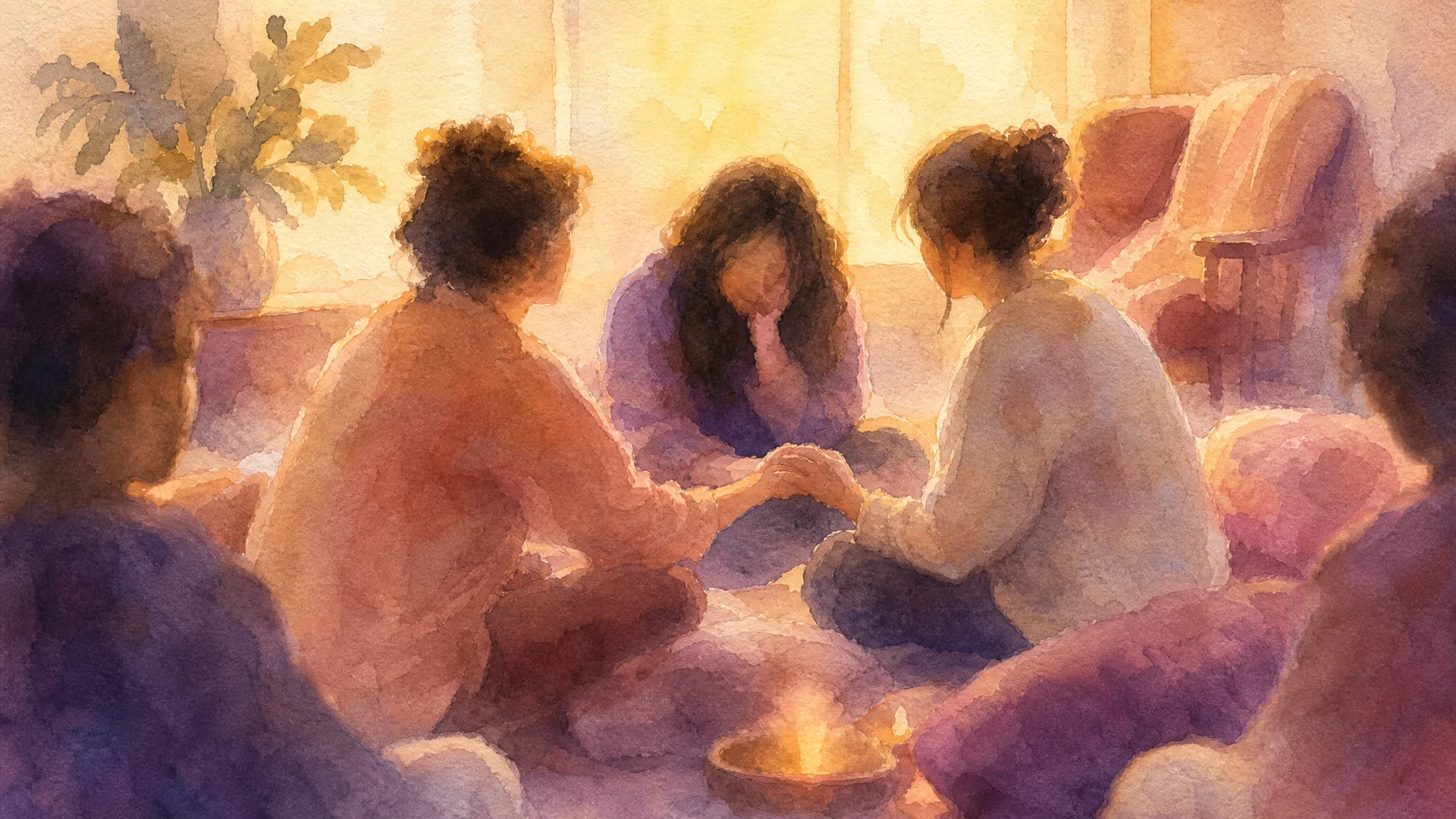
Affairs isolate people. Betrayed partners often feel too ashamed or too raw to talk to friends. Unfaithful partners frequently avoid the subject entirely because they fear judgment. Support groups for infidelity break that isolation by putting people in a room, or on a screen, with others who genuinely get it.
The Role of Peer Connection in Affair Recovery
Peer connection works because it normalises what feels abnormal. Hearing someone else describe the same intrusive thoughts, the same sleepless nights, or the same confusion about whether to stay can be enormously relieving. It tells a person that their reaction isn’t a sign of weakness, just a common response to betrayal. Shared experience like this reduces shame fast, often faster than logic or reassurance from a partner can.
That said, peer support complements therapy. It doesn’t replace it. A group can validate feelings and offer practical tips, but it isn’t equipped to diagnose trauma responses or guide a specific couple’s healing plan. Many people pair a support group with betrayal trauma counselling so they get both the community and the clinical structure.
Who Benefits Most from Group Support
Group support tends to help people who feel stuck in isolation or rumination, and who want practical coping ideas from others further along in recovery. It also suits people who process emotions well out loud, in conversation with others, rather than only through solitary reflection. It’s less useful on its own for anyone in crisis or dealing with acute trauma symptoms. Those situations usually call for one-to-one clinical support first.
Types of Infidelity Support Groups
Not all groups work the same way, and the labels can be confusing. Some are peer-run. Some are led by a therapist. Some focus on one specific role within the affair rather than the couple as a whole.
Peer-Led Support Groups vs Group Therapy
Peer-led support groups are usually organised by people who have been through infidelity themselves, sometimes loosely modelled on 12-step formats, and sometimes run informally through community organisations or charities. They tend to be low-cost or free, with a facilitator who guides discussion but isn’t necessarily a clinician.
Group therapy for infidelity, by contrast, is led by a qualified therapist or counsellor trained in relationship or trauma work. Sessions are more structured, often follow a set curriculum over several weeks, and usually cost more than peer-led options. If someone is dealing with significant trauma symptoms, clinician-led groups tend to offer more consistent safety and boundaries than informal peer groups.
Groups for Betrayed Partners, Unfaithful Partners, and Couples
Most infidelity support communities are built around a specific role. Some groups are only for betrayed partners, giving them space to process anger, grief, and trust issues without worrying about how the unfaithful partner in the room might react. Others are specifically for people who had an affair, focused on understanding their own behaviour and rebuilding integrity.
A smaller number of groups work with couples together, usually once both partners are further along in recovery and want to rebuild jointly rather than separately. Whether betrayed and unfaithful partners can join the same group depends entirely on that group’s design. Mixed groups exist, but they are less common than single-role groups, and a well-run one will state clearly upfront who it’s for.
Online vs In-Person Infidelity Support Communities
Both formats have real advantages, and the right choice often comes down to personal comfort and what’s locally available.
Benefits and Drawbacks of Online Support Groups
Online support groups offer flexibility that’s hard to match. Someone can join a session from home, at a time that fits their schedule, without arranging childcare or travel. Anonymity is another major draw. Some people find that anonymous online forums or moderated groups for affair recovery let them process shame privately before they’re ready to speak in a room full of strangers. Online groups also open up options for people in rural areas, or anyone whose local area simply doesn’t have an in-person option.
The drawbacks are worth naming too. Online groups can feel less accountable, since it’s easier to disengage or lurk without participating. Moderation quality varies enormously, especially in open social media groups where anyone can post without vetting. And the depth of connection some people need can be harder to build through a screen.
When In-Person Groups Work Better
In-person groups tend to work better for people who want stronger accountability and a slower, more embodied sense of trust-building. Reading someone’s expression and tone in real time often deepens connection faster than text or even video can. In the UK, availability varies by region: larger cities usually have more in-person options through private practices and relationship charities, while people in smaller towns may find that online groups are the only realistic option nearby. Comparing that trade-off is similar to weighing up online therapy for infidelity against face-to-face counselling: both formats can work, but the right one depends on personal preference and local access.
How to Find Affair Recovery Support Groups
Once someone decides to look for a group, the next question is where to actually start searching.
Where to Search: Therapists, Charities, and Online Directories
A GP can sometimes refer someone to local counselling services that run or know of support groups nearby. UK relationship counselling bodies, such as those that accredit relationship therapists, often list practitioners who run infidelity-specific groups alongside one-to-one work. More UK relationship charities and private practices are now running both in-person and video-call support groups for people navigating betrayal, a shift driven by rising demand for peer-based recovery options heading into 2027. Private therapy directories are another useful starting point, since many list group offerings alongside individual therapist profiles. It’s worth checking whether a facilitator’s credentials and group focus are stated clearly before reaching out.
Questions to Ask Before Joining
Before committing to any group, it helps to ask a few direct questions:
- Who facilitates the group, and what’s their training or experience?
- Is the group peer-led or clinician-led, and does that match what’s needed right now?
- What confidentiality rules are in place, and how are they enforced?
- How many people typically attend, and is there a cap on group size?
- Is there a cost, and is it ongoing or a one-off session fee?
- Is the group specifically for betrayed partners, unfaithful partners, or couples?
Asking these questions before joining saves a lot of wasted time and awkward exits later.
How to Evaluate a Support Group Before Committing
Not every group calling itself a support community is well run. Knowing what to look for, and what to avoid, matters as much as knowing where to search.
Red Flags to Watch For
Be cautious of groups with no clear facilitator or moderation. Unmoderated spaces can drift into blame, judgment, or advice that isn’t grounded in any clinical understanding of betrayal trauma. Watch for groups that pressure people to share more than they’re comfortable with, or that feel dominated by one or two loud voices. A lack of stated confidentiality norms is another warning sign, especially in online groups where screenshots can spread beyond the group itself. Groups that charge high fees with little transparency about who runs them or what qualifies them deserve extra scrutiny too.
Signs a Group Is a Good Fit
A good group usually has a clear, consistent facilitator, whether that’s a trained peer leader or a qualified therapist. Confidentiality is stated plainly and taken seriously by everyone involved. Group size stays manageable, often somewhere between six and twelve people, small enough that everyone gets a chance to speak. The tone feels supportive rather than judgmental, and people are allowed to share at their own pace rather than being pushed. If a free taster session or an initial call is offered before committing, that’s usually a good sign the organisers care about fit as much as attendance numbers.
Combining Support Groups with Professional Recovery Resources
Support groups work best as one part of a wider recovery toolkit, not the whole plan. Therapists who specialise in betrayal trauma often recommend pairing group support with individual or couples counselling, since group settings help with validation and reduced isolation but aren’t structured to address a specific couple’s dynamics. A group can validate feelings, but a therapist can help unpack why a specific pattern keeps repeating in a specific relationship.
Structured programmes reflect this same principle: community and peer connection sit alongside individual reflection and dedicated couples work as parts of a broader healing process, not standalone fixes. Alongside a group, it’s worth exploring coping strategies for betrayed partners, reading through some affair recovery books, and understanding couples therapy after infidelity if rebuilding together is the goal.
For a clearer sense of where all these pieces fit together, an affair recovery stages roadmap can help map out what recovery typically looks like over time. And for anyone who isn’t ready to join a group yet but wants a low-pressure first step, a free affair recovery assessment is a practical way to get oriented before deciding what kind of support fits best.