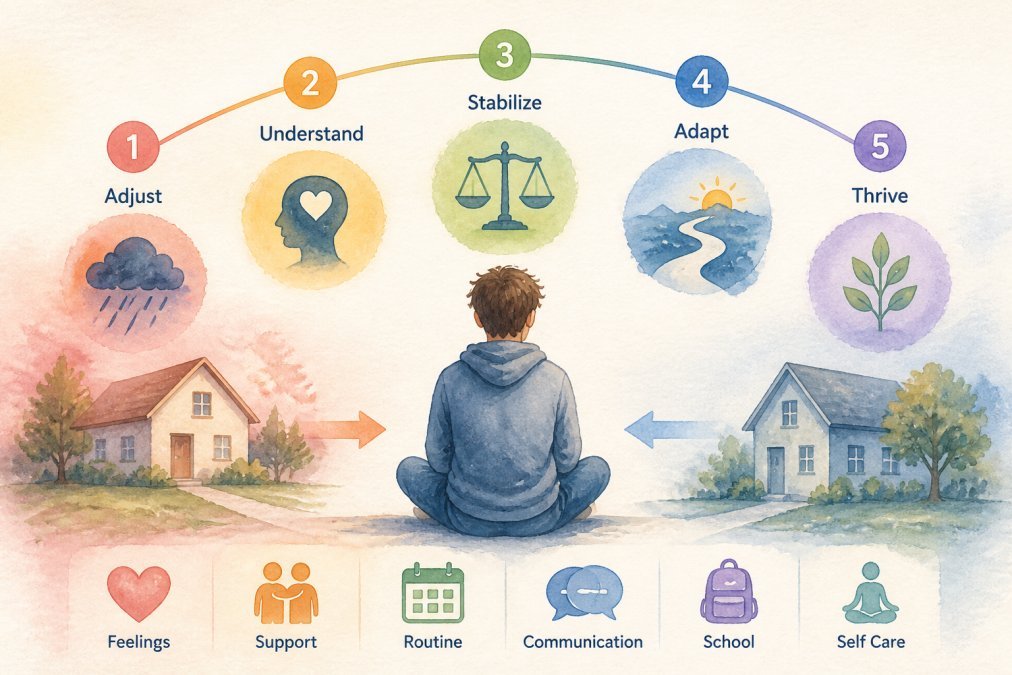
Rebuilding intimacy after infidelity follows a five-stage sequence: stabilize safety, establish accountability, engage individual and couples therapy, practice daily trust-building, and monitor progress honestly. This is not a linear sprint. Safety before vulnerability is the clinical starting point, and specialized support is usually necessary for lasting repair.
Your immediate actions (first 72 hours):
- End all contact with the third party, confirmed and observable
- Choose one trusted support person, not a mutual friend
- Agree on one short-term boundary (separate sleep space if needed)
- Make one transparent gesture: share location or device access voluntarily
- Contact a trauma-informed therapist or counselor
- Key Takeaways
- What are the five rebuilding intimacy steps and how long does each take?
- Step 1: How do you stabilize after discovering infidelity?
- Step 2: What does genuine accountability look like after an affair?
- Step 3: What therapy works best for infidelity recovery in the UK?
- Step 4: What daily trust-building practices actually restore connection?
- Step 5: How do you measure progress and know when to get more help?
- Two clinical examples showing the five steps in practice
- A note on realistic expectations and pacing
- Structured resources from the After the Affair Series
- FAQ
Key Takeaways
Rebuilding intimacy after infidelity requires five staged steps: stabilization, accountability, structured therapy, daily trust practices, and honest progress evaluation, with recovery typically spanning several months to two years.
| Point | Details |
|---|---|
| Stabilize first | Stop betrayal behaviors and set observable boundaries before any repair work begins. |
| Accountability is behavioral | Genuine remorse shows in consistent actions over 90+ days, not single apologies. |
| Use both therapy types | Individual trauma processing and couples therapy serve different functions and work best together. |
| Daily practices rebuild trust | Proactive transparency, micro-reassurance, and shared low-stakes activities create new neural patterns. |
| Aftertheaffair resources | The 7 Steps Checklist, Accountability Guide, and Trust-Building Exercises map to each recovery stage. |
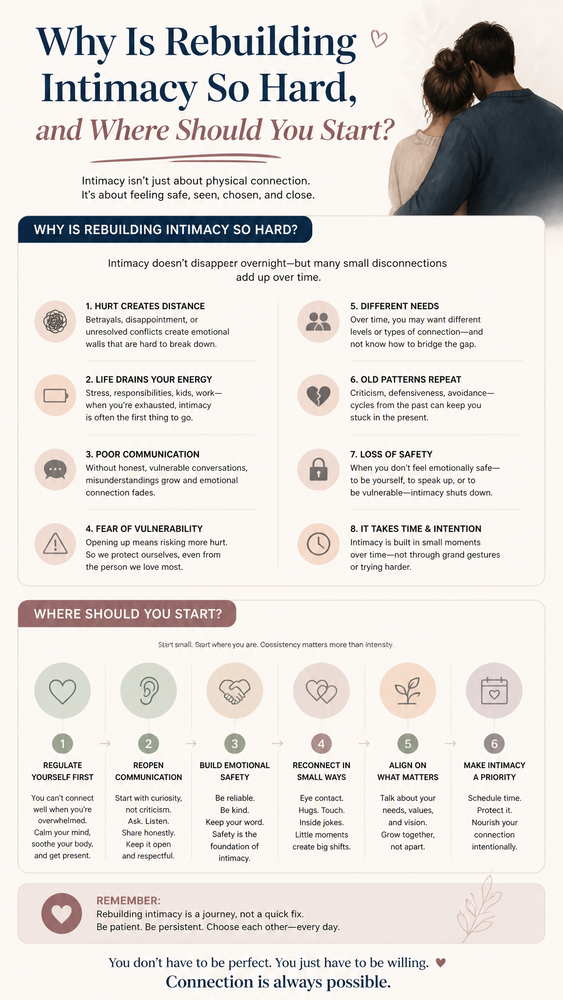
What are the five rebuilding intimacy steps and how long does each take?
A three-stage clinical model integrating cognitive-behavioral and trauma-informed strategies has strong precedent in the literature. Expanded into five practical stages, the roadmap looks like this:
| Stage | Goal | Who Leads | Typical Duration |
|---|---|---|---|
| 1. Stabilize | Stop harm, set observable boundaries | Both partners | A few days to several weeks |
| 2. Accountability | Full disclosure, remorse, behavior change | Unfaithful partner | Several weeks to a few months |
| 3. Therapy plan | Individual + couples work begins | Both, with therapist | Several weeks to several months |
| 4. Trust practices | Daily attunement, shared rituals | Both partners | Several months to over a year |
| 5. Progress/decision | Evaluate repair, stay or exit consciously | Both partners | Ongoing |
Gottman-based Trust Revival frameworks describe three therapeutic phases: atonement, attunement, and attachment. Recovery commonly spans several months to a couple of years, depending on affair complexity and both partners’ commitment. Rushing any stage tends to collapse the next one.
Step 1: How do you stabilize after discovering infidelity?
Stabilization means stopping the bleeding before attempting to heal the wound. Three things must happen first: the betrayal behavior stops completely, observable boundaries are set, and the injured partner’s nervous system gets some relief from constant threat-scanning.
Practical stabilization checklist:
- Confirm no ongoing contact with the affair partner (written agreement if needed)
- Agree on a temporary transparency measure: shared calendar, location sharing, or open device access
- Decide on sleeping arrangements without pressure to resolve the relationship
- Reduce avoidable shared stressors for 2–4 weeks (cancel non-essential social obligations)
- Identify one grounding practice each: box breathing, cold water on wrists, brief walks
Pro Tip: Clinicians advise pacing disclosure carefully. A full forensic download of affair details in the first 48 hours can re-traumatize the injured partner. Agree on what is disclosed now versus in a structured session with a therapist present.
For the injured partner, processing emotional trauma after disclosure often requires individual support before couples work can begin. Hypervigilance and intrusive thoughts are normal trauma responses, not signs that repair is impossible.
Step 2: What does genuine accountability look like after an affair?
Accountability is not a single apology. It is a sustained pattern of behavior that gives the injured partner evidence, not promises.
Authentic accountability includes four elements: full responsibility with no minimization, credible remorse expressed through changed behavior, transparent access decisions made proactively, and consistent follow-through over weeks, not days.
A structured disclosure conversation: basic framework
- Set a 45-minute limit with a therapist or agreed mediator present
- The unfaithful partner speaks first: “I take full responsibility for [specific behavior]. I understand this caused [specific harm].”
- The injured partner asks up to three pre-agreed questions
- No counter-accusations, no “but you also” statements
- Close with one concrete next step: “I will [specific action] by [specific date]”
What actively harms repair:
- Partial truths that come out later (each new disclosure resets the trust clock)
- Weaponized apologies: “I’m sorry you feel that way”
- Defensiveness when the injured partner needs to express anger
- Withdrawing remorse when the injured partner is struggling
Therapists recommend written recovery agreements covering technology rules, contact with exes, and check-in schedules. Written agreements reduce repeated negotiations and give the injured partner’s nervous system consistent, checkable cues.
Pro Tip: The Partner Accountability Conversation Guide from the After the Affair Series provides scripted frameworks for these conversations, including safe phrases and time-limited formats designed for high-emotion disclosures.
Step 3: What therapy works best for infidelity recovery in the UK?
Both individual therapy and couples therapy are commonly recommended, and they serve different functions. Clinical guidance is clear: injured partners often need trauma-focused processing for hypervigilance and intrusive thoughts, while the unfaithful partner benefits from individual work on attachment patterns and motivation.
Therapy types worth knowing:
- Trauma-informed CBT: Addresses intrusive thoughts and avoidance patterns in the injured partner
- EMDR: Useful when trauma responses are severe or somatic
- Gottman-based couples therapy: Structured repair work with evidence-informed communication tools
- Emotionally Focused Therapy (EFT): Targets attachment injuries directly
Approximate UK private therapy costs:
| Setting | Typical Cost Per Session | Notes |
|---|---|---|
| Private individual therapy | £60 to £120 | Higher in London; varies by therapist |
| Private couples therapy | £80 to £150 | Specialist infidelity therapists at upper end |
| NHS IAPT (individual) | Free | Long waits; may not offer infidelity-specific work |
| Charity/sliding scale | £20 to £50 | BACP-registered therapists available |
These are approximate ranges. Costs vary by region and therapist experience. The BACP therapist directory and Relate are established UK starting points.
Questions to ask a prospective therapist:
- Do you have specific experience with infidelity and betrayal trauma?
- Which modalities do you use for trauma processing?
- Do you work with both partners individually and as a couple?
For a deeper look at therapy types for infidelity trauma, Aftertheaffair covers the main modalities and what to expect from each.
Step 4: What daily trust-building practices actually restore connection?
A PRISMA-guided systematic review identified five recurring themes that support trust repair: proactive transparency, active monitoring, remorse and accountability, shared activities, and clear communication of reasons for the betrayal. Each maps to a daily practice.
Daily trust-building exercises:
- Morning check-in (5 minutes): Each partner shares one feeling and one need for the day, no problem-solving
- Proactive transparency gesture: The unfaithful partner shares something voluntarily before being asked
- Shared low-stakes activity: A walk, cooking together, or a short TV episode, without discussing the affair
- Micro-reassurance: One specific, genuine statement of commitment per day (“I chose to come home”)
- Sensate-focus progression: Graduated, non-sexual touch exercises to rebuild physical safety before intimacy
Monitoring: what is reasonable and when to shift
Active monitoring is a legitimate short-term tool, not a permanent state. A reasonable monitoring plan is time-limited (agree on a review date), specific (defined access, not blanket surveillance), and shifts from investigation to evaluation as trust builds. Rebuilding trust after betrayal requires both partners to treat monitoring as a bridge, not a destination.
Daily consistency checklist for both partners:
- Unfaithful partner: Did I share something proactively today? Did I follow through on one commitment?
- Injured partner: Did I name one need clearly? Did I acknowledge one positive behavior?
Structured communication rituals and sensate-focus exercises create new positive associations and reduce the brain’s automatic threat-scanning over time.
Step 5: How do you measure progress and know when to get more help?
Progress in affair recovery is rarely smooth. What to look for: reduced frequency of intrusive thoughts, the unfaithful partner following through consistently without reminders, fewer defensive reactions during difficult conversations, and the injured partner taking small emotional risks again.
Red flags that repair is stalling:
- New deceptions discovered after the initial disclosure
- Refusal to engage in accountability work or therapy
- Coercive behavior: pressure to “get over it,” threats, or emotional withdrawal as punishment
- Repeated boundary violations with no behavioral change
When to escalate immediately: If either partner is experiencing suicidal ideation, self-harm, or severe PTSD symptoms (dissociation, inability to function), contact a crisis service or GP before continuing couples work.
Pro Tip: When deciding whether to stay or leave, weight evidence of change against promises of change. Consistent behavior over 90+ days carries more clinical weight than any single gesture, however dramatic.
A relapse response plan: if a new deception surfaces, pause couples sessions, re-engage individual therapists, conduct a short transparency audit (what happened, when, what was hidden), and reset the monitoring agreement before resuming joint work.

Two clinical examples showing the five steps in practice
Case A: Physical affair, full disclosure
A couple in their late 30s sought help within two weeks of discovery. The unfaithful partner ended contact immediately and agreed to device transparency. Stabilization took three weeks. Couples therapy began in week four, with individual EMDR for the injured partner running concurrently. The main obstacle was the unfaithful partner’s tendency to withdraw when the injured partner expressed anger, which the therapist addressed directly in session.
- Lesson 1: Rapid, observable stopping behaviors accelerated the injured partner’s nervous-system regulation more than any verbal reassurance.
- Lesson 2: Emotional withdrawal by the unfaithful partner during conflict was the single biggest barrier to attunement work.
Case B: Emotional affair, gradual disclosure
A couple in their mid-40s presented six months after discovery. The emotional affair had involved no physical contact but deep intimacy. The injured partner struggled to have the betrayal validated. Sensate-focus exercises and shared weekly rituals were introduced early; formal accountability conversations came later, once individual therapy had stabilized both partners.
- Lesson 1: Validating the injured partner’s experience before moving to repair exercises prevented early dropout from therapy.
- Lesson 2: Graduated physical reconnection through sensate-focus created safety for emotional vulnerability to follow.
A note on realistic expectations and pacing
Recovery from betrayal trauma is not a straight line, and the couples who make it through are rarely the ones who felt the most love at the start. They are the ones who stayed consistent when it was hardest.
What the research and clinical experience both show is that dramatic gestures matter far less than small, reliable behaviors repeated over months. A single weekend away does not rebuild trust. Showing up honestly every day for six months does. That is a difficult truth for both partners, but it is also a genuinely hopeful one: consistency is something both people can choose, regardless of how broken things feel right now.
Seek trauma-informed professional support. Use structured resources. And give the process the time it actually needs, not the time you wish it needed.
Structured resources from the After the Affair Series
The After the Affair Series offers four resources that map directly to the five stages covered here. The 7 Steps Infidelity Recovery Checklist gives betrayed partners a concrete, downloadable action plan for the acute phase. The Partner Accountability Conversation Guide provides scripted frameworks for structured disclosure meetings, designed for use with or without a therapist present. The Trust-Building Exercises for Couples After Betrayal bundle covers daily attunement practices, sensate-focus progressions, and shared rituals for the mid-recovery phase. For couples committed to the long work of growth, Relationship Growth After Infidelity addresses the transformation and maintenance stages directly. Start with the checklist if you are in the first weeks. It takes the guesswork out of what to do next.
Sources
The evidence base for this guide draws on peer-reviewed clinical research and practitioner guidance:
- The path to affair recovery — Psychology Today
- Three-stage treatment for addressing the sequelae of affairs — J Clin Psychol/In Session
- How to Rebuild Intimacy After Betrayal Trauma — The Art of Relationships
- Gottman Method for Infidelity Recovery | TherapyExplained
This article provides general information and is not a substitute for professional clinical advice. Consult a qualified therapist or your GP for guidance specific to your situation.
FAQ
How long does rebuilding intimacy after infidelity take?
Recovery typically spans several months to a couple of years, depending on affair complexity and both partners’ commitment. Gottman-based clinical frameworks suggest this range is realistic even with consistent effort.
What are the first steps to rebuild intimacy after betrayal?
End the betrayal behavior completely, set one observable boundary, and contact a trauma-informed therapist. These three steps in the first 72 hours create the safety needed for any further repair work.
Can a relationship recover from infidelity without therapy?
Some couples manage with structured self-help resources, but clinical guidance consistently recommends at least individual therapy for the injured partner, whose trauma symptoms often require professional processing.
What is the difference between accountability and an apology?
An apology is a statement; accountability is a sustained pattern of changed behavior. Genuine accountability includes proactive transparency, consistent follow-through, and no minimization of the harm caused.
Which Aftertheaffair resources help most in early recovery?
The 7 Steps Infidelity Recovery Checklist is designed for the acute phase, giving betrayed partners a concrete action plan. The Partner Accountability Conversation Guide supports the structured disclosure conversations that follow.
Recommended
- Trust Rebuilding Guide: Steps to Heal After Infidelity
- Healing together guide: rebuild trust after infidelity – After the Affair Series
- Relationship Growth After Infidelity – After the Affair Series
- How to Guide Clients After Infidelity for Healing – After the Affair Series