Table of Contents
- Why Age-Appropriate Disclosure Matters for Children
- Signs of Betrayal Trauma in Children
- What to Say: Scripts for Talking to Kids About Infidelity
- Handling the ‘What If They Already Know’ Scenario
- Co-Parenting After Betrayal: Scripts for High-Conflict Situations
- Creating Emotional Safety and Validating Feelings
- Common Mistakes to Avoid
- Maintaining Stability While Managing Your Own Trauma
Last Updated: August 20, 2026
Why Age-Appropriate Disclosure Matters for Children
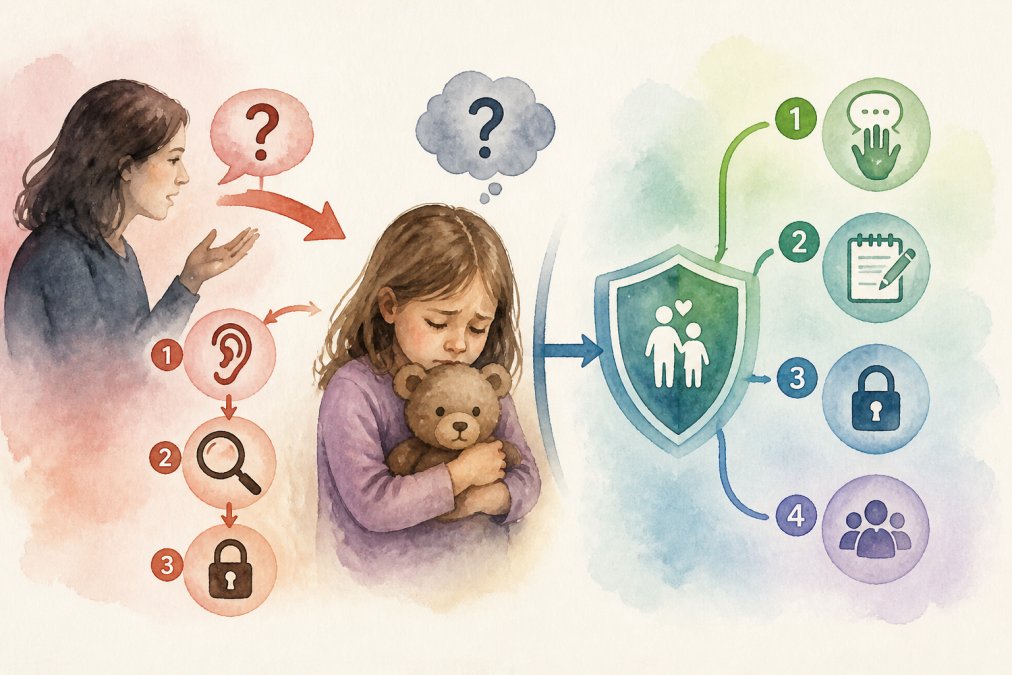
When parents face infidelity, silence creates problems. Children pick up on tension, notice behavioral changes, and sense dishonesty. Real protection comes from talking to children about parental betrayal in ways that match their developmental stage and emotional capacity.
Age-appropriate disclosure isn’t about oversharing adult details. It’s about giving children enough truth to make sense of what’s happening while keeping their emotional safety intact. Research shows that children who receive honest, developmentally-matched explanations of family changes experience less anxiety and fewer behavioral problems than those left to guess or piece together overheard conversations.
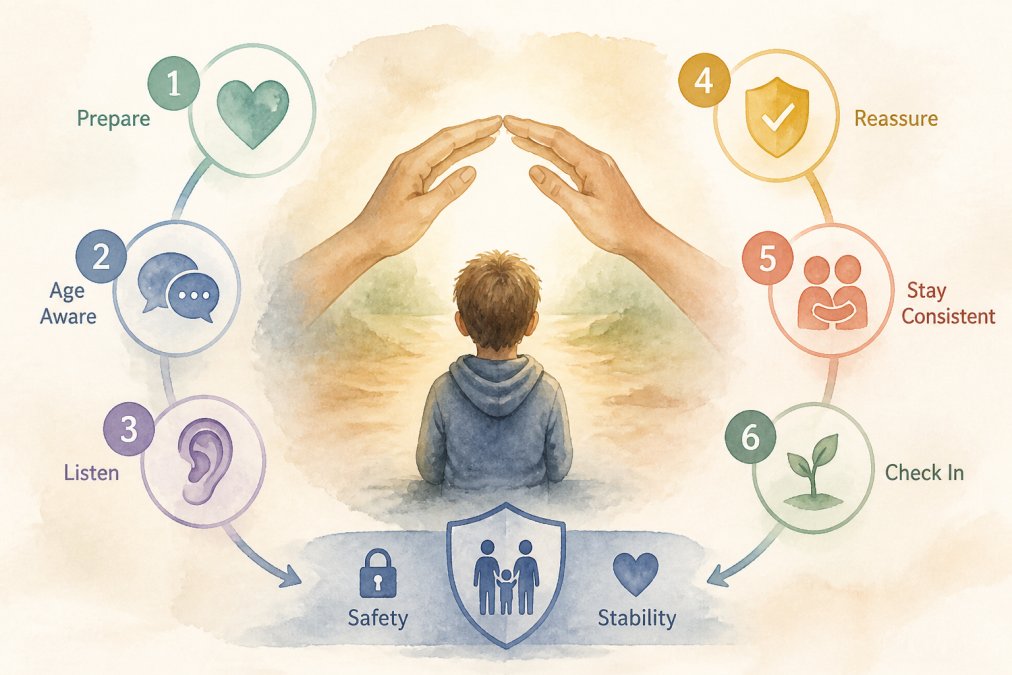
After the Affair Series has developed frameworks specifically designed to help parents navigate these conversations with clarity and structure, approaching them with intention so children feel heard, safe, and reassured that the betrayal is not their fault.
Signs of Betrayal Trauma in Children
Children don’t process infidelity like adults, but they absolutely experience its impact. Recognizing these signs early helps you understand what your child is experiencing and whether your disclosure approach is working.
Younger children (ages 3-6) often show behavioral and emotional red flags: regression to outgrown behaviors like bedwetting, increased clinginess, sleep disturbances, withdrawal, or aggression during transitions between parents.
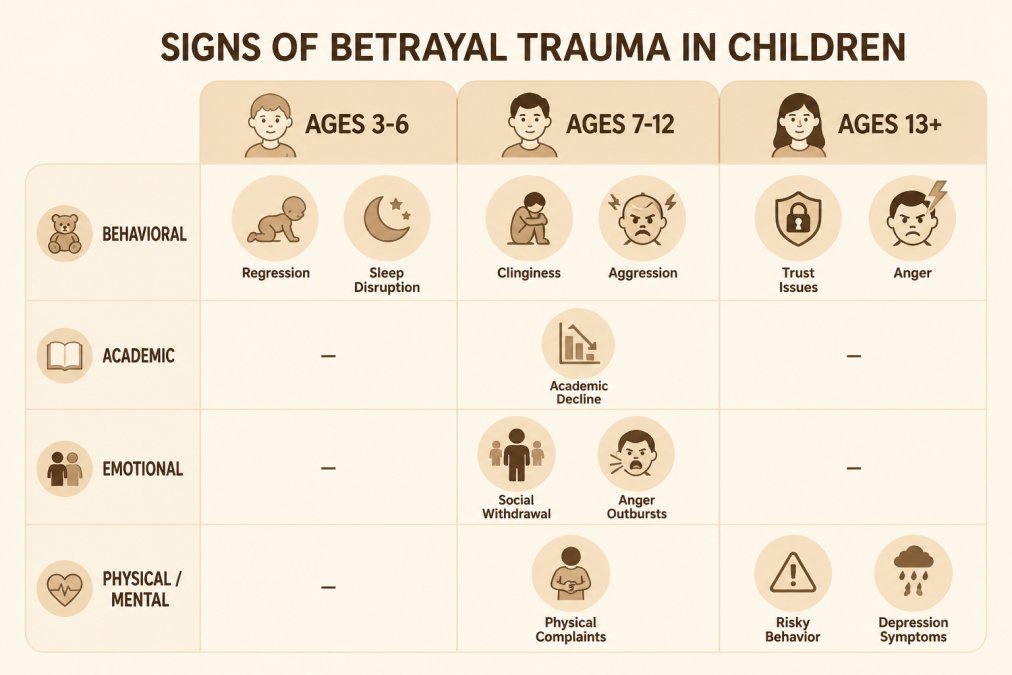
School-age children (ages 7-12) often show obvious emotional and academic changes: declining grades, difficulty concentrating, withdrawal from activities, sudden anger, hypervigilance about parental love, or physical complaints like stomachaches and headaches.
Adolescents (ages 13+) understand infidelity more fully and may express anger directly at the unfaithful parent or withdraw from both. Some show behavioral changes like declining grades, isolation, or increased screen time. Others become parentified, taking on emotional labor by comforting a distressed parent.
The key is that these signs often cluster. A child showing multiple signs across different contexts, home, school, with each parent, is likely experiencing betrayal trauma and needs both reassurance and professional support.
What to Say: Scripts for Talking to Kids About Infidelity
The conversation about infidelity happens in a series of smaller conversations, each matched to what your child already knows, their age, and emotional readiness. Adapt these scripts to your situation and your child’s language.
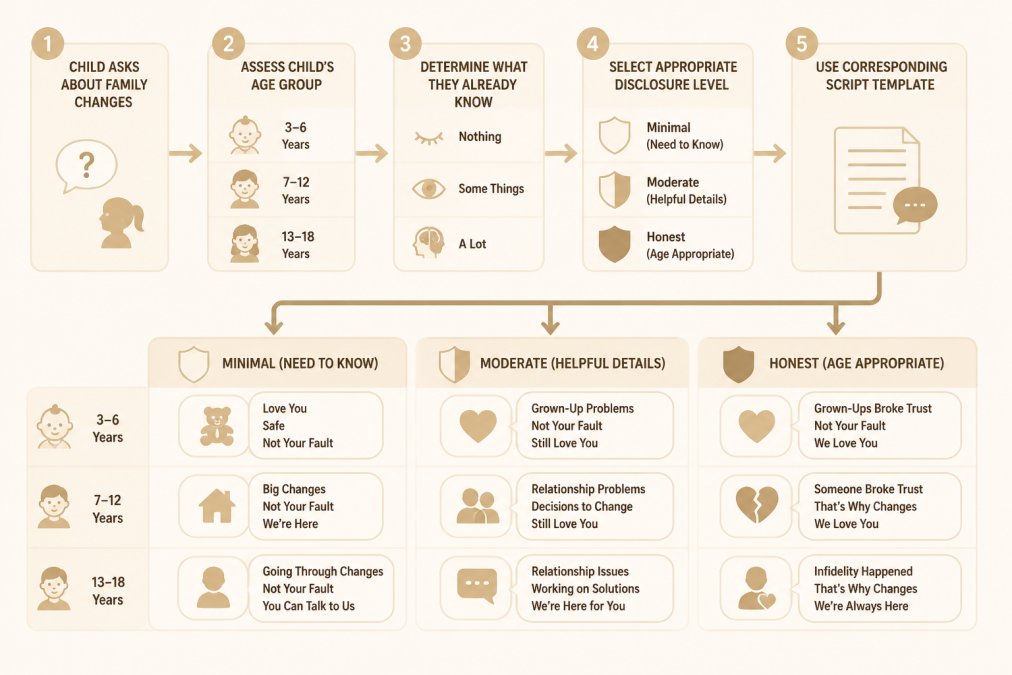
Ages 3-6: Keeping explanations concrete and simple
Young children need extremely simple, concrete language. They don’t need to understand infidelity. They need to know that both parents love them, the family is changing, and it’s not their fault.
What to say:
"Mommy and Daddy love you very much. We’ve decided we’re not going to live in the same house anymore. This is not because of anything you did. Sometimes grown-ups decide they don’t want to be married, but we will always be your parents."
Then answer immediate questions:
- "Will I still see Daddy?" → "Yes, you’ll spend time with Daddy on [specific days]."
- "Why are you sad?" → "Sometimes grown-ups feel sad about big changes. That’s okay. I’m still taking care of you."
- "Is it my fault?" → "No, this is about grown-up things between Mommy and Daddy. You didn’t cause this."
What NOT to say:
Don’t mention infidelity, betrayal, or what the other parent did. Don’t ask them to keep secrets or report on the other parent’s behavior.
Ages 7-12: Addressing questions with honesty and reassurance
School-age children are more aware something is wrong. They may have overheard conversations or noticed tension. They can handle more honesty, but still need reassurance framed simply.
What to say:
"Your mom/dad made a choice that hurt our family. They weren’t honest with me about something important. Because of that, we decided we can’t stay married. But both of us are still your parents, and that will never change."
If they ask what happened:
"There was someone else involved. That means Mom/Dad wasn’t being faithful to our marriage. That was wrong, and it hurt me. But it has nothing to do with you or how we feel about you."
What NOT to say:
Don’t use the word "cheating" unless they use it first. Don’t describe sexual details. Don’t say "Your dad is a bad person" or ask them to choose sides.
Common questions and responses:
- "Why did they do that?" → "I don’t fully understand either. Sometimes people make choices that hurt the people they love. It doesn’t mean there’s something wrong with you."
- "Are you going to be okay?" → "I’m sad right now, and that’s okay. I have people helping me. My job is to take care of you."
- "Does [other parent] still love me?" → "Yes. This is between the grown-ups. It doesn’t change how they feel about you."
Ages 13+: Navigating adolescent understanding and anger
Teenagers often already know or suspect what happened. They understand infidelity more fully and may feel angry at both parents. They need honest conversation, acknowledgment of their feelings, and reassurance that they’re not responsible for fixing the situation.
What to say:
"I need to talk to you about why our family is changing. [Other parent] was unfaithful to me. That means they were in a relationship with someone else while we were married. I found out, and I couldn’t stay in the marriage after that. I know this is hard and probably makes you angry."
Then pause and let them respond.
If they’re angry:
"Your anger makes sense. This isn’t fair to you, and you didn’t ask for this. You have every right to feel angry. But this is between the grown-ups. It’s not your job to fix it or choose sides." helping children with anxiety.
What NOT to say:
Don’t ask them to keep secrets from the other parent. Don’t vent your anger to them. Don’t ask them to spy or carry messages. Don’t say "Your dad/mom is a liar."
Common questions and responses:
- "Did you know?" → "I didn’t at first. When I found out, I had to make a decision about what to do."
- "Are you going to be okay?" → "I’m going to work through this. I’m getting help. My priority is making sure you’re okay too."
- "Can I talk to them about this?" → "Yes. You can talk to them about how you’re feeling. But you don’t have to take sides or manage their feelings."
Handling the ‘What If They Already Know’ Scenario
Many parents delay talking to children because they’re waiting for the "right time." But children often figure it out first through the other parent’s new relationship, overheard conversations, social media, or friends. If your child already knows or suspects, the conversation changes.
The risk of waiting is that your child feels lied to when you finally tell them, potentially losing trust in your honesty about other things.
If your child says, "I already know":
Don’t deny it. Instead, say: "I know you’ve figured some things out. I’m glad we can talk about it now. What do you understand about what happened?"
Listen first. Your child may have accurate information or significant misunderstandings. Let them share what they know before you add details.
If they’re angry about the delay:
"You’re right to be upset. You deserved to hear this from me directly. I was scared, and I handled that poorly. I’m sorry."
Co-Parenting After Betrayal: Scripts for High-Conflict Situations
When co-parenting involves significant conflict, the stakes of what you say to your children increase. Your ex may use your words against you or try to involve your children in the conflict. Protect your children from becoming caught in the middle while still being honest.
Take the free 23-point assessment →
Communicating with your ex about what the children know
Before you talk to your children, communicate with your ex about what you’re planning to say. This conversation is difficult, especially if there’s significant anger.
What to say:
"I’m going to talk to the kids about why we’re separating. I’m going to tell them the truth in age-appropriate ways. I’m not going to blame you to them or ask them to take sides. I’m asking you to do the same."
If they push back:
"I understand you may have a different perspective. But the kids need to know what happened so they can make sense of the family changes."
This isn’t a debate. You’re informing them, not asking permission.
Protecting children from becoming confidants or messengers
One of the most damaging dynamics in high-conflict co-parenting is parentification, when children become emotional support for a parent or carry messages between parents.
Red flags that your child is becoming a confidant:
- They’re asking how you’re doing or trying to comfort you
- They’re reporting back about the other parent’s behavior
- They’re carrying messages between you and your ex
- They’re taking on emotional labor that should belong to adults
What to say to your child:
"I know things are hard right now. But it’s not your job to take care of me or help me feel better. That’s what my friends and therapist are for. Your job is just to be a kid."
If your ex is doing this:
You can’t control what happens at their house, but you can control your response. Don’t ask your child to report back. If they volunteer information, listen without judgment but don’t encourage it. Say: "That sounds like something between your mom and her new partner. You don’t need to worry about that."
Creating Emotional Safety and Validating Feelings
After the initial conversation, the work shifts to creating an environment where your child feels safe expressing their feelings without judgment or pressure to manage yours.
Emotional safety means your child believes that their feelings are normal and acceptable, even if angry, confused, or sad; you won’t punish them for having feelings about the other parent; you won’t use their feelings as evidence that the other parent is bad; and you’re stable and capable, even though the family structure has changed.
Validating feelings without taking sides:
When your child expresses anger at the unfaithful parent, don’t agree with them. Say: "You’re angry, and that makes sense. This situation is unfair to you. Your anger is okay."
When your child expresses sadness or wishes the family could go back, don’t try to fix it. Say: "I know you wish things were different. I do too sometimes. It’s okay to feel sad about that."
When your child asks difficult questions, answer honestly but without blame. "I did love them, but trust is broken now, and I can’t rebuild that" is more helpful than "They destroyed our family."
Maintaining routine and predictability:
Emotional safety also comes from structure. Children whose schedules are consistent, whose basic needs are met, and who know what to expect feel safer processing difficult emotions. Stick to the parenting schedule. Show up on time. Follow through on what you say you’ll do.
Common Mistakes to Avoid
Mistake 1: Waiting too long to talk to your children.
The longer you wait, the more your children fill in gaps with their own stories. They may blame themselves or feel betrayed when they discover you’ve been hiding information.
Mistake 2: Giving too much detail.
Your child doesn’t need to know about sexual infidelity, the other person’s identity, or the timeline of the affair. They need enough information to understand that a boundary was broken and that’s why the family is changing.
Mistake 3: Asking them to keep secrets from the other parent.
Even if you’re angry, don’t ask your child to hide information. This puts them in an impossible position and damages their relationship with the other parent.
Mistake 4: Using them as a messenger or spy.
"Tell your mom I said…" or "Does your dad have a girlfriend? Find out for me." These requests make your child responsible for managing your emotions and gathering information for you.
Mistake 5: Venting your anger or pain to them.
Your child doesn’t have the emotional capacity to support you. If you vent to them, they feel responsible for your feelings. Process your pain with other adults, friends, a therapist, or a support group.
Mistake 6: Asking them to choose sides.
"Do you want to stay with me or your dad?" forces your child into an impossible position. They need both parents.
Mistake 7: Minimizing their feelings.
"You’ll get over it" or "Other kids have it worse" shuts down emotional expression. Your child needs to know their feelings matter.
Maintaining Stability While Managing Your Own Trauma
You can’t give your child emotional safety if you’re in crisis. If you’re drowning in your own betrayal trauma, your child will feel that instability. Managing your own trauma is not selfish. It’s the foundation of protecting your children.
What this looks like:
- Getting professional support: therapy, a support group, or a structured program like After the Affair Series
- Creating a support network: friends, family, or community who understand what you’re going through
- Establishing non-negotiables: sleep, exercise, basic self-care that keeps you functional
- Setting boundaries with your ex: limiting contact to necessary co-parenting communication
- Building a life outside the crisis: activities, relationships, and goals that remind you that your identity isn’t defined by the betrayal
The specific challenge of high-conflict co-parenting:
If your ex is hostile or unpredictable, your nervous system is constantly activated. Structured frameworks help. After the Affair Series provides specific scripts and tools designed for high-conflict situations to protect your own emotional energy and keep interactions as neutral as possible.
What your children need to see:
They need to see that you’re capable, that you’re getting support, and that you’re moving forward. This doesn’t mean being happy or pretending the betrayal didn’t happen. It means showing them that difficult things can be survived, that asking for help is strength, and that life continues after crisis.
Talking to children about parental betrayal is one of the hardest conversations parents face. After the Affair Series offers structured frameworks and specific scripts designed for exactly this challenge. Rather than generic parenting advice, the toolkit provides age-appropriate language templates, co-parenting scripts for high-conflict situations, and protocols for managing your own trauma so you can show up for your children. The 23-point assessment helps you understand where you and your children are in the recovery process and which tools will help most. Take the free assessment to start building a plan that protects both your children’s emotional wellbeing and your own stability.
Frequently Asked Questions
At what age should you tell children about a parent's infidelity?
There's no universal age, it depends on what the child already knows or suspects. Children ages 3-6 need simple, concrete language focused on reassurance that the betrayal wasn't their fault. Ages 7-12 can handle more detail about what happened while still protecting them from adult conflict. Adolescents (13+) often need direct honesty because they're already forming their own conclusions. The key is matching your disclosure to their developmental capacity and what they've already picked up from siblings, school, or overheard conversations.
What are the signs of betrayal trauma in children after learning about infidelity?
Betrayal trauma in children shows up differently by age. Younger children (3-6) may regress, bedwetting, clinginess, or sleep disruption. School-age children (7-12) often display behavioral changes: declining grades, withdrawal from activities, increased anxiety, or acting out. Adolescents may show anger, trust issues, or risky behavior. All ages may struggle with emotional regulation and ask repeated questions seeking reassurance. If you notice persistent changes lasting more than a few weeks, or signs of depression or anxiety, professional support from a child therapist can help them process the trauma.
How do I use scripts for talking to kids about infidelity without sounding robotic or manipulative?
Scripts provide a framework, not a word-for-word recitation. Read them beforehand to internalize the core message and emotional tone, then speak naturally in your own voice. Children sense authenticity, they'll pick up on genuine care more than perfect wording. Scripts are most effective when they help you stay calm and non-blaming under stress, not when they replace your natural parenting voice. Practice delivering them with a calm tone and open body language, pausing to let your child respond.
What should I do if my child already knows or suspects the infidelity?
Acknowledge what they know without forcing additional details. Say something like: 'I can tell you've picked up on something. What have you heard, and what are you worried about?' Listen without defensiveness, validate their feelings, and provide age-appropriate context that reassures them of your love and stability. Avoid filling silence with oversharing, answer the specific question they're asking, not the whole story. If they've heard conflicting accounts from both parents, coordinate with your ex (if possible) on a shared, non-blaming narrative to reduce confusion and loyalty conflicts.
This article was written using GrandRanker