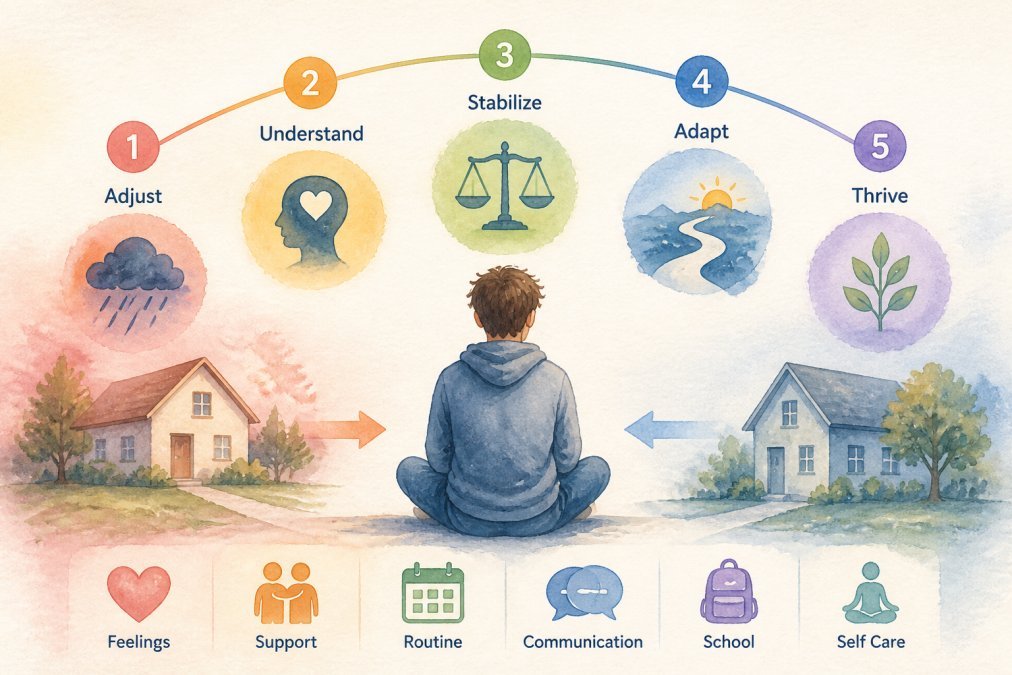
- Step 1: Assess commitment to healing together
- Step 2: Establish open and honest communication
- Step 3: Practice accountability and empathy in actions
- Step 4: Rebuild trust with consistent behaviors
- Step 5: Strengthen connection through shared growth
- Start Rebuilding Your Relationship with Proven Recovery Strategies
- Frequently Asked Questions
- Recommended
The aftermath of infidelity often leaves couples feeling lost, overwhelmed, and unsure where to begin. When trust has been deeply shaken, every conversation can feel loaded with pain and uncertainty. In these first fragile months, what matters most is discovering genuine commitment to healing together, building honest communication, and taking small, intentional steps toward trust and connection—a process that, according to research, requires more than promises but ongoing, shared effort. Here, you will find guidance grounded in proven strategies, emotional support, and practical actions for both partners to move forward with hope.
Quick Summary
| Key Point | Explanation |
|---|---|
| 1. Assess commitment to healing | Ensure both partners are genuinely willing to work towards recovery and understand what healing entails for each. |
| 2. Establish open communication | Create a safe space for honest dialogue, prioritizing feelings and needs over blame during regular check-ins. |
| 3. Practice accountability and empathy | The unfaithful partner must show consistent accountability while the betrayed partner develops empathy through understanding. |
| 4. Rebuild trust with consistency | Trust is restored through repeated actions, transparency, and maintaining commitments over time. |
| 5. Strengthen connection through shared growth | Use the healing process as an opportunity for both partners to grow individually and as a couple, prioritizing mutual development. |
Step 1: Assess commitment to healing together
Before moving forward, you need to understand whether both partners are genuinely willing to do the work required for recovery. This isn’t about surface-level agreement or forced reconciliation. Real commitment to healing means each person has made a conscious decision to move through the pain, understand what happened, and rebuild the relationship from the foundation up. Assessing this commitment early prevents wasted emotional energy and sets realistic expectations for what comes next.
Start by having an honest conversation about what healing actually means to each of you. Many couples skip this step and assume they’re on the same page, only to discover later that one person envisions reconciliation while the other simply wants to coexist peacefully. Your conversation should explore these key dimensions:
- What does forgiveness look like? Does it mean pretending nothing happened, or does it mean working through the hurt while choosing to stay?
- How much time are you willing to invest? Recovery takes months, not weeks. Both partners need realistic timelines.
- What are your individual goals? One person might prioritize rebuilding emotional intimacy, while the other focuses on regaining trust. Both matter.
- Are you willing to examine your relationship patterns? Healing requires looking at what contributed to the environment where infidelity occurred.
- Can you commit to vulnerability? The unfaithful partner must be willing to answer difficult questions and provide transparency. The betrayed partner must be willing to express pain without shutting down.
True commitment isn’t about staying in the relationship—it’s about deciding, intentionally and repeatedly, to do the work required to heal it.
Listen carefully to what your partner says during this conversation. Pay attention not just to words but to their tone, body language, and whether they seem rushed or dismissive. Research on attachment bond recovery emphasizes ongoing communication and joint commitment as essential elements that couples must deliberately maintain throughout the healing process. If one partner seems to be going through the motions while the other is emotionally invested, that’s information you need to acknowledge now rather than ignore.
Next, assess whether both of you are willing to seek professional support. Some couples resist therapy, believing they can handle recovery alone. While some couples do heal without professional guidance, the healing journey typically involves multiple stages including exploration of emotions, expression, and development of empathy that benefit greatly from structured guidance. A therapist or counselor can help you navigate these phases more effectively and can intervene if one partner becomes defensive or if you become stuck. Agreeing together to work with a professional (or at least remaining open to it) is a concrete indicator of commitment.
Look for evidence of commitment in everyday actions, not just words. The unfaithful partner should demonstrate willingness to be transparent about their phone, social media, and whereabouts without being asked repeatedly. The betrayed partner should show evidence of working on managing anxiety and intrusive thoughts rather than using them as weapons. Both partners should initiate conversations about the healing process rather than avoiding it. These behaviors reveal whether commitment is real or performative.
If either partner is hesitant or resistant, name it directly. You might say: “I notice you seem uncertain about this. That’s okay, but we need to talk about what that uncertainty means for us.” Sometimes resistance indicates fear, unresolved anger, or genuine doubts about whether the relationship can survive. Those are legitimate concerns that deserve exploration rather than dismissal.
Pro tip: Write down what commitment looks like to each of you separately, then compare. The gaps between your lists will reveal where you need more conversation before deeper healing work begins.
Step 2: Establish open and honest communication
This step is where the real work begins. You can assess commitment together, but without honest communication, nothing will change. Creating a space where both partners can speak truthfully about their feelings, fears, and needs is the foundation for everything that comes next. This means moving beyond surface-level conversations and developing the courage to say things that feel uncomfortable or scary.
Start by setting up dedicated time for these conversations. Life gets busy, and difficult topics tend to get pushed aside or discussed in fragments between work and dinner. Instead, schedule regular check-ins, ideally weekly at first, where you both agree to sit down without phones, distractions, or time pressure. These conversations work best when you’re not exhausted or angry. Pick a time when you can both be present and emotionally available. During these sessions, honest dialogue about feelings and expectations supports trust rebuilding and creates the emotional safety necessary for healing.
Establish some basic ground rules before you start. Without structure, conversations can spiral into arguments or repeat the same painful patterns. Consider these guidelines:
- Use “I” statements rather than accusations. Say “I felt hurt when…” instead of “You made me feel…” This keeps the conversation focused on emotions rather than blame.
- Listen without interrupting or defending. When your partner is speaking, your job is to understand, not to immediately explain your perspective.
- Acknowledge what you hear. Reflect back what your partner said to confirm you understood correctly. “So what I’m hearing is that you felt abandoned when…” This shows you’re genuinely listening.
- Stay in the present moment. Avoid bringing up every past hurt or mistake. Focus on what needs to be communicated now.
- Ask clarifying questions. If something doesn’t make sense, ask with genuine curiosity, not skepticism.
- Take breaks if emotions get too high. It’s okay to pause and resume later. Continuing when you’re both flooded doesn’t help.
The unfaithful partner needs to understand that being asked questions about the affair, the relationship, or their behavior is not punishment—it’s healing. The betrayed partner needs answers, and avoiding those conversations only prolongs the pain. Be prepared to answer questions like “Why did you do this?” “What were you feeling?” “Do you still have contact with this person?” These conversations hurt, but they’re necessary. Research shows that communication depends heavily on developing honest dialogue about the trauma, impact, and meaning of infidelity, which requires both partners to engage authentically.
The betrayed partner also needs to communicate beyond anger. Share your pain, your fears about the future, your doubts about whether you can ever trust again. Don’t assume your partner knows how much you’re hurting. Describe the specific moments when the betrayal hits hardest, what triggers your anxiety, and what you need to feel safe again. This vulnerability creates the opening for genuine connection.
Honest communication isn’t about being nice or avoiding conflict—it’s about being truthful even when the truth is uncomfortable.
Watch for patterns that derail conversations. If one partner becomes defensive every time certain topics come up, that’s a sign that shame or fear is blocking communication. If the other partner uses information as a weapon or brings up the affair to win arguments, that’s a sign of unprocessed anger. Neither of these patterns serves healing. Name them when they happen. “I notice we can’t talk about your family without you shutting down. Can we explore that?” or “When you bring up the affair during unrelated disagreements, I feel like you’re trying to hurt me rather than understand me.”
Remember that this communication work is not linear. You’ll have good conversations and terrible ones. You’ll make progress and then feel like you’re back at square one. That’s normal. What matters is that you keep trying, keep listening, and keep showing up even when it’s hard.
Pro tip: Write down three things you’re afraid to say to your partner, then practice saying them out loud to yourself first. Knowing what you want to communicate before the conversation begins reduces anxiety and increases clarity.
Step 3: Practice accountability and empathy in actions
Words mean nothing without actions backing them up. This step is about moving beyond apologies and promises into consistent, observable behavior that demonstrates genuine change. Both partners need to show up differently—the unfaithful partner through accountability, and the betrayed partner through developing empathy even while still hurting. This isn’t about forgetting what happened; it’s about choosing to build something better.
Accountability starts with the unfaithful partner taking full responsibility for their choices. This goes beyond saying “I’m sorry.” Real accountability means acknowledging the specific harm caused, without minimizing, deflecting, or offering excuses. When your partner asks why you did this, resist the urge to explain your reasons as if they justify your actions. Instead, focus on the impact. Say things like “I broke your trust and put your health at risk. I understand why you’re struggling to believe me now.” Notice the difference—you’re acknowledging what you did and how it affected your partner, not defending yourself.
Accepting personal responsibility and establishing accountability while developing empathy are essential for moving beyond blame toward mutual understanding. This means the unfaithful partner needs to demonstrate consistent behaviors that show genuine understanding of the hurt caused. Accountability isn’t a one-time conversation. It’s shown through:
- Being consistently transparent. Share your location, passwords, and schedule without being asked. Answer questions about your day, your thoughts, and your movements. This transparency might feel invasive, but it rebuilds safety.
- Taking responsibility for triggers. If certain situations put you in the position to make similar choices, actively avoid them. If you’re tempted by alcohol or late nights out, change your patterns.
- Acknowledging setbacks immediately. If you mess up—lose your temper, hide something small, lie about where you were—tell your partner right away rather than hoping they don’t find out.
- Following through on commitments. If you said you’d go to therapy, go. If you promised to cut contact with the person involved, actually do it. Small consistencies build trust more than grand gestures.
- Sitting with discomfort. When your partner expresses anger or pain, don’t try to fix it or rush them to move past it. Stay present with their pain even though it’s uncomfortable.
The betrayed partner also has work to do here, though it’s different work. You’re practicing empathy while still protecting yourself. This means trying to understand your partner as a complex human being who made a terrible choice, rather than reducing them to their worst moment. This doesn’t mean you owe them forgiveness or that their behavior was acceptable. It means you’re attempting to understand what led them to make that choice.
Start by asking questions with genuine curiosity rather than judgment. “What were you feeling in your life that made the affair seem like a good idea?” Listen to the answer without using it as ammunition later. Your partner might have been struggling with depression, feeling disconnected from you, or dealing with their own trauma. None of this excuses the affair, but understanding it creates space for empathy.
Empathy doesn’t mean you’re okay with what happened—it means you’re willing to see your partner as human, capable of both harm and growth.
Practice empathy by noticing when your partner is genuinely trying. When they apologize sincerely, acknowledge it. When they answer a difficult question honestly, recognize their courage. When they make a sacrifice to rebuild trust, notice it. These acknowledgments don’t erase the betrayal, but they create momentum toward healing. Empathy fosters forgiveness and supports a transformative process for rebuilding emotional trust, which requires both partners to recognize efforts even while wounds are still fresh.
Watch for performative actions versus genuine ones. The unfaithful partner might bring flowers or suggest a nice dinner, which feels good in the moment but doesn’t address the core issue. Real accountability shows up in the small, unglamorous ways. It’s being present during a conversation about the affair when you’d rather avoid it. It’s answering the same question for the tenth time without frustration. It’s working through your own shame so you can focus on your partner’s pain.
Both partners should expect this to feel awkward and uncomfortable at first. You’re building new patterns after old ones have broken. Progress isn’t smooth. You’ll have moments where you slip back into old defensive patterns or where resentment flares up. When that happens, gently course-correct and keep going.
Pro tip: Choose one specific behavior each week that demonstrates accountability or empathy, and commit to it fully. Rather than trying to overhaul everything at once, small, consistent actions build credibility and momentum faster than big promises ever could.
Step 4: Rebuild trust with consistent behaviors
Trust isn’t rebuilt through grand gestures or heartfelt speeches. It’s rebuilt through the small, repeated actions that happen day after day, week after week. When your partner sees you making the same choice over and over again to be honest, transparent, and reliable, they begin to believe that change is real. This step is about understanding what consistent behavior actually looks like and committing to it even when it feels tedious or when you’re tired of trying.
Start by identifying the specific behaviors that eroded trust in the first place. Was it dishonesty? Then trust rebuilds through radical transparency. Was it broken promises? Then trust rebuilds through following through on every commitment, no matter how small. Was it unavailability or emotional distance? Then trust rebuilds through showing up consistently and being emotionally present. Rebuilding trust after infidelity requires consistent, transparent actions over time, accompanied by open communication and mutual accountability. Trust is re-earned through reliability, honesty, and responsiveness to your partner’s needs.
Consistent behaviors take many forms, and the most powerful ones are often the most mundane:
- Follow through on commitments. If you say you’ll be home at 6 PM, be home at 6 PM. If you promise to attend therapy, go to every session. If you commit to checking in during your lunch break, do it. Your partner is watching to see if your words match your actions.
- Maintain transparency without defensiveness. Share your location, your schedule, and your social plans. Answer questions about your day honestly. Don’t hide your phone or create situations that look suspicious. When you’re consistently transparent, you remove the opportunity for your partner to wonder or worry.
- Respond to your partner’s needs promptly. If your partner asks you to call them back, call them back. If they need reassurance, provide it without making them feel burdensome. If they express fear or anxiety, listen without trying to dismiss it. Responsiveness demonstrates that their emotional safety matters to you.
- Initiate repair when you make mistakes. You will mess up. When you do, address it immediately rather than hoping your partner doesn’t notice. Acknowledge what you did wrong, explain what you’ll do differently, and follow through. This shows accountability.
- Maintain consistent emotional availability. Show interest in your partner’s day, their thoughts, their feelings. Ask questions and listen to the answers. Be present during conversations rather than checking your phone or mentally checking out.
Understand that this consistency is not negotiable. Consistent behaviors such as transparency, keeping commitments, and demonstrating respect form the foundation of rebuilding trust, and this process is gradual and requires patience and persistent affirming actions. You can’t be transparent one week and secretive the next. You can’t keep your commitments most of the time. Consistency means doing these things reliably, repeatedly, and without expecting immediate recognition.
The betrayed partner’s role here is equally important. You need to notice when your partner is being consistent. Don’t wait until they’ve been perfect for six months to acknowledge their effort. When your partner shows up reliably, say something. “I noticed you came home when you said you would. That matters to me.” When they answer a difficult question honestly, acknowledge it. “That took courage to tell me that.” These acknowledgments create positive reinforcement and show your partner that their efforts are seen and valued.
Consistency rebuilds trust not because your partner suddenly forgets what happened, but because they gradually experience a new reality where you show up differently.
Expect this process to take time. Trust doesn’t rebuild in weeks or even months. Research suggests that meaningful trust restoration typically takes anywhere from one to three years, depending on the severity of the betrayal and the consistency of both partners’ efforts. This isn’t meant to discourage you—it’s meant to help you understand that slow, steady progress is the goal. You’re not trying to rush back to how things were. You’re building something new and stronger.
Watch for subtle ways trust erodes during this process. A small lie, even about something seemingly insignificant, can set you back emotionally. Avoiding a difficult conversation because it’s uncomfortable undermines the transparency you’re building. Broken promises, even minor ones, send the message that your words don’t mean much. The point isn’t to be perfect. The point is to recognize when you’ve slipped and immediately course-correct.
Pro tip: Create a weekly check-in where you both acknowledge what consistent behaviors you noticed that week. This doesn’t need to be formal—it can be as simple as “I appreciated that you were honest about running into an old friend” or “I noticed you kept your commitment to therapy all month.” Recognizing consistency, even in small ways, accelerates the rebuilding process.
Here’s how common challenges and solutions differ for the unfaithful and betrayed partners during healing:
| Challenge | Unfaithful Partner | Betrayed Partner |
|---|---|---|
| Managing Guilt/Shame | Address underlying reasons and show remorse | Work through feelings of inadequacy |
| Rebuilding Trust | Maintain transparency and consistency | Recognize and acknowledge progress |
| Communication | Answer hard questions openly | Express pain and needs directly |
| Personal Growth | Identify triggers and seek self-awareness | Focus on resilience and boundaries |

Step 5: Strengthen connection through shared growth
Healing from infidelity isn’t just about damage control and rebuilding what was broken. It’s also about creating something better than what existed before. Shared growth means you’re both intentionally evolving as individuals and as a couple. You’re learning together, supporting each other’s development, and using this crisis as a catalyst for positive change rather than letting it be purely destructive.
Shared growth starts with understanding that this experience, as painful as it is, can teach you both valuable lessons. You’ll learn about your individual vulnerabilities, your relationship patterns, and what truly matters to you. The unfaithful partner often discovers unmet emotional needs or avoidance patterns they didn’t recognize. The betrayed partner often learns about their own capacity for resilience and their true values. Instead of pretending these insights don’t matter, bring them into your relationship conversations.
Create growth opportunities together through several practical approaches:
- Pursue personal development individually. Both partners should invest in their own healing and growth. This might mean therapy, reading books about relationships, taking classes, or developing new skills. When you work on yourself, you bring a healthier version of yourself back to the relationship.
- Learn about relationships together. Read books about healthy partnerships, take couples courses, or listen to podcasts that explore communication and connection. Shared learning creates common ground and shows you’re both committed to understanding relationships better.
- Develop new shared experiences. Travel somewhere neither of you has been. Take a cooking class together. Start a hobby you both find interesting. These new experiences create positive memories that aren’t shadowed by the affair.
- Explore what you each need emotionally. Through conversations and reflection, identify your partner’s love language and what makes them feel valued. Then intentionally meet those needs. This isn’t about grand gestures—it’s about consistent attentiveness.
- Work toward shared goals. Discuss what you both want for your future together. Do you want to travel? Start a project? Improve your financial situation? Build a shared vision that you’re both excited about.
Spiritual and emotional interventions integrated with relational strategies promote shared growth by fostering forgiveness, emotional support, and shared commitment toward strengthening the relationship. This multidimensional approach enhances connection by helping both partners move beyond the affair into a more intentional partnership. Whether your growth involves spiritual practices, emotional work, or relational strategies, the key is that you’re both engaged in the process.
One powerful aspect of shared growth is forgiving yourself. The unfaithful partner often carries shame that doesn’t fade even after their partner forgives them. Work on releasing that shame through self-compassion and understanding that you’re more than your worst mistake. The betrayed partner also needs to forgive themselves for any role they played in the relationship dynamics that preceded the affair, while still holding firm that infidelity was not your fault and you don’t deserve that betrayal.
Connect with others who understand the journey. This might mean finding a couples support group, joining a community that shares your values, or building friendships with other couples who’ve navigated similar challenges. Isolation prolongs healing, while connection accelerates it. Hearing that other couples have survived infidelity and come out stronger can provide hope and practical perspective.
Shared growth transforms infidelity from purely a tragedy into an opportunity to build a relationship you both actually choose, rather than one you simply inherited or took for granted.
This step is about recognizing that the relationship you rebuild won’t be identical to the one you had before. It can’t be. But it can be healthier, more intentional, and deeper. You’ll have weathered a profound storm together and come out with greater appreciation for each other. That’s not naive optimism—that’s what many couples actually experience when they do the work.
Watch for signs that shared growth is happening. You’ll notice yourself communicating more openly about feelings and needs. You’ll feel more connected during conversations. You’ll find moments of genuine laughter and joy together. You’ll notice that you’re thinking about your future together with less dread and more hope. These subtle shifts indicate that you’re moving from surviving the crisis to actually rebuilding.
Pro tip: Schedule a “state of the relationship” conversation quarterly where you both reflect on how you’ve grown individually and as a couple since the affair. Celebrate the growth you’ve both made, acknowledge what still needs work, and recommit to your shared vision for the relationship.
Compare these key actions for rebuilding trust and strengthening connection:
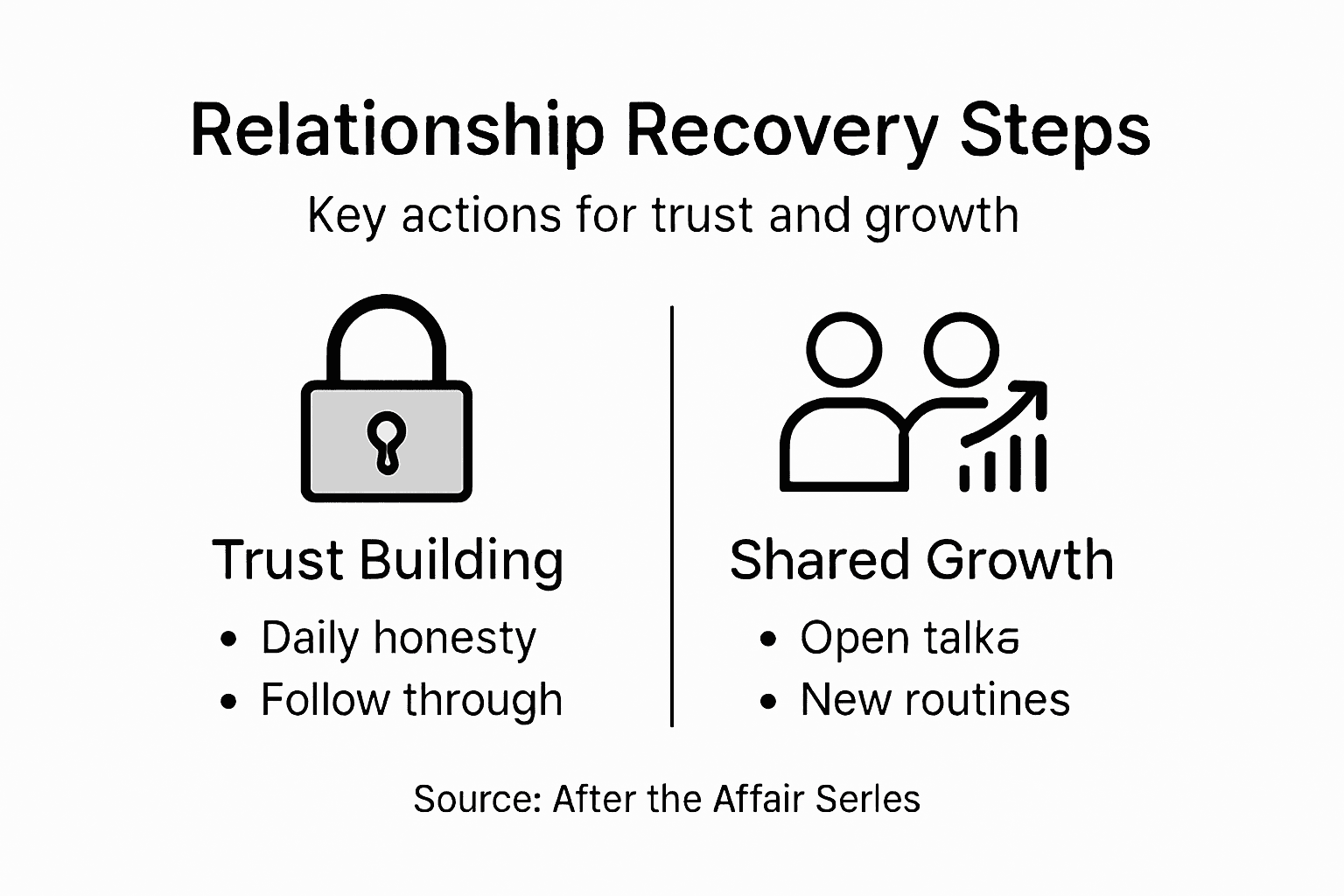
| Focus Area | Trust Recovery | Shared Growth |
|---|---|---|
| Main Objective | Restore safety and reliability | Foster deeper connection |
| Core Activities | Keep commitments, be transparent | Pursue joint learning, set goals |
| Required Mindset | Patience and accountability | Curiosity and openness |
| Timeframe | Months to years for stability | Ongoing, lifelong process |
Start Rebuilding Your Relationship with Proven Recovery Strategies
Healing after infidelity means more than just forgiveness. It requires commitment, honest communication, accountability, and consistent effort to rebuild trust and foster shared growth. If you are struggling to find practical tools to navigate these challenges or want guidance on how to turn pain into transformative connection, you are not alone. Many couples face the hard realities of emotional wounds and the uncertainty about the future, but the right support can light the way forward.
Explore comprehensive resources on Recovery Strategies – After the Affair Series to understand key steps for rebuilding trust effectively. Learn about different Affair Types & Signs – After the Affair Series to deepen your awareness and approach healing with clarity. Visit our resource library now and take the next step toward restoring hope, connection, and a healthier relationship. Start your recovery journey today and invest in the future you both deserve.
Frequently Asked Questions
How can my partner and I assess our commitment to healing after infidelity?
To assess commitment, have an honest conversation about what healing means to each of you. Discuss individual goals, expectations, and specific actions you both are willing to take to rebuild the relationship.
What steps can we take to establish open and honest communication?
Schedule regular check-in sessions where you both can discuss feelings and needs without distractions. Use “I” statements, actively listen, and reflect back what you hear to create a safe space for dialogue.
How do we practice accountability and empathy in our actions?
The unfaithful partner should take full responsibility for their actions and demonstrate consistent transparency. The betrayed partner should also work on their empathy by recognizing the effort the unfaithful partner is making, which fosters healing.
What specific behaviors help rebuild trust after infidelity?
Rebuilding trust involves consistently following through on commitments, maintaining transparency, and being emotionally available. Aim to demonstrate these actions daily, as consistency is key to restoring safety and reliability.
How can we strengthen our connection while working on our relationship after infidelity?
Engage in personal development individually and explore shared growth opportunities together. Take classes, read relationship books, or pursue hobbies as a couple, reinforcing your commitment to each other’s growth and the relationship.
What are some signs that shared growth is occurring in our relationship?
Signs of shared growth include improved communication, increased emotional connection, and a greater sense of hope about the future. Celebrate these moments and make a habit of acknowledging progress quarterly to nurture positive change.
Recommended
- Rebuilding Trust Timeline – After the Affair Series
- Relationship Healing Process – After the Affair Series
- Rebuilding Trust After Cheating-5 Milestones Reconciliation
- How to Cope After Infidelity – After the Affair Series