Shame after betrayal doesn’t mean you failed. Research shows that intense shame is a neurobiological trauma response, not a character flaw. When trust shatters through infidelity, your brain’s threat detection system activates powerful survival mechanisms that generate overwhelming feelings you never asked for. This article explains why shame emerges after betrayal trauma, how it differs from guilt or jealousy, and practical steps to heal these painful emotions with compassion and understanding.
Table of Contents
- How Betrayal Trauma Creates And Fuels Shame
- The Role Of Self-Identity And Dissociation In Shame After Betrayal
- Differentiating Shame In Betrayal Trauma From Normal Guilt And Jealousy
- Practical Steps To Heal Shame In Betrayal Trauma
- Explore Expert Resources For Healing Betrayal Trauma
Key takeaways
| Point | Details |
|---|---|
| Shame stems from trauma | Brain systems create shame as a protective response to betrayal, involving the amygdala and prefrontal cortex. |
| Identity becomes fragmented | Betrayal trauma threatens core self-worth, triggering dissociation and deep questioning of judgment and value. |
| Trauma shame differs fundamentally | Unlike guilt or jealousy, trauma shame roots in past violation and persists through neurological triggers. |
| Validation reduces shame’s power | Normalizing trauma responses helps break cycles of self-blame and isolation. |
| Healing requires compassionate action | Therapy, self-compassion practices, and mindfulness effectively address trauma-related shame. |
How betrayal trauma creates and fuels shame
Your brain doesn’t distinguish between physical and emotional threats when betrayal occurs. Betrayal trauma triggers activate neurological alarm systems that detect reminders of original infidelity, flooding you with intense emotional and physical reactions. The amygdala, your brain’s threat detector, responds to betrayal with the same intensity as life-threatening danger.
This neurobiological response involves both amygdala and prefrontal cortex dysfunction, creating a perfect storm for shame. Your prefrontal cortex, responsible for emotional regulation and rational thinking, becomes overwhelmed during trauma. When this executive function area struggles, you lose capacity to manage feelings effectively, allowing shame to spiral unchecked.
Trauma triggers feel like present dangers even though they reference past events. A text notification, certain music, or specific locations can instantly transport you back to discovery moments, reactivating the full trauma response. Your body doesn’t recognize these as memories but experiences them as current threats requiring immediate reaction.
“The brain’s protective mechanisms during betrayal trauma can manifest as physical symptoms including sleep disturbances, chronic fatigue, digestive problems, and heightened startle responses that persist long after the initial discovery.”
Physical symptoms accompany this neurological chaos. Sleep problems plague many who experience betrayal trauma, while others report persistent fatigue despite adequate rest. Digestive issues commonly emerge as your gut responds to chronic stress signals. These aren’t weakness but evidence of how deeply betrayal affects brain function.
Understanding shame as a natural trauma response, not personal failure, fundamentally shifts your healing journey. Your brain created these feelings to protect you, even if the protection feels punishing now.
Common neurobiological shame symptoms include:
- Hypervigilance and constant scanning for threat signals
- Difficulty concentrating or making decisions
- Memory problems, particularly around trauma events
- Emotional numbness alternating with overwhelming feelings
- Physical tension, headaches, or muscle pain
- Intense fear responses to minor triggers
The role of self-identity and dissociation in shame after betrayal
Betrayal trauma fractures your sense of self in ways few other experiences can match. Betrayal trauma theory emphasizes dissociation as preservation of attachment, where your mind splits awareness to maintain connection with someone who simultaneously provides safety and danger. This protective mechanism, while preserving relationships, creates profound identity confusion that feeds shame.
You likely question everything you thought you knew about yourself. Am I attractive enough? Did I miss obvious signs? How could my judgment fail so completely? Betrayed partners frequently struggle with self-worth, attractiveness, and sexual self-concept as trauma challenges core beliefs about personal value.
Shame cycles intensify when you blame yourself for not detecting infidelity earlier. This self-criticism ignores how deliberately affairs hide, focusing instead on perceived personal failures. You may feel foolish, naive, or inadequate, emotions that trauma amplifies beyond proportion.
Attachment behaviors shift dramatically after betrayal. Some develop anxious attachment, constantly seeking reassurance and fearing abandonment. Others adopt avoidant patterns, protecting themselves through emotional distance. Both responses emerge from trauma, not character flaws, as your nervous system recalibrates around violated trust.
Pro Tip: When identity questions overwhelm you, remember that confusion about self-worth represents normal trauma processing, not accurate assessment of your value or judgment.
Recognizing how betrayal trauma symptoms include identity disruption helps separate trauma effects from true self. Your fundamental worth remains unchanged, even as trauma temporarily clouds perception. The person you were before betrayal still exists beneath protective responses.
Identity reconstruction involves:
- Acknowledging trauma’s impact without claiming it as permanent identity
- Separating partner’s choices from your inherent value
- Recognizing protective behaviors as temporary adaptations
- Rebuilding self-esteem through compassionate self-assessment
Differentiating shame in betrayal trauma from normal guilt and jealousy
Many confuse trauma shame with other relational emotions, but critical differences exist. Triggers fundamentally differ from ordinary relationship jealousy or insecurity because they activate past trauma rather than present concerns. Jealousy anticipates potential threats, while trauma shame responds to violations already experienced.
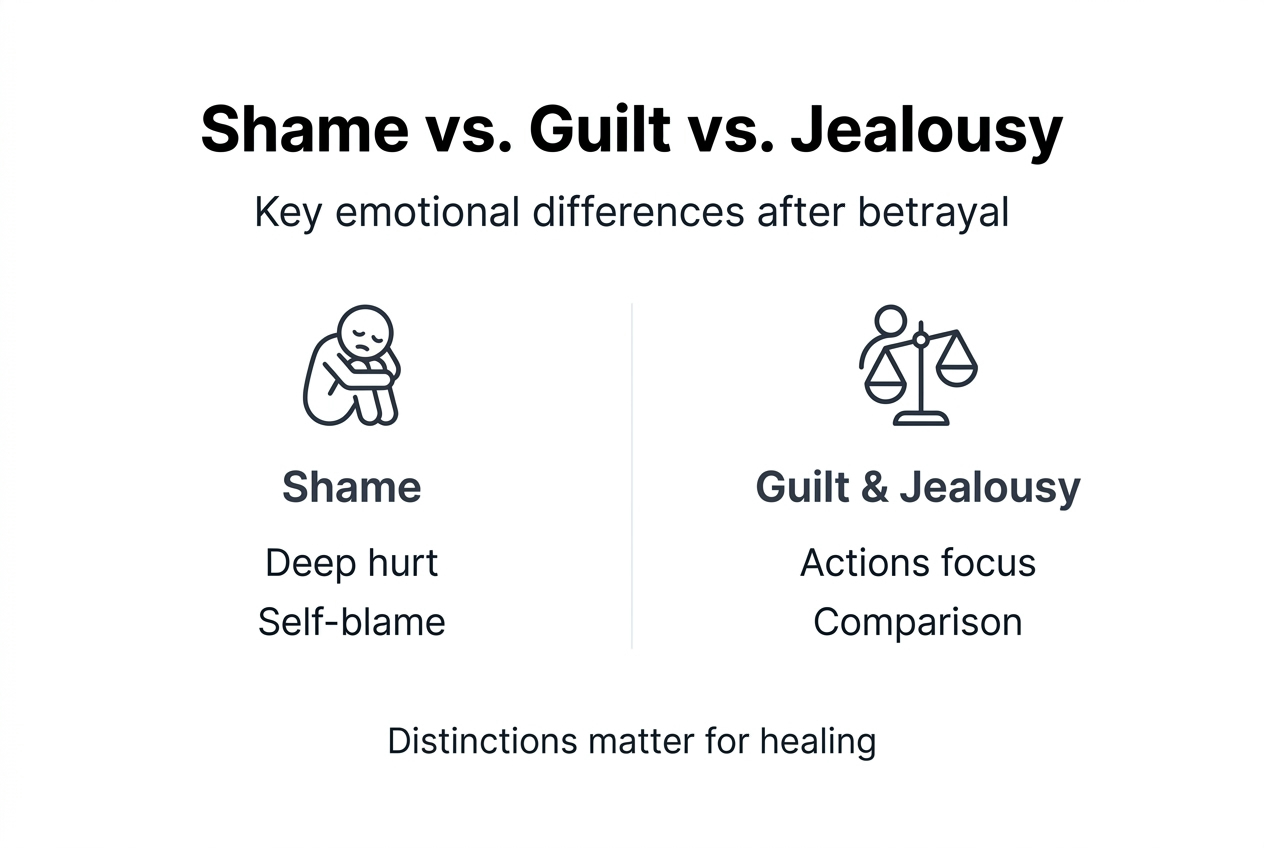
Understanding these distinctions empowers you to respond appropriately. When you recognize trauma shame versus temporary guilt, you can apply targeted coping strategies rather than general relationship advice that doesn’t address neurological trauma responses.
| Emotion | Primary Cause | Duration | Core Impact | Common Triggers |
|---|---|---|---|---|
| Trauma Shame | Past betrayal violation, brain trauma response | Persistent, cyclical | Erodes self-worth, threatens identity | Reminders of infidelity, attachment cues |
| Guilt | Specific actions you took | Temporary, resolves with amends | Motivates behavior change | Conscience about own choices |
| Jealousy | Perceived threats to relationship | Situational | Creates insecurity about partner | Partner interactions with others |
Trauma shame carries unique characteristics that set it apart. It persists despite logic or reassurance, rooted in neurological patterns rather than current circumstances. You might recognize intellectually that you hold no fault, yet shame persists because trauma lives in body and brain, not rational mind.
Common misunderstandings about trauma shame include:
- Believing time alone heals trauma-based shame
- Thinking positive thinking can override neurological responses
- Assuming shame intensity reflects actual fault or failure
- Expecting shame to respond to logical reassurance
- Confusing trauma reactions with personality weaknesses
Guilt motivates amends and behavior change, serving constructive purposes in relationships. Trauma shame, conversely, punishes you for violations you didn’t commit, serving no productive function. Recognizing this difference allows self-compassion rather than continued self-punishment.
Exploring betrayal trauma resources helps clarify these emotional distinctions. When you accurately identify what you’re experiencing, you can pursue healing strategies that actually address underlying trauma mechanisms.
Practical steps to heal shame in betrayal trauma
Healing trauma shame requires intentional, compassionate action rooted in understanding neurological responses. Normalizing the neurobiological response reduces shame by validating experience severity and removing self-blame. When you recognize your reactions as natural trauma responses, shame loses its grip.
Betrayal trauma creates feelings of shame, self-blame, and questioned self-worth in betrayed partners, but these responses can transform through targeted healing practices. Recovery doesn’t happen overnight, but consistent compassionate action creates measurable progress.
Therapy approaches focused on trauma and attachment provide structured healing frameworks. EMDR therapy helps reprocess traumatic memories, reducing their emotional charge. Attachment-focused therapy addresses relationship patterns emerging from betrayal. Trauma-informed counselors understand neurobiological responses, offering validation alongside practical tools.
- Validate your trauma responses by learning about betrayal’s neurobiological effects and recognizing symptoms as protective mechanisms, not weaknesses.
- Practice daily self-compassion through speaking to yourself as you would a close friend experiencing similar pain, countering self-blame with understanding.
- Engage somatic practices like deep breathing, progressive muscle relaxation, or gentle movement to calm your activated nervous system.
- Build a support network of people who understand betrayal trauma, whether through therapy groups, trusted friends, or online communities.
- Use grounding techniques when shame overwhelms, focusing on present moment sensory experiences to interrupt trauma spirals.
- Track patterns in a journal, noting what triggers shame and what helps, building awareness of your unique trauma responses.
- Pursue evidence-based coping strategies that address both emotional and physical trauma symptoms systematically.
Pro Tip: Start each day with a brief mindfulness practice, even just three minutes of focused breathing, to strengthen your capacity for emotional regulation throughout the day.
Rebuilding self-esteem involves consistently choosing self-compassion over self-criticism. Each time you notice shame arising, pause and acknowledge it as a trauma response rather than truth about your worth. This simple recognition interrupts automatic shame spirals.
Consider following an infidelity recovery checklist that provides structured steps through healing stages. Structure reduces overwhelm when trauma makes everything feel chaotic and unmanageable.
Explore expert resources for healing betrayal trauma
Recovery from betrayal trauma shame requires more than understanding alone. The After the Affair Series offers expert-compiled guides specifically designed for individuals navigating the complex terrain of infidelity recovery. These resources translate trauma research into practical, compassionate frameworks you can apply at your own pace.

Our infidelity recovery checklist provides step-by-step guidance through healing phases, addressing both emotional and practical recovery aspects. When shame feels overwhelming, structured approaches help you move forward even when motivation falters. Explore proven strategies for relationship growth after infidelity that address trauma’s impact on connection and trust rebuilding. The healing together guide offers couples-focused approaches when you’re ready to work on relationship repair alongside individual healing.
Frequently asked questions
What is betrayal trauma shame and why does it feel so overwhelming?
Betrayal trauma shame arises from profound violation of trust combined with intense neurobiological responses in the amygdala and prefrontal cortex. This creates overwhelming feelings because your brain processes betrayal as a survival threat, activating the same systems that respond to physical danger. The intensity reflects trauma severity, not personal weakness.
How can I tell if my feelings are trauma shame or regular guilt?
Trauma shame links directly to past betrayal triggers and involves deep self-blame for violations you didn’t commit, persisting despite logic or time. Regular guilt relates to specific actions you took, motivates behavior change, and typically resolves when you make amends. Trauma shame punishes you for someone else’s choices, while guilt addresses your own.
What practical steps can reduce shame after betrayal trauma?
Start by normalizing your feelings as natural trauma responses rather than personal failures. Seek trauma-informed therapy that addresses neurobiological impacts, practice daily self-compassion exercises, and use mindfulness or journaling to manage triggers. Building a support network of people who understand betrayal trauma provides essential validation during recovery.
Is it possible to rebuild self-worth after experiencing betrayal trauma?
Yes, many people successfully rebuild and even strengthen self-worth after betrayal trauma through consistent therapy, support, and personal growth practices. Recovery often leads to deeper self-understanding, stronger boundaries, and healthier relationships than existed before trauma. The journey requires patience and compassion, but personal growth after betrayal is not only possible but common among those who pursue intentional healing.
Recommended
- 7 Key Benefits of Therapy – After the Affair Series
- Betrayal Trauma Symptoms – After the Affair Series
- How to Cope After Infidelity – After the Affair Series
- Relationship Healing Process – After the Affair Series