TL;DR:
- Harassment includes repeated unwanted contact, threats, stalking, or sabotage from affair partners.
- Establishing clear, enforced boundaries and documenting incidents are essential legal and emotional protections.
- Support from specialized therapy, trusted contacts, and trauma-informed care aid recovery from ongoing harassment.
Ending an affair does not automatically end the chaos around it. For many people recovering from infidelity, the affair partner continues making contact, sending threatening messages, or attempting to derail the healing process in ways that feel impossible to ignore. This pattern is far more common than most guides acknowledge, and it creates a second layer of trauma on top of the original betrayal. Whether you are trying to rebuild your relationship or simply move forward alone, dealing with unwanted attention from an affair partner is a real, urgent problem. This article covers what harassment looks like, how to protect yourself legally and emotionally, and what steps you can take right now.
Key Takeaways
| Point | Details |
|---|---|
| Harassment is serious | Persistent unwanted contact from an affair partner can deeply impact emotional recovery and safety. |
| Know your options | Legal protection such as restraining orders is available if harassment meets certain criteria. |
| Set firm boundaries | Clear boundaries and immediate documentation of harassment are your best frontline defenses. |
| Prioritize emotional recovery | Coping strategies and professional support are essential to reclaiming mental wellbeing post-harassment. |
Recognizing forms of harassment and their impact
Not every uncomfortable interaction counts as harassment in a legal sense, but many behaviors cross a clear line. Understanding what qualifies matters because it shapes the actions you can take and the help you can request.
Harassment from an affair partner typically looks like one or more of the following:
- Repeated texts, calls, or emails after being asked to stop
- Showing up at your home, workplace, or social events without invitation
- Threats to expose the affair to your family, employer, or friends
- Attempting to contact you through mutual friends or shared social media accounts
- Sending messages designed to create guilt, confusion, or emotional dependency
- Deliberately trying to undermine your relationship or therapy process
The distinction that matters most is this: one or two messages after a breakup, even an affair, may feel uncomfortable but do not always meet the legal threshold for harassment. What tips the scale is repetition, intent to intimidate, and refusal to stop after a clear request.
“Harassment after an affair can include repeated messages, threats, or attempts to manipulate your recovery.”
The emotional fallout from this kind of contact is significant. Post-infidelity stress is already a recognized pattern of symptoms similar to post-traumatic stress disorder, and ongoing harassment amplifies every one of them. Anxiety spikes every time your phone buzzes. Hypervigilance, the state of being constantly alert for danger, becomes exhausting. Guilt can be weaponized if the affair partner knows how to push your buttons.
Why does this happen? Affair partners sometimes struggle to accept that the relationship is over. In other cases, they use contact as leverage to prevent exposure or extract concessions. Either way, the impact on your healing is real and serious. Recognizing these examples of effective boundaries early helps you respond with clarity rather than panic. Early action matters because patterns of harassment tend to escalate rather than fade on their own when left unaddressed.
Establishing and enforcing boundaries
Once you recognize what is happening, the most powerful tool you have is a clearly enforced boundary. This is not just emotional advice. It is a practical and legal foundation for everything that follows.
Here is a step-by-step approach to setting and maintaining contact limits:
- Decide your position clearly. Decide whether you want zero contact or strictly limited contact, and commit to that decision before communicating it.
- Send one clear message. State your boundary once, in writing, without negotiation or lengthy explanation. Short is better.
- Block on all platforms. After sending that message, block the person on every channel: phone, email, social media, and any apps you share.
- Manage mutual connections. Ask close friends or family not to relay messages. Make clear that indirect contact is still contact.
- Document every attempt to reach you. Even after blocking, keep records of any attempts that get through.
- Do not respond. Responding to boundary violations, even to say “stop,” can reset the cycle and signal that persistence works.
Pro Tip: Your one clear message does not need to be long or emotional. Something like: “I am not willing to have further contact. Please do not reach out to me again.” That is enough. Anything more gives the other person material to argue with.
Setting effective boundaries is harder when the affair partner has information that feels threatening. In those cases, it helps to consult a therapist before sending any message, so that you feel grounded and prepared for possible reactions.
Social media deserves special attention. Shared followers or mutual friends can become pathways for unwanted contact. Social media boundaries after a digital affair, in particular, require deliberate attention to privacy settings, follower lists, and what you share publicly during recovery.
Building trust with boundaries is also essential if you are trying to repair a relationship with your partner. Clear, enforced limits with the affair partner show your partner that the situation is being taken seriously, which supports rebuilding trust.
Critically, “boundaries are critical for mental wellbeing after ending an affair” and should be treated as non-negotiable from the start, not as something you get around to eventually.
Understanding your legal rights and protective actions
When boundaries are ignored, legal tools exist to back them up. Understanding your rights removes the feeling of helplessness that harassment is designed to create.
First, a common misconception: you cannot sue an affair partner simply for having the affair. Most U.S. states have abolished “heart balm torts,” which were old laws that allowed lawsuits for alienation of affection or criminal conversation. However, “you may be eligible for restraining orders or protection under anti-stalking laws if harassment occurs.” That is a meaningful legal avenue, and many people do not realize it applies to them.
Here is a comparison of your main response options:
| Response type | When to use it | What it does |
|---|---|---|
| Cease-and-desist letter | Early escalation | Formal written warning, often from a lawyer |
| Police report | Threats or repeated contact | Creates an official record of incidents |
| Restraining order | Ongoing or escalating harassment | Legally bans contact, enforceable by arrest |
| Civil harassment lawsuit | Extreme, documented cases | Seeks damages for emotional distress caused |
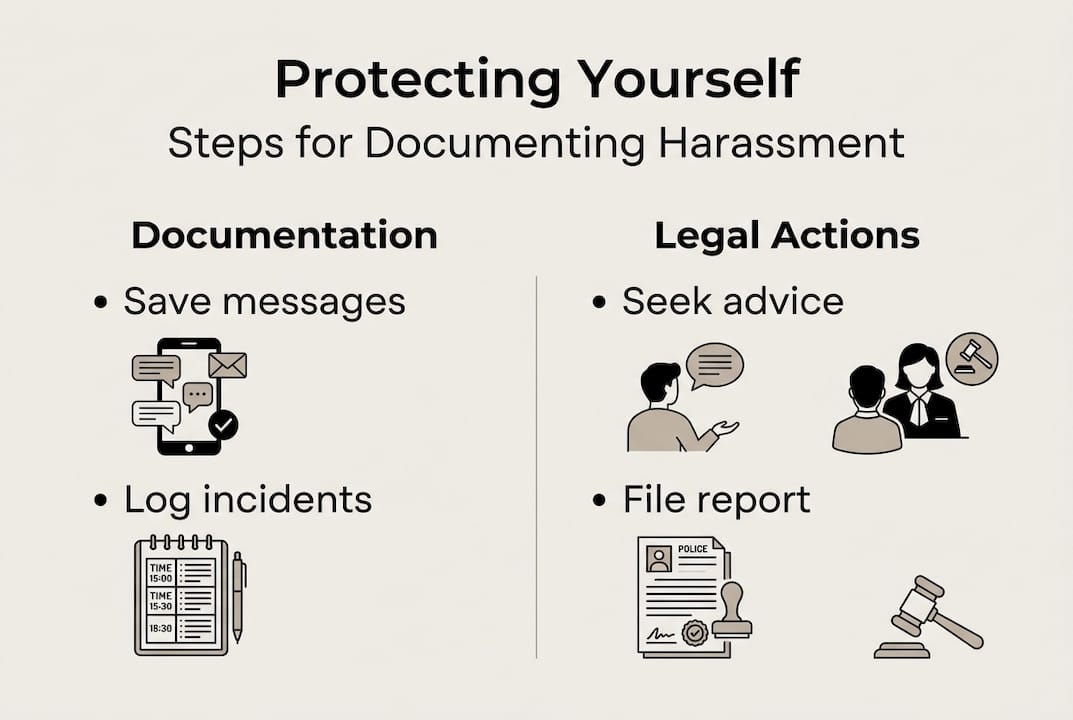
Documentation is your most important asset throughout this process. Save every message, screenshot every post, log dates and times of phone calls, and write brief notes after any in-person incident. Store copies somewhere the affair partner cannot access, such as a cloud account they do not know about.
If you are not sure whether a situation rises to the legal threshold, a single consultation with a family law or civil attorney is often enough to clarify your options. Many offer free initial consultations. Knowing when to seek help when the affair partner won’t leave the situation alone is not weakness. It is strategy.
Emotional coping strategies and recovery tools
Legal boundaries protect your safety, but they do not automatically heal the emotional wounds that harassment creates. Recovery requires deliberate, consistent emotional care alongside practical protective steps.
Start with these daily practices:
- Grounding exercises: When anxiety peaks, focus on five things you can see, four you can touch, three you can hear. This simple technique interrupts the stress response.
- Structured routines: Predictable daily schedules reduce the sense of chaos that harassment thrives on. Regular sleep, meals, and movement are not luxuries. They are tools.
- Safe support networks: Identify two or three people you can contact when you feel overwhelmed. Be specific about who they are before you need them.
- Limit exposure: Avoid checking blocked accounts or searching the affair partner online. Curiosity can restart the cycle of distress.
Pro Tip: Keep a dedicated journal for processing emotions related to the harassment. Each entry can follow a simple format: What happened, how it made you feel, what you did in response, and one thing that helped. Over time, this log also becomes useful evidence if legal action becomes necessary.
The table below outlines practical recovery resources:
| Resource | Type | Best for |
|---|---|---|
| Individual therapy | Professional support | Processing trauma and building coping skills |
| Crisis text line | Immediate help | High-distress moments, available 24/7 |
| Peer support groups | Community connection | Reducing isolation and shame |
| Journaling apps | Self-guided | Daily emotional tracking and reflection |
| Infidelity recovery books | Structured guidance | Working through stages of healing independently |
“Harassment can cause significant emotional distress but there are effective coping tools” that can restore stability and forward momentum. Seeking therapy options that specialize in betrayal trauma is especially valuable because a general therapist may not fully understand how affair-related harassment operates psychologically.
Self-forgiveness also matters here. If you feel responsible for inviting this situation, you need to understand that harassment is a choice made by the other person, not a consequence you earned. Emotional recovery is not linear. Some weeks feel like progress. Others feel like setbacks. Both are part of the same process, and coping with infidelity stress takes time even when everything is going right.
A trauma-informed approach: What most advice misses
Most guides tell you to block, document, and move on. That advice is accurate but incomplete. What it misses is the compounding nature of betrayal trauma when harassment layers on top of the original wound.
When an affair partner continues making contact, it is not just annoying. It reactivates the original trauma repeatedly, preventing your nervous system from returning to baseline. You are not being dramatic. You are responding exactly as a person under sustained psychological pressure would respond.
The “just move on” narrative also underestimates the social complexity. Shared workplaces, mutual friends, and coparenting situations make complete no-contact sometimes impossible. In those cases, healing demands a more nuanced plan than a simple block list.
What actually works is approaching your situation as a trauma survivor, not just a person dealing with a difficult ex. That means seeking support from someone who understands healing post-infidelity trauma specifically, not just general life stress. It means validating your own reactions instead of minimizing them. And it means recognizing that full recovery is possible, but it requires more patience and specialized care than most people expect.
Your reaction to this situation is not a sign of weakness. It is a sign that you are human, and that something genuinely harmful happened to you.
Find more guidance and healing resources
If you are navigating harassment from an affair partner, you do not need to figure it out alone or rebuild without a roadmap.
At After the Affair, we offer structured, compassionate tools built specifically for people in your situation. The infidelity recovery checklist gives you a clear, step-by-step framework for the early stages of healing. If you want to understand where you are in the process, exploring the stages of healing can help you make sense of your experience. For those focused on long-term rebuilding, our relationship growth resources offer practical guidance for moving forward with strength and intention. Your next step is simply to take one.
Frequently asked questions
What types of behavior from an affair partner count as harassment?
Harassment includes repeated unwanted contact, threats, blackmail, stalking, or attempts to sabotage your recovery. Repeated messages and threats qualify even when they appear to be emotional rather than overtly threatening.
Can I sue the affair partner for harassment after the affair?
You cannot sue for the affair alone in most U.S. jurisdictions, but documented harassment that causes extreme distress may qualify for civil or criminal action depending on your state.
How should I document harassment for legal action?
Save all communications, take screenshots, and log every incident with dates, times, and brief descriptions. Documentation is essential for any civil or legal steps you decide to take later.
What emotional support is most effective during harassment recovery?
Specialized therapy, trusted friends or family, and structured grounding exercises are among the most effective tools. Emotional support through therapy accelerates recovery especially when the therapist understands betrayal trauma specifically.
Recommended
- How to heal when the affair partner won’t leave: 5 steps – After the Affair Series
- Online Affair Recovery for Couples – After the Affair Series
- Emotional Affair Recovery – After the Affair Series
- Steps for Healing After Betrayal – After the Affair Series