Table of Contents
Last Updated: September 15, 2026
Why Your Routine Falls Apart After Divorce (and What to Do First)
Maintaining a consistent routine after divorce starts with a hard truth: the structure you built over years was designed for one household and no longer fits. Parents often try to run the old schedule in a new reality, and it collapses.
The emotional weight of a transition period makes simple tasks feel heavy. Parents describe forgetting lunches or permission slips, not from carelessness but cognitive overload (pubmed.ncbi.nlm.nih.gov). That is normal and temporary.
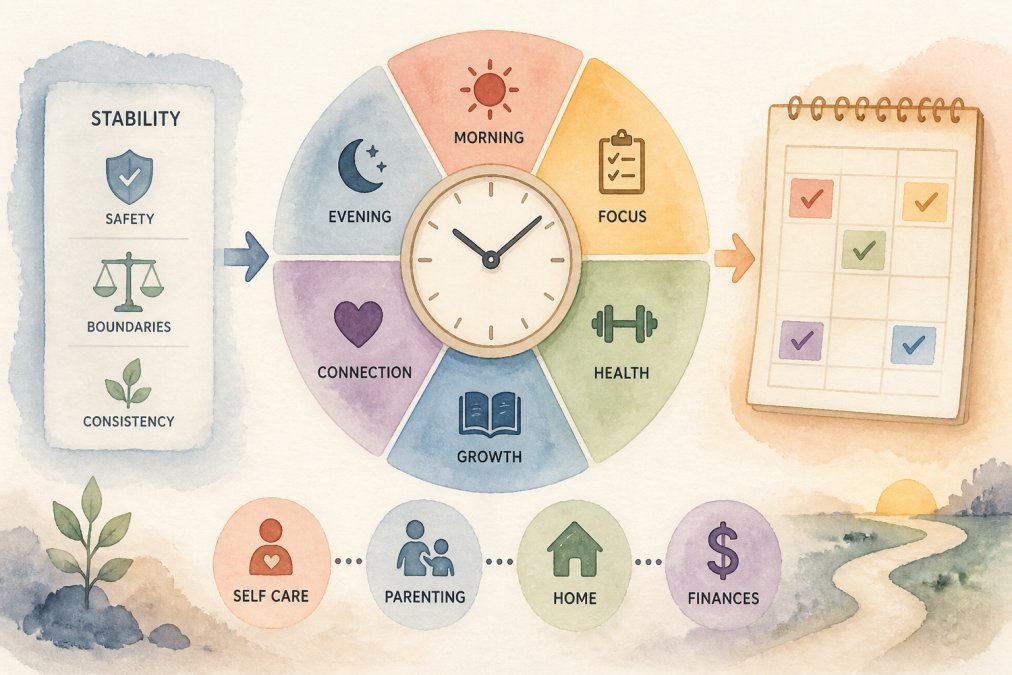
What matters most in the first month is predictability, not perfection. Children adjust better when they can anticipate what happens next, even if the schedule looks different (pubmed.ncbi.nlm.nih.gov). Write down three anchors, wake time, dinner time, bedtime, protect those, and let everything else flex.
A common mistake is rebuilding the entire week at once. Pick one anchor, hold it for seven days, then add the next. Parents who layer changes slowly report far less resistance from kids than those who overhaul everything overnight.
Build a Daily Schedule That Works in Both Households
A daily schedule that works across two homes shares four non-negotiables: consistent wake times, predictable meal times, a fixed homework window, and the same bedtime rituals. Everything else can differ. The hard part is keeping them synchronized across two households.
Most guides stop at “communicate well,” which fails the moment a practice moves or a fever hits. What holds a two-household routine together is a shared system, not shared goodwill.
The coordination layer: shared calendars and communication tools
Before you build the routine, build the infrastructure. Three tools cover almost every situation:
- A shared digital calendar (Google Calendar, Apple Calendar, or Cozi) with both parents as editors. Every practice, appointment, early dismissal, and handoff goes on it the moment it is scheduled. Color-code by child if you have more than one.
- A dedicated co-parenting communication app (OurFamilyWizard, TalkingParents, or AppClose) for messages, expense tracking, and a timestamped record. Courts and mediators recognize these logs; a text thread does not carry the same weight (uscourts.gov).
- A shared document for the routine itself: wake time, breakfast expectations, screen-time limits, homework window, bedtime ritual, and medication or allergy notes. Both households edit the same file, so there is one source of truth.
A common pattern: parents agree verbally, then discover three weeks in that each household has quietly drifted. The calendar catches the drift before it becomes a fight.
Morning and bedtime rituals that create predictability
Morning rituals reduce friction. A visual checklist by the door, even for older kids, cuts repeated reminders. Keep the sequence identical in both homes, same order, same cues, so the child does not relearn the morning at every switch.
Bedtime rituals matter just as much. Reading the same two books, dimming lights at the same hour, or a short debrief gives children security that carries across homes. If one parent works evenings, a phone call at the same time each night works. Consistency is the point, not the format.
Age-specific adjustments for younger and older children
The same routine does not fit a four-year-old and a fifteen-year-old. Adjust to the developmental stage:
- Toddlers and preschoolers (ages 2-5): They cannot hold a verbal plan, so the routine must be visible. Picture schedules, photos of brushing teeth, eating breakfast, putting on shoes, work because the child can point to the next step. Warn them two minutes before a change. Handoffs are hardest here; a comfort object that travels between homes reduces the sting.
- School-age children (ages 6-12): They can follow a plan but still need structure imposed. A printed weekly chart on the fridge with checkboxes for homework, chores, and reading gives them control without asking them to manage themselves. Extracurriculars multiply at this age, so the shared calendar becomes non-negotiable.
- Teens (ages 13-18): They need autonomy inside the structure. Offer a choice on homework time, right after school or after a 30-minute break. Negotiate bedtime but hold the line on wake time, since school start times are fixed. Teens respond better to routines they helped design. They also resent being treated as a message between parents, so route logistics through the app.
Do not assume the other household will replicate your routine exactly. Expecting identical schedules creates conflict and sets kids up to fail. Aim for compatible, not cloned. The four non-negotiables stay fixed; the details around them can flex.
Handoff logistics: the part nobody plans for
Handoffs are where routines break. A few practices reduce friction:
- Fixed time and place. “Friday at 5:00 PM at the school parking lot” beats “Friday evening, we’ll figure it out.” Predictability for the child beats convenience for the adults.
- A written handoff note. What the child ate, how they slept, any medication given, any behavior worth flagging. A shared note takes 60 seconds and prevents the “you never told me” loop.
- Neutral territory when possible. School, a grandparent’s house, or a public lot reduces the emotional charge. If conflict is high, avoid the front door.
- A consistent goodbye ritual. The same phrase, hug, and wave signal to children that the transition is safe and temporary.
With the coordination layer in place, the routine stops depending on two people remembering the same thing at once. It depends on a system, and systems survive bad weeks.
Co-Parenting Schedule Templates: A Shared Framework for Two Homes
A co-parenting schedule template is a written document defining custody rotation, handoff times, and routine expectations for both households. It removes daily negotiation from the equation.
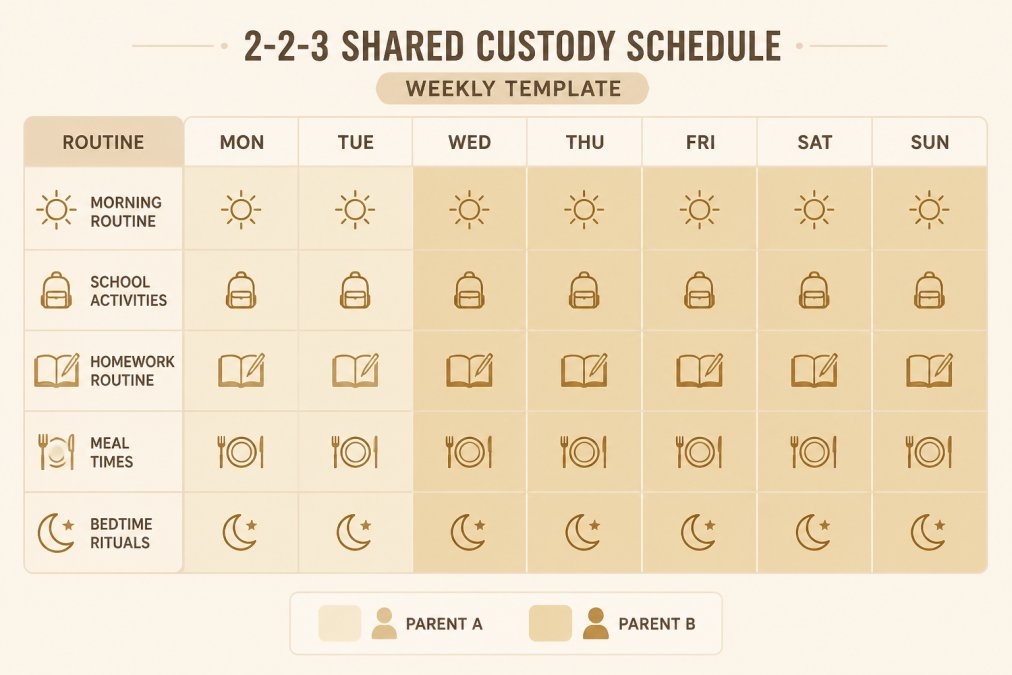
The 2-2-3 rotation (two days with one parent, two with the other, then three) suits younger children because no stretch away feels long. Week-on, week-off works better for school-age kids who need longer settling periods. Whatever you choose, put it in writing and share it with teachers and caregivers.
| Schedule Type | Best For | Rotation Pattern | Handoff Frequency |
|---|---|---|---|
| 2-2-3 | Younger children | 2 days, 2 days, 3 days | High |
| Week on/off | School-age children | 7 days each | Low |
| 3-4-4-3 | Teens | Alternating mid-week | Moderate |
| 5-2-2-5 | Minimal disruption | Weekdays split | Moderate |
How to Manage High-Conflict Co-Parenting Without Losing Your Routine
Managing high-conflict co-parenting without losing your routine requires one shift: treat every message as a transaction, not a conversation.
Gray Rock communication and written handoff protocols
The Gray Rock Method means responding with brief, neutral, factual statements that give a hostile ex nothing to react to. You are removing fuel, not being cold. Pair it with a written handoff protocol: all schedule changes confirmed in writing, all pickups and drop-offs logged, no verbal agreements.
A simple template you can copy:
“Confirming pickup Friday at 5:00 PM at [location]. Please reply yes to confirm. Any change must be sent in writing by Thursday noon.”
Short, dated, specific. No emotion, no explanation, no room for argument. The structure reads as professional, not robotic, and creates a written record that protects you.
High-conflict communication improves when you stop trying to be understood and start trying to be documented. Neutral, written, and brief beats persuasive every time.
Divorce Recovery Tools That Protect Your Emotional Well-Being
The routines that hold your household together depend on you being functional. Divorce recovery tools are maintenance, not luxuries.
Practical options parents find useful:
Rebuilding Your Own Healthy Habits While Holding the Routine Together
Why the parent’s routine is the child’s routine
- A concrete parent self-care system (not a list of bubble baths)
- The trade-off nobody names: you cannot do all of this at once
Your consistency is not a luxury you earn after the family is stable. It is the thing that makes the family stable. Treat your own routine as infrastructure, not as the reward at the end.

Frequently Asked Questions
Why is consistency important for children during and after a separation?
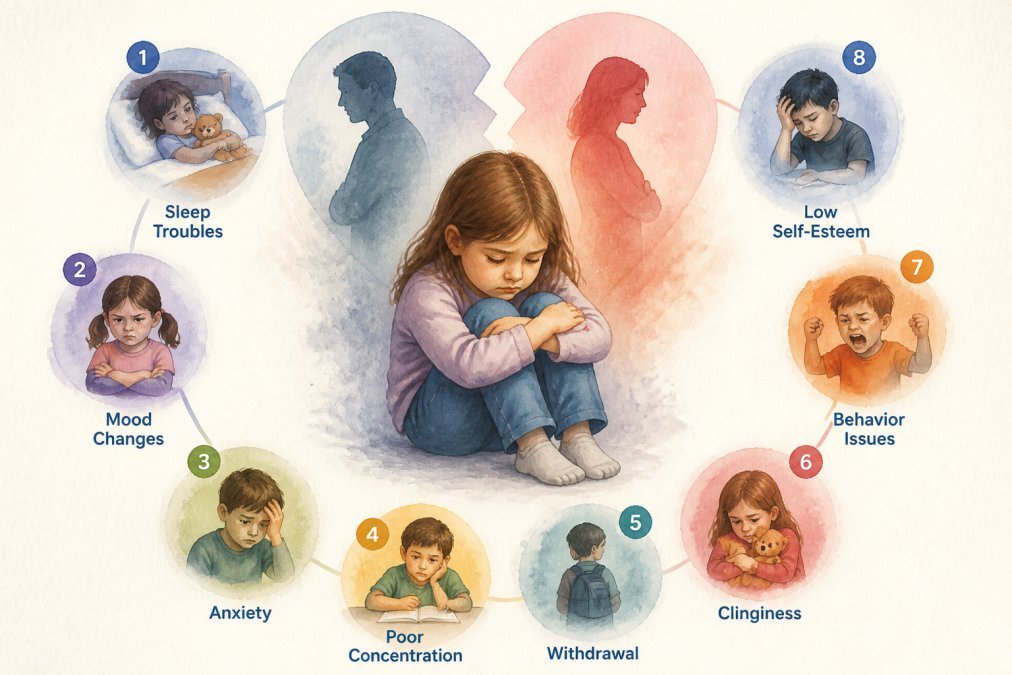
Children use routine to predict what happens next, and that predictability signals safety. When a divorce disrupts daily schedule patterns, kids often show regression, anxiety, or acting out. Keeping bedtime rituals, meal times, and homework routines consistent across both homes gives children emotional security even when the family structure has changed. The goal is not a perfect schedule; it is a reliable one they can count on from week to week.
How do co-parenting schedule templates help when my ex won’t cooperate?
Templates remove negotiation from every handoff. When both households follow the same written schedule, you stop re-litigating pickup times and start pointing to a document. Use a shared calendar app or a printed template posted in each home. If your ex refuses to engage, keep documenting your side in writing and follow the schedule you can control. Consistency on your end still gives your child stability, even if the other household is less predictable.
What are practical divorce recovery tools for rebuilding a routine when I feel overwhelmed?
Start with three anchors: a fixed wake time, one scheduled meal you eat without screens, and a 15-minute daily reset (walk, journal, or tidy one space). Add structure gradually rather than overhauling everything at once. Structured toolkits with scripts and checklists can be helpful. Track what you actually complete for two weeks, then adjust. Small, repeatable actions rebuild stability faster than ambitious plans.
How do I handle routine disruptions like illness, holidays, or a last-minute schedule change?
Expect disruptions and plan a return path. When the routine breaks, restart with the smallest unit: one bedtime, one morning, one meal. Tell your child out loud what is happening and when normal returns, which reduces anxiety. For holidays, agree in writing on which parent handles which days well before the date. If your ex cancels at the last minute, document it and keep your household’s routine intact. The routine’s value is in how quickly you return to it, not in never missing a day.