Last Updated: September 9, 2026
- How Betrayal Trauma Shows Up in Your Body
- The Mind-Body Connection: Why Your Nervous System Goes Into Overdrive
- Somatic Healing Exercises for Betrayal Trauma
- Managing High-Conflict Stress After Infidelity
- Self-Care Scripts for Betrayal Trauma Recovery
- Long-Term Health Risks and When to Seek Professional Support
- Your First 72 Hours: A Grounding Action Plan
- Conclusion: Reclaiming Physical Stability
- Frequently Asked Questions
How Betrayal Trauma Shows Up in Your Body
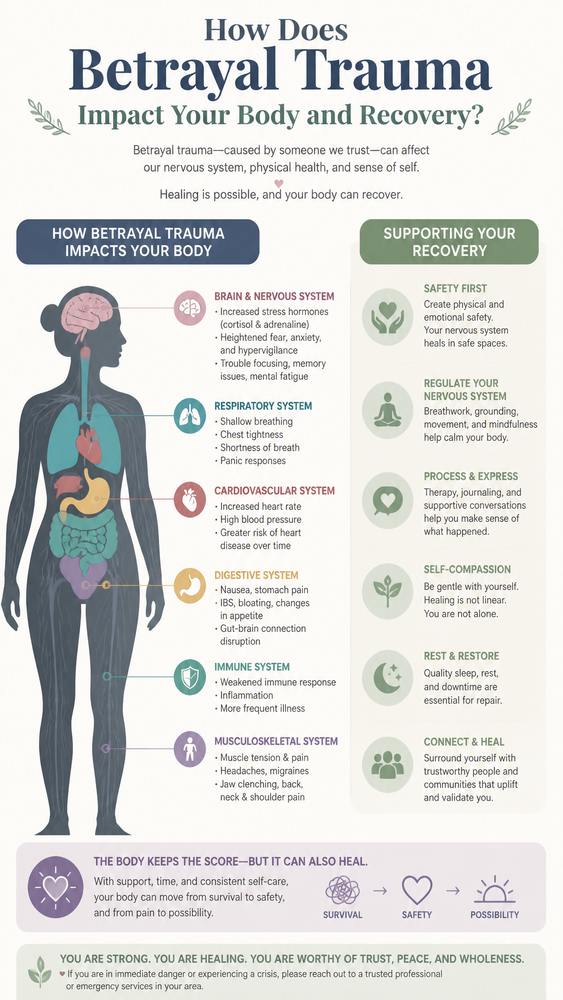
The discovery of infidelity is not just an emotional wound; it is a physiological event that rewires how your body responds to the world. Managing betrayal trauma and physical health requires understanding that symptoms like fatigue, chest tightness, and digestive disruption are real stress responses rooted in your biology. Betrayal trauma is the emotional and physical shock that occurs when a trusted attachment figure violates your safety, and it often triggers the same neural pathways as physical injury.
Most people expect the sadness and anger. What catches them off guard is the insomnia, the loss of appetite, or the sudden onset of headaches. These physical manifestations are your body’s way of signaling that it perceives an ongoing threat. Recognizing these signals as legitimate trauma responses, rather than personal weakness, is the critical first step toward reclaiming stability.
Below, we walk through the specific mechanisms driving these symptoms and provide a practical, step-by-step plan for the first 72 hours and beyond.
The Mind-Body Connection: Why Your Nervous System Goes Into Overdrive
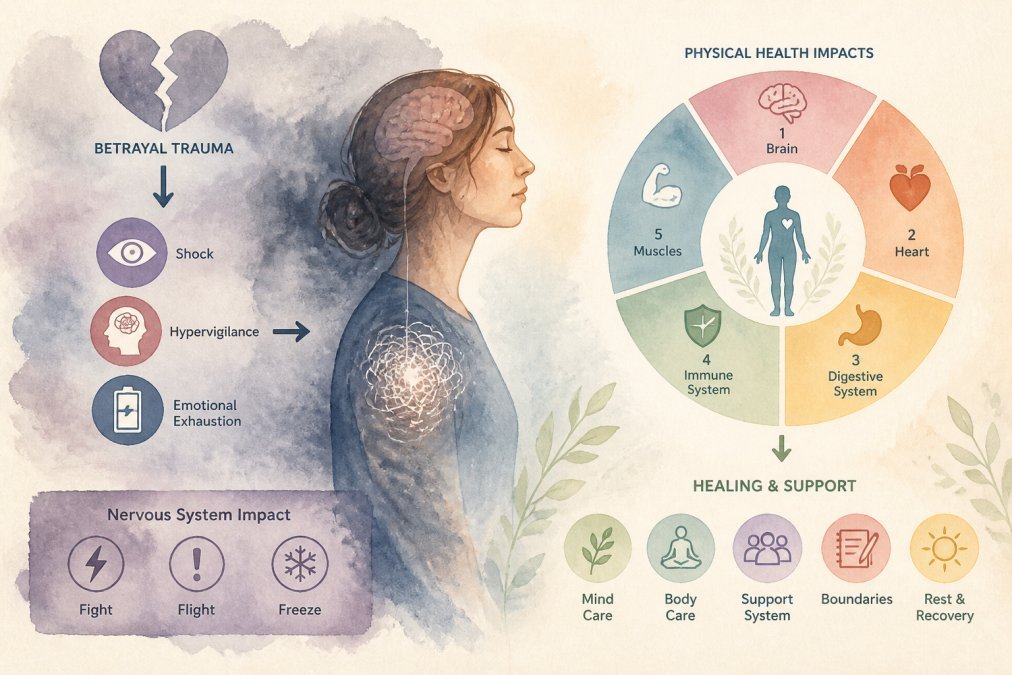
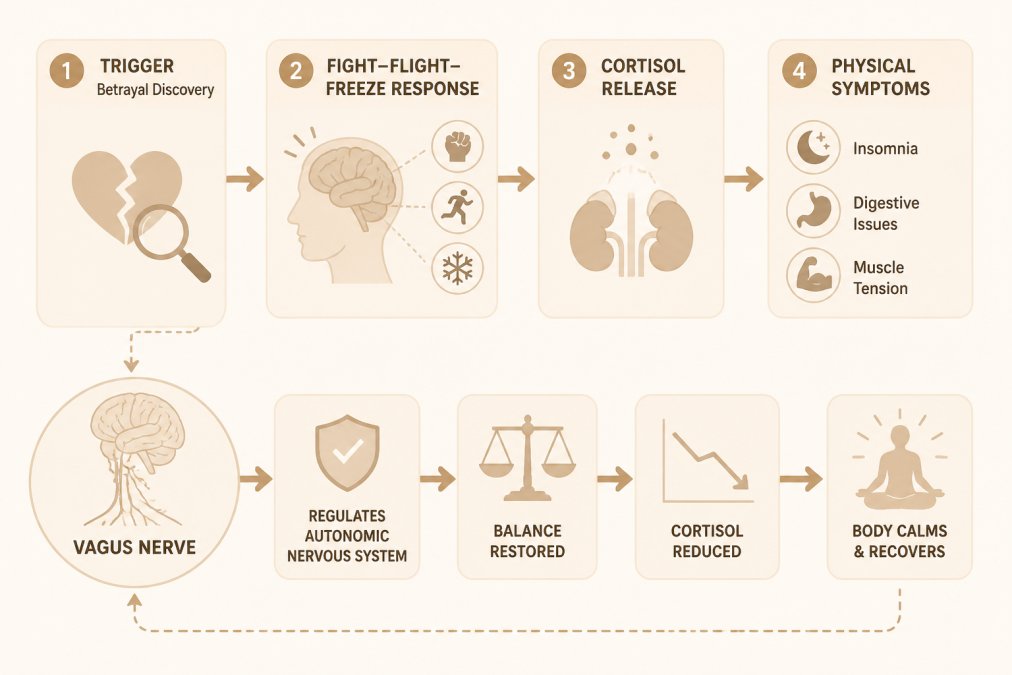
Your autonomic nervous system is the control center for this entire experience. When you discover betrayal, your brain perceives a threat to your social bonds, which it interprets as a threat to survival itself. This activates the sympathetic nervous system, flooding your body with cortisol and adrenaline (apa.org). According to guidance from the American Psychological Association on stress effects, this stress response, when prolonged, can disrupt nearly every bodily process, from sleep cycles to immune function.
The key to managing betrayal trauma and physical health lies in understanding this stress response is not a character flaw. It is a survival mechanism gone into overdrive. Polyvagal theory, developed by Dr. Stephen Porges, explains that our nervous system constantly scans for safety cues. When it detects none, it shifts into defense modes: fight, flight, or freeze. Your racing heart and hypervigilance are not signs you are “falling apart”; they are signs your nervous system believes you are under attack.
Recognizing Hyperarousal and Hypoarousal
Many people assume trauma looks like panic. In reality, it exists on a spectrum between two states: hyperarousal and hypoarousal.
Hyperarousal is the “fight or flight” state. You might experience racing thoughts, irritability, an inability to sit still, or a pounding heart. Sleep becomes elusive because your body refuses to lower its guard.
Hypoarousal is the “freeze” state. This is characterized by emotional numbness, profound fatigue, brain fog, and a feeling of dissociation, as if you are watching your life from a distance. You might feel disconnected from your body or struggle to find the energy to move.
Understanding which state you are in dictates your intervention. If you are hyperaroused, you need to slow down your heart rate. If you are hypoaroused, you need gentle stimulation to bring energy back into your system. Most guides miss this distinction, but it is the difference between a grounding technique that works and one that leaves you frustrated.
Somatic Healing Exercises for Betrayal Trauma
Talk therapy has its place, but betrayal trauma is stored in the body. Somatic healing exercises for betrayal focus on releasing trapped stress through physical awareness and movement, bypassing the analytical mind that often gets stuck in rumination. Here are four distinct, science-backed techniques you can deploy immediately, depending on whether you are in a state of hyperarousal (fight-or-flight) or hypoarousal (freeze).
1. Orienting: The Safety Scan
This exercise signals to your brain via the vagus nerve that the immediate environment is safe, helping to down-regulate the fight-flight-freeze response.
- Step 1: Pause and slowly turn your head to the left, then to the right, as if you are surveying a landscape.
- Step 2: Let your gaze soften. Do not stare or look for threats. Instead, let your eyes land on objects without judgment.
- Step 3: Name five objects you can see, four you can touch, three you can hear, two you can smell, and one you can taste. This 5-4-3-2-1 sequence is a classic grounding tool.
- Step 4: Notice any subtle shift in your body. Often, the shoulders drop slightly, or the jaw unclenches. This is your nervous system registering safety.
2. Pendulation: Titrating the Activation
Pendulation is a core technique in Somatic Experiencing, developed by Dr. Peter Levine. It involves moving your attention between a place of ‘activation’ (tension) and a place of ‘neutrality’ (groundedness) to teach your nervous system that it can oscillate between states without becoming overwhelmed.
- Step 1: Close your eyes and scan your body. Where is the tension most pronounced? It might be a tight chest, a knotted stomach, or a clenched jaw. This is your ‘activation zone.’
- Step 2: Now, find a part of your body that feels neutral or even pleasant. This could be the warmth of your feet on the floor, the weight of your hands resting on your thighs, or the sensation of your back against a chair. This is your ‘neutral zone.’
- Step 3: Spend 10 seconds focusing on the activation zone. Notice its shape, temperature, and intensity. Do not try to change it.
- Step 4: Deliberately shift your full attention to the neutral zone for 20 seconds. Let yourself feel the support there.
- Step 5: Repeat this cycle for 3-5 minutes. You are ‘pendulating’ between the two states, which helps your system learn that it can safely move in and out of distress without being flooded.
Willpower was never the problem
You’ve Said No Contact Before. What Made It Fail Last Time?
It usually isn’t willpower. It’s a loophole nobody accounted for, a second number, a mutual friend, a platform nobody thought to block. This free audit maps all 47 known workarounds so the boundary holds on its own, without relying on you to be strong enough every single time.
Get the Free Loophole Elimination Matrix ->47-point audit, instant download, free
3. The Physiological Sigh: A Rapid Reset for Hyperarousal
When you are in a state of panic or high anxiety, your heart rate is elevated and your breathing is shallow. The physiological sigh is a specific breathing pattern that is one of the fastest ways to stimulate the vagus nerve and lower heart rate. It is not a relaxation technique; it is a biological reset button.
- Step 1: Take two sharp, short inhales through your nose. The second inhale should be slightly smaller than the first.
- Step 2: Follow immediately with a long, slow, audible exhale through your mouth.
- Step 3: Repeat this cycle five times. You should feel a noticeable drop in your heart rate and muscle tension.
4. Neurogenic Tremoring: Releasing Stored Energy
When a threat is perceived, your body prepares for action. If you cannot fight or flee, that energy gets trapped in your nervous system. Neurogenic tremoring, sometimes called TRE (Tension & Trauma Releasing Exercises), is a method of intentionally inducing a shaking response in the body to release this pent-up stress.
- Step 1: Stand with your feet shoulder-width apart and gently bend your knees.
- Step 2: Let your arms hang loose at your sides.
- Step 3: Begin to gently bounce your knees, allowing the movement to become slightly more pronounced. Do not force it.
- Step 4: After about 30 seconds, you may notice a natural tremor or shaking in your legs, hips, or arms. This is your body’s way of discharging excess adrenaline and cortisol.
- Step 5: Allow the shaking to continue for 1-2 minutes. If it feels too intense, slow down or stop. The goal is not to exhaust yourself but to let the nervous system settle.
For hyperarousal, start with the physiological sigh or orienting. For hypoarousal (the ‘freeze’ state characterized by numbness and fatigue), neurogenic tremoring or a brisk 10-minute walk is often more effective because it introduces gentle stimulation to bring energy back into your system.
These exercises are not a substitute for professional therapy, but they are powerful tools for self-regulation. The key is to practice them when you are not in crisis so that they become accessible when you are. Over time, these somatic routines can help interrupt the cycle of rumination and physical tension, giving your body a direct path back to a state of safety.

Managing High-Conflict Stress After Infidelity
If you are co-parenting or still navigating logistics with the person who betrayed you, the stress is not just internal; it is external and recurring. Managing high-conflict stress after infidelity requires a different toolkit than internal regulation because you are dealing with an active trigger source.
The first rule is containment. Designate specific times and methods for communication, such as a shared email thread or a parenting app, and refuse to engage in real-time arguments via text or phone. This creates a boundary that limits the unpredictable exposure to hostility that keeps your stress response elevated.
The second rule is preparation. Before any necessary interaction, use a brief grounding exercise to center yourself. Decide in advance what you will and will not discuss. This is where structured communication tools, like the Gray Rock Method, become invaluable. By making your responses as uninteresting and neutral as possible, you deprive the conflict of the emotional fuel it needs to escalate, protecting your nervous system from repeated spikes in cortisol.
Do not attempt to have “closure” conversations in these high-conflict settings. Rehashing the betrayal with a hostile or unremorseful partner rarely provides the validation you seek and often triggers a new wave of emotional dysregulation. Save those conversations for a licensed therapist.
::: holistic healing practices.
Self-Care Scripts for Betrayal Trauma Recovery
When your mind is racing, you cannot always conjure a calming thought on demand. Self-care scripts for betrayal trauma recovery provide pre-written, structured internal dialogues that help interrupt the cycle of rumination and self-blame. They work because they bypass the overwhelmed decision-making part of your brain and give you a direct instruction to follow.
Here is a grounding script to use during acute moments of distress:
- Acknowledge the moment: “I am feeling overwhelmed right now. This feeling is a trauma response, not a reflection of my worth.”
- Regulate your breath: “I am going to take three slow breaths. In through my nose, out through my mouth.”
- Reconnect to the present: “I am safe in this moment. I am in [current location]. The betrayal happened in the past, and I am not in immediate danger.”
- Set an intention: “For the next five minutes, I will focus only on [a simple task]. I can process these emotions later when I feel more stable.”
Scripts are not about suppressing your feelings. They are about creating enough mental space to choose a response rather than being hijacked by a reaction. In the early weeks of recovery, repetition matters more than eloquence. Use the same script every time until it becomes an automatic circuit breaker for the stress response.
Reading this won’t change tomorrow’s message
You Know the Tactic Now. Do You Know What You’ll Actually Do When It Lands?
Understanding grey rock is not the same as doing it at 9pm when your phone buzzes. Most parents can explain the theory perfectly and still bite the bait every single time. The gap between the two is exactly what the free self-check measures.
Get Your Ex Out of Your Head ->5 scenarios, scored result, 4 minutes free
Long-Term Health Risks and When to Seek Professional Support
Ignoring the physical toll of betrayal trauma does not make it disappear; it often compounds the damage. The science is clear that chronic betrayal trauma creates a specific biochemical cascade that, if left unregulated, can lead to measurable long-term health consequences. Understanding these mechanisms is not meant to scare you; it is meant to validate that your physical symptoms are real and to motivate you to take them seriously.
The Biochemical Cascade: Cortisol, Adrenaline, and Inflammation
When you discover betrayal, your brain perceives a threat to your social bonds, which it interprets as a threat to survival. This activates the sympathetic nervous system, flooding your body with cortisol and adrenaline. In an acute situation, this is adaptive. But when the betrayal is ongoing, due to co-parenting, financial entanglements, or unresolved legal issues, your body remains in a state of chronic high alert.
This persistent elevation of cortisol has several downstream effects:
- Immune Suppression: Chronic cortisol suppresses the activity of natural killer cells and other immune components, making you more susceptible to infections and slowing wound healing.
- Cardiovascular Strain: Repeated spikes in adrenaline and cortisol increase heart rate and blood pressure, putting sustained strain on your cardiovascular system. Over time, this can contribute to the development of hypertension.
- Digestive Disruption: The stress response diverts blood flow away from the digestive tract, which can lead to irritable bowel syndrome (IBS), acid reflux, and altered gut motility.
- Chronic Inflammation: Prolonged stress keeps inflammatory markers like C-reactive protein (CRP) elevated. Low-grade, chronic inflammation is a precursor to a host of conditions, including autoimmune disorders, type 2 diabetes, and certain types of cardiovascular disease.
The Long-Term Picture: What the Research Suggests
While no single study can isolate betrayal trauma as a sole cause, the broader research on adverse childhood experiences (ACEs) and chronic stress provides a compelling framework. The landmark CDC-Kaiser Permanente ACE study demonstrated a strong dose-response relationship between the number of traumatic stressors and the risk of chronic diseases, including heart disease, cancer, and autoimmune conditions (the CDC). The mechanism is the same: prolonged activation of the stress response system leads to wear and tear on the body, a concept known as allostatic load.
In the context of betrayal trauma, the risk is compounded by the fact that the stressor is often ongoing. Unlike a single traumatic event, infidelity or a broken trust can involve months or years of hypervigilance, rumination, and repeated exposure to the betraying partner. This means the body is not getting the ‘all-clear’ signal it needs to down-regulate the stress response.
When to Seek Professional Support
It is critical to distinguish between normal recovery discomfort and signs that you need professional intervention. Consider seeking support if you experience:
- Physical Symptoms: Persistent chest pain, shortness of breath, or severe digestive issues that last more than a few weeks. These warrant a medical evaluation to rule out underlying conditions.
- Mental Health Symptoms: Symptoms of clinical depression lasting more than two weeks, including a loss of interest in activities, changes in appetite, or feelings of hopelessness.
- Functional Impairment: Inability to perform basic daily functions or care for your children.
- Substance Use: Reliance on alcohol or substances to manage symptoms.
- Safety Concerns: Intrusive thoughts that make you feel unsafe, either toward yourself or others.
If you are experiencing chest pain, do not assume it is ‘just stress.’ While anxiety can cause chest tightness, it is essential to rule out cardiac issues with a medical professional. Your physical health is not secondary to your emotional recovery; they are intertwined.
Managing betrayal trauma and physical health is not a linear path. If you notice that your physical symptoms are not improving despite your best efforts, or if you are developing new symptoms like chronic pain, fatigue, or digestive issues, this is not a personal failure. It is a signal that your body’s stress response system is overwhelmed and may need the support of a trauma-informed therapist, a medical professional, or both. Addressing the biochemical cascade early can prevent the long-term health consequences that arise from unprocessed trauma.
Seeking professional support is not a sign of weakness; it is a strategic intervention to protect your long-term physical health. A trauma-informed therapist can help you regulate your nervous system, while a physician can monitor and address the physiological markers of chronic stress. Together, they form a comprehensive approach to healing that addresses both the mind and the body.
Your First 72 Hours: A Grounding Action Plan
In the immediate aftermath of discovery, your brain is in survival mode. Complex decisions feel impossible, and your physical health is at its most vulnerable. Do not aim for healing in the first 72 hours; aim for stabilization. Here is a concrete action plan to get you through the acute phase.
| Timeframe | Primary Goal | Action | Expected Impact |
|---|---|---|---|
| Hours 1-24 | Safety & Shock Reduction | Limit contact with the betraying partner; tell one trusted person; prioritize sleep with a warm shower and dark room. | Lowers immediate hyperarousal and prevents impulsive decisions. |
| Hours 24-48 | Basic Needs & Grounding | Eat small, regular meals even if not hungry; take a 10-minute outdoor walk; use the 5-4-3-2-1 grounding script. | Stabilizes blood sugar and begins to interrupt the stress hormone cycle. |
| Hours 48-72 | Structure & Containment | Create a simple daily schedule; defer major life decisions; write down your questions for a therapist or the free 23-point assessment. | Restores a sense of agency and prevents the “fog” from driving destructive choices. |
The most important action in the first 72 hours is to slow down. Your nervous system is telling you to act immediately to resolve the threat, but making permanent decisions about the relationship during this window often leads to outcomes you may regret. Focus on the physical basics: hydration, food, and rest.
Conclusion: Reclaiming Physical Stability
Managing betrayal trauma and physical health is a dual challenge that requires you to treat your body with the same compassion you are trying to extend to your mind. The path forward is not about forgetting what happened; it is about teaching your nervous system that the danger has passed so your body can finally rest. The strategies outlined here, from somatic exercises to communication scripts, are designed to give you immediate, actionable tools to reclaim that stability.
If you are still in the “fog” and unsure whether to stay or leave, you do not have to make that decision today. Focus first on regulating your physical state. For structured guidance on navigating these high-conflict moments and protecting your children’s emotional wellbeing, the After the Affair Series offers specific frameworks and a free 23-point assessment with scored results to help you see your situation with clarity. Take the free 23-point assessment today and take the first concrete step toward physical and emotional recovery.
Understanding the pattern is not the same as breaking it
You Can Explain Why This Happened. Can You Explain Why You’re Still Stuck In It?
Most people in affair recovery can narrate their entire situation with total clarity, the timeline, the triggers, the whole story, and still find themselves back in the same spiral by evening. Insight was never the missing piece. This free assessment shows you exactly where the gap actually is.
Take the Free Affair Recovery Clarity Check ->A few honest questions, a scored result, 4 minutes free
Frequently Asked Questions
What are the physical symptoms of betrayal trauma?
Physical symptoms often include insomnia, chronic fatigue, digestive problems, muscle tension, and chest pain. You might also experience headaches, a racing heart, and a lowered immune response, leading to frequent colds. These symptoms are driven by cortisol levels and the fight-flight-freeze response. Your body is processing the emotional shock as a physical threat. Acknowledging these as real physiological responses, not weaknesses, is the first step. Using grounding exercises and somatic healing can help calm this stress response and reduce the physical toll.
How does betrayal trauma affect the nervous system?
Betrayal trauma keeps your autonomic nervous system in a state of high alert. Your brain perceives the partner who was once a source of safety as a threat, which triggers hyperarousal (anxiety, panic, hypervigilance) or hypoarousal (numbness, dissociation, exhaustion). This dysregulation disrupts sleep hygiene and emotional processing. Polyvagal theory explains this as a loss of ventral vagal safety. Recovery requires intentional nervous system regulation through techniques like somatic experiencing and vagus nerve stimulation, which help your body shift out of chronic stress mode.
Can betrayal trauma cause chronic physical illness?
Yes, unmanaged chronic stress from betrayal trauma can contribute to long-term health risks. Persistent high cortisol levels and ongoing emotional dysregulation create inflammation and strain on the cardiovascular and digestive systems. This can increase the risk of hypertension, irritable bowel syndrome, and autoimmune conditions. The physical illness correlation is significant, which is why somatic healing exercises are vital, not optional. By addressing the physiological impact of the trauma through grounding techniques and professional support, you reduce the risk of these stress-related conditions becoming permanent.
What are the first steps to healing from betrayal trauma?
Start by stabilizing your body before you try to process the story. Use grounding exercises to interrupt the stress response. Focus on sleep hygiene and basic physical health to rebuild your foundation. Use self-care scripts to validate your emotions without spiraling. If you are in high-conflict situations with your ex, use structured communication tools to limit exposure to triggers. Finally, seek trauma-informed care from a professional who understands attachment trauma and somatic healing. These initial steps focus on regulation, not decision-making.