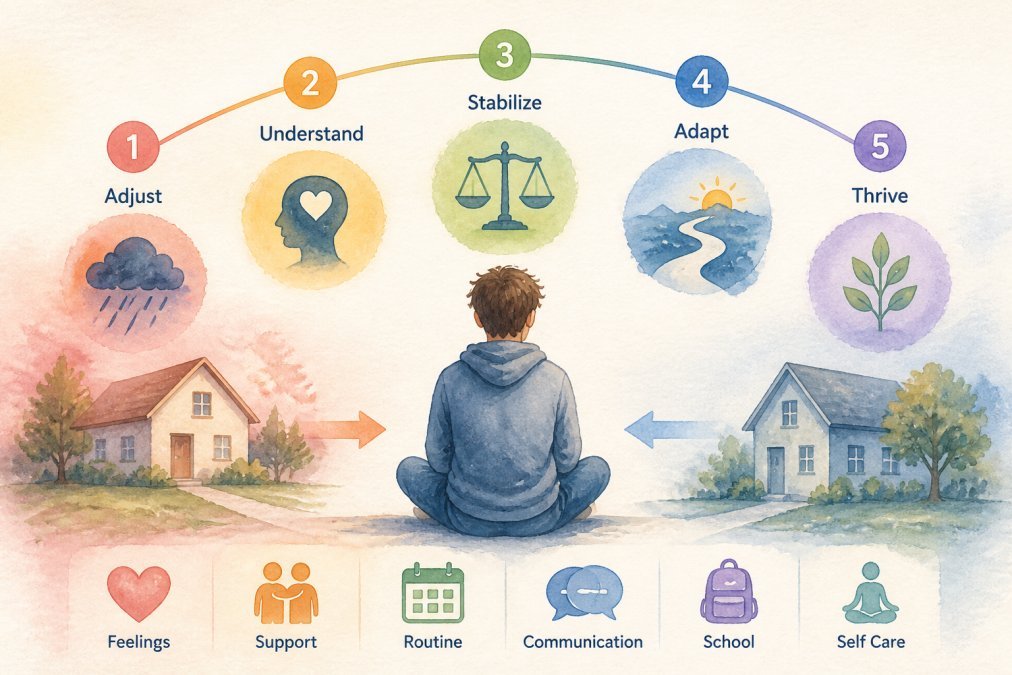
Discovering a partner’s affair doesn’t end when the conversation stops. For many betrayed partners, the hardest part comes later, in ordinary moments that suddenly collapse into panic, grief, or rage. Understanding infidelity triggers in relationships is the first step toward reclaiming a sense of safety, because these reactions are not weakness or instability. They are your nervous system doing exactly what it was designed to do.
The brain’s threat-detection system after betrayal
When you experience betrayal, your brain registers it as a genuine threat to survival. The amygdala, the brain’s threat-detection centre, stores the emotional memory of that moment with intense precision. From then on, it scans the environment for anything that resembles the danger it recorded.
This is pattern-matching, not overreaction. Your nervous system is running the same programme it would after any serious threat: stay alert, detect early warning signs, protect yourself. The problem is that the “danger signals” are now embedded in everyday life, a song, a phone notification, a particular smell.
Hypervigilance and intrusive memories are the two most recognisable features of this state. You may find yourself checking your partner’s location compulsively, or re-experiencing the moment of discovery without warning. Both are the nervous system trying to prevent the threat from happening again.
Why ordinary moments become emotional triggers after betrayal
Emotional triggers after betrayal feel disproportionate because the brain doesn’t evaluate context the way the rational mind does. It matches pattern to memory, then fires the alarm. A restaurant where your partner once worked late. A phrase they used with the other person. A film with an affair subplot. Each one can pull the nervous system back into the original moment of pain.
Esther Perel, couples therapist and author, has observed that the discovery of an affair doesn’t produce a single wound, it produces a cascade. The betrayed partner is forced to rewrite the past, the present, and the imagined future simultaneously. That’s why a trigger can feel like re-experiencing multiple losses at once, not just one moment.
If you’re currently in the raw early stage, our guide to surviving the immediate aftermath of discovery may help you understand what’s happening before the triggers become the dominant experience.
Common Flashback Triggers After an Affair
Knowing the most common flashback triggers after an affair helps you stop pathologising yourself when they hit. Almost everyone in affair recovery reports some version of these.
Sensory and situational triggers
The senses carry memory with unusual fidelity. A specific cologne or perfume, a song that played during the affair period, the particular quality of light on a weekday afternoon when your partner was supposed to be somewhere else, any of these can land with physical force.
People in affair recovery frequently describe hearing a song in a café and experiencing an immediate racing heart, nausea, and an urge to flee that is indistinguishable in intensity from the original discovery. This is sensory memory operating below conscious reasoning. Dates, anniversaries of the affair, the discovery date, even a holiday that coincided, work the same way.
Relational and behavioural triggers
Behaviour-based triggers are often harder to name, because they sit inside the relationship itself. A partner who pauses before answering a question. A phone left face-down. A delayed reply to a text. Behaviours that were once meaningless are now loaded with the memory of what they once concealed.
Intimacy and sexual triggers after an affair form their own category, physical closeness can simultaneously feel like comfort and like a reminder of the betrayal, producing contradictory, disorienting responses. Certain phrases, words or pet names associated with the affair, can produce the same effect.
The Psychological Roots: PTSD After Infidelity
How betrayal trauma differs from other trauma
PTSD after infidelity is a recognised pattern in trauma literature. Research consistently finds that a significant proportion of betrayed partners meet diagnostic criteria for post-traumatic stress symptoms, including intrusive thoughts, avoidance behaviours, and heightened arousal, in the period following discovery.
Betrayal trauma has a distinct quality that separates it from other trauma. Psychologist Jennifer Freyd’s betrayal trauma theory explains that when the person who causes the harm is also someone the victim depends on for safety, as in a committed relationship, the mind can suppress awareness of the betrayal as a protective mechanism. This suppression later manifests as intensified trauma responses. The perpetrator is not a stranger. They may still be in the home. The nervous system has to manage fear and attachment toward the same person simultaneously, which is physiologically and psychologically contradictory.
This is why infidelity trauma can feel more destabilising than many other painful life events, even objectively severe ones.
Why triggers can intensify weeks or months later
Many people expect the worst to come immediately after discovery. For some it does. But people who reach out to After the Affair UK frequently describe trigger experiences that peak not in the first weeks after discovery, but two to six months later, once the initial shock has lifted and the reality of what happened begins to fully land.
This delayed intensification has a clear mechanism. In the acute phase, dissociation and shock act as partial buffers. As the nervous system stabilises, it becomes capable of processing more, and that means more full-spectrum pain. Triggers that felt manageable at week two can feel overwhelming at month four. This is not regression. It is the normal arc of trauma processing.
Understanding what to do when your partner has had an affair across that longer timeline can help you build the right scaffolding before the harder stretch arrives.
Managing Anxiety After Betrayal: In-the-Moment Coping Strategies
Managing anxiety after betrayal requires tools that work on the body first, because a triggered nervous system is not accessible to reasoning. Thinking your way out of a trigger rarely works until the physiological response has been reduced.
Grounding and regulation techniques
The physiological sigh: Take a double inhale through the nose (two sharp sniffs), then a long, slow exhale through the mouth. This specific breath pattern activates the parasympathetic nervous system faster than a standard deep breath. Repeat two or three times.
5-4-3-2-1 grounding: Name five things you can see, four you can physically touch, three you can hear, two you can smell, one you can taste. This technique redirects attention to the present sensory environment, interrupting the brain’s loop back to the traumatic memory.
Pause and name: Simply narrating what’s happening, out loud or internally, creates a small cognitive gap between stimulus and reaction. “I’m noticing a trigger. My heart is racing. I’m in the present moment, not in the past.” This isn’t about suppression; it’s about locating yourself in time.
Communication scripts for triggered moments
Telling a partner you’re triggered without escalating is one of the hardest skills in affair recovery. A simple script that works: “I’m triggered right now, I’m not able to talk about this productively yet. Can we come back to it in twenty minutes?”
This communicates your state, removes the pressure to perform calm you don’t feel, and gives both people a structured exit from a conversation that could otherwise spiral.
Longer-Term Healing From Triggers: Building a Recovery Path
Triggers rarely disappear all at once. What changes, with time and the right support, is their intensity and frequency. The clinical concept of the window of tolerance, the zone in which you can process difficult emotions without becoming overwhelmed or shutting down, describes the core goal of longer-term healing. Healing from triggers means widening that window incrementally.
Narrative reprocessing, revisiting the story of what happened in a supported, structured way, helps the brain file the memory correctly rather than holding it as an open threat. Trauma-informed couples work addresses both partners’ nervous systems in parallel, which matters because a partner’s defensive or dismissive response to a trigger can re-traumatise rather than repair.
EMDR (Eye Movement Desensitisation and Reprocessing) and EFT (Emotionally Focused Therapy) are both evidence-informed approaches used in infidelity recovery. EMDR targets the stored traumatic memory directly; EFT addresses the attachment injury at the core of betrayal. Rebuilding trust after infidelity is not a single event. It is the accumulated result of many small moments of safety, over time, that gradually teach the nervous system the threat has passed.
When to Seek Professional Support
If your infidelity triggers are increasing in frequency rather than decreasing, if they are causing dissociation, periods where you feel detached from yourself or the world around you, or if they are making it difficult to function at work, parent, or carry out daily tasks, professional support is appropriate. There is no threshold of suffering you need to cross first.
Affair recovery counselling in the UK offers a structured, trauma-informed space to work through what you’re experiencing with someone who understands the specific architecture of betrayal. Couples therapy after infidelity is available when both partners want to do that work together. Either way, reaching out early tends to shorten the overall recovery timeline, not because the work is less, but because you don’t spend months deepening patterns that then need to be unwound.