Last Updated: July 27, 2026
- Understanding Betrayal Trauma: What Happens in Your Brain and Body
- Recognizing Betrayal Trauma Symptoms After Discovery
- The Four Stages of Infidelity Recovery: A Roadmap for Healing
- Immediate Crisis Management: First 72 Hours After Infidelity Discovery
- Grounding Techniques and Nervous System Regulation for Daily Management
- Rebuilding Trust After Infidelity: Setting Boundaries and Expectations
- Trauma-Informed Therapy for Infidelity: When and How to Seek Help
- Managing Betrayal Trauma When Co-Parenting: Protecting Your Children
- Frequently Asked Questions
Managing betrayal trauma after infidelity discovery is one of the most destabilizing experiences a person can face. The shock of learning about a partner’s infidelity doesn’t just damage trust, it fundamentally disrupts your sense of safety, reality, and identity. At After the Affair Series, we understand that this moment demands practical tools that address the immediate crisis, the neurobiological aftermath, and the long path toward genuine healing.
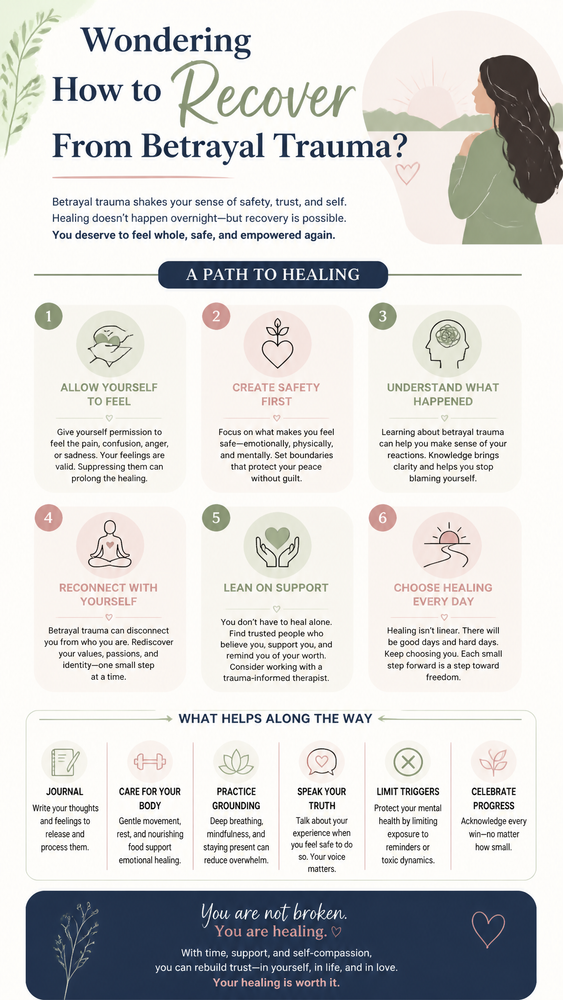
Below, we’ll walk you through what happens in your brain and body during betrayal trauma, how to manage the first 72 hours after discovery, and the specific strategies that help people rebuild their lives, whether that means rebuilding the relationship or building a new one entirely.
Understanding Betrayal Trauma: What Happens in Your Brain and Body
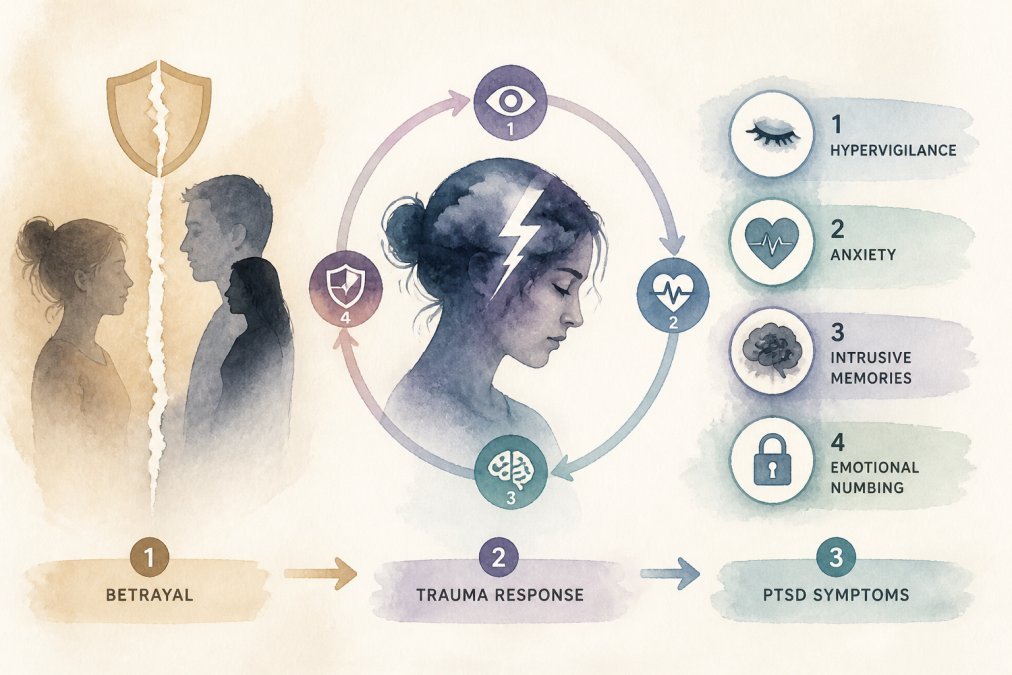
Betrayal trauma is not the same as general relationship stress. When someone you’ve trusted violates that trust through infidelity, your nervous system registers it as a threat to your survival. Your amygdala activates in overdrive while your prefrontal cortex becomes less active, leaving you foggy and unable to think clearly. Your body floods with cortisol and adrenaline, elevating your heart rate, disrupting sleep, and keeping your nervous system in heightened vigilance. This neurobiological response isn’t weakness, it’s a normal reaction to abnormal circumstances.
The Neurobiology of Betrayal Trauma
When infidelity is discovered, the brain processes this as relational trauma. Unlike a physical attack, infidelity is a betrayal by someone whose primary role was to protect you, creating a unique neurobiological response. The hippocampus becomes hyperactive, causing intrusive memories and flashbacks. The insula also becomes hyperactive, creating physical sensations of betrayal, a knot in the stomach, chest tightness, or feeling hollowed out. Understanding this normalizes what you’re experiencing. Your brain isn’t broken. It’s responding exactly as designed to a threat to your closest attachment bond.
Common Physical and Emotional Responses
The physical symptoms of betrayal trauma are often as intense as the emotional ones. Many people report insomnia, appetite changes, tension headaches, nausea, fatigue, and muscle tension. Emotionally, the landscape shifts moment to moment, rage, despair, numbness, bargaining. Many people also report dissociation, feeling like they’re watching their life from outside their body. This is a protective mechanism your nervous system uses when emotions become too overwhelming.
Recognizing Betrayal Trauma Symptoms After Discovery
Not everyone experiences betrayal trauma the same way. Some people’s symptoms are primarily physical; others are consumed by intrusive thoughts. What matters is recognizing that what you’re experiencing is a legitimate trauma response, not a personal failing.
Hypervigilance, Intrusive Thoughts, and Flashbacks
Hypervigilance is perhaps the most exhausting symptom of betrayal trauma. Your nervous system constantly scans for threat, noticing every text notification, late arrival, or change in routine. Intrusive thoughts are unwanted mental images or scenarios related to the infidelity. Flashbacks transport you back to the moment of discovery or imagined scenarios, triggered by a smell, song, location, or time of day. These symptoms are not signs of weakness or obsession. They’re signs that your nervous system is trying to process a significant threat to your attachment security.
Distinguishing Betrayal Trauma from General Anxiety
Betrayal trauma can look similar to general anxiety, but the anxiety is specifically tied to the betrayal, the relationship, or reminders of the infidelity. Betrayal trauma also includes profound loss, you’re grieving the relationship you thought you had, the future you believed was coming, and the version of your partner you trusted. If you’re experiencing panic attacks, severe dissociation, or thoughts of self-harm, professional help becomes urgent.
The Four Stages of Infidelity Recovery: A Roadmap for Healing
Recovery from betrayal trauma isn’t linear. Most people move through identifiable stages, though the timeline and intensity vary significantly.
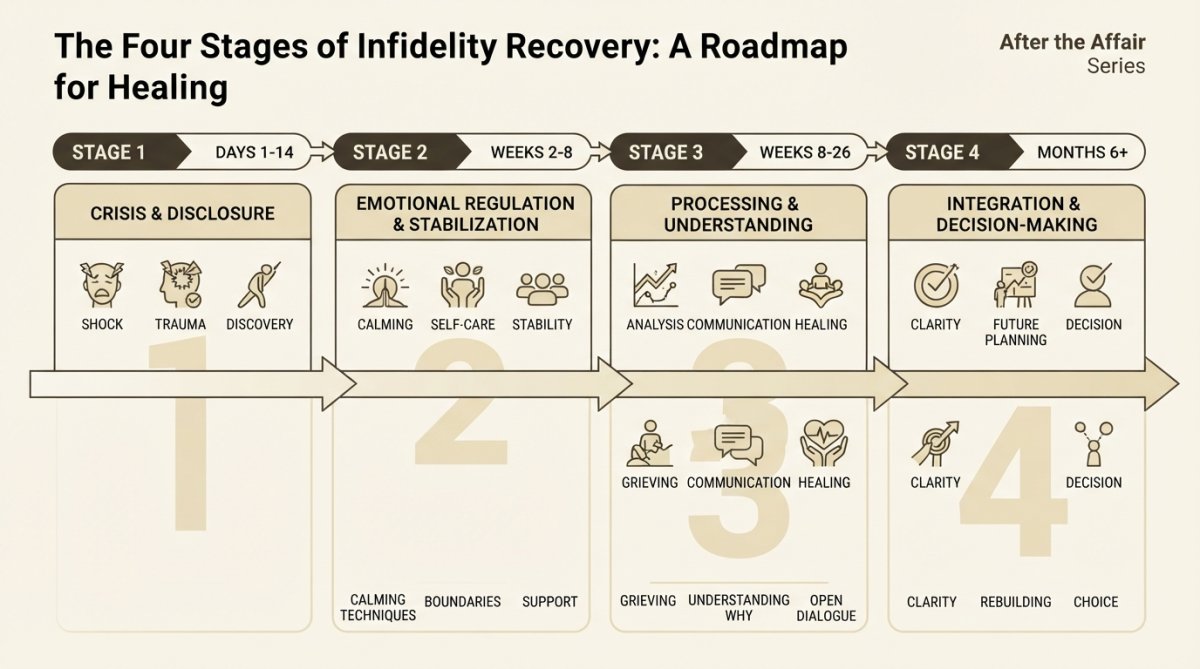
Stage 1: Crisis and Disclosure
The first stage begins at discovery and typically lasts 1-2 weeks. Your nervous system is in full activation. You might oscillate between rage, despair, and shock. This is not the time to make permanent decisions about the relationship. Your brain is flooded with stress hormones that impair judgment. Crisis management means stabilizing your nervous system and activating your support system.
Stage 2: Emotional Regulation and Stabilization
This stage typically spans weeks 2-8. The acute crisis subsides, but emotional turbulence continues. You have moments of feeling almost normal, followed by crashes into despair. Your job is to develop tools for nervous system regulation. Sleep improves somewhat. Appetite normalizes. You begin to have moments of clarity.
Stage 3: Processing and Understanding
This stage typically begins around week 8 and can last several months. You’re no longer in crisis but actively working to understand what happened, why it happened, and what it means about your relationship and yourself. Therapy becomes most valuable here. You’re asking deeper questions: What vulnerabilities in the relationship allowed this? What patterns led to this moment? What do I need from my partner to rebuild trust, if I choose to stay?
Stage 4: Integration and Decision-Making
By month 6 or so, most people have moved into integration. The trauma is no longer acute. You’ve processed the major emotional waves. Now you’re making deliberate choices about your future. Some people choose to stay and rebuild the relationship. Others choose to separate. All paths are valid when the decision comes from clarity, not trauma reactivity or fear.
Immediate Crisis Management: First 72 Hours After Infidelity Discovery
The first 72 hours after discovering infidelity are critical. Your nervous system is in maximum activation. Your decisions during this window can significantly impact your safety, your children’s wellbeing, and your ability to move forward with clarity.
Step 1: Establish Emotional and Physical Safety
Your first priority is ensuring you’re physically safe and emotionally supported. If you’re in an abusive relationship or fear your partner’s reaction, contact the National Domestic Violence Hotline at 1-800-799-7233. If you’re not in immediate danger but in acute crisis, remove yourself from the situation if possible. Go to a trusted friend’s or family member’s home. If you have children, ensure they’re safe and cared for. Don’t make decisions about custody or living arrangements in the first 72 hours.
Step 2: Activate Your Support System
Call someone you trust and tell them what happened. This breaks the isolation that trauma creates and provides immediate emotional support. If you’re having thoughts of self-harm, contact the 988 Suicide and Crisis Lifeline (call or text 988) or go to your nearest emergency room. Document your emotional state by writing down what happened, when you discovered it, and how you’re feeling. This creates a record that helps you remember your own experience if your partner later tries to minimize or reframe what occurred.

Step 3: Document and Secure Critical Information
Take screenshots of any communications that document the infidelity (texts, emails, dating app profiles) and save them in a secure location your partner doesn’t have access to. Gather information about your financial accounts, property ownership, and any joint assets. If you have children, document their schedule, health information, and any special needs. If you’re concerned about your safety or your children’s safety, consider consulting with a family law attorney within the first week. Many offer free initial consultations.
Grounding Techniques and Nervous System Regulation for Daily Management
Once you’ve stabilized the immediate crisis, your work shifts to managing ongoing symptoms of betrayal trauma. Grounding techniques bring you back into the present moment when you’re caught in intrusive thoughts, flashbacks, or anxiety spirals.
The 5-4-3-2-1 Sensory Grounding Method
When you notice yourself spiraling into an intrusive thought or memory, use this method: Name 5 things you can see. Name 4 things you can touch. Name 3 things you can hear. Name 2 things you can smell. Name 1 thing you can taste. This technique works because it anchors your attention in the present moment and engages your sensory cortex, which temporarily quiets the threat-detection system driving the intrusive thought.
Box Breathing and Vagal Toning Exercises
Box breathing calms an overactive nervous system: Breathe in for a count of 4. Hold for 4. Exhale for 4. Hold for 4. Repeat 5-10 times. The key is that the exhale is as long as the inhale. A longer exhale activates your parasympathetic nervous system, your body’s brake pedal. Vagal toning exercises stimulate the vagus nerve: humming or singing, cold water on your face, progressive muscle relaxation, or gargling. These help you manage your nervous system in the moment when triggered.
Managing Triggers in Real Time
A trigger is anything that reminds you of the infidelity and causes an emotional or physiological response. When you notice a trigger: (1) Name it as a trigger, not current danger. (2) Ground yourself using the 5-4-3-2-1 method or box breathing. (3) Separate past from present by reminding yourself of the date, location, and that you’re physically safe. (4) Move your body. (5) Reach out to a trusted person or your therapist. Over time, as you process the trauma in therapy, triggers become less intense and less frequent.
Rebuilding Trust After Infidelity: Setting Boundaries and Expectations
If you’re choosing to stay and attempt to rebuild, trust doesn’t return automatically. It’s rebuilt through consistent, transparent behavior over time. This requires clear boundaries and explicit expectations from both partners.
Non-Negotiable Boundaries for Emotional Safety
Before you can rebuild trust, establish boundaries that protect your emotional safety. These aren’t punitive; they’re structural safeguards that allow you to feel secure enough to heal. Common non-negotiable boundaries include: full transparency about whereabouts and communications, no contact with the person they had the affair with, willingness to attend couples therapy and individual therapy, honesty about any future lapses or temptations, and commitment to addressing underlying issues that led to the infidelity. These boundaries should be negotiated together, not imposed unilaterally. If your partner resists, that’s important information about their commitment to rebuilding.
Transparency Requirements and Digital Boundaries
Establish clear agreements about digital communication. Many couples find it helpful to have shared access to certain accounts (email, social media, messaging apps) without constant monitoring. The agreement is that if you ask for access, your partner provides it immediately and without defensiveness. These agreements should reflect what you need to feel safe, not what you think you “should” accept.
Trauma-Informed Therapy for Infidelity: When and How to Seek Help
Professional therapy isn’t optional for most people processing betrayal trauma. A trained therapist can help you process the trauma, understand what happened, and decide your path forward.
Individual Therapy vs. Couples Therapy: What the Research Shows
Individual therapy is essential for the betrayed partner. You need space to process your own trauma, examine your attachment patterns, and decide what you need from the relationship, all without your partner’s presence influencing your thinking. Couples therapy is useful only after the betrayed partner has stabilized (typically at least 4-8 weeks after discovery). The typical progression is: individual therapy for the betrayed partner → individual therapy for the unfaithful partner → couples therapy when both partners have done their own work.
Finding a Trauma-Informed LMFT or Therapist
Look for a therapist who specializes in trauma and infidelity. Licensed Marriage and Family Therapists (LMFTs) are trained specifically in relationship dynamics. Therapists with trauma certification (EMDR, Somatic Experiencing, or trauma-focused CBT) are particularly helpful. When you call a therapist’s office, ask directly: “Do you have experience working with betrayal trauma and infidelity?” You want someone neutral about the outcome and focused on helping you process the trauma and make clear decisions.
What to Expect in Therapy Sessions
In individual therapy, you’ll spend the first few sessions stabilizing your nervous system and establishing safety. Your therapist will teach you grounding techniques and help you process the initial shock. As you progress, therapy moves into deeper processing. You’ll explore your attachment history, the vulnerabilities in your relationship that allowed the infidelity to happen, and what you need going forward. Most people need 6-12 months of individual therapy to process betrayal trauma adequately.
Managing Betrayal Trauma When Co-Parenting: Protecting Your Children
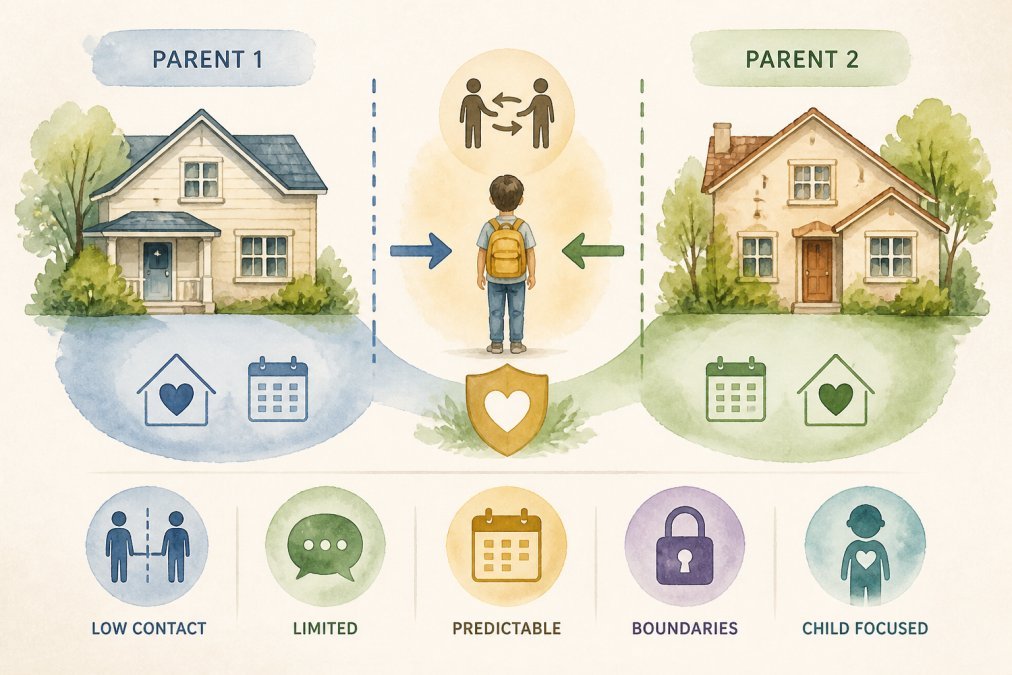
If you have children, managing betrayal trauma becomes exponentially more complex. Your children are affected by the infidelity and the relationship breakdown, and they need your stability even as you’re processing your own trauma.
Navigating Co-Parenting During Acute Trauma
Children are exquisitely sensitive to parental distress. They don’t need to know the details of the infidelity, but they will sense that something is wrong. Keep routines as consistent as possible. Children thrive on predictability, especially during family upheaval. Don’t use your children as emotional support or ask them to take sides. If you’re struggling to manage your emotions in front of your children, take breaks and return when you’re more regulated.
Structured Communication Tools for High-Conflict Situations
If communication with your partner becomes hostile, structured communication tools become essential. Keep communications about children brief, factual, and focused solely on logistics (pickup times, school events, health issues). Avoid emotional language, accusations, or attempts to process the relationship. If direct communication isn’t safe or is consistently triggering, consider using a co-parenting app or a mediator.
Frequently Asked Questions
What are the main signs of betrayal trauma after infidelity discovery?
Common betrayal trauma symptoms include hypervigilance (constant scanning for threats), intrusive thoughts about the infidelity, flashbacks triggered by reminders, sleep disruption, anxiety, and emotional numbness. You may experience panic responses to innocent situations that resemble the original discovery. These reactions are neurobiological, your nervous system has been dysregulated by the breach of trust. Physical symptoms like headaches, digestive issues, and muscle tension are also frequent. If symptoms persist beyond a few weeks or intensify, trauma-informed therapy can help stabilize your nervous system and begin processing the betrayal.
How long does it typically take to heal from infidelity recovery stages?
Infidelity recovery is not linear. The acute crisis phase (first 72 hours to 2 weeks) focuses on safety and stabilization. Emotional regulation and processing typically spans 3-12 months, depending on the depth of betrayal and your support system. Integration and decision-making can extend 12-24+ months. Healing timelines vary significantly based on whether you’re rebuilding trust in the relationship, co-parenting, or separating. Working with a trauma-informed therapist accelerates this process by addressing both the emotional and neurobiological impacts of betrayal trauma. Individual factors like attachment style, prior trauma, and access to support also influence recovery speed.
Is individual therapy or couples therapy better for managing betrayal trauma after infidelity?
Individual trauma-informed therapy should typically come first. You need to stabilize your own nervous system, process your betrayal trauma symptoms, and rebuild your sense of safety before engaging in couples work. Once you’ve developed grounding techniques and emotional regulation skills, couples therapy with an LMFT experienced in infidelity can address relational repair if you choose to rebuild trust. Some betrayed partners benefit from individual therapy throughout separation or divorce. The best approach depends on your decision about the relationship and your therapist’s recommendation based on your specific trauma response.
What practical tools can I use right now to manage intrusive thoughts and triggers?
Grounding techniques like the 5-4-3-2-1 sensory method (name 5 things you see, 4 you can touch, 3 you hear, 2 you smell, 1 you taste) interrupt the trauma response cycle. Box breathing (inhale 4 counts, hold 4, exhale 4, hold 4) regulates your nervous system within minutes. Identify your specific triggers and create a written action plan: when you encounter a trigger, pause, ground yourself, and use a structured response (like the Gray Rock Method for interactions with your ex). Journaling, physical movement, and cold water exposure also activate your parasympathetic nervous system. These tools are most effective when practiced consistently, not just during crises.