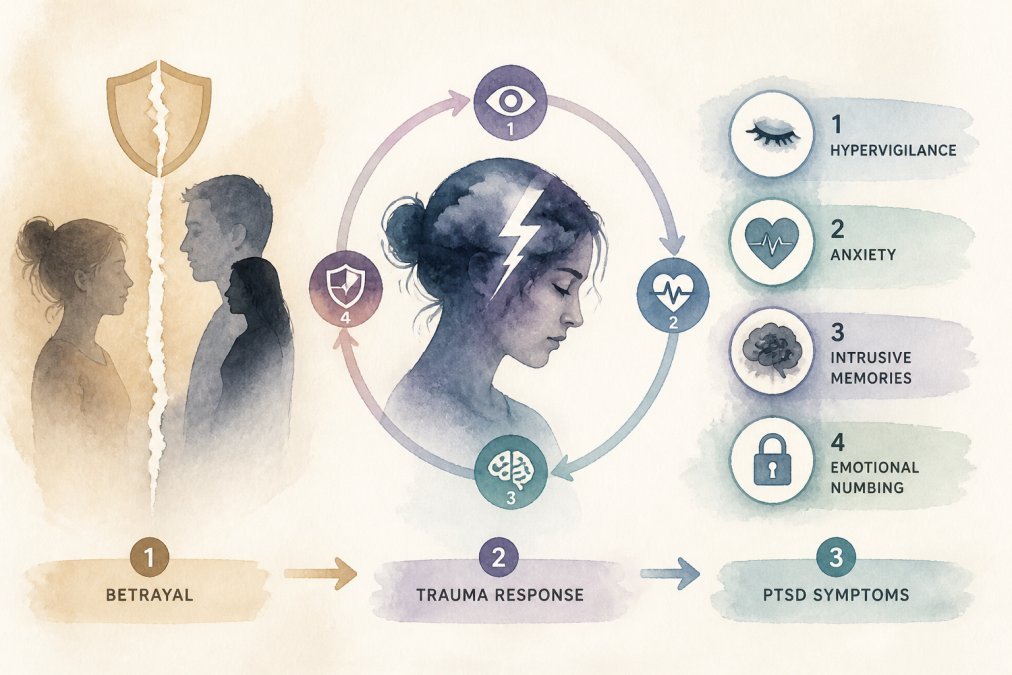
Yes, infidelity can be forgiven — but whether that forgiveness leads to reconciliation depends on the type of affair, the unfaithful partner’s genuine accountability, and how much trauma the betrayal caused. Research shows that betrayed partners frequently develop PTSD-like symptoms including intrusive thoughts, hypervigilance, and sleep disruption, which means this is not just an emotional wound. It is a trauma response that requires structured care. The question is, Can Infidelity Be Forgiven?
- What are the practical first steps for healing from infidelity?
- Is forgiveness the same as reconciliation?
- How does the type of affair change your path forward?
- What emotional stages should you expect after discovery?
- Should you stay, separate, or leave? A decision framework
- How do you actually rebuild trust after infidelity?
- What individual healing looks like for the betrayed partner
- How the After the Affair Series supports each stage of recovery
- Key Takeaways
- What the research and experience actually tell us
- Where to start with Aftertheaffair’s recovery resources
- FAQ
“Forgiveness releases the betrayed person from soul-destroying resentment and primarily benefits the injured partner’s healing — not the relationship.”
— Psychology Today
Forgiveness is an internal process. Reconciliation is a separate, joint project that requires sustained accountability from the unfaithful partner. You can forgive without ever returning to the relationship. The Aftertheaffair series is built on exactly this distinction, and it shapes every resource in the toolkit.
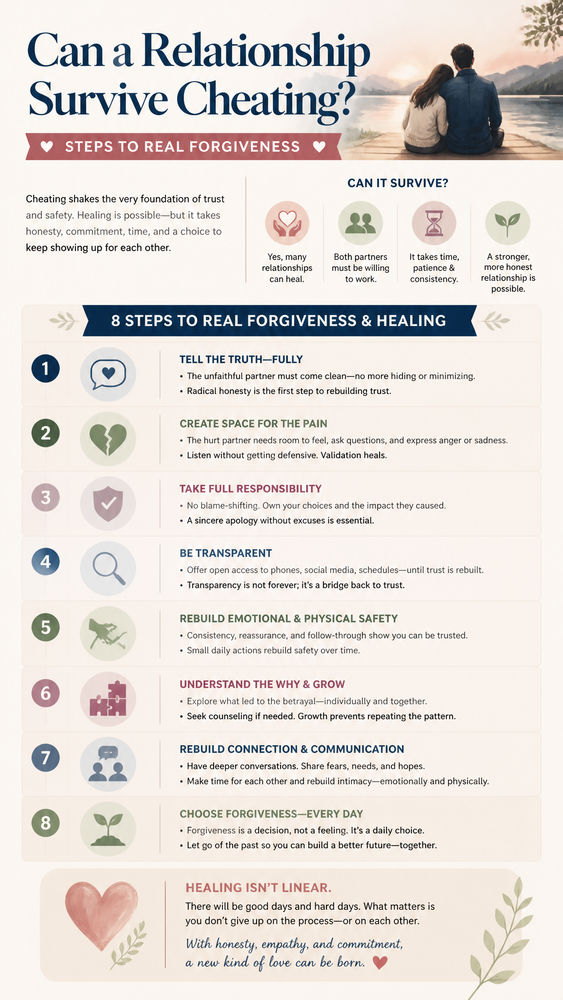
Your next three moves in the next 72 hours:
- Stabilize first. Do not make permanent decisions yet. Psychologists recommend waiting at least three to six months before any irreversible choice, because acute stress impairs rational thinking.
- Set one immediate boundary. Identify what you need to feel physically and emotionally safe right now — and say it out loud or in writing.
- Get the 7 Steps Infidelity Recovery Checklist. It gives you a concrete, stage-by-stage action plan from the first days through longer-term repair.
What are the practical first steps for healing from infidelity?
Recovery does not happen by waiting for the pain to pass. It requires deliberate action from both partners, and the steps look different depending on which side of the betrayal you are on.
Steps for the betrayed partner
- Triage your emotional state. Before anything else, assess whether you are safe and stable enough to function. If you are not sleeping, eating, or able to work, that is the priority. Contact a therapist or your primary care doctor.
- Set a boundary on information-sharing. Choose one or two trusted confidants. Broadcasting the affair widely tends to complicate reconciliation later and can increase your own shame and isolation.
- Restrict major decisions. Write down any permanent decisions you are tempted to make — divorce, moving out, confronting the affair partner — and put that list away for 30 days.
- Start individual therapy. Look specifically for a therapist experienced in betrayal trauma or infidelity recovery. Couples therapy comes later; your trauma needs individual attention first.
- Download the Emergency Scripts Cheat Sheet. When emotions spike and you do not know what to say, having pre-written, safe language prevents conversations from escalating into damage you cannot undo.
Steps for the unfaithful partner
- End all contact with the affair partner immediately. Not gradually. Not “after I explain.” Now. Continued contact — even for work — prevents the transparency and safety that recovery requires.
- Make a full, honest disclosure. Partial truths that surface later cause secondary betrayals that are often harder to recover from than the original affair.
- Create a transparency routine. Share your location, be reachable, and do not require your partner to ask for reassurance. Offer it proactively.
- Find your own therapist. Understanding why the affair happened is your responsibility, not your partner’s. Individual therapy is where that work begins.
- Use the Partner Accountability Conversation Guide. It gives you structured language for accountability conversations so they do not collapse into defensiveness or blame.
Steps for the couple
- Agree on a communication structure. Decide when and how you will talk about the affair. Some couples limit it to therapy sessions; others set a daily 20-minute window. Both approaches work — the key is that both partners agree.
- Schedule a weekly check-in. A short, structured conversation (15–20 minutes) focused on safety and needs, not accusations.
- Start couples therapy only after individual stabilization. Jumping into couples work before the betrayed partner has basic safety and the unfaithful partner has ended the affair typically backfires.
Pro Tip: Avoid the data-collection trap. Betrayed partners often feel compelled to gather every detail — texts, timelines, photos. Some information helps; obsessive detail-gathering usually prolongs hypervigilance. Set a time-limited “information window” with your therapist — one structured session to ask your questions — and then agree to stop seeking new data.
Is forgiveness the same as reconciliation?
They are not the same, and conflating them is one of the most common mistakes people make after an affair. Treating them as identical puts unfair pressure on the betrayed partner and sets the couple up for confusion about what they are actually working toward.
Forgiveness is something you do for yourself. It is an internal process of releasing resentment so that the betrayal stops consuming your present. Forgiveness can happen whether you stay in the relationship or leave it. It does not require an apology. It does not mean the affair was acceptable.
Reconciliation is a mutual project. It requires the unfaithful partner to actively demonstrate trustworthiness over an extended period — not just promise to change. It requires both partners to invest in building something new, because the old relationship is gone.
| Dimension | Forgiveness | Reconciliation |
|---|---|---|
| Who does it | The betrayed partner alone | Both partners together |
| What it requires | Internal work, self-compassion, time | Accountability, behavior change, couples therapy |
| Timeline | Months to years; nonlinear | Typically 1–3 years of active work |
| Can it happen alone | Yes | No |
| What it is NOT | Forgetting, condoning, or returning to normal | A return to the pre-affair relationship |
| Outcome if successful | Emotional freedom for the betrayed partner | A new, renegotiated relationship |
Common misunderstandings to correct:
- Forgiving does not mean forgetting. You can forgive and still remember what happened.
- Reconciliation does not mean returning to how things were. Successful couples build a new relationship with different rules and expectations.
- Staying is not the same as forgiving. Some people stay out of fear or financial dependence without doing any internal forgiveness work.
- Leaving is not the same as failing to forgive. Many people forgive and still choose to end the relationship.
Decision signals that reconciliation may be feasible:
- The unfaithful partner ended all contact with the affair partner without being pressured to do so.
- There is genuine remorse, not just regret about getting caught.
- Both partners are willing to enter therapy.
- There is no history of repeated infidelity or other forms of abuse.
How does the type of affair change your path forward?
Not all affairs carry the same weight, and the path forward genuinely differs depending on what happened. A one-night encounter during a work trip and a two-year emotional affair with a close friend are not the same wound. Treating them identically leads to mismatched expectations and misaligned recovery strategies.
Questions to classify the affair:
- Was it a single sexual encounter or an ongoing sexual relationship?
- Was there an emotional component — shared secrets, future plans, declarations of love?
- Did it happen online only, or was there physical contact?
- How long did it last?
- How much secrecy was involved, and who else knew?
- Does the affair partner have ongoing access to your partner (workplace, shared social circle, co-parenting)?
- Are children involved, and do they know anything?
Impact checklist — factors that affect recovery timelines:
- Duration. A longer affair typically means deeper emotional investment and more deception to unpack.
- Emotional vs. physical. Emotional infidelity often feels more threatening to the relationship than a purely physical encounter, because it suggests the unfaithful partner sought intimacy, not just sex.
- Ongoing contact. If the affair partner is a coworker or neighbor, rebuilding safety requires practical boundary-setting, sometimes including a job change.
- Children. When children are aware or affected, recovery must account for their needs alongside the couple’s.
- Secrecy level. Affairs that required elaborate deception over years tend to produce more severe trust damage and longer repair timelines.
Cultural background, religious beliefs, and personal values also shape how people interpret infidelity and what options feel available to them. A person whose faith community treats divorce as unacceptable faces a different set of pressures than someone without that context, and any recovery plan needs to account for that honestly.
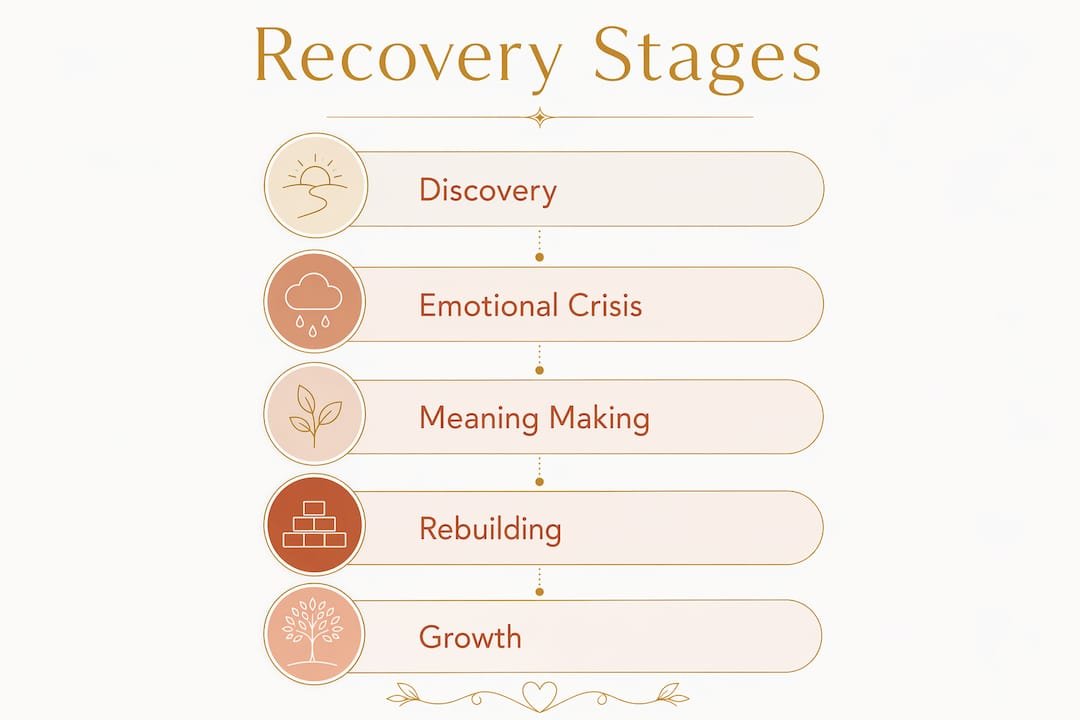
What emotional stages should you expect after discovery?
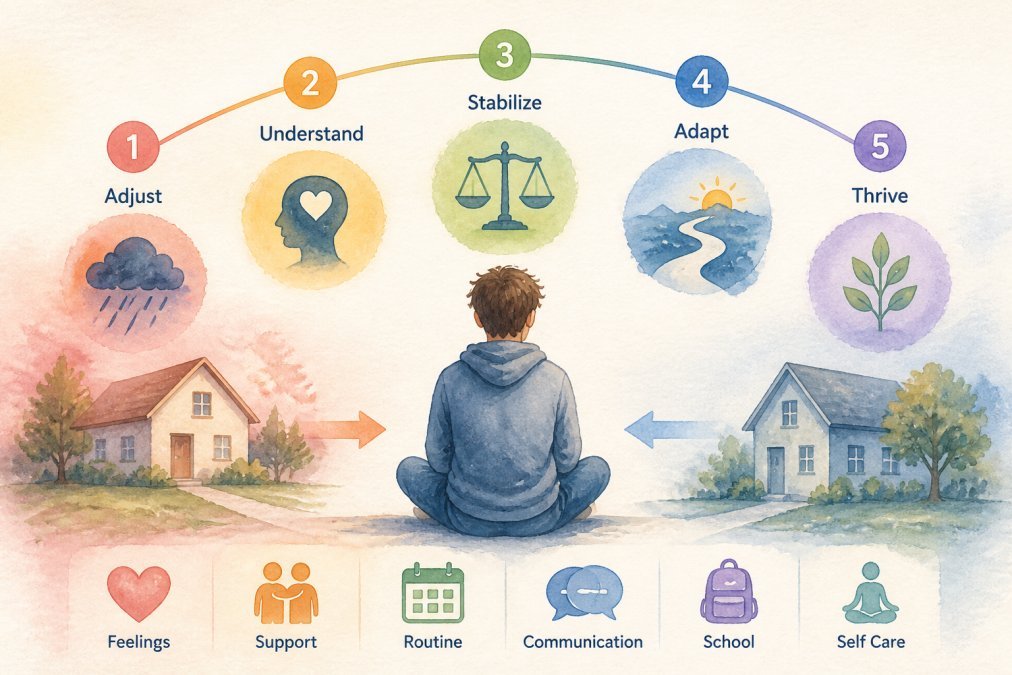
The emotional trajectory after discovering infidelity is not a straight line. Most people cycle through stages rather than moving cleanly from one to the next, and setbacks are normal, not signs of failure.
The four main stages
- Crisis (weeks 1–8). Shock, disbelief, rage, grief, and physical symptoms like nausea, insomnia, and inability to eat. Decision-making is severely impaired here. The only goal is stabilization.
- Meaning-making (months 2–6). The acute shock fades and the harder questions arrive: Why did this happen? What does it mean about me, my partner, and our relationship? This is where individual therapy does its most important work.
- Rebuilding or ending (months 6–24). Couples who stay begin the active work of building a new relationship. Couples who separate begin the work of grieving and moving forward independently. Both paths require sustained effort.
- Long-term integration (year 2 onward). The affair becomes part of the relationship’s history rather than its defining feature. Triggers decrease in frequency and intensity. A staged recovery approach — stabilization first, then meaning-making, then rebuilding — is what recovery specialists consistently recommend.
Typical timelines:
- Stabilization: 3–6 months
- Active rebuilding: 6–24 months
- Deeper integration: 2 years and beyond
Factors that lengthen timelines include ongoing contact with the affair partner, secondary betrayals (new lies discovered after the initial disclosure), untreated PTSD symptoms, and lack of professional support. Factors that shorten them include early individual therapy, genuine and consistent accountability from the unfaithful partner, and strong social support.
Trigger management tips:
- Use grounding techniques (the 5-4-3-2-1 sensory method, box breathing) when intrusive thoughts spike.
- Limit checking behaviors — monitoring your partner’s phone or location constantly tends to increase anxiety rather than reduce it.
- Set scheduled “information windows” with your therapist rather than processing triggers in real time with your partner.
- Understanding why triggers happen in the context of attachment patterns can reduce their power significantly.
Warning signs that require specialist referral:
- Persistent suicidal thoughts or self-harm urges.
- Inability to function at work or care for children after the first few weeks.
- Substance misuse that has increased since discovery.
- Dissociation, flashbacks, or severe hypervigilance that does not reduce over time.
Should you stay, separate, or leave? A decision framework
There is no universally right answer here. The goal of this framework is not to push you toward any outcome but to give you a structured way to think through a decision that feels impossible right now.
Decision checklist:
- Is there physical or emotional safety in the home right now?
- Has the unfaithful partner ended all contact with the affair partner?
- Is there genuine remorse, or only regret about consequences?
- Has the unfaithful partner shown any willingness to enter therapy?
- Are there children whose stability depends on the decision?
- What are the financial realities of separation?
- Has infidelity happened before in this relationship?
- What do your core values say about this situation?
Red flags that strongly suggest separation or exit:
- Ongoing deception discovered after the initial disclosure.
- Any form of physical, emotional, or financial abuse.
- Complete absence of remorse or accountability.
- Refusal to end contact with the affair partner.
- A pattern of repeated infidelity.
A sample trial-separation plan
If you are not ready to make a permanent decision, a structured trial separation can create space without foreclosing options.
- Set a defined period. Six to twelve weeks is a common starting point.
- Agree on contact rules. Decide in advance how often you will communicate and about what (children, finances, logistics only, or also relationship check-ins).
- Both partners enter individual therapy during the separation period.
- Define measurable milestones. What would need to be true at the end of the separation period for reconciliation to be worth attempting? Write these down.
- Set a review date. Agree to reassess at the end of the defined period, not before.
For readers considering separation or divorce, consulting a family law attorney early clarifies your rights and options before emotions drive decisions. In the United States, infidelity laws vary by state, so local legal advice matters.
Pro Tip: The step-by-step betrayal recovery guide at Aftertheaffair walks through the decision period in detail, including how to assess readiness for reconciliation versus separation with specific, measurable criteria.
How do you actually rebuild trust after infidelity?
Trust does not return because someone promises it will. It returns through observable, repeated behavior over time. Successful couples do not restore the old relationship — they build a new one with explicit rules, predictable routines, and measurable milestones.
Prioritized trust-building practices:
- Radical transparency. The unfaithful partner shares location, schedule, and communications proactively — not because they are forced to, but because they understand why it matters.
- Predictable routines. Consistency in small things (being home when expected, following through on commitments) rebuilds the sense of reliability that the affair destroyed.
- Timed check-ins. A brief daily or weekly structured conversation focused on safety and needs, not interrogation.
- Shared calendar access. Reduces the need for the betrayed partner to ask where their partner is or was.
- Phone transparency. This is not mandatory for every couple, but for some it provides meaningful reassurance in the early months. Agree on it explicitly rather than assuming.
For practical guidance on rebuilding trust after betrayal, the Aftertheaffair resource library offers concrete exercises mapped to each stage of recovery.
Sample written accountability agreement
“We agree that [unfaithful partner] will: share location via [app] during working hours; come home by [time] unless prior notice is given; not meet privately with [affair partner or any person the betrayed partner identifies as a concern]; attend couples therapy weekly for the next six months; and check in by text if plans change. We will review this agreement at the three-month mark and adjust as trust develops.”
Adapt the specifics to your situation. The point is that it is written, specific, and time-bound.
Milestone table: what progress looks like
| Timeframe | Behavioral markers | Emotional markers |
|---|---|---|
| 3 months | All contact with affair partner ended; transparency routines in place; therapy started | Betrayed partner reports feeling physically safe; acute crisis symptoms reducing |
| 6 months | No new deceptions discovered; accountability agreement followed consistently; couples therapy ongoing | Betrayed partner able to function at work and with children; triggers less frequent |
| 6–24 months | Relationship contract renegotiated; both partners report increased trust; individual therapy continuing | Both partners describe the relationship as different but viable; intimacy beginning to return |
Pro Tip: Measure actions, not feelings. Feelings lag behind behavior by weeks or months. Track whether the unfaithful partner is doing what they said they would do — not whether you feel better yet. Consistent behavior over time is what eventually moves the emotional needle.
What individual healing looks like for the betrayed partner
Whether you stay or leave, your trauma needs attention that is separate from the relationship’s repair. Healing from infidelity is not a byproduct of the couple doing well. It requires its own dedicated work.
Therapy options worth knowing
- Betrayal trauma therapy. Specifically addresses the attachment rupture and trauma symptoms that infidelity causes. Not all therapists are trained in this; ask directly.
- Trauma-informed CBT. Cognitive behavioral therapy adapted for trauma helps reframe intrusive thoughts and reduce hypervigilance.
- EMDR (Eye Movement Desensitization and Reprocessing). Particularly useful when flashbacks or intrusive memories are severe and persistent.
- Individual counseling vs. couples therapy. Individual work should come first. Couples therapy before the betrayed partner has basic safety often retraumatizes rather than heals.
The role of therapists in infidelity recovery is more specific than general relationship counseling. A therapist who has not worked with betrayal trauma may inadvertently minimize the injury or push premature forgiveness.
Self-care practices tailored to betrayal trauma
- Protect sleep. Sleep deprivation worsens every symptom. Prioritize it even when it feels impossible — speak to your doctor if insomnia persists beyond two weeks.
- Limit social media. Checking your partner’s accounts or the affair partner’s profiles keeps the nervous system in a state of threat. Set specific limits.
- Choose confidants carefully. One or two people who will support you without fueling rage or pushing you toward decisions you are not ready for.
- Journal with structure. Rather than free-form venting, try prompted journaling: “What do I need today?” “What am I afraid of?” “What would safety look like?” These questions move processing forward.
- Rebuild self-trust. Betrayal often damages the betrayed partner’s confidence in their own perception. Rebuilding self-esteem after betrayal is a distinct piece of work from repairing the relationship.
Warning signs that require specialist referral:
- Suicidal ideation or self-harm.
- Inability to care for yourself or dependents.
- Flashbacks or dissociation that do not reduce over several weeks.
- Substance use increasing as a coping mechanism.
How to choose a therapist: Ask specifically whether they have experience with infidelity recovery and betrayal trauma. Ask whether they use a trauma-informed model. A therapist who immediately pushes couples work or minimizes the trauma impact is not the right fit. For readers navigating the choice between individual and couples therapy, the Aftertheaffair guide on individual or couples therapy lays out the decision clearly.
Rebuilding self-trust matters whether you stay or leave. If you are co-parenting with an ex after separation, a stable sense of your own judgment is what allows you to parent effectively and set healthy boundaries.
How the After the Affair Series supports each stage of recovery
The Aftertheaffair series was built around a single premise: recovery from infidelity is not one problem. It is four distinct stages, each requiring different tools. Throwing a couple into reconciliation work when the betrayed partner is still in crisis does not help. Neither does offering only emotional support when someone is ready to make decisions.
Product-to-stage mapping
| Recovery stage | What you need | Aftertheaffair resource |
|---|---|---|
| Survival (weeks 1–8) | Immediate stabilization, safe language for high-emotion conversations | Emergency Scripts Cheat Sheet; 7 Steps Infidelity Recovery Checklist |
| Decision-making (months 2–6) | Framework for stay-or-leave decision; accountability assessment | Partner Accountability Conversation Guide; Book 1: Navigating Infidelity |
| Rebuilding (months 6–24) | Trust-building practices, milestone tracking, couples communication | Relationship Growth After Infidelity course |
| Growth (year 2+) | Long-term integration, personal development, new relational contract | Relationship Growth After Infidelity; personal growth resources |
How to start this week:
- Day 1: Download the 7 Steps Infidelity Recovery Checklist and complete the first two steps (stabilization and boundary-setting).
- Day 3: Use the Partner Accountability Conversation Guide to structure your first accountability conversation — or to prepare for it if you are not ready to have it yet.
- Week 1 end: Identify which stage you are in and which resource matches it from the table above.
The series is authored by S.J. Howe, whose background spans clinical practice and personal experience with betrayal trauma recovery. The resources reflect both the research literature on infidelity and the practical realities that structured clinical materials often miss. For therapists working with clients in this area, the clinician guide provides a framework for using these materials in session.

Key Takeaways
Forgiveness after infidelity is an individual, internal process that can happen with or without reconciliation — and recovery depends on the unfaithful partner’s consistent accountability, not just their promises.
| Point | Details |
|---|---|
| Forgiveness vs. reconciliation | Forgiveness is internal and benefits the betrayed partner; reconciliation is a separate, joint project requiring sustained behavior change. |
| Wait before deciding | Psychologists recommend waiting at least three to six months before making permanent decisions, because acute stress impairs judgment. |
| Trauma is real | Betrayed partners frequently develop PTSD-like symptoms; individual trauma-informed therapy should come before couples work. |
| Measure behavior, not feelings | Trust rebuilds through observable, repeated actions over time — track what the unfaithful partner does, not how you feel week to week. |
| Start with Aftertheaffair | The 7 Steps Infidelity Recovery Checklist and Partner Accountability Conversation Guide are the recommended first tools for the survival and decision-making stages. |
What the research and experience actually tell us
The conventional framing of infidelity recovery tends to go one of two ways: either “love conquers all, just work at it” or “once a cheater, always a cheater.” Both are wrong, and both are unhelpful to someone sitting in the wreckage of a betrayal trying to figure out what to do next.
What the research actually shows is more nuanced. Recovery outcomes vary widely, and the single strongest predictor of a positive outcome is not the type of affair or even the length of the relationship. It is whether the unfaithful partner takes genuine, sustained accountability — not a one-time apology, but a months-long pattern of changed behavior. An apology without behavior change is noise. Behavior change without an apology is cold. Both are required, and they have to be sustained.
The other thing that gets underestimated is how long this actually takes. Most people expect to feel better in weeks. The research and clinical experience both point to a realistic timeline of one to three years for meaningful repair. That is not a failure. That is what healing from a significant trauma looks like.
There is also a tendency to treat the betrayed partner’s decision as a moral test — as if staying means you have more self-respect, or leaving means you have more. Neither is true. The decision to stay or leave is a practical, values-based question that deserves a structured framework, not a verdict from friends or family who are not living inside the relationship.
One more thing worth saying plainly: if you are the unfaithful partner reading this, the work is yours to do. Your partner did not cause the affair. Explaining it, yes. Justifying it, no. The fastest path to any outcome — reconciliation or a respectful separation — runs through your willingness to be fully accountable without making your partner manage your guilt.
If you are in immediate distress, please contact the 988 Suicide and Crisis Lifeline by calling or texting 988.
Where to start with Aftertheaffair’s recovery resources
The hardest part of the first week after discovery is not knowing what to do next. Every decision feels permanent. Every conversation feels dangerous. That is exactly what the Aftertheaffair toolkit was built for.
The 7 Steps Infidelity Recovery Checklist is the right starting point. It gives you a concrete, stage-matched action plan from the first 72 hours through the decision period, so you are not improvising through the most destabilizing experience of your life. For couples who have decided to repair the relationship and are ready for deeper work, the Relationship Growth After Infidelity course provides the structured, long-term framework that moves recovery from crisis management into genuine rebuilding.
The Partner Accountability Conversation Guide gives the unfaithful partner scripted, structured language for accountability conversations that do not collapse into defensiveness. The Emergency Scripts Cheat Sheet gives both partners safe, pre-written language for the high-emotion moments that arrive without warning. Both are available directly from the Aftertheaffair resource library.
Start with the checklist. It takes less than 20 minutes to complete the first two steps, and it will tell you exactly where you are and what comes next.
Useful sources
| Source | Why it’s worth reading |
|---|---|
| Mayo Clinic: Infidelity — Mending your marriage after an affair | Practical, evidence-based overview of recovery factors and the role of accountability; good first read for both partners. |
| Psychology Today: After Infidelity — Can You Forgive? | Clinician-authored explanation of forgiveness as an internal process and the stages it moves through. |
| Simply Psychology: Recovering from Infidelity | Research-informed overview of PTSD-like symptoms, recovery timelines, and therapy recommendations. |
| PMC: Staying Together After Infidelity | Peer-reviewed qualitative study on injured partners’ decision-making; useful for understanding the stay-or-leave process from a research perspective. |
| Focus on the Family: Forgiveness vs. Reconciliation | Clear, practical distinction between forgiveness and reconciliation with guidance on what each requires. |
| Pacific Behavioral Health: How to Forgive a Cheating Partner | Accessible clinical guidance on forgiveness as a personal process, independent of relationship outcome. |
| Pair Pulse: Surviving Infidelity | Step-by-step recovery guide with practical advice on timelines, trust-building, and the decision period. |
| Aftertheaffair: Relationship Healing Process | Detailed exercises and trust-rebuilding practices mapped to recovery stages. |
| Aftertheaffair: How to Address Betrayal Trauma | Trauma-informed steps for individual healing and therapist selection guidance. |
| Aftertheaffair: Stages of Healing After an Affair | Stage-based program for understanding and navigating the emotional timeline of recovery. |
For therapists and counselors, the Aftertheaffair clinician guide provides structured materials for use in session. When selecting a therapist, prioritize someone with specific training in betrayal trauma or infidelity recovery — general couples counselors may not have the specialized framework this work requires.
This article is general information, not professional advice. For guidance specific to your situation, consult a licensed therapist or mental health professional.
FAQ
Can a relationship actually recover from cheating?
Yes, though recovery outcomes vary widely based on the unfaithful partner’s genuine accountability, the couple’s investment in repair, and access to professional support. Many couples who do the sustained work describe building a stronger relationship than they had before.
What are the emotional stages after being cheated on?
Most betrayed partners move through four broad stages: acute crisis, meaning-making, active rebuilding or grieving, and long-term integration. Stabilization typically takes 3–6 months; active rebuilding takes 6–24 months, with full integration often extending beyond two years.
Does forgiving a cheating partner mean you have to stay with them?
No. Forgiveness is an internal process that benefits the betrayed partner’s own healing and can happen whether the couple reconciles or separates. Choosing to leave does not mean you have failed to forgive.
How long should you wait before making a permanent decision after infidelity?
Psychologists recommend waiting at least three to six months before making any irreversible decision, because the acute stress of discovery significantly impairs rational judgment. Use that window for individual therapy and stabilization, not for finalizing outcomes.
What is the difference between an emotional affair and a physical one?
A physical affair involves sexual contact; an emotional affair involves deep emotional intimacy, shared secrets, and often a sense of primary attachment to someone outside the relationship. Emotional affairs are frequently experienced as more threatening to the relationship because they suggest the unfaithful partner sought connection, not just physical release. Both require the same core recovery steps, though emotional affairs often need more work on rebuilding emotional intimacy specifically.
Recommended
- How to repair relationship trust after infidelity
- Forgiving after cheating steps: A guide to healing and trust
- How to Guide Clients After Infidelity for Healing – After the Affair Series
- Relationship Growth After Infidelity – After the Affair Series