Table of Contents
- Recognize Betrayal Trauma Symptoms in Men
- Step 1: Stabilize Yourself Immediately
- Step 2: Identify the Right Therapy for Betrayal Trauma
- Step 3: Find Infidelity Recovery Support Groups for Men
- Step 4: Vet Trauma-Informed Providers
- Step 5: Access Financial Resources and Sliding Scale Care
- Navigate Male Vulnerability and Stigma
- Frequently Asked Questions
Last Updated: August 31, 2026
Recognize Betrayal Trauma Symptoms in Men
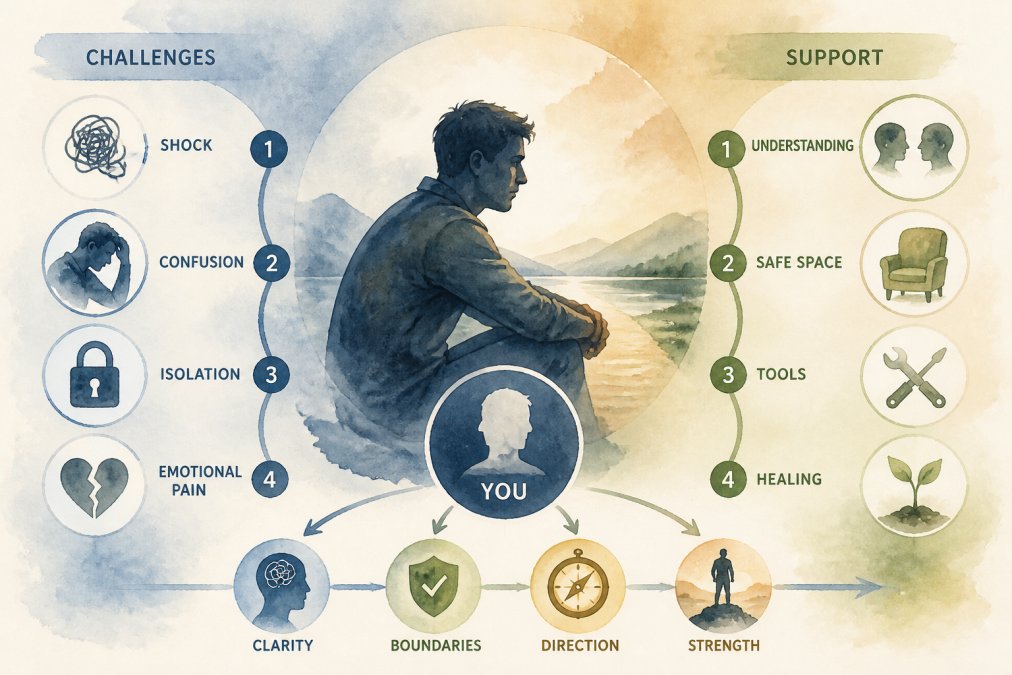
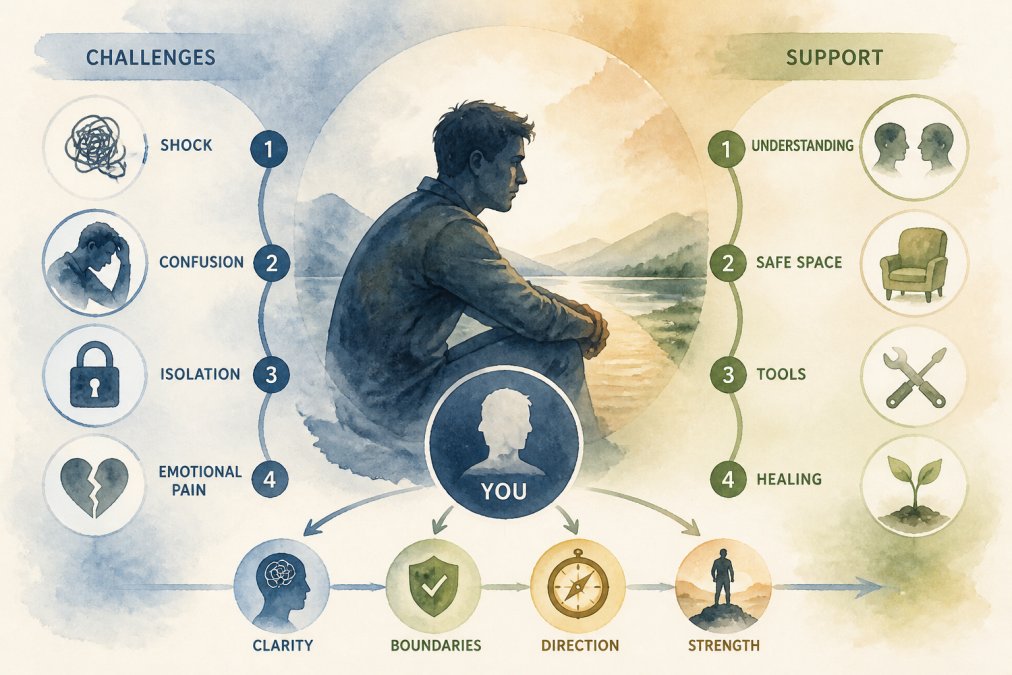
Betrayal trauma is a specific psychological injury that occurs when someone you trusted, particularly a romantic partner, violates that trust through infidelity. For men, this trauma often goes unrecognized because male vulnerability is stigmatized, and many men have been socialized to suppress emotional pain rather than process it. Understanding these symptoms is the first step toward recognizing that what you’re experiencing is a legitimate trauma response deserving care and attention.
Hypervigilance and intrusive thoughts
Hypervigilance is a hallmark symptom of betrayal trauma. After discovering infidelity, your nervous system goes into overdrive. You become acutely aware of your partner’s movements, check their phone, monitor their location, or replay conversations obsessively looking for hidden meanings. This isn’t paranoia; it’s your brain trying to prevent another betrayal by staying constantly alert.
Intrusive thoughts accompany this hypervigilance. You replay the infidelity over and over, imagine scenarios, or suddenly remember details at random moments. These thoughts feel involuntary and exhausting. Many men describe this as “stuck in a loop” where their mind won’t let the betrayal go, even when they want to move forward.
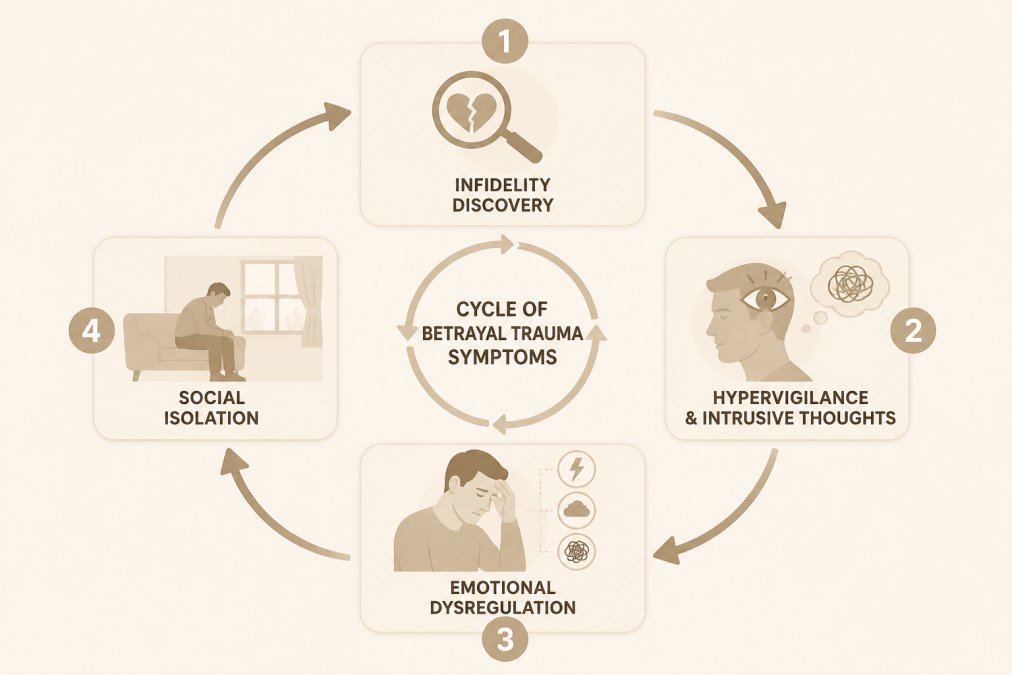
Emotional dysregulation and isolation
Emotional dysregulation means your feelings swing unpredictably. One moment you feel rage toward your partner; the next, desperation to save the relationship. This emotional instability is disorienting and makes decision-making feel impossible.
Many men respond by withdrawing from friends, family, and support systems because explaining what happened feels humiliating. Isolation amplifies the trauma. Without external support, you’re left alone with intrusive thoughts and emotional chaos. Some men describe feeling numb alongside intense emotions, a dissociative response where nothing feels real or manageable. This emotional fragmentation is part of the trauma response, not a sign of weakness.
Step 1: Stabilize Yourself Immediately
Before seeking therapy, support groups, or making major decisions about your relationship, you need to stabilize. Trauma doesn’t respond well to logic when you’re in acute crisis. The goal is to create enough psychological safety that you can think clearly and take the next steps without being overwhelmed by panic or despair.
Self-help tools for crisis moments
When gripped by intrusive thoughts or emotional overwhelm, grounding techniques can help bring you back to the present moment. The 5-4-3-2-1 technique works quickly: identify five things you can see, four things you can touch, three things you can hear, two things you can smell, and one thing you can taste. This forces your brain out of the trauma loop and into present-moment awareness.
Box breathing is another practical tool. Breathe in for four counts, hold for four, exhale for four, hold for four (peer-reviewed research). Repeat five to ten times. This activates your parasympathetic nervous system and signals safety to your body.
Physical movement helps discharge the stress energy that betrayal trauma creates. A 15-minute walk, intense exercise, or yard work can help your nervous system process activation. Journaling without judgment, writing whatever comes to mind without editing, can help externalize the chaos in your head.
Building psychological safety
Psychological safety means creating an environment where you feel safe enough to process what happened. This starts with one basic action: telling someone. Isolation is the betrayal trauma’s favorite hiding place. You don’t need to tell everyone or share details. You need to tell one person you trust, a close friend, family member, or therapist, that you’re going through something difficult. The act of speaking it aloud breaks the silence and begins to normalize your experience.
Set boundaries around conversations about the infidelity. Decide what you’re willing to talk about and what’s off-limits. Create a physical space where you feel safe, whether a separate room or a refuge in your own home.
After the Affair Series provides structured frameworks specifically designed for this stabilization phase. The platform offers immediate-access tools that help you organize your thoughts, identify what you need right now versus what you can address later, and create a concrete action plan.
Step 2: Identify the Right Therapy for Betrayal Trauma
Not all therapy is equally effective for betrayal trauma. A trauma-informed therapist understands the specific neurobiology of betrayal, how it hijacks your threat-detection system, and why standard talk therapy alone often isn’t enough.
Trauma-informed therapy approaches
Trauma-informed therapy recognizes that betrayal trauma is stored in your body and nervous system, not just your mind. Effective approaches include:
Cognitive Processing Therapy (CPT) helps you identify and challenge the thoughts that keep you stuck. After betrayal, your brain develops sticky beliefs: “I’m stupid for not seeing it,” “I’m unlovable,” “I can never trust again.” CPT systematically examines these beliefs and helps you develop more accurate thinking.
Eye Movement Desensitization and Reprocessing (EMDR) uses bilateral stimulation while you process traumatic memories. This helps your brain file away the betrayal as a past event rather than an ongoing threat. Many men find EMDR effective because it doesn’t require extensive talking about emotions.
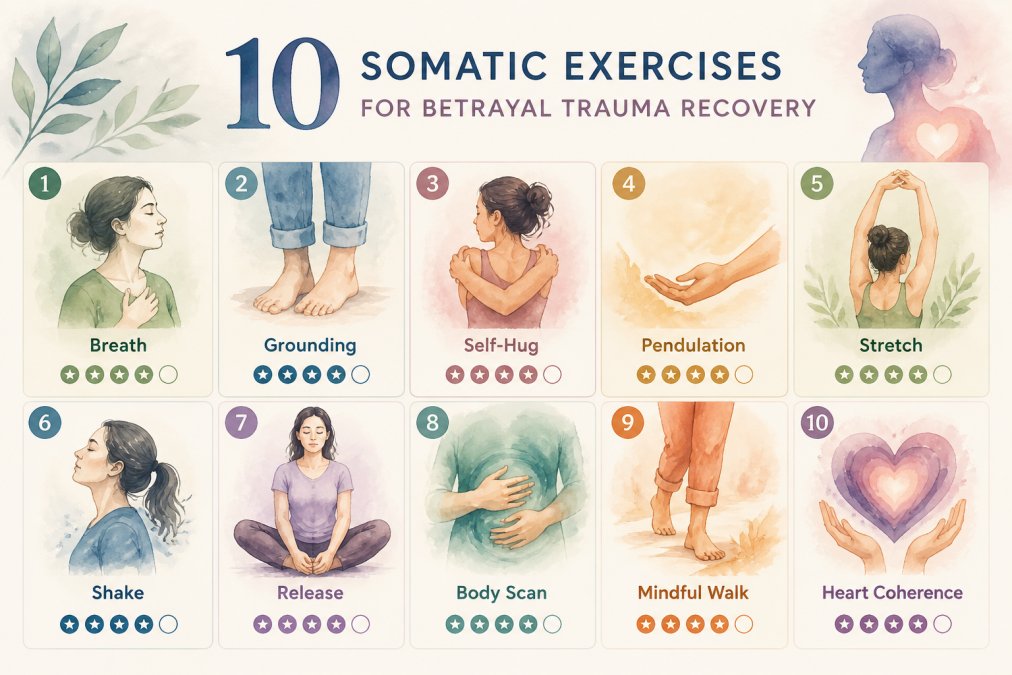
Somatic therapies work directly with your nervous system through body awareness, breathwork, and movement. Since betrayal trauma is stored in your body, addressing it somatically can be more effective than talk therapy alone.
Internal Family Systems (IFS) treats different parts of your psyche as distinct voices. After betrayal, you might have a part that wants to fight, a part that wants to flee, and a part that wants to shut down. IFS helps these parts communicate and cooperate.
Individual counseling vs. group therapy
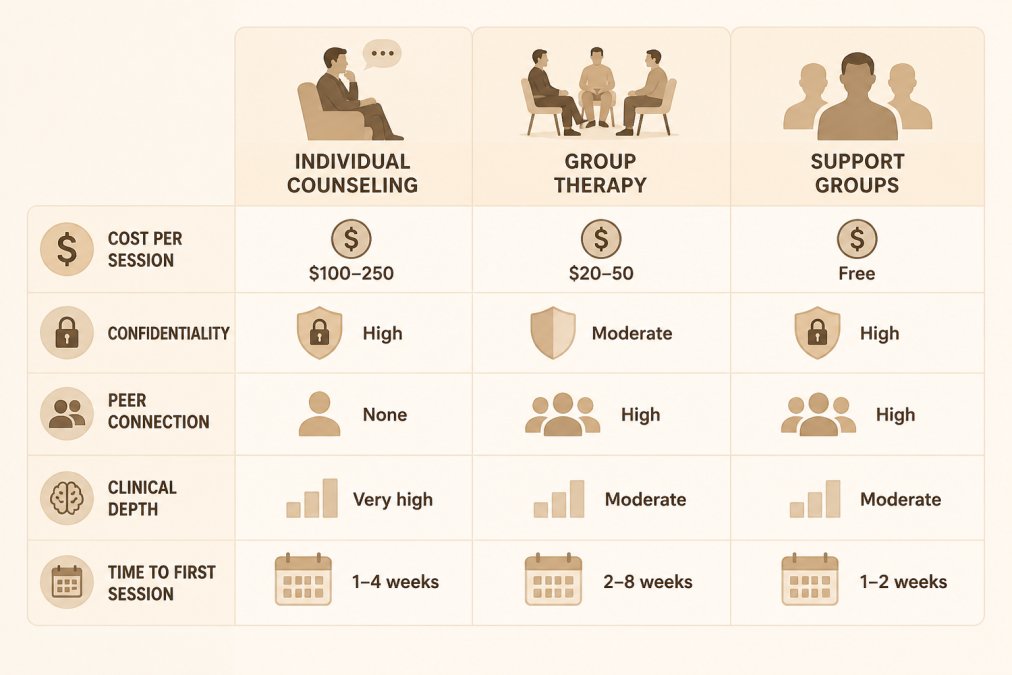
Individual counseling gives you one-on-one attention from a trained professional tailored to your specific situation. The downside is cost, individual therapy typically runs $100-250 per session.
Group therapy brings you together with others processing similar trauma. A skilled group therapist facilitates conversation and ensures safety. Group therapy is less expensive and creates community, but you get less individualized attention.
Support groups are peer-led or minimally facilitated gatherings of people navigating betrayal trauma. Many are free or low-cost. The power lies in hearing others say, “I felt that too,” and realizing you’re not alone. Support groups don’t replace clinical treatment if you’re in acute crisis, but they reduce isolation.
The most effective approach for many men combines individual therapy with group support. Individual therapy addresses the clinical work; group support provides community and normalization.
Step 3: Find Infidelity Recovery Support Groups for Men
Support groups specifically for men dealing with infidelity or betrayal trauma are rare. Many men end up in generic therapy groups where they feel like outsiders. Finding a space designed for men’s experiences matters.
Peer support and group dynamics
In a men’s betrayal trauma support group, you’re with people who understand the specific pressure of male socialization, the expectation to “move on,” the shame of being “weak,” and the difficulty of admitting vulnerability. This shared context changes everything.
Good group dynamics depend on confidentiality, non-judgment, and clear boundaries. A well-run group establishes ground rules: what’s said in the group stays in the group, people don’t give unsolicited advice, and each person’s experience is valid.
The group becomes a place where you can practice being vulnerable in a safe container. You can say things you’d never say to friends or family, your deepest fears, your rage, your confusion about whether to stay or leave.
Virtual care and in-person options
Virtual support groups have made access easier. You can attend from home, which reduces the barrier to showing up when you’re in crisis. Virtual groups also connect you to people outside your geographic area.
In-person groups create a different quality of connection. You’re in the same room, making eye contact, hearing tone of voice, and building real relationships. For many men, this in-person accountability makes it easier to commit to showing up.
Hybrid models offer both in-person and virtual meetings, providing flexibility to attend consistently regardless of circumstance.
Take the free 23-point assessment →
After the Affair Series recognizes that finding the right support is a barrier for many men. The platform connects you to vetted resources, including information about support groups in your area and virtual options that match your specific situation.
Step 4: Vet Trauma-Informed Providers
Not every therapist who claims to work with trauma is actually trauma-informed. Vetting providers is crucial because the wrong fit can retraumatize you or waste months of your time and money.
Vetting criteria for qualified providers
Ask specific questions before committing to work with a therapist:
“What is your training in trauma?” A trauma-informed therapist should name specific certifications or training programs (apa.org). EMDR training, CPT certification, or specialized training in relational trauma are markers of real expertise.
“How do you work with betrayal trauma specifically?” You want someone who has treated multiple clients with infidelity-related trauma and can speak to their approach.
“What is your stance on reconciliation?” You need someone neutral who helps you clarify what YOU want, not what they think you should want.
“How do you handle crisis?” Ask what happens if you’re in acute distress between sessions and whether you can contact them.
“What is your cancellation policy?” Ask about sliding scale fees and how cancellations are handled.
Confidentiality and non-judgmental space
Confidentiality is non-negotiable. A therapist should explain their limits clearly, they’re required to report if you’re a danger to yourself or others, or if there’s suspected abuse of a child or vulnerable adult. Beyond those legal limits, everything you say should stay confidential.
Non-judgment means the therapist doesn’t shame you, doesn’t pressure you toward a particular outcome, and doesn’t make you feel like your trauma is your fault. Red flags include discomfort with male vulnerability, pushing you toward a specific decision about your relationship, or making you feel worse after sessions. Trust your gut and find someone else if something feels off.
Step 5: Access Financial Resources and Sliding Scale Care
Cost is a real barrier. Knowing where to look makes a difference.
Community mental health centers offer sliding scale therapy based on income. Search “[your state] community mental health center” to find options in your area.
Psychology Today’s therapist directory allows you to filter by insurance accepted, sliding scale availability, and specialization.
Open Path Collective offers therapy sessions for $30-$80 through a network of vetted therapists.
University psychology clinics often provide low-cost therapy through graduate student therapists supervised by licensed professionals.
Employee Assistance Programs (EAP) through your employer often provide free or heavily subsidized counseling. Check with HR.
Support groups are often free or very low-cost. Combining individual therapy with group support is practical, the group costs less but provides community.
After the Affair Series offers structured resources at a price point designed to be accessible. The platform provides immediate tools while you’re searching for longer-term professional care.
Navigate Male Vulnerability and Stigma
The biggest barrier to men getting support for betrayal trauma isn’t lack of resources; it’s stigma. The cultural message is clear: men don’t cry, men don’t process emotions, men move on. Admitting that infidelity devastated you can feel like admitting weakness.
But betrayal trauma doesn’t care about gender norms. Your nervous system is dysregulated. Your trust is shattered. Your sense of self is questioned. These are real injuries requiring real care.
The men who recover best are those who reject the narrative that vulnerability is weakness. They reach out. They cry if they need to. They admit they don’t know what to do. And they find community with other men doing the same.
Stigma thrives in silence. The moment you tell one person, a friend, therapist, or support group, the shame loses its grip. You realize you’re not the only one. You realize this isn’t a personal failure; it’s a human response to profound betrayal.
Your capacity to feel deeply, to be affected by betrayal, to grieve what you’ve lost, these are not flaws. They’re evidence that you’re capable of real connection.
Finding betrayal trauma support for men requires navigating multiple systems while you’re in crisis. After the Affair Series simplifies this by providing a structured framework that helps you stabilize immediately, identify the right type of care for your situation, and access resources without endless searching. The platform’s 23-point assessment gives you clarity about where you are and what you need next, turning overwhelming chaos into a concrete action plan. Start with the free assessment and move forward from there.
Frequently Asked Questions
What are the most common symptoms of betrayal trauma in men?
Betrayal trauma symptoms in men often include hypervigilance (constant scanning for threats), intrusive thoughts about the infidelity, emotional numbness alternating with rage, difficulty trusting others, and social withdrawal. Many men also experience physical symptoms: sleep disruption, appetite changes, and heightened stress responses. These reactions are not weakness, they are the brain’s natural protective response to relational trauma. Recognition of these symptoms is the first step toward seeking appropriate support and beginning the healing journey.
How do I know if I need professional help for betrayal trauma?
Professional support becomes essential when betrayal trauma symptoms persist beyond a few weeks, interfere with work or parenting, trigger substance use, or include thoughts of harming yourself. If you cannot regulate your emotions, maintain relationships, or function in daily tasks, trauma-informed therapy is warranted. Additionally, if you’re experiencing post-traumatic stress responses, flashbacks, nightmares, or panic, a qualified therapist specializing in relational trauma can provide evidence-based treatment that self-help alone cannot address.
Are there support groups specifically for men dealing with infidelity?
Yes. Infidelity recovery support groups for men exist both online and in-person, though men’s-specific groups are less common than mixed-gender options. Many trauma-informed therapists facilitate small group programs focused on male experience of betrayal. Virtual care platforms have expanded access to peer support, allowing men to connect with others processing similar experiences in confidential, non-judgmental spaces. When evaluating groups, confirm they are trauma-informed, led by qualified facilitators, and structured around evidence-based healing modalities rather than blame or shame.
What is the difference between individual therapy and support groups for betrayal trauma recovery?
Individual counseling provides personalized, clinical intervention tailored to your specific trauma history and needs, with direct guidance from a licensed therapist trained in relational trauma. Support groups offer peer connection, shared validation, and the relief of knowing others understand your experience, reducing isolation and normalizing grief processing. Best therapy for betrayal trauma often combines both: individual sessions for clinical depth and crisis management, plus group participation for emotional regulation and community. The choice depends on your attachment style, preference for privacy, and access to resources.
This article was written using GrandRanker