TL;DR:
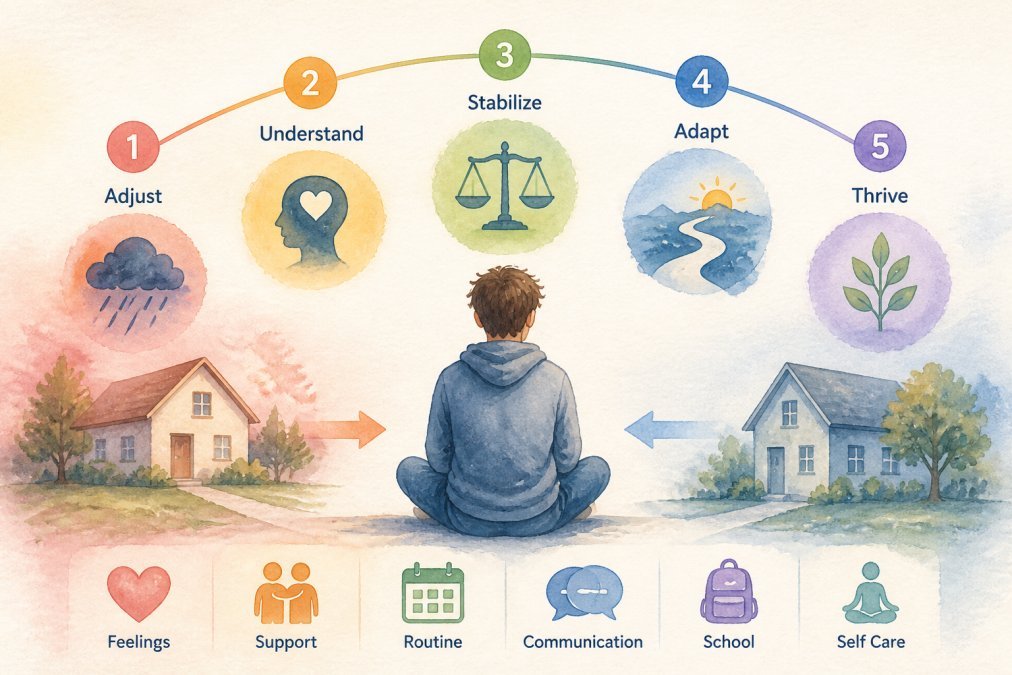
- Talking to children about a parent’s affair prioritizes emotional safety by providing honest, age-appropriate reassurance and framing disclosure as an ongoing conversation.
- Preparing emotionally, agreeing on a shared script, and maintaining a united parental front help protect children from secondary trauma and parental conflict.
- Consistently offering reassurance, normalizing feelings, and revisiting conversations over time support children’s healthy adjustment and trust in their parents.
- How to prepare before talking to kids about a parents affair
- What to say: age-appropriate ways to explain infidelity to children
- How to maintain a united parental front during disclosure
- How to manage children’s reactions and support their adjustment over time
- Common mistakes that harm children and how to avoid them
- Key takeaways
- What I’ve learned about these conversations that most advice misses
- FAQ
Talking to kids about a parent’s affair means prioritizing emotional safety above all else, using honest but age-appropriate language, and treating disclosure as an ongoing conversation rather than a single difficult moment. The standard clinical term for this process is “betrayal trauma disclosure,” and how you handle it shapes your children’s emotional adjustment for years. Emotional safety is the primary objective in these conversations. Children need to know they are loved, that the affair is not their fault, and that their daily lives will remain stable. What they do not need is a full adult account of what happened. Remember, talking to kids about a parents affair is crucial.
How to prepare before talking to kids about a parents affair
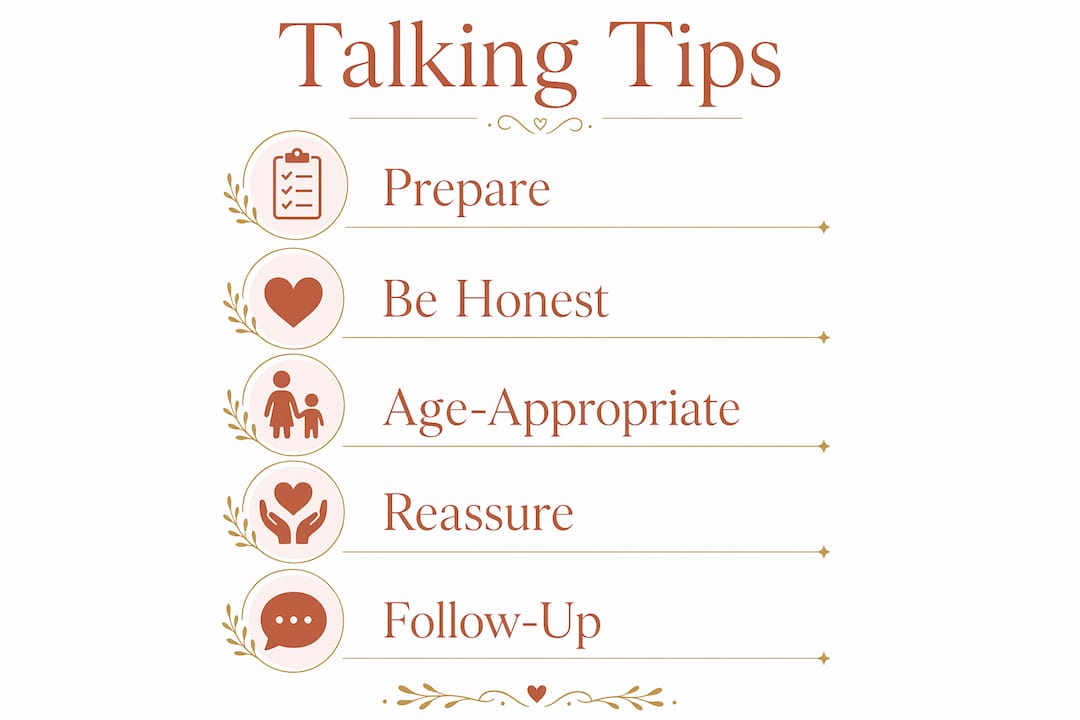
Preparation is not optional. Disclosing a parent’s affair before you are emotionally regulated causes secondary trauma. Your distress becomes their distress, and children are not equipped to hold that weight.
Before you say a single word to your children, clarify two things: what the affair means for your relationship going forward, and what you and your co-parent agree to say. Children are remarkably perceptive. If you and your partner contradict each other or show visible hostility during the conversation, the conflict itself becomes the wound. Parental conflict exposure is a stronger predictor of children’s long-term adjustment than knowledge of the affair itself. That finding should change how you prioritize your preparation.
Here is what to address before you sit down with your children:
- Regulate your own emotions first. Seek individual therapy, lean on a trusted friend, or work through Aftertheaffair’s structured resources before the conversation. You cannot be a stable container for your child’s feelings if you are still in crisis yourself.
- Agree on a shared script. You and your co-parent do not need to be in a good place relationally to deliver consistent messaging. Write it down if necessary.
- Decide what is age-appropriate to share. Young children need simple reassurances. Teenagers can handle slightly more context, but still not adult details.
- Prepare for follow-up questions. Children rarely process big news in one sitting. Have a plan for what comes next.
Pro Tip: Use a “Someday Journal” to record questions your child asks that you are not ready to answer yet. This tactic signals transparency to your child while protecting them from information they are not developmentally ready to process.
What to say: age-appropriate ways to explain infidelity to children
The goal is honest simplicity, not full disclosure. Use broad language like “broken trust,” “serious challenges in our relationship,” or “one parent made a choice that hurt the other.” These phrases are truthful without being graphic. Avoid blame, avoid names of third parties, and avoid any detail that serves your emotional need to be understood rather than your child’s need to feel safe.
Here is how language shifts across developmental stages:
| Age group | What they need to hear | What to avoid |
|---|---|---|
| Ages 4 to 7 | “Mom and Dad are having some big problems. We both love you and that will never change.” | Any reference to cheating, betrayal, or a third person |
| Ages 8 to 12 | “One of us did something that broke trust in our relationship. It’s not your fault and it doesn’t change how we feel about you.” | Details about the affair partner or physical intimacy |
| Ages 13 and up | “There was a serious breach of trust between us. We’re telling you because you deserve honesty, not because you need to fix anything.” | Asking them to take sides or process your grief |
Disclosure is an ongoing process, not a single event. Revisit the conversation as your child grows and their questions deepen. A seven-year-old who accepts “Mom and Dad had problems” will become a fourteen-year-old who wants to understand what actually happened. Plan for that.
Children fill information gaps with damaging narratives when parents stay silent. Moving from giving answers to asking questions uncovers what your child is actually afraid of. Ask: “What are you thinking about right now?” or “Is there anything you’re worried about?” rather than delivering a monologue. Their answers will tell you exactly what reassurance they need.
Explicitly state, more than once, that the affair is not their fault. Children between ages six and twelve are especially prone to magical thinking and self-blame. Saying it once is not enough.
How to maintain a united parental front during disclosure
Delivering news cooperatively is one of the most powerful protective acts you can offer your child. It signals that despite the relational breakdown between adults, the parental unit remains intact for their benefit. This does not require you to pretend everything is fine. It requires you to agree, in advance, on what you will and will not say.
When a united front feels impossible, a scripted conversation is the next best option. Write out the key points together, even by text or email if face-to-face is too charged. Stick to the script during the actual conversation. If one parent becomes visibly distressed, the other can take over calmly.
Specific behaviors that harm children during this process:
- Speaking negatively about the other parent in front of or to the child
- Using the child as a messenger between parents
- Asking the child to keep secrets from the other parent
- Implying the child should comfort you or take your side
Parentification causes genuine psychological harm. When a child becomes the emotional support for a grieving parent, they lose their right to simply be a child. Guard against this even when you are in pain.
Pro Tip: If co-parenting communication has broken down entirely, a family mediator or therapist can help you draft a disclosure script. Aftertheaffair’s guidance on co-parenting after an affair walks through this process in practical detail.
How to manage children’s reactions and support their adjustment over time
Children’s greatest underlying fear during a family crisis is abandonment, not the affair itself. Parents must remain emotionally regulated and serve as a stable container for the child’s emotions during disclosure and in the months that follow. This is a long-term commitment, not a one-time conversation.
Expect reactions to shift over time. A child who seems fine at age nine may struggle significantly at thirteen when they understand more. A teenager who reacts with anger may soften into grief six months later. None of these responses are wrong. They are all normal.
Here is how to support your child through the adjustment process:
- Normalize all feelings. Tell your child directly: “It’s okay to feel angry, sad, confused, or even nothing at all. All of those feelings make sense.”
- Protect daily routines. Children focus on practical stability far more than adults expect. Keeping school schedules, mealtimes, and bedtime routines consistent communicates safety more powerfully than any conversation.
- Revisit the conversation proactively. Do not wait for your child to come to you. Check in regularly: “I know we talked about some hard stuff. How are you feeling about it now?”
- Watch for warning signs. Withdrawal, declining grades, sleep disturbances, or sudden behavioral changes in a child who seemed fine are signals to seek professional support.
- Connect them with a counselor. A child therapist who specializes in family trauma gives your child a space to process feelings they may not feel safe expressing to you. This is not a failure on your part. It is good parenting.
Understanding how children emotionally cope with infidelity at home gives you a clearer picture of what is happening beneath the surface, even when your child appears unaffected.
Common mistakes that harm children and how to avoid them
The most damaging mistake parents make is oversharing. Young children need simple assurances and stable routines, not full narratives of the affair. Sharing adult details does not make you more honest with your child. It transfers your trauma onto them.
Other critical mistakes to avoid:
- Forcing a single “perfect” conversation. There is no perfect conversation. Pressure to get it right in one sitting leads to either oversharing or shutting down entirely.
- Waiting too long. If children sense something is wrong and no one explains it, they construct their own explanations. Those explanations are almost always worse than the truth.
- Expecting immediate resolution. Children process news iteratively over months and years. Do not interpret a calm reaction as proof they are fine.
- Sharing out of a need for validation. Parents must guard against disclosing more than necessary because they need someone to understand their pain. Your child cannot be that person.
“The conversation is not about you being understood. It is about your child feeling safe.”
Repair is always possible. If you said too much, went back and apologized, or lost your composure during the conversation, you can revisit it. Say: “I shared some things last time that were too much for you to carry. I’m sorry. What matters most is that you know you are loved and none of this is your fault.”
Key takeaways
Talking to kids about a parent’s affair requires emotional regulation, a united parental front, age-appropriate language, and a commitment to ongoing conversation rather than a single disclosure event.
| Point | Details |
|---|---|
| Emotional safety comes first | Children need reassurance they are loved and not at fault before any other information is shared. |
| Preparation protects children | Regulate your own emotions and agree on a shared script with your co-parent before the conversation. |
| Age-appropriate language matters | Use broad terms like “broken trust” and adjust detail level to the child’s developmental stage. |
| Disclosure is a process | Revisit and adapt conversations as children grow and their questions deepen over months and years. |
| Avoid parentification | Never use children as emotional support, messengers, or confidants during or after the disclosure. |

What I’ve learned about these conversations that most advice misses
By Silviya
Most guidance on this topic focuses on what to say. In my experience, the harder and more consequential question is whether you are ready to say anything at all. Parents in acute betrayal trauma are often operating from a place of raw pain, and that pain has a way of leaking into conversations with children no matter how carefully you script them.
What I have seen consistently is that children do not need perfect words. They need a regulated parent. A calm, present parent who says “we’re going through something hard, and we’re going to be okay” does more for a child’s sense of safety than the most carefully worded disclosure script. The words matter less than the emotional state behind them.
I also think we underestimate how long this process takes. Parents often want to have the conversation, check the box, and move forward. But children circle back. They ask the same questions at different ages because they are processing at a deeper level each time. The parent who stays open to those returning questions, without frustration or defensiveness, is the one whose child comes through this with their trust intact.
Trust your instincts. You know your child better than any guide does. Use the frameworks here as scaffolding, not a script.
— S.J.Howe
Support and resources for healing after an affair
Knowing what to say to your children is one part of recovery. Rebuilding your own stability and your family’s future is the longer work. Aftertheaffair offers structured, evidence-informed resources designed specifically for this stage of healing. The 7 Steps Infidelity Recovery Checklist gives you a clear, practical framework for moving through recovery without losing sight of what matters most, including your children’s wellbeing. For parents working to rebuild after betrayal, the guidance on relationship growth after infidelity addresses how to restore trust and stability in a way that protects the whole family. You do not have to figure this out alone.
FAQ
What is the right age to tell kids about a parent’s affair?
There is no universal right age. Disclosure should be guided by the child’s developmental stage and emotional readiness, using simple language for young children and more context for teenagers, always prioritizing reassurance over detail.
How do I explain cheating to a young child without traumatizing them?
Use broad, simple language such as “one of us broke trust in our relationship” and focus entirely on reassuring the child they are loved and safe. Avoid graphic details, names of third parties, and any language that assigns blame.
What are the most common children’s reactions to affairs?
Children typically react with confusion, anxiety, anger, or withdrawal, and these reactions shift over time as they process the news at deeper developmental levels. A calm initial reaction does not mean the child is unaffected.
Should both parents be present when telling kids about an affair?
Yes, when possible. Presenting a united front signals safety and consistency to children and prevents them from feeling they must choose sides between parents.
When should I get professional help for my child after an affair?
Seek a child therapist if you notice withdrawal, declining school performance, sleep problems, or behavioral changes that persist beyond a few weeks. These are signs your child needs a dedicated space to process feelings they may not feel safe expressing at home.
Recommended
- How to Tell Kids About an Affair – After the Affair Series
- What Should Parents Never Say to Their Children
- How to Emotionally Prepare Kids for Parenting Changes After Infidelity – After the Affair Series
- How Children Emotionally Cope with Infidelity at Home