The Definitive, Stage-Based Clarity Checklist
If you are a betrayed partner who has just discovered infidelity, the question “Should I stay or go after cheating?” is likely consuming your every thought. You are drowning in a volatile mixture of anger, sorrow, love, and fear. You need an answer now, yet every fiber of your being is too traumatized to make a decision you won’t regret later.
The Most Painful Question: Why You Can’t Decide in Crisis
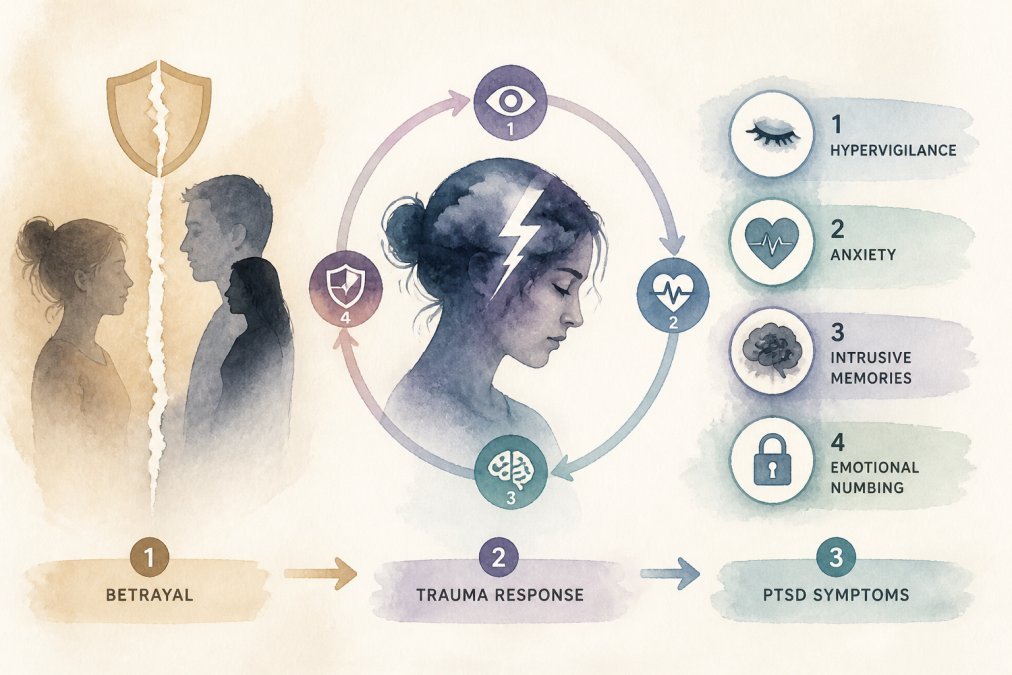
This profound indecision is not a personal failure; it is the neurological reality of betrayal trauma. Your brain is in fight-or-flight mode, seeking immediate safety.
The Solution is not a single answer, but a structured process. You cannot make a grounded, healthy, long-term decision while you are in the acute trauma phase. The After the Affair Series is the only comprehensive, stage-based roadmap that respects this reality, ensuring you get the right advice at the right time.
This Clarity Checklist is your guide through the necessary stages-from the immediate chaos to the long-term commitment, allowing your decision to emerge from a place of strength, not panic.
Phase 1: Stabilization & Diagnosis (Months 0-6)
Why the First Six Months are for Survival, Not Resolution?
The immediate aftermath is dedicated to stabilization. Your world has been shattered, and your nervous system is overwhelmed. The goal of this phase is simply to quiet the chaos, regain personal footing, and create a safe environment to begin the hard work. You must focus on yourself before you can focus on the relationship.
The Stabilization Checklist–(The Work of Book 1)
| Status | Action Required | Purpose & Book Integration |
|---|---|---|
Complete | Implement Urgent Trauma Management | You need immediate tools to stop intrusive thoughts, manage triggers, and sleep. This is essential self-care that prevents burnout. |
| Complete | Demand Full, Honest Disclosure | The uncertainty fuels trauma. Your partner must provide answers about the affair timeline, not in a cruel way, but in a complete way, to end the need for “snooping.” |
| Complete | Determine the Type of Affair (The 7 Types Framework) | This is your most critical step. You cannot assess viability without diagnosis. An Emotional Affair requires emotional rebuilding; Serial Cheating may require non-negotiable professional accountability. |
| Complete | Assess Partner’s Initial Accountability | Are they minimizing, blaming, or defending? Or are they showing genuine remorse, owning the betrayal, and committing to your healing? True accountability is the prerequisite for moving to Phase 2. |
If you are in the first six months, stop searching and start stabilizing. Trying to decide on your future while experiencing acute betrayal trauma will only lead to further confusion and pain.
Your next step is clear: Stabilize.

Phase 2: Accountability & Clarity (Months 6-12)
Earning the Right to Rebuild: Beyond the Initial Apology
Once you have achieved some stability (around the six-month mark), you can begin to shift your focus from survival to assessment. This phase is about determining if the foundation of a new relationship can be built. This decision is not based on your feelings, but on measurable actions and committed effort from both parties.
The Clarity Checklist (The Work of Book 2 & 4)
| Status | Action Required | Purpose & Book Integration |
|---|---|---|
| Complete | Establish Strict Boundaries and Safety Protocols | For reconciliation, trust is earned through consistent, observable behavior. New boundaries must be clear, non-negotiable, and adhered to (e.g., full access, check-ins, termination of contact with the affair partner). |
| Complete | Evaluate Trust-Building Milestones | Has the wayward partner done the work of moving from defensiveness to genuine empathy? Have you seen progress in their ability to answer tough questions without minimizing? Trust is rebuilt with small, daily, accountable actions. |
| Complete | Address the Root Causes of Vulnerability | You must move beyond what happened to why it happened. This is deep work that addresses personal issues, unmet needs, and relationship systems that allowed the affair to take root. |
| Complete | Test Your Communication Under Stress | The new relationship must have a new language. Can you discuss the affair without the conversation escalating to defensiveness or shutdown? Can you use the practical communication exercises needed for deep repair? |
If you have survived the first six months and your partner is committed to genuine accountability, you are ready for the hardest, most rewarding work.
Phase 3: Identity & Growth (Year One and Beyond)
The Long-Term View: Is This Relationship 2.0 Sustainable?
By the one-year mark, your decision should begin to solidify. If you have been doing the work, you are no longer deciding whether to stay with the old relationship, but whether to commit to the new one- Relationship 2.0. This phase is dedicated to long-term healing and personal fulfillment.
The Growth Checklist
| Status | Action Required | Purpose & Book Integration |
|---|---|---|
| Complete | Reclaim Your Individual Identity | Regardless of the relationship’s fate, you must define yourself outside of the betrayal. What are your passions, boundaries, and personal goals now? Your happiness cannot be contingent on your partner. |
| Complete | Assess the “New Normal” for Long-Term Fit | The trauma is lessened, and the new boundaries are routine. Do you genuinely like the new, stronger version of yourself and the new, more accountable version of your partner? Do you see a sustainable future? |
| Complete | Embrace Post-Traumatic Growth (PTG) | You are capable of moving beyond “just surviving” to actively thriving. This means integrating the lessons of the betrayal to become more authentic, connected, and resilient. |
The infidelity does not have to be the end of your story, it can be the catalyst for profound growth.
Your healing is too important to leave to chance. Take control of your recovery today.