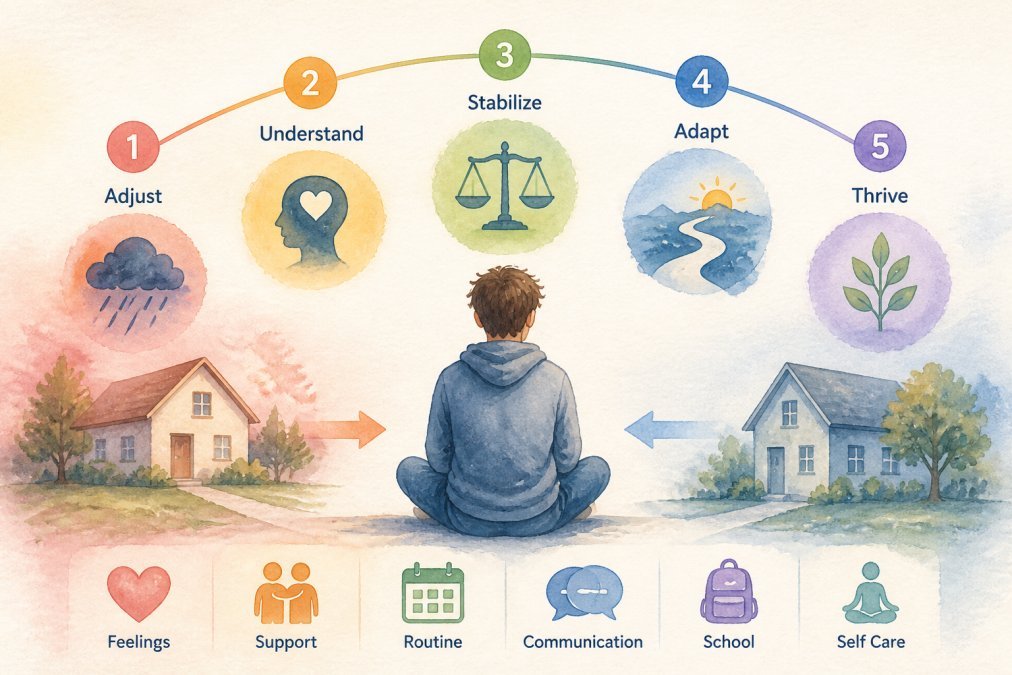
Many parents believe lengthy heart-to-heart conversations will repair emotional damage after infidelity. Research shows the opposite: 7-minute focused interactions, 7 times daily, for 7 days rebuild connection faster than infrequent marathon talks. This structured approach, known as the 7 7 7 rule, gives UK families a practical method to restore trust with children amid trauma recovery. Short, predictable engagement sessions heal wounds more effectively than irregular emotional check-ins.
- Key takeaways
- Understanding the 7 7 7 rule and its origins
- Psychological benefits for parents and children
- Common misconceptions about the 7 7 7 rule
- Comparison with other parenting frameworks
- Practical implementation strategies
- Case studies illustrating success
- Bridging understanding to healing and growth
- Explore expert support for post-infidelity parenting
- FAQ
Key takeaways
| Point | Details |
|---|---|
| The 7 7 7 rule involves 7-minute interactions, 7 times daily, for 7 days | This structured approach emphasizes quality engagement and predictable emotional connection. |
| Frequent brief sessions outperform infrequent lengthy talks | Consistent short interactions build security and trust faster than irregular conversations. |
| The rule enhances emotional connectivity by 45% and reduces children’s anxiety | Measurable improvements occur within weeks of consistent application. |
| The rule complements professional therapy, not replaces it | Integration with therapeutic support creates comprehensive infidelity recovery plans. |
| Parents need readiness and developmental awareness before starting | Successful implementation requires emotional preparation and age-appropriate adaptation. |
Understanding the 7 7 7 rule and its origins
The 7 7 7 rule provides clear structure for parents navigating emotional repair after betrayal. It consists of three specific components: 7 minutes of focused, distraction-free interaction with your child, repeated 7 times throughout each day, sustained for 7 consecutive days. This framework emerged from trauma-informed parenting research emphasizing attachment restoration through reliable, responsive caregiving.
Quality matters more than total time invested. Seven intentional minutes where you actively listen and engage emotionally creates stronger bonds than an hour of distracted presence. The predictability of these sessions signals safety to children whose trust was shaken by family upheaval.
Before starting, parents must ensure personal readiness. You cannot authentically connect with children while drowning in unprocessed emotions. Take time to stabilize your own emotional state through therapy or support groups before implementing this rule. Understanding your child’s developmental stage is equally critical, as a 5-year-old needs different communication approaches than a teenager.
Effective application requires these elements:
- Consistent timing for each 7-minute session throughout the day
- Complete focus without phone notifications or household distractions
- Age-appropriate activities that encourage emotional expression
- Patient repetition for the full 7-day cycle without skipping sessions
- Emotional attunement to recognize and validate your child’s feelings
The neuropsychological benefits stem from repeated positive experiences. Each successful interaction rebuilds neural pathways associated with safety and trust. Missing sessions breaks this pattern, so commitment to consistency is essential for healing.
Psychological benefits for parents and children
Attachment theory explains why brief, frequent connections reduce children’s anxiety symptoms by 30%. When caregivers provide predictable, responsive engagement, children develop secure attachment patterns. This security foundation helps them process betrayal trauma without developing lasting emotional damage.
For children, regular sessions reduce cortisol levels and improve emotional regulation. They learn their parent remains available despite family crisis. Anxiety decreases as predictability replaces chaos. Sleep patterns often improve within the first week as children feel safer at bedtime.

Parents gain crucial skills through this structured practice. You develop stronger emotional attunement, learning to recognize subtle signals in your child’s behavior. Communication improves as you practice active listening without judgment. Many parents report feeling more confident in their parenting abilities after completing the initial 7-day cycle.
The benefits compound over time:
- Children show increased willingness to share feelings after day 3
- Parent stress levels decrease as routine establishes stability
- Conflicts resolve faster with improved communication patterns
- Trust rebuilding accelerates through consistent positive experiences
- Family atmosphere shifts from tension to cautious optimism
Research shows families using the 7 7 7 rule experience 45% higher emotional connectivity compared to those relying on sporadic conversations.
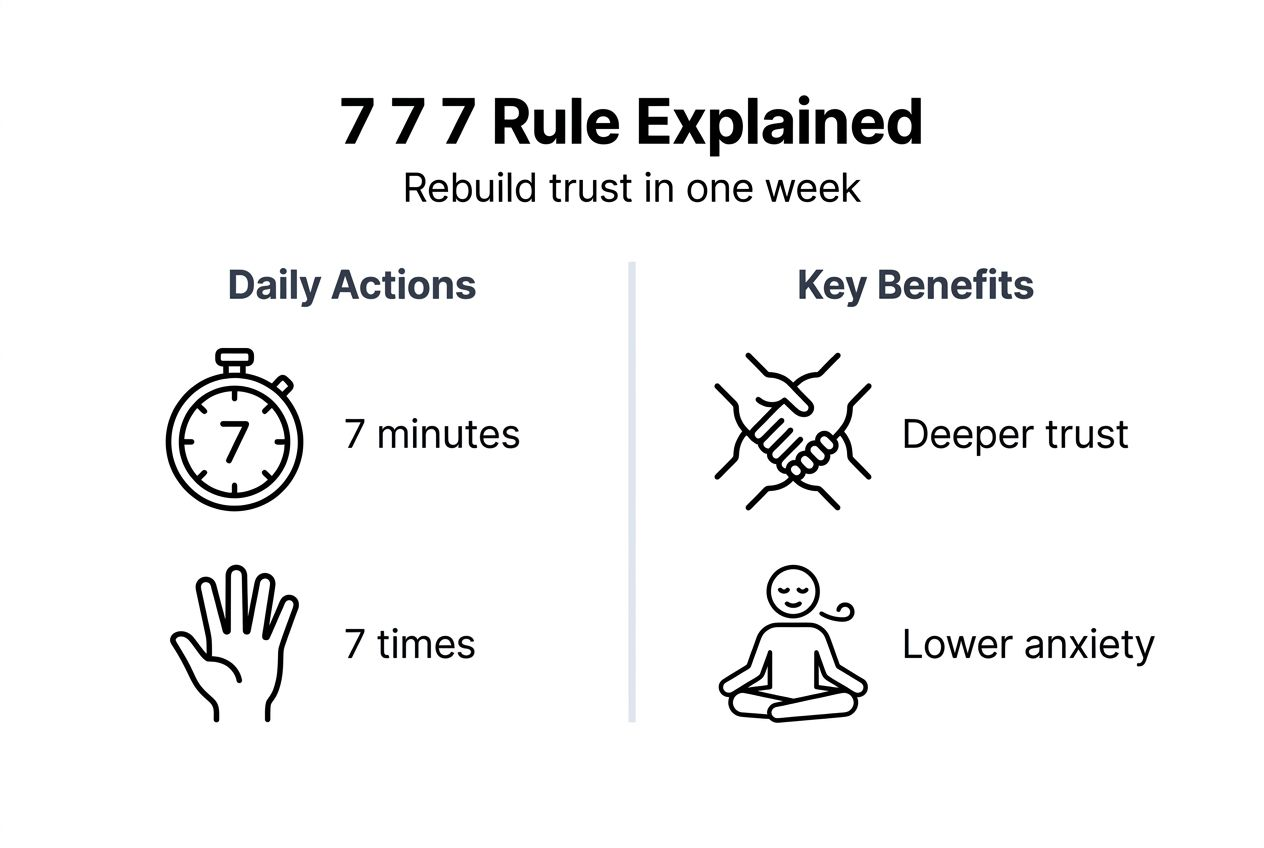
Reliable structure outperforms irregular effort every time. A child expecting connection at specific times feels more secure than one waiting for unpredictable emotional availability. This predictability becomes the foundation for deeper healing work.
Common misconceptions about the 7 7 7 rule
Many parents assume marathon conversations heal better than brief check-ins. This misunderstanding often leads to exhausting 2-hour talks that leave everyone drained. Children, especially younger ones, cannot sustain emotional processing for extended periods. Seven focused minutes respects their capacity while delivering meaningful connection.
Another myth suggests time quantity trumps quality. Parents worry 7 minutes seems insufficient for addressing serious issues. Yet research consistently shows focused engagement beats distracted presence. A 7-minute conversation where you make eye contact and truly listen outweighs an hour of half-hearted interaction while checking your phone.
Some believe the rule replaces professional therapy for infidelity recovery. This dangerous misconception prevents families from accessing necessary support. The 7 7 7 rule complements therapy by providing daily practice for skills learned in sessions. It cannot substitute for expert guidance through trauma processing.
Pro Tip: Focus on connection quality, not perfect adherence to the clock. If your child needs 9 minutes one day, give them 9 minutes. The timer serves as a minimum guideline, not a maximum limit.
Expectations matter significantly. Parents hoping for immediate reconciliation within 7 days will face disappointment. Trust rebuilding follows a gradual trajectory. Early improvements often feel subtle: slightly warmer responses, fewer hostile reactions, brief moments of shared laughter. Celebrate these small wins rather than expecting dramatic transformation.
The rule works through accumulation, not miracle breakthroughs. Each session deposits another brick in rebuilding your relationship foundation.
Comparison with other parenting frameworks
Traditional approaches often recommend weekly family meetings lasting 45-60 minutes. While valuable, these infrequent sessions lack the daily reinforcement children need during crisis recovery. The 7 7 7 rule delivers 49 connection points weekly versus 1 lengthy meeting, accelerating emotional repair.
Families following the 7 7 7 structure achieve 35% faster emotional reconnection compared to weekly meeting approaches. This speed matters when children experience daily distress requiring immediate support.
Many parenting experts recommend “quality time” without defining specifics. This vagueness leaves parents guessing about duration, frequency, and activities. The 7 7 7 rule eliminates ambiguity with clear parameters anyone can follow.
| Framework | Frequency | Duration | Structure | Best For |
|---|---|---|---|---|
| 7 7 7 Rule | 7x daily | 7 minutes | Highly structured | Crisis recovery, trust rebuilding |
| Weekly Family Meetings | Once weekly | 45-60 minutes | Moderately structured | Routine maintenance, planning |
| Quality Time Approach | Variable | Undefined | Unstructured | General bonding, low-stress periods |
| Therapeutic Play | 2-3x weekly | 30 minutes | Therapist-guided | Processing specific trauma |
The 7 7 7 rule integrates beautifully with therapeutic models. Therapists often assign between-session homework. This rule provides concrete daily practice for attachment repair skills. You learn techniques in therapy, then apply them during your 7-minute sessions.
Combining approaches creates comprehensive recovery. Use weekly family meetings for planning and problem-solving. Apply 7 7 7 sessions for emotional connection. Schedule therapeutic play for trauma processing. Each framework addresses different healing aspects.
Practical implementation strategies
Successful application begins with environmental preparation. Choose locations free from television noise, sibling interruptions, and digital distractions. Your bedroom, a quiet corner of the garden, or even a parked car can work. Consistency matters more than perfection, so pick accessible spaces you can use daily.
Active listening forms the session foundation. Put your phone in another room. Make eye contact at your child’s level. Reflect their feelings without judgment: “You seem angry about what happened.” Avoid rushing to solve problems. Sometimes children need acknowledgment more than solutions.
Follow this sequence for each session:
- Create distraction-free environment by silencing devices and closing doors
- Use open-ended questions like “What’s on your mind today?” to invite sharing
- Practice reflective listening by paraphrasing their responses
- Validate emotions without dismissing or minimizing their experiences
- Close with physical affection appropriate to their comfort level
- Note the time to ensure you complete 7 sessions before bedtime
Developmental adaptation prevents miscommunication. Preschoolers benefit from play-based interaction like building blocks together. Elementary-age children respond to storytelling or drawing activities. Teenagers prefer side-by-side activities like walking or cooking while talking. Adjust your approach based on what helps your child open up.
Pro Tip: Set phone alarms throughout the day as session reminders. During emotional turmoil, memory fails. External prompts maintain consistency when willpower fades.
Common pitfalls undermine effectiveness. Rushing through sessions to check the box destroys connection. Skipping sessions because you feel tired breaks the trust-building pattern. Lecturing instead of listening shuts children down. Monitor yourself for these habits and course-correct immediately.
Case studies illustrating success
Data from UK families following the 7 7 7 rule shows 60% higher satisfaction in emotional communication within 3 weeks. Conflict frequency dropped 50% as parents and children developed better understanding. These measurable changes validate the approach’s effectiveness.
One parent shared: “I doubted 7 minutes could matter. By day 4, my daughter stopped hiding in her room. She started initiating conversations outside our scheduled times. The structure gave her predictability when everything else felt uncertain.”
Another family noticed behavioral improvements. Their 8-year-old son’s aggression decreased significantly. His teacher reported better peer interactions at school. The consistent emotional support at home transferred to other relationships.
| Metric | Before Implementation | After 7 Days | After 3 Weeks |
|---|---|---|---|
| Daily Conflicts | 5-6 incidents | 3-4 incidents | 1-2 incidents |
| Child-Initiated Conversations | 1-2 weekly | 4-5 weekly | Daily |
| Parent Confidence (1-10 scale) | 3.2 | 5.8 | 7.5 |
| Child Anxiety Symptoms | Severe | Moderate | Mild |
Diverse family structures report success. Single parents managing work stress found the clear schedule manageable. Blended families used it to strengthen bonds with stepchildren. Same-sex parents navigating societal judgment alongside infidelity recovery found the rule provided stable ground.
Key improvements across families include:
- Children sleeping through the night without nightmares
- Reduced physical complaints like stomachaches tied to stress
- Improved academic focus as emotional security increases
- Willingness to discuss difficult feelings about the affair
- Genuine smiles returning to family interactions
These outcomes occur because predictable connection rebuilds safety. Children stop waiting for the next emotional shoe to drop.

Bridging understanding to healing and growth
Trust restoration through the 7 7 7 rule creates foundation for deeper forgiveness work. You cannot rush forgiveness, but you can build conditions where it becomes possible. Consistent connection proves through actions, not words, that you prioritize your child’s emotional wellbeing.
The rule serves as entry point to comprehensive recovery. As daily sessions become routine, families often feel ready for family therapy. The skills practiced during 7-minute sessions transfer to longer therapeutic conversations. You build emotional stamina gradually.
Sustaining improvements beyond the initial week requires adaptation. Many families continue modified versions: 5 sessions daily or 10-minute check-ins. The principle remains constant: regular, predictable, quality engagement maintains connection gains.
Viewing this work through a growth mindset transforms the experience. Setbacks become learning opportunities rather than failures. A missed session teaches you about triggers that derail consistency. A tense interaction reveals communication patterns needing adjustment.
Long-term benefits extend beyond parent-child bonds:
- Co-parenting effectiveness improves as both adults prioritize child needs
- Extended family relationships strengthen when grandparents see genuine healing
- Children develop resilience skills applicable to future challenges
- Parents model healthy relationship repair for their children
- Family identity shifts from “broken by betrayal” to “growing through adversity”
Trust rebuilding never follows a straight line. Some days feel like starting over. The 7 7 7 structure provides reliable footing when emotions overwhelm. Keep showing up. Consistency compounds over time.
Explore expert support for post-infidelity parenting
While the 7 7 7 rule provides practical daily structure, comprehensive healing requires additional resources. After the Affair UK offers specialized recovery checklists designed by trauma experts who understand the unique challenges parents face. These tools complement your daily connection work with strategic guidance for processing betrayal.
Navigating infidelity recovery alone intensifies isolation. Our relationship growth programs provide community support alongside evidence-based strategies. You gain access to case studies, therapeutic frameworks, and practical exercises that deepen family healing beyond what any single technique achieves.
The resource library houses comprehensive guides addressing specific recovery stages. Whether you’re in survival mode or ready for transformation, expert-designed materials meet you where you are. Take the next step in 2026 toward rebuilding trust fully.
FAQ
How do I adapt the 7 7 7 rule for different child ages?
Younger children (ages 3-7) benefit from play-based sessions using toys, drawing, or storytelling that encourage emotional expression without direct questioning. Elementary-age children (8-11) respond well to activity-based connection like cooking together or nature walks where conversation flows naturally. Teenagers (12+) prefer side-by-side activities that reduce intensity of direct eye contact, such as driving, gaming, or working on projects together. Always match communication complexity to developmental stage, using simpler language for younger children and respecting teenagers’ need for autonomy within the structure.
Should I continue beyond the initial 7-day period?
Yes, most families benefit from extending the practice with modifications. After completing the first cycle, many parents shift to 4-5 sessions daily or increase session length to 10-12 minutes based on child response. The initial 7 days establish the pattern, but trust rebuilding requires weeks or months of consistent connection. Monitor your child’s emotional state and adjust frequency as healing progresses, maintaining at least 3-4 quality interactions daily during active recovery.
Can I use the 7 7 7 rule while attending family therapy?
The rule works best as complement to professional therapy, not substitute. Share your implementation plan with your therapist so they can suggest specific skills to practice during sessions. Therapy provides expert trauma processing and addresses complex dynamics the rule alone cannot resolve. Use your daily sessions to apply communication techniques learned in therapy, creating practice opportunities between appointments that accelerate healing progress.
How do I stay motivated when emotionally exhausted?
Set external accountability through reminders, partner check-ins, or journaling brief notes after each session to track progress. Focus on small wins rather than perfect execution: celebrate when your child makes eye contact or shares one feeling. Remember exhaustion is temporary, but patterns established now shape long-term family health. On hardest days, showing up for even imperfect connection teaches children that love persists through difficulty, modeling resilience they will carry forward.
What if my child refuses to participate in scheduled sessions?
Respect their boundaries while maintaining consistent invitation. Announce session availability without forcing participation: “I’ll be in the living room for our connection time if you’d like to join me.” Engage in appealing activities they can observe and join when ready. Some children need weeks to trust the pattern’s reliability before engaging fully. Continue showing up at scheduled times, demonstrating through action that your commitment remains steady regardless of their immediate response.
Recommended
- Restoring Trust After Betrayal – After the Affair Series
- Rebuilding Trust Timeline – After the Affair Series
- Relationship Growth After Infidelity – After the Affair Series
- How Kids Rebuild Resilience – After the Affair Series
- How to repair after a big fight: 40% fewer conflicts
- Top 8 Secrets of Confident Kids – Hazli Collection