Attachment styles profoundly shape how you experience and recover from infidelity. If you feel stuck in emotional chaos after betrayal, understanding your attachment pattern unlocks personalized healing strategies. Research shows secure attachment facilitates quicker trust restoration after infidelity, but even insecure styles can be reshaped through intentional effort and therapy. This guide explores how anxious, avoidant, and secure attachment styles influence recovery and provides practical frameworks to accelerate your healing journey.
Table of Contents
- Introduction To Attachment Styles And Infidelity Recovery
- How Attachment Styles Influence Emotional Responses To Infidelity
- Common Misconceptions About Attachment Styles In Affair Recovery
- Frameworks For Understanding And Applying Attachment Theory In Infidelity Recovery
- Practical Strategies For Recovery Tailored To Attachment Styles
- Integrating Attachment Insight Into Affair Healing Journeys
- Explore Targeted Resources For Infidelity Recovery
- Frequently Asked Questions
Key takeaways
| Point | Details |
|---|---|
| Attachment styles impact emotional responses | Different attachment patterns create distinct challenges in processing betrayal and rebuilding trust after infidelity. |
| Secure attachment supports faster recovery | Securely attached individuals recover trust 50% faster on average, but still require intentional effort and patience. |
| Insecure styles need tailored strategies | Anxious and avoidant attachment patterns benefit from specific communication, boundary-setting, and emotional regulation approaches. |
| Therapy modifies attachment behaviors | 70% of couples with insecure attachment show significant improvement after attachment-focused interventions. |
| Misconceptions limit healing potential | Believing attachment style is unchangeable or determines recovery success creates unnecessary barriers to healing. |
Introduction to attachment styles and infidelity recovery
Attachment theory provides a powerful lens for understanding why betrayal triggers such intense emotional reactions. Your attachment style, formed through early relationships and reinforced throughout life, shapes how you bond, trust, and respond to relationship threats.
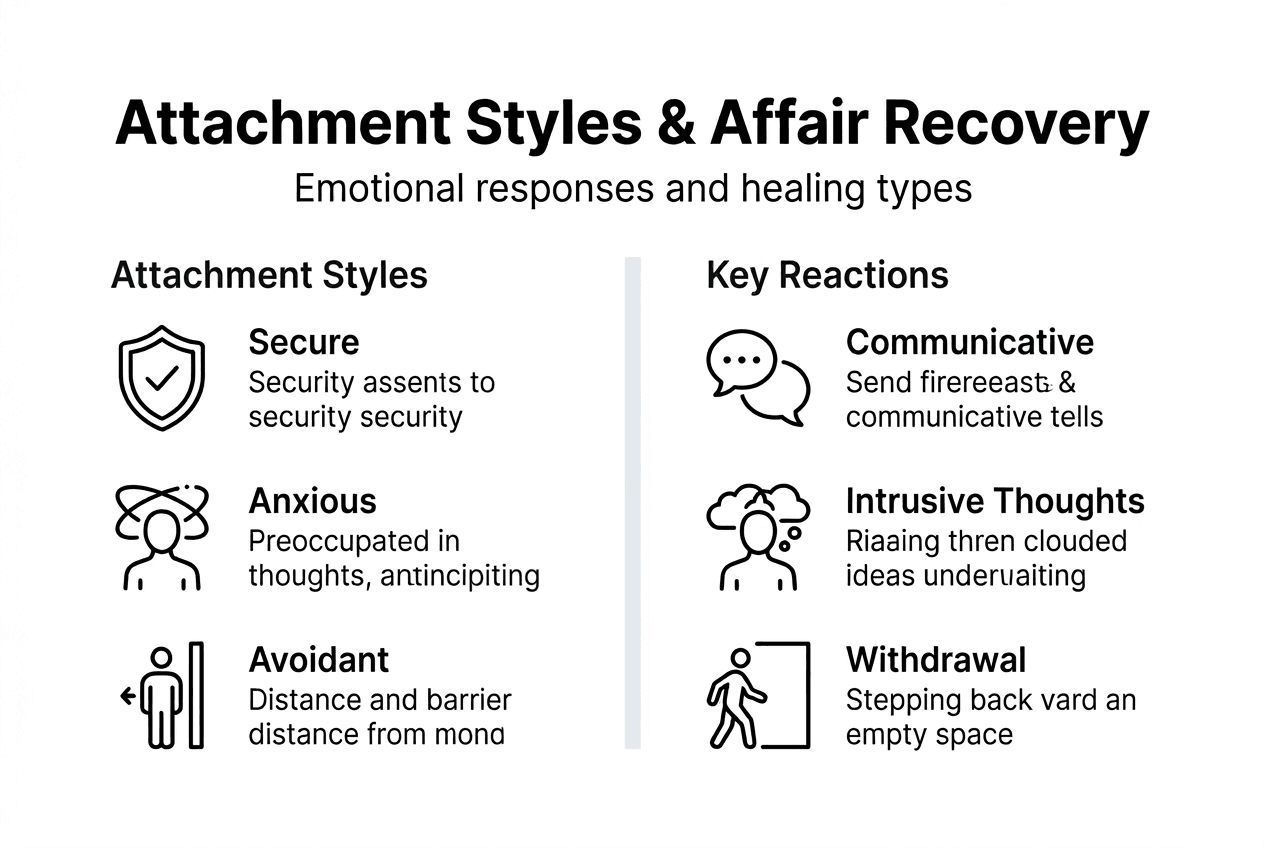
Three primary attachment styles dominate adult relationships. Secure attachment represents roughly 50% of the population and features comfort with intimacy and independence. Anxious attachment affects about 20% of adults and involves heightened fear of abandonment and need for reassurance. Avoidant attachment, also around 20%, manifests as discomfort with emotional closeness and self-reliance.
Infidelity strikes at the core of attachment security. When betrayal occurs, your attachment system activates powerful survival responses. Securely attached individuals typically access healthier coping mechanisms and can rebuild trust more effectively. Anxiously attached people often experience overwhelming panic and obsessive thoughts. Avoidantly attached individuals may withdraw emotionally or minimize the betrayal’s impact.
Understanding these patterns matters because recovery strategies that work brilliantly for one attachment style may backfire for another. Key attachment-related challenges during betrayal recovery include:
- Emotional regulation difficulties that vary by attachment pattern
- Communication breakdowns rooted in different attachment needs
- Trust rebuilding obstacles specific to each style
- Resistance to vulnerability required for healing
Recognizing your attachment profile isn’t about labeling or limiting yourself. It’s about gaining insight into your automatic emotional responses so you can make conscious choices that support healing rather than prolong suffering.
How attachment styles influence emotional responses to infidelity
Your attachment style acts as an emotional blueprint, determining how intensely you react to betrayal and which coping strategies feel natural. These patterns explain why some people ruminate endlessly while others shut down completely.
Anxious attachment creates a perfect storm after infidelity. You likely experience intrusive thoughts about the affair, constant need for reassurance from your partner, and heightened emotional distress and rumination. Your nervous system stays on high alert, scanning for additional threats. This hypervigilance exhausts you emotionally and strains the relationship further. Research confirms anxiously attached individuals struggle most with persistent anxiety during recovery.
Avoidant attachment triggers the opposite response. You might minimize the betrayal’s emotional impact, resist couples therapy, or withdraw into work or hobbies. Avoidant individuals often delay seeking help, believing they should handle pain independently. This emotional distancing protects you from vulnerability but prevents the deep processing necessary for genuine healing.
Secure attachment provides distinct advantages. You can acknowledge pain without being consumed by it, communicate needs directly, and remain open to reconciliation while maintaining healthy boundaries. Securely attached individuals recover trust 50% faster on average compared to insecurely attached peers. However, secure attachment doesn’t eliminate suffering or guarantee relationship survival.
| Attachment Style | Primary Emotional Response | Communication Pattern | Trust Rebuilding Approach |
|---|---|---|---|
| Secure | Sadness, anger, but regulated | Direct, honest, balanced | Gradual, evidence-based |
| Anxious | Panic, obsessive thoughts | Demanding reassurance | Requires frequent validation |
| Avoidant | Emotional numbing, minimization | Withdrawn, dismissive | Resistant, slow to engage |
Pro Tip: Track your emotional patterns for two weeks after discovery. Notice when you seek excessive reassurance or withdraw completely. This awareness helps you recognize attachment-driven reactions before they sabotage recovery.
Understanding these differences allows you to anticipate challenges and develop strategies matched to your emotional wiring. An anxiously attached person benefits from structured reassurance schedules, while an avoidant individual needs gentle encouragement toward emotional vulnerability.
Common misconceptions about attachment styles in affair recovery
Several damaging myths about attachment styles prevent people from pursuing effective healing strategies. Clearing up these misconceptions opens pathways to recovery that might otherwise remain hidden.
Many believe attachment style determines recovery destiny. This fatalistic view suggests anxiously or avoidantly attached individuals cannot fully heal. Research contradicts this assumption. 70% of couples with insecure attachment styles show significant relational improvement after attachment-focused interventions. Your attachment pattern influences your journey but doesn’t write your ending.
Another misconception claims avoidantly attached people lack the capacity for deep emotional healing. In reality, avoidant individuals possess rich emotional lives but learned to suppress vulnerability as a protective mechanism. With proper support and safety, they can access and process betrayal trauma effectively. The path looks different, requiring patience and gentle encouragement rather than pressure.
People also mistakenly assume secure attachment guarantees easy recovery. While secure individuals recover faster on average, they still experience profound pain, trust struggles, and relationship uncertainty. Betrayal wounds everyone regardless of attachment security. The difference lies in having more adaptive coping tools, not immunity to suffering.
“Attachment patterns represent learned relational strategies, not fixed personality traits. Therapeutic interventions targeting attachment behaviors consistently demonstrate that individuals can develop more secure relating styles, even after significant betrayal trauma.”
Key misconceptions to abandon:
- Attachment style is unchangeable throughout life
- Insecure attachment makes reconciliation impossible
- Secure attachment eliminates the need for professional help
- One partner’s attachment style matters more than the other’s
- Understanding attachment theory alone heals betrayal wounds
Therapy provides the corrective emotional experiences necessary to reshape attachment patterns. Through consistent safety, responsive communication, and processing painful emotions with support, you can develop more secure ways of relating. This transformation doesn’t happen overnight, but evidence confirms it’s achievable when you commit to growth.
Frameworks for understanding and applying attachment theory in infidelity recovery
Structured frameworks translate attachment theory into actionable recovery plans. These models help you move from abstract understanding to concrete healing steps tailored to your attachment profile.
The tiered attachment-informed recovery framework organizes healing into distinct phases. Each phase addresses attachment-specific needs while building toward relationship restoration or healthy separation.
| Recovery Stage | Goals | Anxious Style Strategy | Avoidant Style Strategy | Secure Style Strategy |
|---|---|---|---|---|
| Stabilization | Manage crisis emotions | Structured reassurance times | Space with connection check-ins | Express needs, maintain boundaries |
| Understanding | Identify attachment patterns | Education on anxiety cycles | Recognize withdrawal patterns | Deepen self-awareness |
| Intervention | Targeted therapy | Emotion regulation skills | Vulnerability practice | Communication refinement |
| Rebuilding | Restore connection | Gradual independence building | Incremental closeness | Balanced trust restoration |
| Integration | Sustain growth | Internalize security | Maintain emotional openness | Model healthy attachment |
Implementing this framework follows a sequential process:
- Identify attachment styles for both partners using validated assessments or professional evaluation
- Educate yourselves about how each style influences betrayal responses and recovery needs
- Design therapy approach matching attachment profiles, choosing therapists trained in attachment-focused methods
- Practice tailored communication that honors both partners’ attachment needs and triggers
- Monitor progress through regular assessment of emotional regulation, trust indicators, and relationship satisfaction
- Adjust strategies as attachment patterns shift and healing progresses
This systematic approach prevents the common pitfall of applying generic advice that clashes with your attachment wiring. An anxiously attached person forcing themselves into avoidant-style independence before they’re ready creates additional trauma rather than healing.
Pro Tip: Revisit your attachment assessment every three months during recovery. As you heal and develop new relational skills, your functional attachment style often shifts toward greater security, requiring strategy adjustments.
The 7-step recovery checklist provides a complementary structure that integrates attachment considerations into each phase. Combining frameworks ensures you address both practical recovery tasks and deeper attachment-related emotional work.
Practical strategies for recovery tailored to attachment styles
Theory becomes powerful when translated into daily practices. These attachment-specific strategies address the unique challenges each style faces during betrayal recovery.
For anxious attachment:
- Schedule specific reassurance times (15 minutes, twice daily) rather than seeking constant validation
- Practice self-soothing techniques when anxiety spikes between check-ins
- Write down intrusive thoughts instead of immediately sharing them, then review with therapist
- Build independent activities that provide fulfillment outside the relationship
- Set clear boundaries about what information helps versus triggers obsessive rumination
For avoidant attachment:
- Commit to sharing one vulnerable emotion daily, even if uncomfortable
- Stay physically present during difficult conversations rather than leaving the room
- Notice when you minimize pain and consciously acknowledge its reality
- Accept that needing support doesn’t equal weakness
- Practice asking for help or connection before withdrawing completely
For secure attachment:
- Maintain your healthy boundaries even when partner pressures for premature reconciliation
- Continue expressing needs directly without assuming partner should intuit them
- Stay engaged in your own healing work rather than focusing solely on partner’s recovery
- Model vulnerability while respecting your limits
- Recognize secure attachment is a strength, not a guarantee against suffering
Pro Tip: Partners should explicitly acknowledge each other’s attachment-driven behaviors without judgment. Saying “I notice you’re withdrawing, which I understand is your avoidant pattern” creates awareness without criticism and opens space for different choices.
Communication requires style-specific adjustments. Anxiously attached individuals benefit from structured conversations with clear beginnings and endings, preventing the anxiety of open-ended discussions. Avoidantly attached people need permission to take breaks during intense conversations, with agreements to return within a specific timeframe.
Boundary-setting also varies by attachment style. Anxious attachment requires firm boundaries around reassurance-seeking to prevent partner burnout. Avoidant attachment needs boundaries that maintain connection while respecting space needs. Both styles must work toward the secure middle ground where independence and intimacy coexist comfortably.
Trust rebuilding demands patience matched to attachment capacity. Anxious individuals may trust too quickly out of fear of abandonment, while avoidant individuals resist trust long after evidence supports it. Secure attachment allows trust to rebuild gradually based on consistent behavior rather than fear or resistance.
Exploring relationship growth after infidelity reveals how these attachment-informed practices create opportunities for deeper connection than existed before betrayal. The crisis becomes a catalyst for developing more secure relating patterns when approached intentionally.
Integrating attachment insight into affair healing journeys
Attachment awareness transforms infidelity recovery from a chaotic emotional experience into a navigable journey with personalized roadmaps. Understanding your attachment style explains past struggles and illuminates paths forward.
Personalized recovery based on attachment style significantly boosts emotional resilience. You stop fighting your natural responses and instead work with your wiring while gradually developing greater security. This acceptance reduces shame about your reactions and directs energy toward effective strategies rather than self-criticism.
Attachment knowledge increases empathy between partners. When you understand your partner’s withdrawal stems from avoidant attachment’s learned self-reliance rather than lack of care, you respond with compassion instead of anger. Similarly, recognizing anxious attachment’s reassurance-seeking as attachment panic rather than manipulation creates space for patient support.
Ongoing growth continues beyond initial recovery. Attachment patterns developed over decades shift gradually. Each time you make a secure choice despite anxious or avoidant impulses, you strengthen new neural pathways. Over months and years, these choices accumulate into lasting change.
The journey isn’t linear. You’ll have setbacks where old patterns resurface under stress. These moments provide opportunities to practice new responses rather than evidence of failure. Each cycle of recognizing an attachment pattern, choosing differently, and experiencing positive results reinforces your evolving security.
Recovery success doesn’t require perfect secure attachment. It requires sufficient security to navigate relationship challenges with honesty, vulnerability, and resilience. Most people develop earned secure attachment, integrating attachment awareness with conscious relationship skills that compensate for remaining insecure tendencies.
Explore targeted resources for infidelity recovery
You’ve gained powerful insights into how attachment styles shape your recovery journey. Now translate this understanding into concrete action with structured support designed specifically for betrayal healing.
The 7-step infidelity recovery checklist provides a clear roadmap integrating attachment considerations into each recovery phase. This systematic approach prevents overwhelm while ensuring you address critical healing tasks matched to your attachment profile. Whether you’re anxiously seeking structure or avoidantly needing gentle guidance, the checklist adapts to your needs.
Discover how attachment-informed strategies accelerate relationship growth after infidelity through proven trust-rebuilding frameworks. Learn communication techniques that honor both partners’ attachment styles while fostering deeper connection than existed before betrayal.
Explore the comprehensive infidelity recovery resource library for additional materials addressing attachment-related challenges. Access expert guidance, case studies, and practical tools supporting every stage of your healing journey.
Frequently asked questions
What are the main attachment styles affecting affair recovery?
Secure attachment (roughly 50% of adults) involves comfort with intimacy and independence, enabling more adaptive coping after betrayal. Anxious attachment (approximately 20%) features fear of abandonment and excessive reassurance-seeking, intensifying betrayal trauma. Avoidant attachment (about 20%) manifests as emotional withdrawal and discomfort with vulnerability, complicating healing. Each style creates distinct emotional responses, communication patterns, and trust rebuilding challenges that require tailored recovery approaches.
Can attachment styles be changed during recovery from an affair?
Attachment styles represent learned patterns, not fixed personality traits. Therapy and intentional strategies significantly alter attachment influence on recovery success. Through consistent corrective experiences, responsive communication, and processing emotions with support, you can develop more secure relating patterns. This transformation requires time and commitment but research confirms meaningful change is achievable even for longstanding insecure attachment styles.
How can I identify my and my partner’s attachment styles?
Use validated attachment assessments available through therapists or reputable online resources for initial insight. Combine self-reflection about relationship patterns with honest conversations about emotional needs and fears. Professional counseling provides expert evaluation and nuanced understanding beyond self-assessment. Awareness of attachment styles forms the foundation for the personalized healing plans that accelerate recovery and prevent mismatched strategies.
What are common mistakes when addressing attachment styles in affair recovery?
Assuming attachment style is unchangeable prevents pursuing effective interventions that could reshape patterns. Neglecting your partner’s attachment needs while focusing solely on your own creates imbalanced recovery and continued conflict. Applying generic advice without considering attachment differences often backfires, as strategies effective for secure attachment may trigger anxious or avoidant individuals. Believing secure attachment guarantees easy recovery sets unrealistic expectations that increase frustration when challenges arise.
Recommended
- Emotional vs Physical Affair – After the Affair Series
- Stages of Healing – After the Affair Series
- Online Affair Recovery for Couples – After the Affair Series
- Role of Self-Care Post-Affair – After the Affair Series
- Sentimental Gifts for Couples: Creating Lasting Bonds – FunLifeNow