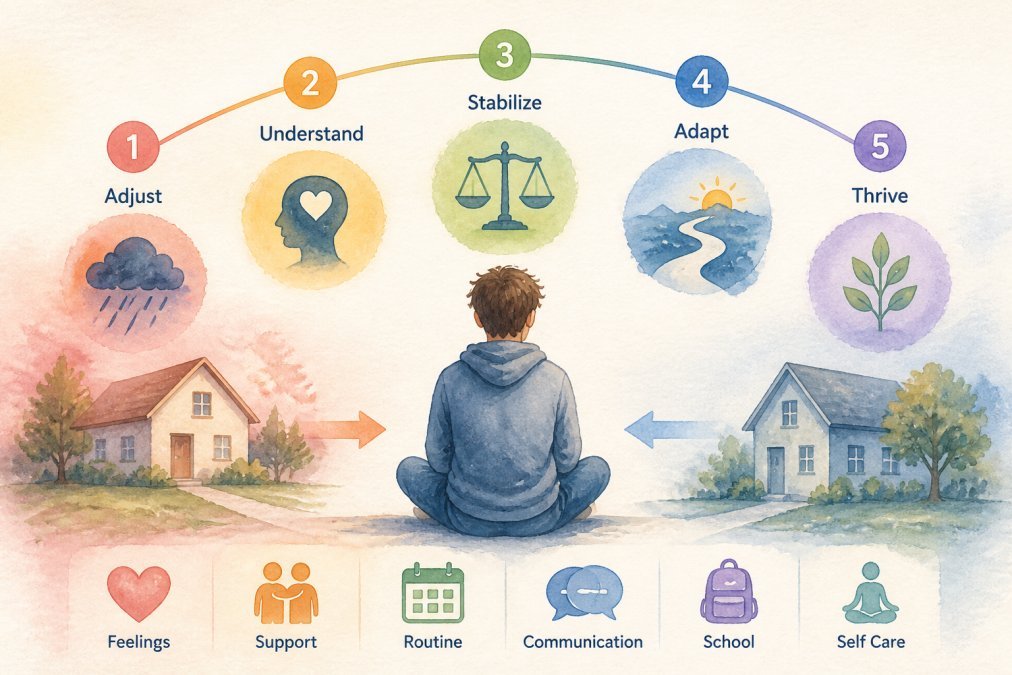
Infidelity shatters the foundation of trust and security in relationships, leaving deep emotional wounds that can feel impossible to heal. The trauma from betrayal disrupts your sense of self, triggers intense emotional responses, and creates lasting psychological effects that impact daily life. Many people struggle to understand why they feel so destabilized and how to begin recovery. This guide provides clear, actionable steps to help you process trauma, heal emotionally, and rebuild your life with confidence and resilience.
Table of Contents
- Understanding Emotional Trauma From Infidelity
- Preparing To Heal: Recognizing Trauma Symptoms And Creating A Safety Plan
- Step-By-Step Process To Heal Emotional Trauma After Infidelity
- Verifying Progress And Maintaining Emotional Health Long-Term
- Explore Our Proven Resources For Healing After Infidelity
- How Long Does It Typically Take To Process Emotional Trauma After Infidelity?
Key takeaways
| Point | Details |
|---|---|
| Acknowledge emotional pain | Recognizing and validating your trauma symptoms is the essential first step toward meaningful recovery. |
| Prepare your healing space | Creating physical and emotional safety through support networks and professional resources establishes a foundation for processing trauma. |
| Take deliberate action steps | Therapy, communication practice, self-care routines, and emotional regulation techniques actively facilitate healing progress. |
| Monitor your recovery journey | Regular emotional check-ins and progress tracking help you adjust strategies and celebrate milestones during nonlinear healing. |
| Practice patient persistence | Trauma recovery requires time, compassion, and realistic expectations as you gradually rebuild trust and emotional stability. |
Understanding emotional trauma from infidelity
Infidelity creates a unique form of psychological injury that differs fundamentally from other relationship challenges or losses. When someone you trust violates that bond through betrayal, it triggers complex emotional responses that can feel overwhelming and confusing. The Betrayal Trauma framework explains why infidelity can be destabilizing for people who experienced caregiver betrayal as children, creating patterns of dissociation and difficulty processing painful truths. This theoretical model helps you understand why your reactions might feel disproportionate or why you struggle to move forward.
The psychological impact of infidelity trauma manifests through several distinct mechanisms. Your brain’s threat detection system activates as if facing physical danger, flooding your body with stress hormones that create constant vigilance. Trust, once broken, becomes difficult to restore because your mind now perceives relationships as potentially unsafe. People who experienced early betrayal by caregivers may find themselves particularly vulnerable to these effects, sometimes disconnecting from reality as a protective mechanism.
Common symptoms that emerge after discovering infidelity include:
- Emotional numbness or feeling disconnected from your own experiences
- Persistent anxiety about your partner’s actions and whereabouts
- Depression characterized by hopelessness about the relationship’s future
- Intrusive thoughts that replay the betrayal repeatedly
- Difficulty trusting not just your partner but other people in your life
Recognizing these betrayal trauma symptoms after cheating validates your experience and helps you understand that your responses are normal reactions to abnormal circumstances. Understanding trauma’s roots provides context for your healing journey and guides you toward appropriate coping strategies. When you grasp why infidelity generates such profound destabilization, you can approach recovery with greater self-compassion and realistic expectations about the process ahead.
Trauma from infidelity isn’t weakness or overreaction. It’s a legitimate psychological injury that deserves proper attention, care, and professional support.
Preparing to heal: recognizing trauma symptoms and creating a safety plan
Before diving into active healing work, you need to identify your specific trauma responses and establish a secure foundation for recovery. Common symptoms extend beyond emotional reactions to include physical manifestations that signal your body’s distress. Insomnia disrupts your sleep patterns as your mind races with questions and scenarios. Intrusive thoughts interrupt daily activities, forcing you to relive painful moments repeatedly. Emotional volatility creates unpredictable mood swings that strain relationships and make you feel out of control. Some people withdraw from social connections, isolating themselves when they most need support.
Recognizing these symptoms empowers you to approach healing intentionally rather than reactively. When you understand that physical symptoms of betrayal trauma like headaches, digestive issues, and muscle tension stem from psychological distress, you can address root causes instead of just managing surface problems. Self-awareness transforms confusion into clarity, helping you communicate your needs to others and seek appropriate help.
Creating a safe space and support network forms the cornerstone of effective trauma processing. Safety encompasses both physical environments where you feel secure and emotional spaces where you can express feelings without judgment. Identify trusted friends or family members who can provide support during difficult moments. Consider joining support groups where others understand your experience firsthand. Professional resources offer specialized guidance that friends and family cannot provide.
Pro Tip: Write down three people you can call during emotional crises and keep their contact information easily accessible on your phone.
Therapy and professional help provide structured frameworks for managing trauma effectively. The benefits of therapy after infidelity include learning emotional regulation techniques, processing painful memories safely, and developing healthier relationship patterns. Therapists trained in trauma-focused approaches understand how caregiver betrayal affects your current responses and can tailor interventions accordingly.
Early preparation increases your chances of successful emotional processing by establishing:
- Clear boundaries that protect your emotional energy
- Regular self-care practices that maintain baseline wellbeing
- Professional support systems that provide expert guidance
- Trusted relationships that offer emotional validation
- Physical spaces where you feel genuinely safe and calm
This preparatory work might feel tedious when you want immediate relief, but it creates the stable foundation necessary for deeper healing work ahead.
Step-by-step process to heal emotional trauma after infidelity
Healing emotional trauma requires deliberate, sequential actions that build upon each other to create lasting recovery. The process begins with accepting your emotions honestly as the foundation for all subsequent work. Many people try to suppress or rationalize their feelings, believing they should move past the pain quickly. Genuine healing starts when you acknowledge the full spectrum of your emotional responses without judgment or shame.
- Accept and validate your emotional experience completely, recognizing that all feelings are legitimate responses to betrayal.
- Seek professional therapy using modalities like cognitive behavioral therapy or EMDR that specifically address trauma processing.
- Practice healthy communication with trusted individuals who can hold space for your pain without trying to fix or minimize it.
- Establish consistent self-care routines including mindfulness meditation, regular journaling, and physical activity that releases stored tension.
- Track your healing progress through journaling or therapy check-ins, adjusting strategies as your emotional needs evolve.
- Gradually rebuild trust through small, consistent actions that demonstrate reliability and safety in relationships.
- Engage in personal growth activities that help you rediscover your identity beyond the trauma and betrayal.
Therapy modalities offer different approaches to trauma processing. Cognitive behavioral therapy helps you identify and change thought patterns that perpetuate suffering. EMDR uses bilateral stimulation to reprocess traumatic memories, reducing their emotional charge. Trauma-focused therapies address how betrayal trauma specifically impacts your nervous system and attachment patterns. Working with a qualified therapist provides structure and safety during this vulnerable process.
Pro Tip: Schedule therapy sessions during times when you have space afterward to process emotions rather than rushing back to work or responsibilities.
Healthy communication rebuilds trust and understanding gradually. Share your needs clearly with your partner if you’re working toward reconciliation, or with trusted friends and family if you’re processing independently. Express feelings using specific language rather than generalizations. Listen actively when others share their perspectives, even when it feels difficult.
Self-care routines maintain your baseline wellbeing during the ups and downs of recovery:
| Practice | Frequency | Benefit |
|---|---|---|
| Mindfulness meditation | Daily, 10-20 minutes | Reduces anxiety and grounds you in present moment |
| Physical exercise | 3-5 times weekly | Releases trauma stored in body and improves mood |
| Journaling | Daily or as needed | Processes emotions and tracks patterns over time |
| Social connection | Weekly minimum | Combats isolation and provides emotional support |
| Creative expression | As desired | Offers non-verbal outlets for complex feelings |
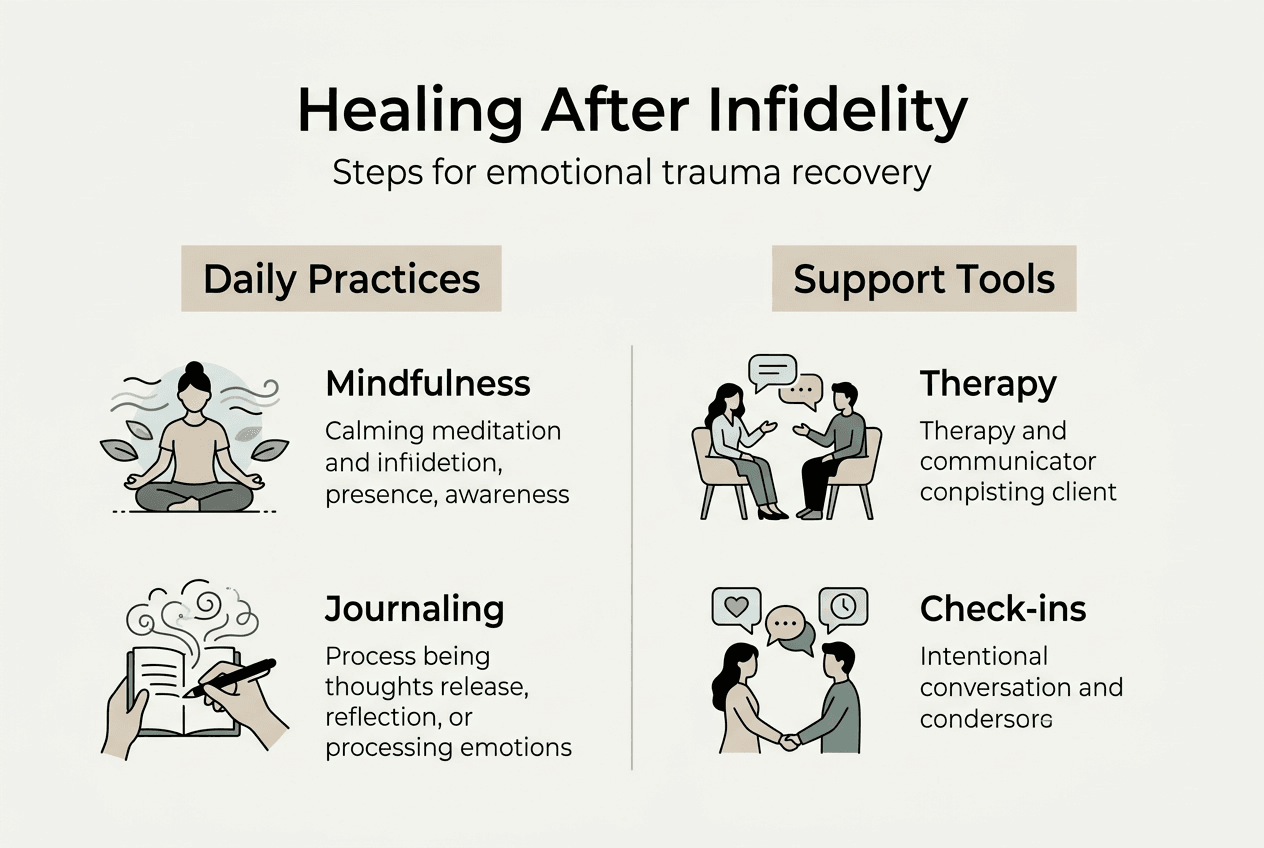
Explore coping strategies after infidelity that resonate with your personal preferences and lifestyle. Some people find comfort in nature, others in creative arts, and still others in structured routines. The key is consistency rather than perfection. Small, regular actions compound over time to create significant healing.
The relationship healing process involves both individual recovery and, if you choose reconciliation, joint work with your partner. Individual healing must progress sufficiently before relationship repair can succeed. You cannot rebuild trust with someone else until you’ve stabilized your own emotional foundation.
Verifying progress and maintaining emotional health long-term
Healing from infidelity trauma follows a nonlinear path with progress, plateaus, and occasional setbacks. Understanding this reality prevents discouragement when difficult days occur after periods of improvement. Your recovery journey won’t follow a straight upward trajectory, and that’s completely normal. Some days you’ll feel strong and hopeful, while others bring unexpected emotional waves that seem to erase all progress.
Distinguishing between short-term coping and long-term resilience helps you assess genuine healing:
| Short-term coping | Long-term resilience |
|---|---|
| Avoiding triggers and painful reminders | Processing triggers until they lose emotional charge |
| Suppressing difficult emotions to function | Experiencing emotions fully while maintaining stability |
| Relying heavily on others for emotional regulation | Developing internal capacity to manage feelings independently |
| Seeking constant reassurance about safety | Building secure attachment through consistent experience |
Regular emotional check-ins help you monitor your state accurately. Set aside time weekly to assess your mood, sleep quality, relationship satisfaction, and overall wellbeing. Notice patterns that emerge, such as specific situations that trigger distress or activities that consistently improve your state. These observations inform adjustments to your healing strategies.
Support conversations with therapists, trusted friends, or support groups provide external perspectives on your progress. Sometimes you’re too close to your own experience to recognize growth. Others can reflect positive changes they observe, helping you celebrate milestones you might otherwise miss. The Betrayal Trauma framework reminds us that recovery involves rewiring deeply ingrained patterns, which takes sustained effort over time.
Growth activities that sustain long-term healing include:
- Continuing therapy even after acute symptoms subside to address deeper patterns
- Participating in support groups that normalize your experience and reduce isolation
- Engaging in regular self-reflection through journaling or meditation practices
- Setting and pursuing personal goals unrelated to the trauma or relationship
- Building new relationships that model healthy trust and communication
Recognize specific milestones that indicate genuine progress. You might notice you can discuss the infidelity without intense emotional flooding. Perhaps intrusive thoughts decrease in frequency or intensity. Maybe you feel genuine moments of joy and hope about your future. These markers validate your hard work and reinforce motivation to continue healing.
Understanding why healing takes time prevents unrealistic expectations that set you up for disappointment. Trauma rewires your brain’s threat detection and attachment systems. Reversing those changes requires consistent, patient effort over months or years, not weeks. Give yourself permission to heal at your own pace without comparing your timeline to others.
Use the infidelity recovery checklist to track concrete steps you’ve completed and identify areas needing more attention. This structured approach transforms overwhelming healing work into manageable tasks. Celebrate each completed step as evidence of your commitment to recovery and growth.
Explore our proven resources for healing after infidelity
Recovering from infidelity trauma requires more than understanding the process. You need practical tools, expert guidance, and ongoing support as you navigate this challenging journey. Our comprehensive resources bridge the gap between knowing what to do and actually implementing effective healing strategies in your daily life.

The infidelity recovery checklist provides a structured roadmap through each phase of healing, breaking down overwhelming tasks into actionable steps you can complete at your own pace. Whether you’re in the immediate aftermath of discovery or working toward long-term growth, this checklist keeps you focused on meaningful progress. Our specialized programs address relationship growth after infidelity for those choosing reconciliation, offering evidence-based strategies to rebuild trust and create stronger connections. Explore our resource library for articles, guides, and tools covering every aspect of trauma recovery and relationship healing.
How long does it typically take to process emotional trauma after infidelity?
What factors influence healing time after infidelity trauma?
Healing time varies significantly based on trauma severity, personal history, support systems, and whether you pursue professional help. Some people notice meaningful improvement within months, while others require years to fully process betrayal trauma. Individual circumstances like previous trauma exposure, relationship duration, and the nature of the infidelity all impact recovery speed.
Can therapy accelerate recovery from infidelity trauma?
Consistent therapy with a trauma-informed professional typically accelerates healing by providing structured processing techniques and expert guidance. Specialized approaches like EMDR or trauma-focused cognitive behavioral therapy address the neurological impacts of betrayal more efficiently than processing alone. Regular sessions create accountability and momentum that self-directed healing often lacks.
Why does healing sometimes feel slower than expected?
Recovery follows a nonlinear path with natural plateaus and setbacks that can feel discouraging. Your brain needs time to rewire threat responses and attachment patterns altered by betrayal. Understanding why healing takes time helps you maintain realistic expectations and practice patience with yourself during difficult phases.
What are common emotional and physical symptoms of betrayal trauma from infidelity?
What emotional symptoms indicate betrayal trauma?
Emotional symptoms include persistent anxiety about your partner’s actions, depression characterized by hopelessness, emotional numbness that disconnects you from experiences, and intense anger that feels disproportionate. Many people experience difficulty trusting others beyond just their partner, creating isolation and relationship challenges. Mood swings and emotional volatility are normal responses as your nervous system processes the threat of betrayal.
How does betrayal trauma manifest physically?
Physical signs often include chronic insomnia or disrupted sleep patterns, persistent fatigue even with adequate rest, changes in appetite leading to weight loss or gain, and tension-related symptoms like headaches or muscle pain. Your body stores trauma, creating digestive issues, weakened immune function, and other stress-related health problems. Recognizing these betrayal trauma symptoms after cheating validates your experience and guides appropriate treatment.
Do trauma symptoms fluctuate during recovery?
Symptom intensity naturally fluctuates throughout recovery, with some days feeling manageable and others overwhelming. Triggers like anniversaries, similar situations, or unexpected reminders can temporarily intensify symptoms even after significant progress. This variability is completely normal and doesn’t indicate failure or regression in your healing journey.
How can therapy aid in processing emotional trauma after infidelity?
What makes therapy effective for infidelity trauma?
Therapy provides a confidential, non-judgmental space to explore and express painful emotions that feel too vulnerable to share elsewhere. Trained therapists guide you through evidence-based techniques specifically designed to process traumatic memories and reduce their emotional intensity. The therapeutic relationship itself models healthy trust and communication, helping you rebuild capacity for secure connections.
Which therapy approaches work best for betrayal trauma?
Trauma-focused therapies like EMDR, cognitive behavioral therapy, and emotionally focused therapy address betrayal trauma’s unique impacts effectively. These specialized approaches target how infidelity disrupts your nervous system, attachment patterns, and core beliefs about relationships. A qualified therapist assesses your specific needs and tailors interventions accordingly rather than using generic counseling approaches.
How does professional support differ from talking with friends?
Therapists offer clinical expertise in trauma processing that friends, despite good intentions, cannot provide. They teach specific emotional regulation skills, identify unhelpful thought patterns, and guide you through structured healing protocols. Professional support also protects your relationships from becoming overwhelmed by your trauma processing needs. Explore the benefits of therapy after infidelity to understand how clinical intervention accelerates and deepens recovery outcomes.
Recommended
- How to Cope After Infidelity – After the Affair Series
- How to Guide Clients After Infidelity for Healing – After the Affair Series
- 7 Key Benefits of Therapy – After the Affair Series
- 7 Steps-Infidelity Recovery Checklist – After the Affair Series