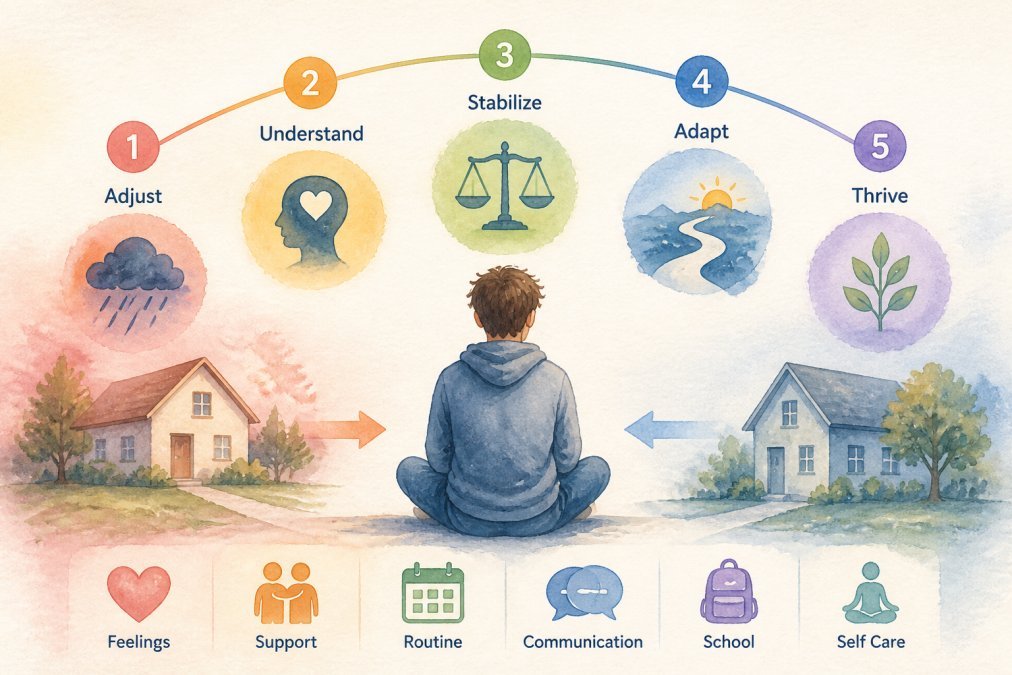
Trying to heal from infidelity while the affair partner remains in your life is one of the most painful positions a betrayed person can face. It isn’t just heartbreak. It’s a constant loop of reminders, triggers, and fresh wounds that make the standard advice, like “just move on,” feel completely useless. Research confirms that ongoing exposure to the affair partner significantly delays recovery and deepens distress. You aren’t broken for struggling with this. The path forward exists, but it looks different here. This article walks you through why this situation is uniquely hard, what foundations you need, and a clear step-by-step plan to begin healing even when the affair partner won’t fully disappear.
Table of Contents
- Recognizing the emotional impact: Why the affair partner’s presence hurts recovery
- Identifying barriers: Common situations when the affair partner can’t be avoided
- Preparing for healing: Essential foundations before deeper recovery work
- Step-by-step recovery plan when the affair partner won’t disappear
- Monitoring progress and troubleshooting setbacks
- A hard truth about healing when the affair partner won’t leave
- Your next step for guided recovery support
- Frequently asked questions
Key Takeaways
| Point | Details |
|---|---|
| Ongoing presence prolongs pain | Healing is delayed when the affair partner remains actively present in your life. |
| Setting boundaries is vital | Personal boundaries and emotional support systems create a safer foundation for recovery. |
| Healing is non-linear | Progress is often slow and includes setbacks, especially when the affair partner can’t be avoided. |
| Support is essential | Guided resources and professional help can significantly improve your recovery path. |
Recognizing the emotional impact: Why the affair partner’s presence hurts recovery
When the affair partner stays in the picture, whether through shared workplaces, mutual friends, or an unwilling spouse, your nervous system can’t fully settle. That’s not weakness. That’s biology.
Betrayed partners commonly experience trauma-like symptoms including intrusive thoughts, hypervigilance, anxiety, depression, and emotional numbness. These responses mirror post-traumatic stress, and they don’t fade on their own schedule when the source of the trauma keeps reappearing. Research shows that ongoing affair partner presence prolongs distress in ways similar to how continued contact with an ex-partner stalls emotional recovery after a breakup.
“Healing isn’t linear, and it’s even less linear when the person who caused your pain keeps showing up in your world.”
Here’s what many betrayed partners report experiencing when the affair partner remains present:
- Sudden emotional flooding when the affair partner’s name comes up
- Difficulty concentrating at work or in daily tasks
- Sleep disruption and physical symptoms like chest tightness
- Shame, self-doubt, and a distorted sense of self-worth
- Cycles of anger, grief, and numbness that feel impossible to break
The effects of infidelity on mental health are well-documented, but what’s less talked about is how much harder those effects become when the wound is re-opened repeatedly. Understanding this isn’t about excusing the pain. It’s about validating that your struggle is real, proportionate, and shared by many others in the same situation.
Your reactions are not overreactions. They are the predictable result of an unpredictable and ongoing threat to your emotional safety.
Identifying barriers: Common situations when the affair partner can’t be avoided
Not every betrayed partner has the option to simply cut contact with the affair partner. Life is messier than that. Recognizing your specific barrier is the first step toward addressing it honestly.
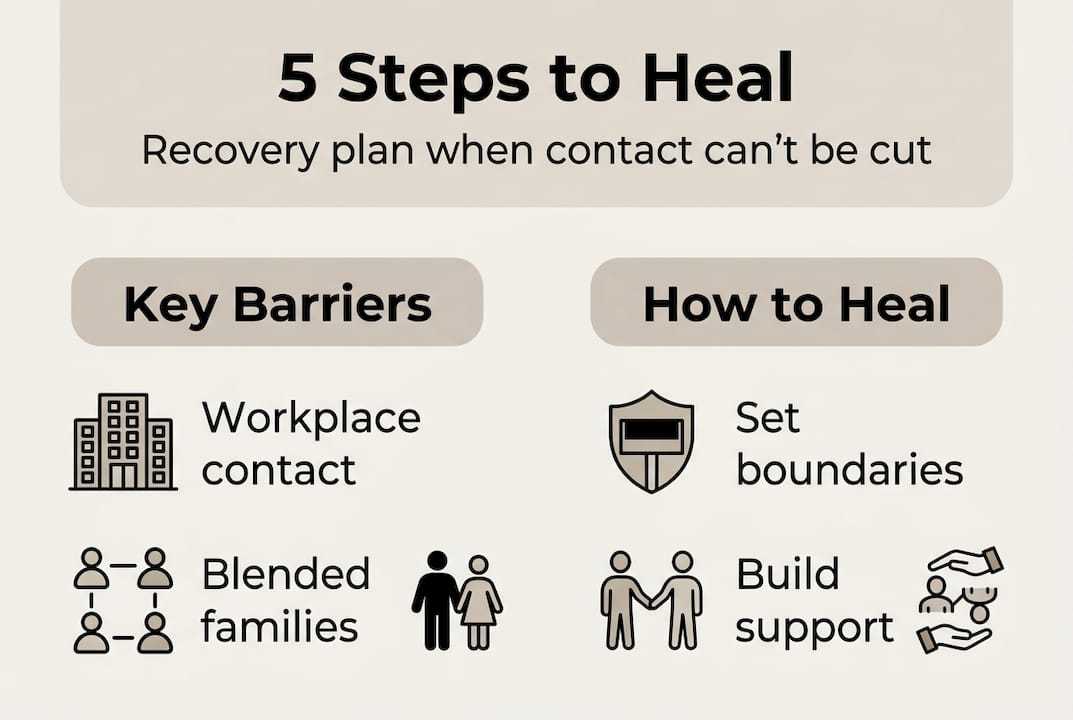
Common situations where avoidance isn’t fully possible include:
- Workplace affairs: You or your partner shares an office, team, or industry with the affair partner
- Co-parenting overlap: The affair partner is connected to your children’s social world or school community
- Shared social circles: Mutual friends, family events, or community groups make encounters unavoidable
- Unwilling partner: Your spouse hasn’t ended the affair or minimizes its impact, making separation from the affair partner impossible
Research on forgiveness after infidelity highlights that cultural and gender pressures can push betrayed partners into what’s called “pseudo-forgiveness.” This is the appearance of having forgiven without genuine emotional resolution, often driven by social expectation, financial dependence, or fear of judgment. It looks like healing from the outside but feels like suffocation from the inside.
| Situation | Unique challenge | Common trigger |
|---|---|---|
| Workplace affair | Daily proximity, professional pressure | Seeing them in meetings or hallways |
| Shared social circle | Fear of exclusion, loyalty tests | Group events, social media |
| Co-parenting overlap | Child welfare concerns | School pickups, events |
| Unwilling partner | Ongoing betrayal, lack of accountability | Partner’s phone, unexplained absences |
Pro Tip: If you’re coping after infidelity in a situation where contact is unavoidable, start by naming your specific barrier clearly. Vague dread is harder to manage than a defined challenge. Write it down. That act alone can reduce the sense of chaos.
Distinguishing genuine forgiveness from forced acceptance is critical here. True forgiveness, when it comes, is a gift you give yourself. It cannot be rushed by circumstance or social pressure. The relationship healing process requires honesty about where you actually are, not where others expect you to be.
Preparing for healing: Essential foundations before deeper recovery work
Before you can work through the deeper layers of betrayal, certain foundations need to be in place. Think of these as the scaffolding that holds you up while the real repair work happens.
Research on genuine forgiveness shows that it requires personal empowerment. When betrayed partners feel powerless, they may comply outwardly while remaining emotionally stuck. Building your own support structure is how you reclaim that power.
- Build your support system. Identify at least two or three people who can hold space for your pain without judgment. A therapist, a trusted friend, or an online support group all count.
- Set clear personal boundaries. Even if you can’t control the affair partner’s presence, you can define what you will and won’t tolerate in your immediate environment.
- Establish emotional safety routines. Daily practices like journaling, physical movement, or a consistent sleep schedule create predictability when everything else feels unstable.
- Access structured resources. An infidelity recovery checklist can help you see what stage you’re at and what’s needed next.
| Foundation | Why it matters | First action |
|---|---|---|
| Support system | Reduces isolation and shame | Contact one trusted person this week |
| Personal boundaries | Protects emotional safety | Write down one non-negotiable boundary |
| Safety routines | Regulates nervous system | Choose one daily grounding practice |
| Professional guidance | Provides structured framework | Research the benefits of therapy |
Pro Tip: Don’t wait until you feel “ready” to build these foundations. Readiness comes from action, not the other way around. Start with the smallest possible step today.
Step-by-step recovery plan when the affair partner won’t disappear
This is where the real work begins. These steps are designed for situations where full no-contact isn’t possible, so they focus on what you can control.
- Map your triggers. Write down every situation, person, or place that activates your distress. Knowing your triggers in advance reduces their power. You shift from being ambushed to being prepared.
- Create distance where you can. Even partial distance helps. If the affair partner is a coworker, request a different shift, project, or floor. Small reductions in exposure matter.
- Redirect your focus to your own progress. Each day, identify one thing you did for your healing. This trains your attention away from the affair partner and back toward yourself.
- Use the tips for emotional healing that fit your situation. Not every strategy works for everyone. Test, adjust, and keep what helps.
- Set small, verifiable milestones. “I will journal three times this week” is measurable. “I will feel better” is not. Concrete milestones build momentum.
- Follow a step-by-step betrayal recovery framework to ensure you’re not skipping stages that matter.
Frequent contact with an affair partner or ex predicts significantly higher distress two months later, with a 112% offset in the expected decline for non-parents. That number matters because it shows that even reducing contact partially, not eliminating it entirely, can shift your recovery trajectory.
Pro Tip: When a setback hits, don’t measure your progress from today back to your worst day. Measure it from your worst day forward to today. The direction matters more than the speed.
Monitoring progress and troubleshooting setbacks
Healing from infidelity when the affair partner remains present isn’t a straight line. Knowing what progress actually looks like, and what stalled recovery feels like, helps you stay oriented.
Signs you are making genuine progress:
- Triggers are less intense or shorter in duration
- You can go longer periods without thinking about the affair partner
- Your self-esteem is slowly rebuilding
- You’re investing in your own life, goals, and relationships again
- Anger or grief feels less consuming, even if it still visits
Red flags that recovery may be stalled:
- Persistent trauma symptoms with no reduction over weeks
- Deepening depression or anxiety
- Increasing isolation from support systems
- Obsessive monitoring of the affair partner’s activity
The 112% distress offset linked to ongoing affair partner contact is a reminder that your environment directly shapes your recovery rate. If you’re stuck, the first question to ask is: what exposure am I still experiencing that I haven’t addressed?
When new waves of pain hit, which they will, return to your foundations. Reach back out to your support system. Revisit the resources that helped early on. Explore relationship growth after infidelity as a longer-term frame for where you’re heading. If you’re a therapist or counselor supporting someone in this situation, the guidance on how to guide clients after infidelity may also be useful.

Troubleshooting isn’t failure. It’s the work.
A hard truth about healing when the affair partner won’t leave
Most recovery advice assumes you get to close the door. Cut contact. Create distance. Start fresh. But that advice, while well-meaning, can feel like a personal failure when your circumstances don’t allow it.
Here’s what we’ve seen again and again: the people who heal most meaningfully in these situations aren’t the ones who achieve perfect closure. They’re the ones who redefine what healing means for their specific life. They stop waiting for the affair partner to disappear before they allow themselves to move forward.
Acceptance isn’t the same as approval. You can accept that this person exists in your world without accepting that they get to define your recovery. That shift in thinking is harder than it sounds, and it takes time. Why healing takes time isn’t just a comforting idea. It’s a structural reality of how trauma resolves in the nervous system.
Give yourself permission to grieve a slow and difficult process. Progress that looks small from the outside can be enormous on the inside. You don’t owe anyone a timeline.
Your next step for guided recovery support
If you’ve recognized yourself in this article, you already know that healing in these circumstances takes more than willpower. It takes structure, support, and a framework built for the reality you’re actually living.
At aftertheaffair.uk, we’ve built resources specifically for people navigating the hardest versions of infidelity recovery. Start with the infidelity recovery checklist to see exactly where you are and what comes next. When you’re ready to go deeper, explore the full resource library for structured, evidence-informed guidance at every stage. Progress is possible, even here. Especially here. You can also explore relationship growth after infidelity to begin seeing what life on the other side can look like.
Frequently asked questions
Why does the affair partner’s ongoing presence delay healing?
Continued contact or reminders of the affair partner can trigger trauma-like responses that prevent your distress from decreasing naturally over time. Each exposure reactivates the wound before it has a chance to close.
What can I do if I can’t cut contact with my partner’s affair partner?
Focus on building strong personal boundaries, consistent self-care, and a reliable support system to make incremental progress even when total no-contact isn’t realistic. Research on pseudo-forgiveness under pressure confirms that working within your actual constraints, rather than ideal ones, is the more honest and effective path.
How can I tell if I’m actually healing after infidelity?
You may notice reduced emotional triggers, slowly rebuilding self-esteem, and less mental focus on the affair partner, though progress is often slow and non-linear. Frequent ongoing contact predicts higher distress two months later, so any reduction in exposure is a measurable step forward.
Is genuine forgiveness possible if the affair persists or can’t be completely ended?
Genuine forgiveness often requires personal empowerment and may not be achievable if the betrayal is ongoing or unacknowledged. Research on forgiveness and empowerment suggests that separation may sometimes be necessary before real healing can begin.
Recommended
- Beziehung nach Affäre reparieren: 5 Schritte zur Heilung – After the Affair Series
- Top 5 Self-Help Solutions for Betrayal 2026 – After the Affair Series
- How to Guide Clients After Infidelity for Healing – After the Affair Series
- Relationship Growth After Infidelity – After the Affair Series