TL;DR:
- Genuine healing requires honesty, remorse, therapy, and time, tailored to individual needs.
- Recovery success varies based on the type of infidelity and presence of commitment and disclosure.
- Personal growth is possible independently of relationship reconciliation, emphasizing self-care and support.
When trust is shattered by infidelity, knowing where to start can feel impossible. Your emotions shift by the hour, and advice that sounds logical in theory can feel hollow when you’re living through the pain. What actually helps is seeing how real recovery looks in practice, not just in theory. This article walks through five distinct emotional recovery examples after infidelity, each shaped by different circumstances and choices. You’ll learn what criteria define genuine healing, how different paths compare, and what the evidence says about which approaches give you the best chance of rebuilding your life.
Table of Contents
- What does emotional recovery after infidelity look like?
- Example 1: The power of full disclosure and joint therapy
- Example 2: Rebuilding after repeated or secret infidelity
- Example 3: Emotional affairs and distinct recovery patterns
- Example 4: Individual recovery—healing without reconciling
- What makes emotional recovery last? Comparing the paths
- Why there’s no one-size-fits-all for emotional recovery
- Resources for your emotional recovery journey
- Frequently asked questions
Key Takeaways
| Point | Details |
|---|---|
| Full disclosure boosts recovery | Healing is far more likely when the unfaithful partner is completely honest and remorseful. |
| Repeated betrayal lowers success | Cases involving secret or repeated infidelity have much lower recovery and reconciliation rates. |
| Emotional affairs have unique paths | Recovery from emotional affairs is often more successful than physical ones but presents different challenges. |
| Self-growth happens regardless | Many people regain emotional well-being and self-worth even if the relationship does not survive. |
| Therapy and support are crucial | Consistent therapy and allowing the betrayed partner to set the pace greatly improve recovery outcomes. |
What does emotional recovery after infidelity look like?
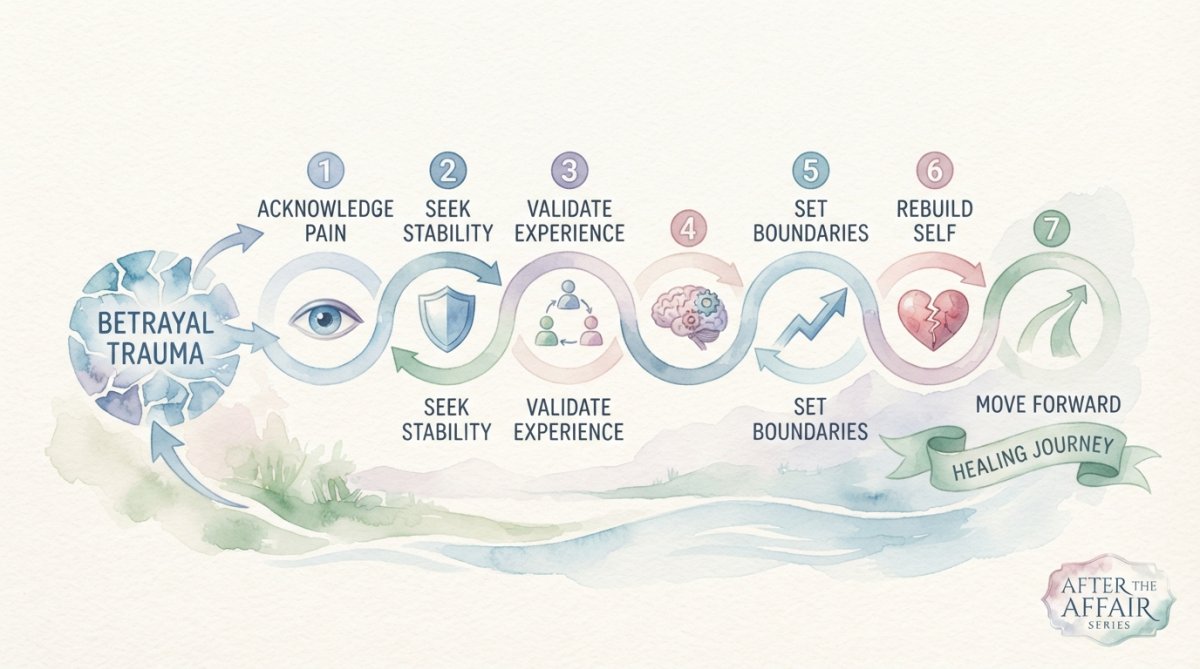
Emotional recovery after infidelity isn’t a single destination. It’s a process of moving through intense pain toward a place where you can function, trust again, and feel worthy of love. That process looks different for everyone, but it tends to follow recognizable stages: shock and disbelief, processing the betrayal, opening communication, slowly rebuilding trust, and reclaiming your sense of self-worth.
Not all recovery attempts are equal. Genuine recovery requires specific conditions:
- Transparency from the unfaithful partner, including honest answers and no further deception
- Remorse that is consistent and demonstrated through actions, not just words
- Agency for the betrayed partner, meaning you control the pace and direction of healing
- Professional support, such as individual or couples therapy
- Time, without pressure to “get over it” quickly
The relationship healing process is rarely linear. You may feel progress one week and slide back the next. That’s normal.
When it comes to processing emotional trauma after betrayal, research consistently shows that recovery statistics improve significantly when full disclosure, remorse, therapy, and commitment are all present together. As one expert framework makes clear, the betrayed partner controls pace while the unfaithful partner shows consistent accountability.
Pro Tip: Don’t let anyone rush your healing. Full disclosure and genuine remorse matter far more than moving quickly. Speed without honesty is not recovery.
Example 1: The power of full disclosure and joint therapy
Imagine a couple where the unfaithful partner comes forward voluntarily, shares everything honestly, and both partners commit to working with a licensed therapist. This is the recovery path with the strongest evidence behind it.
Here’s how this path typically unfolds:
- Full disclosure occurs early, often within days or weeks of discovery
- Individual therapy begins for both partners separately to process their own emotions
- Couples therapy starts once both individuals have some emotional stability
- Structured communication replaces reactive arguments, guided by a therapist
- Trust milestones are set and acknowledged, giving the betrayed partner visible markers of progress
- Ongoing accountability is maintained, with the unfaithful partner checking in regularly without being prompted
“The couples most likely to recover are those where the unfaithful partner takes full responsibility and the betrayed partner feels genuinely heard and safe.”
This approach works because it addresses both the practical and emotional dimensions of betrayal simultaneously. Success is higher with full disclosure, remorse, therapy, and commitment working together. The betrayed partner isn’t left guessing, and the unfaithful partner has a clear framework for demonstrating change.
For practical guidance on this path, the tips for healing after infidelity and understanding the benefits of therapy can help you decide whether this approach fits your situation.
Pro Tip: Early, honest conversations are uncomfortable but essential. Avoiding hard questions early on almost always creates bigger problems later.
Example 2: Rebuilding after repeated or secret infidelity
Not every betrayal is a single incident that comes to light honestly. Some involve repeated affairs, or affairs that are discovered rather than disclosed. These situations create a very different recovery landscape.
The emotional hurdles in these cases include:
- Compounded distrust, because the pattern itself becomes part of the wound
- Questioning your own perception, since repeated deception makes you doubt your instincts
- Shame and self-blame, which are more intense when secrecy was prolonged
- Difficulty believing change is possible, because promises have been broken before
The data here is sobering. Repeated infidelity results in 71% of recovery attempts failing, and secret affairs carry an 80% divorce rate compared to just 43% for affairs that were voluntarily revealed.
| Factor | Secret affair | Revealed affair |
|---|---|---|
| Divorce rate | 80% | 43% |
| Trust rebuilding likelihood | Very low | Moderate |
| Emotional impact severity | Severe | High |
| Recovery attempt success | 20% | 57% |
This doesn’t mean recovery is impossible in these situations, but it does mean the bar for genuine commitment is much higher. Understanding repeated infidelity challenges can help you assess whether the conditions for real change are actually present. If you’re working with a therapist or counselor, the guide for healing after repeated infidelity offers structured frameworks for navigating these more complex cases.
Example 3: Emotional affairs and distinct recovery patterns
An emotional affair involves deep intimacy, attachment, and often romantic feelings shared with someone outside the relationship, without necessarily involving physical contact. Many betrayed partners find this just as painful as a physical affair, sometimes more so, because it involves the heart rather than just the body.
Recovery from emotional affairs tends to follow a different trajectory:
| Aspect | Emotional affair | Physical affair |
|---|---|---|
| Recovery rate | Higher (approx. 25% better) | Lower |
| Primary wound | Emotional intimacy breach | Physical and trust breach |
| Jealousy focus | Ongoing emotional connection | Physical acts |
| Communication challenge | Defining boundaries clearly | Rebuilding physical trust |
Emotional affairs recover at a rate approximately 25% higher than physical affairs. One reason is that the unfaithful partner often hasn’t fully acknowledged the affair as “real,” which can actually create space for honest conversation about unmet needs.
Common hurdles in emotional affair recovery include:
- Jealousy over the emotional bond, which can feel more threatening than a physical act
- Rebuilding emotional intimacy within the relationship itself
- Defining what counts as appropriate contact with others going forward
- Validating the betrayed partner’s pain, since others may minimize it
The emotional affair recovery process requires rebuilding the emotional connection between partners, not just addressing the external relationship. Understanding the broader effects of infidelity on anxiety and well-being can help you recognize that your pain is real and your recovery is valid.
Example 4: Individual recovery—healing without reconciling
Sometimes the relationship doesn’t survive, or you choose not to reconcile. That doesn’t mean emotional recovery isn’t possible. In fact, focusing on your own healing, independent of what your partner does or doesn’t do, is one of the most powerful paths available to you.
Here’s how individual recovery typically unfolds:
- Name the hurt without minimizing it. Acknowledge what was done and how it affected you.
- Separate your worth from the betrayal. Being cheated on says nothing about your value as a person.
- Set clear boundaries, whether you stay or leave, about what you will and won’t accept.
- Build a support network of trusted friends, family, or a therapist who can witness your process.
- Reconnect with your identity outside the relationship through interests, goals, and community.
- Allow grief for what was lost, including the future you had imagined.
Personal growth after betrayal leads 70% of people to regain self-worth even without reconciling. That’s a meaningful statistic, because it means healing is genuinely available to you regardless of what your partner chooses.
For day-to-day strategies, learning how to cope after infidelity without relying on the unfaithful partner for validation is a critical skill in this path.
Pro Tip: Self-kindness is not weakness. Treating yourself with the same compassion you’d offer a close friend accelerates recovery more than self-criticism ever will.
What makes emotional recovery last? Comparing the paths
After looking at four distinct recovery examples, patterns emerge. Some factors consistently support lasting healing across all scenarios, while others predict struggle.
| Recovery path | Key strength | Main risk | Long-term outlook |
|---|---|---|---|
| Full disclosure and therapy | Transparency and structure | Requires both partners’ commitment | Strong |
| Repeated or secret infidelity | Possible with high effort | Pattern of deception is hard to break | Difficult |
| Emotional affair | Higher recovery rate | Minimization of the affair’s impact | Moderate to strong |
| Individual healing | Self-directed and empowering | Can feel isolating without support | Strong with support |
What the evidence consistently shows is that success rises with full disclosure, genuine remorse, therapy, and sustained commitment. Across all paths, these factors matter:
- Remorse that is shown through actions, not just stated
- Agency for the betrayed partner to set the pace
- Therapy, whether individual or couples
- Time, without artificial pressure to resolve things quickly
- Active engagement, meaning both people (or just you, in individual recovery) do the work
Using an infidelity recovery checklist can help you identify where you are in the process and what steps come next. Understanding why full disclosure matters is especially important if you’re weighing whether to stay or leave.

Why there’s no one-size-fits-all for emotional recovery
After years of working in this space, the most important thing we’ve learned is this: the frameworks and statistics are tools, not rules. Every person who walks through betrayal brings their own history, their own nervous system, and their own definition of what healing means to them.
Conventional advice often promises that if you follow a certain number of steps, recovery will arrive on schedule. That promise can actually cause harm. When you don’t heal “on time,” it’s easy to conclude that something is wrong with you. Nothing is wrong with you. Healing is not a performance.
What the research does agree on is that the role of honesty from the unfaithful partner and the betrayed partner’s control over the pace are non-negotiable foundations. Beyond that, your job is to assemble a toolkit that fits your life: the right therapist, the right support network, the right resources, and enough self-compassion to keep going on the hard days. No rigid plan can replace that.
Resources for your emotional recovery journey
You don’t have to figure this out alone. Whether you’re in the early shock of discovery or months into trying to rebuild, structured support makes a real difference.
At After the Affair, we’ve built resources specifically for where you are right now. The infidelity recovery checklist gives you a clear, step-by-step framework so you’re never guessing what to do next. For couples and individuals alike, the relationship growth resources offer evidence-informed guidance across every stage of healing. Whatever path you’re on, practical tools and compassionate support are available to help you move forward with clarity and confidence.
Frequently asked questions
What are some signs of genuine emotional recovery after infidelity?
Signs include restored trust, open communication, and consistent remorse from the unfaithful partner, along with the betrayed partner feeling safe to express feelings without fear of dismissal.
Is recovery possible after repeated or secret infidelity?
Successful recovery is much less likely: 71% of repeated cases and 80% of secret affairs end in separation or divorce, though it remains possible with extraordinary commitment and professional support.
How long does emotional recovery usually take?
There is no set timeline. Healing depends on personal factors, the depth of remorse shown, and the quality of support available to you throughout the process.
What helps most with emotional recovery after an affair?
Evidence points to full disclosure, true remorse, ongoing therapy, and allowing the betrayed partner to set the pace as the most consistently effective factors across all recovery types.
Can you recover emotionally without rebuilding the relationship?
Yes. 70% of people who focus on personal healing after betrayal regain their self-worth and emotional well-being, even without reconciling with their partner.
Recommended
- How to Cope After Infidelity – After the Affair Series
- 7 Steps-Infidelity Recovery Checklist – After the Affair Series
- Effective tips for emotional healing after infidelity – After the Affair Series
- Effects of Infidelity: 65% Face Anxiety, UK Recovery Guide – After the Affair Series