TL;DR:
- When an ex manipulates your children as pawns, staying calm and documenting all interactions is essential. Using structured responses like the BIFF method and parallel parenting minimizes conflict while prioritizing your child’s emotional safety. Building a detailed record and seeking professional support helps protect your children and your legal position.
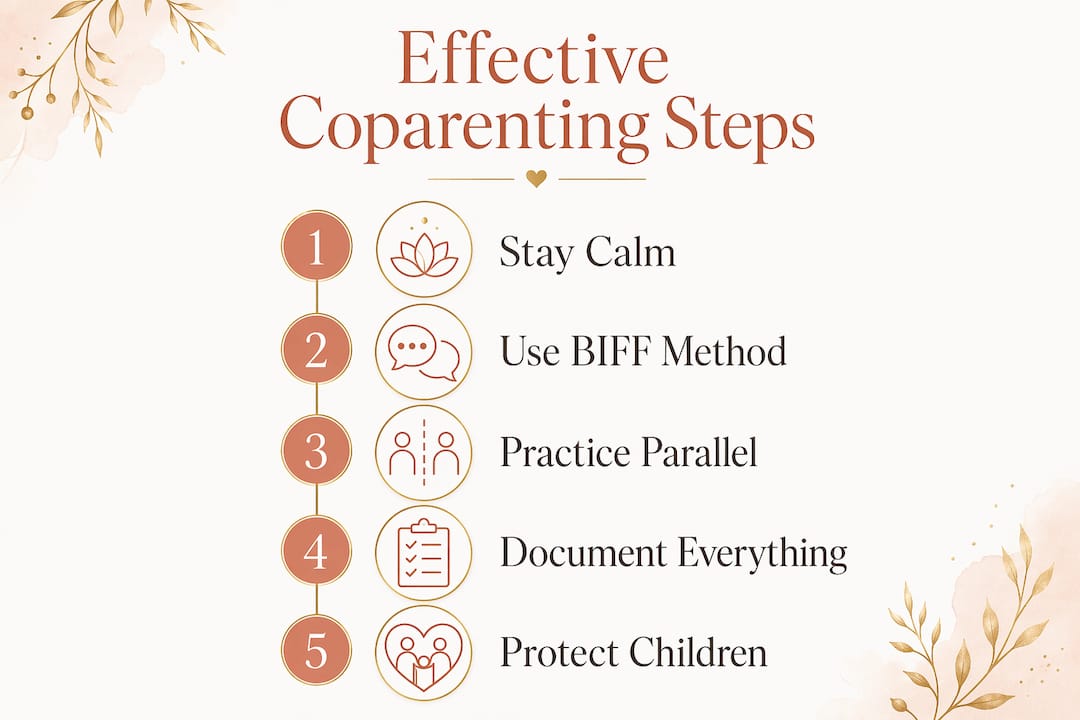
When your ex uses your children as pawns, the most effective response is to stay calm, document everything, and keep your kids completely out of the middle. This pattern of behavior is formally recognized in family law as parental manipulation or, in more severe cases, parental alienation. Both terms describe a co-parent using children as emotional leverage, messengers, or tools of control. The strategies that work are not reactive. They are structured, documented, and child-focused. Practical frameworks like the BIFF communication method and parallel parenting give you a clear path forward without feeding the conflict.
- How to respond when your ex uses kids as pawns
- What communication strategies actually reduce conflict?
- How do you protect your children emotionally?
- How do you build a verifiable documentation trail?
- What legal and professional resources are available?
- Key takeaways
- What i’ve learned about staying sane when your ex uses your kids
- FAQ
How to respond when your ex uses kids as pawns
Knowing how to respond when your ex uses kids as pawns starts with recognizing the specific behaviors at play. Manipulation through children rarely looks like one dramatic incident. It builds gradually through repeated patterns that are easy to dismiss individually but damaging over time.
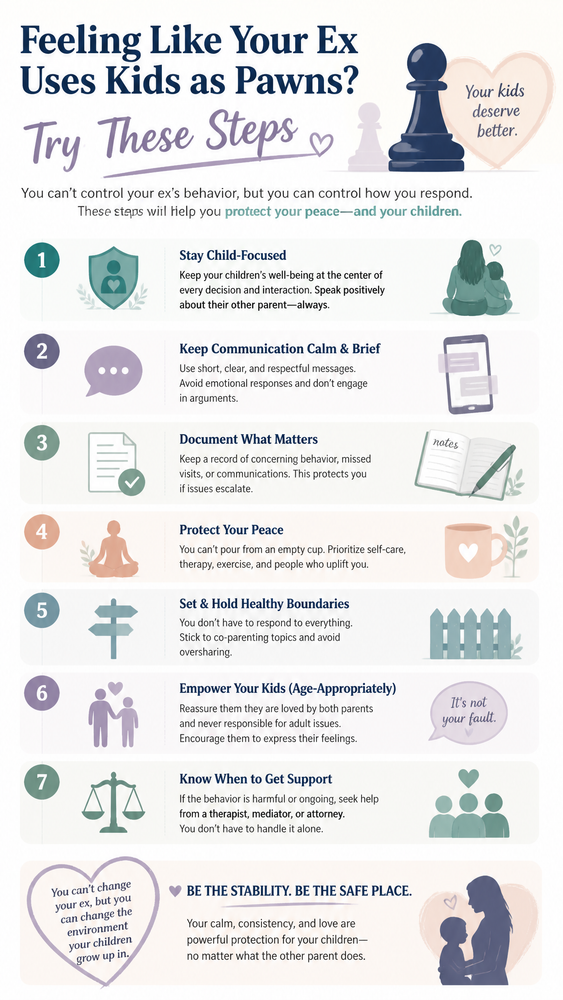
Common behaviors include:
- Using children as messengers. Your ex sends financial demands, schedule changes, or emotional complaints through your child instead of contacting you directly.
- Pumping children for information. Your child is asked to report on your home, your relationships, or your finances after visits.
- Withholding visitation as punishment. Parenting time is canceled or restricted in response to disagreements that have nothing to do with the children.
- Coaching children to reject you. Your child returns from visits repeating phrases or accusations that clearly originate from the other parent.
- Using children to deliver threats. Your ex communicates legal threats, financial pressure, or emotional ultimatums through your child.
The psychological motive behind these behaviors is usually control, retaliation, or an inability to accept the end of the relationship. Children caught in this pattern experience real emotional harm. They feel loyalty conflicts, anxiety, and confusion about their role in the family. Age-appropriate reassurance without burdening them with adult details is the first protective step you can take.
What communication strategies actually reduce conflict?
The two most effective frameworks for co-parenting with a difficult ex are the BIFF method and parallel parenting. Both are designed to reduce your exposure to manipulation while keeping the focus on your children’s needs.
The BIFF method in practice
BIFF stands for Brief, Informative, Friendly, and Firm. It was developed by family law attorney and mediator Bill Eddy specifically for high-conflict communication. A BIFF response runs 2–4 sentences, covers logistics only, and gives no opening for further debate.
Here is how to apply it step by step:
- Read the message once. Identify the one logistical fact that requires a response. Ignore everything else.
- Write a draft. Address only who, what, when, or where. No explanations. No emotional content.
- Check for BIFF compliance. Is it brief? Does it stick to facts? Is the tone neutral? Does it close the topic?
- Remove any reactive language. Delete anything that defends, justifies, or argues.
- Send it. The goal is not to change your ex. It is to protect your energy and create a clean record if court involvement happens.
Example: Your ex sends a message accusing you of missing a school event and threatening to bring it up in court. A BIFF response might be: “I attended the event and signed in at 6:15 p.m. The school office has the record. Please direct any scheduling questions to the shared calendar.”
Parallel parenting as a long-term structure
Parallel parenting reduces conflict by minimizing direct communication and focusing only on child logistics. You and your ex operate as two separate households with minimal overlap. There are no joint school pickups, no shared social events, and no real-time conversations unless a child safety emergency requires it.
Apps like OurFamilyWizard serve as the communication channel. All messages are timestamped, logged, and unalterable. That record matters enormously if you ever need to demonstrate a pattern of behavior to a judge or parenting coordinator.
Pro Tip: Apply a 24-hour delay rule before responding to any non-emergency message. This reduces reactive responses and removes the emotional charge that manipulative messages are designed to trigger.
How do you protect your children emotionally?
Protecting your children from the fallout of a manipulative ex is the most important work you will do during this period. Children do not need to understand the adult conflict. They need to feel safe, loved, and free from pressure.
Practical steps to keep your children out of the middle:
- Never use your child as a messenger. All communication with your ex goes directly to your ex, in writing, through the agreed channel. No exceptions.
- Do not speak negatively about your ex in front of your children. This is not about protecting your ex. It is about protecting your child from loyalty conflicts that cause lasting psychological harm.
- Watch for signs of distress. Regression in younger children, withdrawal, sleep problems, or sudden hostility toward you after visits can all signal that your child is being placed under pressure.
- Provide consistent reassurance. Tell your child clearly and often that both parents love them, that the adult problems are not their responsibility, and that they are safe.
Children should receive age-appropriate reassurance without being burdened with adult conflicts or details about legal proceedings. When your child repeats something that sounds coached, respond with calm curiosity rather than alarm. “That sounds like it was confusing. You don’t need to worry about that” is more protective than a correction or a counter-argument.
Pro Tip: Consider working with a child therapist who specializes in family transitions. A professional at organizations like the American Association for Marriage and Family Therapy (AAMFT) can give your child a neutral space to process their experience without involving either parent.
You can also find specific guidance on emotionally preparing kids for parenting changes through Aftertheaffair’s dedicated resource.
How do you build a verifiable documentation trail?
Documentation is your most powerful tool in a high-conflict custody situation. Courts do not respond to feelings or accusations. They respond to evidence. A complete chronological record is far more persuasive than a folder of isolated screenshots.
| Record Type | What to Capture | Why It Matters |
|---|---|---|
| Written messages | Full threads with timestamps and read receipts | Shows patterns, not just isolated incidents |
| Calendar events | Scheduled visits, cancellations, and changes | Documents interference with parenting time |
| Payment records | Child support, medical expenses, school fees | Establishes financial compliance or non-compliance |
| Incident logs | Date, time, what was said or done, who was present | Builds a factual timeline for legal review |
| Children’s statements | Exact words, date, context, your neutral response | Supports claims of coaching or manipulation |
OurFamilyWizard stores messages with timestamps and read status, creating an unalterable paper trail that courts can rely on. That feature alone makes it worth using over standard text messaging. Document patterns with dates rather than reacting publicly or retaliating, and consult an attorney if the behavior crosses into harassment or defamation.
What legal and professional resources are available?
When documentation alone is not enough, legal and professional resources exist specifically for high-conflict custody situations. Knowing when and how to use them is part of protecting your children.
- Parenting coordinators. A parenting coordinator is a neutral professional, often a therapist or attorney, appointed by the court to resolve day-to-day disputes. They reduce the need for constant litigation and can enforce communication protocols directly.
- Family mediators. Mediation provides a structured environment for resolving specific disputes without a courtroom. It works best when both parties are willing to engage in good faith.
- Family law attorneys. Consult a family law attorney when alienating behaviors become consistent, when visitation is repeatedly withheld, or when your ex’s communications cross into harassment. Your documentation log is the foundation of any legal action.
- Custody order modifications. Courts can modify existing orders when a parent’s behavior consistently harms the children. Courts focus on specific behaviors and their impact on children rather than on labels like “parental alienation.”
The 2026 guidance from the Family Justice Council reinforces this approach. Judges want factual evidence of what happened, when it happened, and how it affected the children. That is exactly what your documentation log provides. Focus on detailed factual evidence of behaviors and child impact rather than trying to win an argument about your ex’s character.

Key takeaways
Responding effectively when your ex uses your children as pawns requires calm documentation, structured communication, and a consistent focus on your children’s emotional safety above all else.
| Point | Details |
|---|---|
| Use the BIFF method | Keep responses brief, factual, and firm to avoid feeding manipulation. |
| Apply parallel parenting | Minimize direct contact and route all communication through a documented platform like OurFamilyWizard. |
| Protect children from conflict | Never use children as messengers and provide consistent, age-appropriate reassurance. |
| Build a chronological record | Log messages, incidents, and calendar events with timestamps for court-ready evidence. |
| Seek legal help when needed | Consult a family law attorney or parenting coordinator when behavior becomes persistent or harmful. |
What i’ve learned about staying sane when your ex uses your kids
The hardest part of this situation is not the legal complexity. It is the emotional discipline required to not react. Every provocative message, every canceled visit, every coached comment from your child is designed to pull you into a fight. The manipulation only works if you engage.
What I have seen consistently is that the parents who protect their children most effectively are the ones who treat every interaction with their ex as a potential court exhibit. That mindset is not paranoid. It is practical. When you write a message, ask yourself: would I be comfortable if a judge read this? That single question eliminates most reactive responses before they are sent.
Self-care is not a luxury in this situation. It is a requirement. You cannot maintain the emotional discipline this process demands if you are running on empty. Therapy, support groups, and resources like those at Aftertheaffair exist precisely because this kind of sustained conflict is genuinely traumatic. You are not overreacting. You are dealing with something that requires real support.
The parallel parenting method is not a compromise. It is a boundary. It says: I will co-parent with you on logistics, and I will not engage with anything else. That boundary protects your children, your legal position, and your mental health simultaneously.
Focus on what you can control. You cannot change your ex’s behavior. You can control your responses, your documentation, and the environment you create for your children. That is enough. It is more than enough.
— S.J.Howe
Healing support for co-parents under pressure
Co-parenting with a manipulative ex is not just a legal challenge. It is an emotional one that can leave you feeling isolated, exhausted, and uncertain about your own stability. Aftertheaffair offers structured, evidence-informed resources built specifically for people navigating betrayal, conflict, and the long road back to themselves.
The 7-step infidelity recovery checklist at Aftertheaffair gives you a practical framework for processing the emotional weight of this experience, whether the conflict stems from infidelity, separation, or ongoing custody battles. For those working through the deeper psychological impact, the stages of healing guide maps the recovery process with clarity and compassion. You deserve support that matches the seriousness of what you are going through.
FAQ
What does it mean when an ex uses kids as pawns?
It means the co-parent uses children as emotional leverage, messengers, or tools of control rather than prioritizing the children’s wellbeing. This behavior is recognized in family law as parental manipulation and, in severe cases, parental alienation.
How does the BIFF method help with a manipulative ex?
The BIFF method keeps your responses brief, factual, neutral, and firm, which removes the emotional openings that manipulative messages are designed to exploit. It also creates a clean, professional record if the situation moves to court.
What app is best for documenting co-parent communication?
OurFamilyWizard is widely used and court-accepted because it stores messages with timestamps and read receipts, creating an unalterable chronological record. Courts prefer this type of comprehensive log over isolated screenshots.
When should i involve a lawyer in a high-conflict custody situation?
Consult a family law attorney when visitation is repeatedly withheld, when your ex’s behavior becomes harassing, or when you see consistent patterns of coaching or alienating behavior directed at your children.
How do i talk to my children about what is happening?
Provide age-appropriate reassurance without sharing adult details or criticizing the other parent. Tell your child clearly that both parents love them and that the adult problems are not their responsibility.
Recommended
- How to Tell Kids About an Affair – After the Affair Series
- Project 2- When Your Ex’s New Partner Enters Your Child’s Life – After the Affair Series
- Parenting During Affair Fog – After the Affair Series
- How to tell if your children are being coached against you – After the Affair Series