TL;DR:
- Co-parenting gaslighting involves deliberate manipulation where one parent distorts reality to control or confuse the other parent about the children. Recognizing repeated denial, minimizing concerns, and blame-shifting helps distinguish it from normal conflict and enables effective countermeasures. Using documented, timestamped communication and practicing emotional detachment, such as gray rocking, can protect parents and children from long-term psychological harm.
- What are the signs your co-parent is gaslighting you about the kids?
- How does gaslighting affect you and your child’s behavior?
- How do you tell gaslighting apart from normal co-parenting conflict?
- What steps can you take to protect yourself and your kids?
- Key takeaways
- What i’ve learned about the gaslight tango trap
- FAQ
Co-parenting gaslighting is a pattern of psychological manipulation where one parent intentionally distorts reality about the children to control, confuse, and destabilize the other parent. The Department of Communities WA classifies this as a form of coercive control, recognizing its emotional impacts as consistent with family and domestic violence. If you regularly leave conversations with your co-parent feeling confused, ashamed, or questioning your own memory, the signs your co-parent is gaslighting you about the kids may already be present. Recognizing these patterns is the first step toward protecting yourself and your children.

What are the signs your co-parent is gaslighting you about the kids?
Co-parenting gaslighting follows a recognizable structure. The manipulative co-parent denies agreements you both made, minimizes your concerns about the children, and redirects blame back onto you. Psychologists describe this pattern as DARVO: Deny, Attack, Reverse Victim and Offender. It is not a one-time misunderstanding. It is a repeated cycle designed to make you doubt your own perception of events.
Common phrases that signal gaslighting in co-parenting include:
- “I never agreed to that pickup time. You’re making things up.”
- “You’re overreacting. The kids are fine.”
- “Why are you confusing the children with your drama?”
- “Everyone thinks you’re unstable. Even the kids say so.”
- “You’re the reason this family fell apart.”
- “I never said that. You always misremember things.”
Each phrase serves a specific function. Denial attacks your memory. Minimizing dismisses your parental instincts. Projection shifts responsibility onto you. Together, these tactics erode your reality-testing skills and make you second-guess every decision you make as a parent.
Pro Tip: Screenshot or save every written communication with your co-parent. Timestamped records are your most reliable defense against denial tactics.
How does gaslighting affect you and your child’s behavior?
The emotional toll of co-parenting gaslighting is cumulative. Targeted parents typically report persistent confusion, excessive apologizing, and a gradual loss of trust in their own judgment. Many describe feeling constantly “on eggshells” before any communication with their co-parent. Over time, this erodes confidence in parenting decisions and creates anxiety that bleeds into daily life.
Children are not shielded from these effects. When one parent uses the children as tools in a gaslighting campaign, kids show specific behavioral changes that differ from normal post-divorce adjustment. Experts identify warning signs that include:
- Sudden, unexplained hostility toward the targeted parent
- Using adult-like language or complaints that do not match the child’s age or vocabulary
- Acting as a messenger between parents, relaying accusations or ultimatums
- Refusing contact without a clear, child-generated reason
- Repeating criticisms of the targeted parent word-for-word
These behaviors signal parental alienation tactics, which frequently overlap with gaslighting. The child is not acting independently. They are reflecting what they have been coached to believe. Aftertheaffair offers a detailed resource on how children get coached that helps parents identify these signs early.
“Long-term exposure to gaslighting erodes reality-testing skills and mental well-being in both the targeted parent and the children involved.” — Verywell Mind
Pro Tip: If your child uses phrases that sound rehearsed or far too adult for their age, write them down immediately with the date. This documentation matters later.
How do you tell gaslighting apart from normal co-parenting conflict?
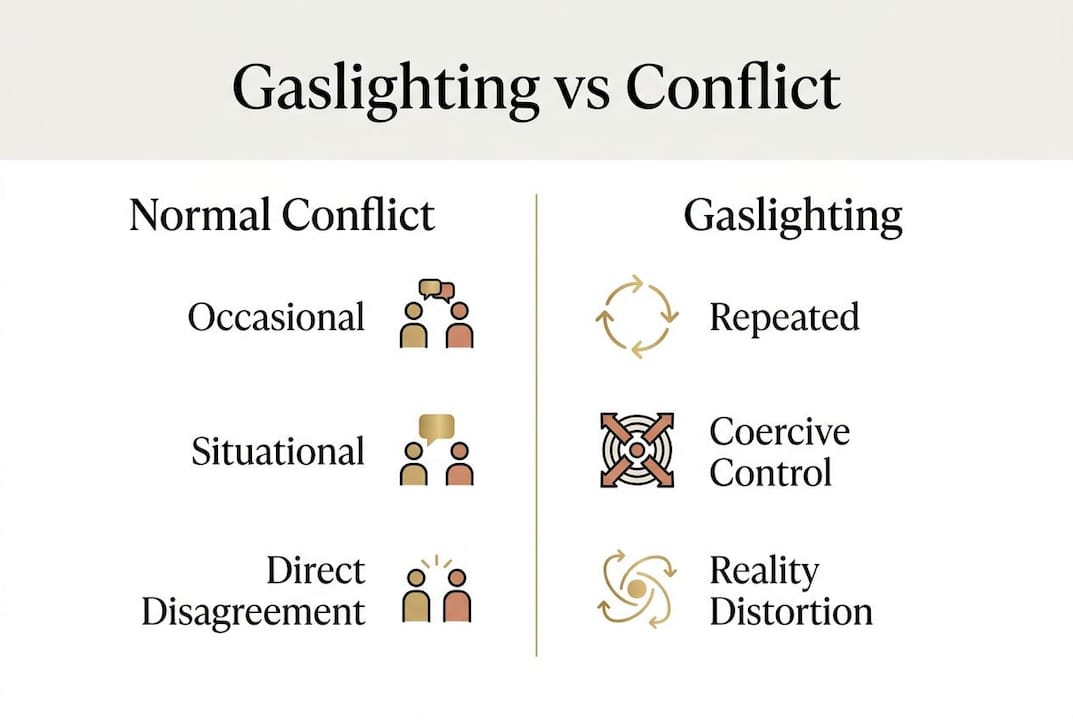
Not every disagreement with your co-parent is gaslighting. Recognizing emotional manipulation requires identifying a pattern, not a single incident. Normal co-parenting conflict involves two people with different perspectives who occasionally misremember or miscommunicate. Gaslighting involves one person systematically denying facts, attacking your credibility, and using the children as leverage.
The table below shows the core differences:
| Feature | Normal Conflict | Co-Parenting Gaslighting |
|---|---|---|
| Frequency | Occasional, situational | Repeated, predictable pattern |
| Intent | Resolve disagreement | Confuse and control |
| Response to evidence | Acknowledges facts | Denies or reframes facts |
| Use of children | Kept out of disputes | Used as messengers or weapons |
| Outcome for you | Frustration, then resolution | Persistent self-doubt and anxiety |
| Accountability | Accepts some responsibility | Always deflects blame onto you |
Parental alienation is a related but distinct concern. Alienation specifically targets the child’s relationship with the other parent, while gaslighting targets the parent’s perception of reality. Both can occur simultaneously. Parental alienation warning signs include 17 identifiable behaviors that experts distinguish from normal post-divorce adjustment.
Documented communication is the clearest way to separate conflict from coercive control. When interactions are recorded and timestamped, patterns become visible. A single argument looks like a misunderstanding. Fifty arguments with the same denial structure look like a strategy.
Pro Tip: Use a co-parenting communication app like OurFamilyWizard or TalkingParents. These platforms create automatic timestamps and prevent message deletion, which is critical if your case ever reaches a family court.
What steps can you take to protect yourself and your kids?
Protection from co-parenting gaslighting requires both structural and emotional strategies. The following steps address both.
Move all communication to written, timestamped platforms. Structured communication is the most effective counter to gaslighting because it removes the gaslighter’s ability to deny what was said. Apps like OurFamilyWizard, TalkingParents, or even a dedicated email thread create objective records. Verbal conversations leave no trail.
Practice gray rocking. Experts at HelpGuide recommend gray rocking as the primary communication strategy with a gaslighting co-parent. This means responding with brief, emotionless, factual replies. “I’ll check the schedule and reply by email” is a gray rock response. Defending yourself, explaining your feelings, or arguing back pulls you into what experts call the “Gaslight Tango,” a manipulative conversational loop you cannot win.
Validate your children’s feelings without taking sides. Validating a child’s emotions separately from the facts of a dispute protects them from being drawn into parental conflict. Say “I can see you’re upset” rather than “Your other parent is wrong.” This builds the child’s emotional trust in you without exposing them to adult conflict.
Document every incident. Successful legal cases involving gaslighting rely on a documented pattern of behavior, not emotional testimony. Keep a private log with dates, exact phrases used, and the context. Courts respond to patterns, not feelings.
Seek professional support. A therapist who specializes in coercive control or post-separation abuse can help you rebuild self-trust and develop coping strategies. Family mediators provide a neutral space for co-parenting decisions. Support groups for separated parents offer peer validation that counters the isolation gaslighting creates.
For parents managing a high-conflict dynamic, parallel parenting is a structured alternative to traditional co-parenting that minimizes direct contact and reduces opportunities for manipulation.
Pro Tip: Before any scheduled call or in-person exchange, write down the three facts you need to communicate. Stick to those facts only. This keeps you grounded and prevents emotional baiting from derailing the conversation.
Key takeaways
Co-parenting gaslighting is a recognizable pattern of coercive control that targets your perception of reality and your children’s loyalty, and it requires structured, documented responses to counter effectively.
| Point | Details |
|---|---|
| Gaslighting follows a pattern | Repeated denial, minimizing, and blame-shifting distinguish it from normal conflict. |
| Children show behavioral signs | Rehearsed complaints, adult-like language, and sudden hostility signal possible coaching. |
| Documentation is your defense | Timestamped, written records from co-parenting apps are more reliable than memory in court. |
| Gray rocking limits manipulation | Brief, factual replies prevent emotional escalation and break the Gaslight Tango cycle. |
| Professional support accelerates recovery | Therapists, mediators, and support groups rebuild self-trust and provide objective perspective. |

What i’ve learned about the gaslight tango trap
One thing I see consistently in the work we do at Aftertheaffair is how many parents get caught trying to prove they are right. They gather evidence, prepare arguments, and walk into the next conversation ready to expose the manipulation. Then they walk out two hours later feeling worse than before.
That is the Gaslight Tango. The gaslighter does not need to win the argument. They just need to keep you arguing. Every time you defend your memory, explain your reasoning, or try to make them admit what they did, you hand them another opportunity to deny, deflect, and reframe. The conversation becomes the trap.
What actually works is boring. It is gray rocking, written records, and a therapist who helps you stop needing the other person to acknowledge your reality. Your reality does not require their validation. That shift, from seeking acknowledgment to building your own solid ground, is where real protection begins.
Your children are watching how you handle this. They do not need you to win. They need you to stay steady. The most powerful thing you can do for them is to support their emotional world without pulling them into the conflict. That steadiness is what they will remember.
— S.J.Howe
How Aftertheaffair can support your recovery
Recovering from betrayal and navigating a high-conflict co-parenting situation at the same time is one of the hardest things a parent can face. Aftertheaffair provides structured, evidence-informed resources designed specifically for this intersection of trauma and family complexity.
The 7-step infidelity recovery checklist gives you a clear, sequential path through the emotional stages of recovery, including rebuilding self-trust after coercive control. For parents working through the long-term effects of betrayal on their co-parenting dynamic, the stages of healing resource maps the recovery process with practical milestones. You do not have to figure this out alone, and you do not have to start from scratch.
FAQ
What is gaslighting in co-parenting?
Co-parenting gaslighting is a form of coercive control where one parent repeatedly denies facts, minimizes concerns, and distorts reality to confuse and destabilize the other parent, specifically regarding the children and shared parenting agreements.
How do i know if my co-parent is gaslighting me or just disagreeing?
Gaslighting follows a repeated pattern of denial, blame-shifting, and reality distortion, while normal disagreement is situational and allows for resolution. If you consistently leave conversations doubting your own memory or judgment, that pattern signals manipulation rather than conflict.
Can gaslighting by a co-parent affect my child’s mental health?
Yes. Children exposed to a gaslighting parent may show sudden hostility toward the targeted parent, use rehearsed adult-like language, and act as messengers between parents. These behaviors differ from normal post-divorce adjustment and may require professional support to address.
What is the gray rock method and does it work for co-parenting?
Gray rocking means responding to your co-parent with brief, emotionless, factual replies that give them nothing emotional to react to. Experts at HelpGuide recommend it specifically to prevent the escalating conversational loops that gaslighting creates.
Can i use gaslighting evidence in a custody case?
Yes. Courts respond to documented patterns rather than emotional accounts. Timestamped records from co-parenting apps like OurFamilyWizard or TalkingParents are more reliable as legal evidence than verbal recollections, according to family law guidance on gaslighting in custody cases.
Recommended
- How to tell if your children are being coached against you – After the Affair Series
- Communication Transition Mistakes – After the Affair Series
- What Not To Do When Co-Parenting – After the Affair Series
- Healthy Co-Parenting – After the Affair Series