TL;DR:
- Myths about infidelity often cause self-blame, misunderstand legal outcomes, and hinder emotional recovery.
- Understanding that cheating results from complex factors and not relationship dissatisfaction is crucial for healing.
Infidelity is defined as a breach of trust through sexual or emotional involvement outside a committed relationship, and the common myths about infidelity surrounding it cause as much damage as the betrayal itself. About 16% of ever-married adults report extramarital sex, but that figure undercounts reality because most surveys exclude emotional affairs entirely. The myths people carry into the aftermath of betrayal shape how they assign blame, what they expect from the legal system, and how long healing takes. Getting the facts straight is not just reassuring. It is the foundation of genuine recovery.
1. Common myths about infidelity and why people cheat
The most persistent infidelity misconceptions center on why cheating happens. People assume a clear, single cause. The reality is far more complicated, and getting this wrong leads directly to self-blame and misplaced shame.
- Myth: The marriage must have been unhappy. Cheating can occur in happy relationships and is frequently tied to the cheating partner’s internal struggles, including low self-esteem, a search for novelty, or unresolved personal trauma. A satisfying marriage does not immunize against infidelity.
- Myth: The betrayed partner’s appearance or worth caused it. Infidelity is not an indictment of the betrayed partner’s worth but a reflection of the cheating partner’s choices and internal state. Therapists consistently report this distinction as the most important one for survivors to internalize.
- Myth: There is one universal reason people cheat. No single cause of infidelity exists. Multiple factors, including emotional disconnection, opportunity, unresolved trauma, and relationship dissatisfaction, all contribute. Expecting one clean explanation sets up a false standard that delays healing.
- Myth: Affairs just happen. Being unfaithful is a choice, not an accident. Trauma complicates the immediate analysis, but the cheating partner’s decision-making is always central to the event.
Pro Tip: If you are trying to understand why it happened, resist the urge to find one definitive answer. Working with a therapist who specializes in betrayal trauma, such as those trained in Emotionally Focused Therapy (EFT), gives you a structured space to process complexity without forcing false conclusions.
The false ideas about adultery that center on blame, whether self-directed or partner-directed, are the ones most likely to stall recovery. Recognizing that blaming the betrayed partner is a distorted inference, not a logical conclusion, is the first real step toward emotional clarity.
2. Myths about the legal consequences of infidelity
Many people discover a partner’s affair and immediately assume it will give them a legal advantage in divorce proceedings. This belief is one of the most damaging false ideas about adultery because it shapes major decisions at the worst possible moment.
| Myth | Legal reality |
|---|---|
| Proving infidelity wins you more assets | Washington state courts treat infidelity as largely irrelevant to property division under no-fault divorce law |
| Infidelity automatically affects custody | Courts separate spousal conduct from parenting fitness; a cheating spouse can still be a fit parent |
| The cheating spouse pays more spousal support | Courts focus on financial need, earning capacity, and marriage length, not on who cheated |
| Texas courts punish adultery heavily | Texas requires substantial proof of a sexual act, and adultery typically shifts property division by only about 5% |
No-fault divorce laws, now standard across most U.S. states, were specifically designed to remove moral fault from financial and custodial decisions. Understanding this legal framework helps reduce panic-driven choices made in the immediate aftermath of discovery.
Pro Tip: Before making any legal decisions post-discovery, consult a family law attorney in your specific state. Laws vary, and understanding no-fault divorce laws reduces the risk of acting on misinformation at a critical moment.
The emotional pull to want the legal system to validate your pain is entirely understandable. Courts, however, are not equipped to deliver that kind of justice. Recognizing this early protects you from making costly decisions based on myths surrounding cheating and divorce.
3. Misconceptions about emotional vs. physical infidelity
One of the most stubborn common beliefs about infidelity is that it only counts if it is physical. This narrow view causes real harm, particularly to people whose partners have formed deep emotional bonds outside the relationship.
The standard survey definition of infidelity, which measures only extramarital sex, excludes emotional affairs entirely. This means prevalence statistics undercount actual betrayal experiences by a significant margin. People who have lived through an emotional affair know the damage is real, even when no physical contact occurred.
Key facts on emotional infidelity:
- Emotional affairs can be as damaging as physical ones, and in many cases more so, because they involve sustained emotional intimacy and secrecy.
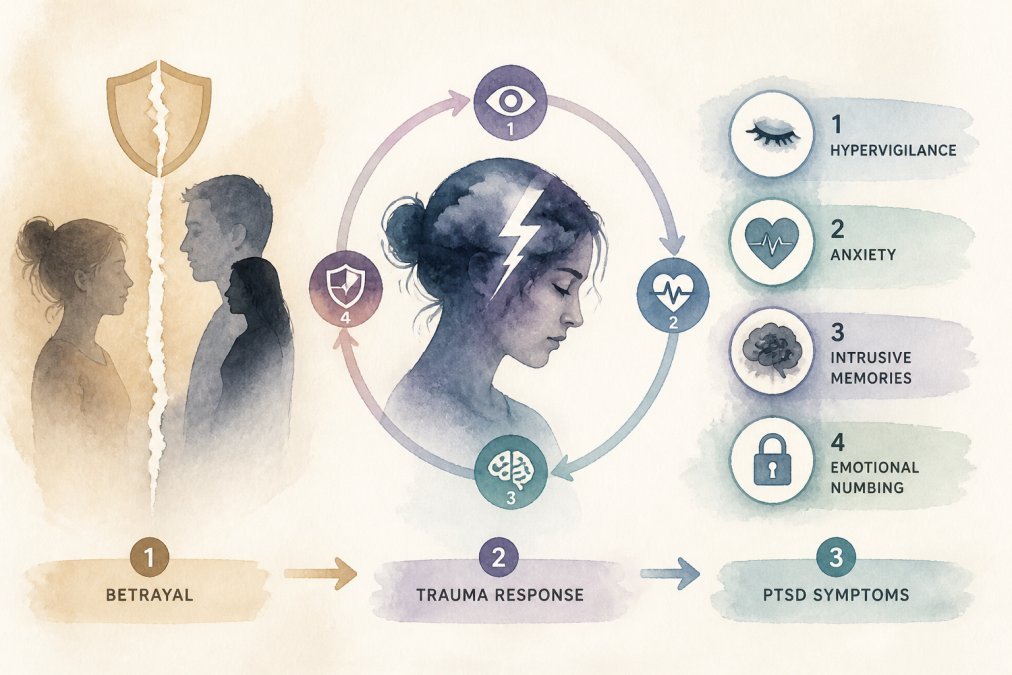
- Secrecy itself is a primary driver of trauma. The breach of trust, not the physical act, is what causes the deepest psychological wound.
- Research from the Institute for Family Studies shows that emotional affairs frequently escalate to physical intimacy over time, making early recognition critical.
- Gender differences in distress are well-documented. Men report greater distress over physical infidelity, while women report greater distress over emotional infidelity. Neither response is more valid than the other.
The emotional affairs myths that minimize this form of betrayal do survivors a disservice. If you are questioning whether your pain is “justified” because the affair was emotional rather than physical, the answer is yes. The impact on trauma and emotional well-being is real regardless of the form the betrayal took.
4. How myths hinder healing and emotional recovery
The most damaging myths about infidelity are not the ones about causes or legal outcomes. They are the ones that distort the healing process itself, because those are the myths that keep people stuck for years.
- Myth: Getting an immediate explanation will heal the trauma. Pushing for the “why” before psychological safety is established can retraumatize the betrayed partner. Timing emotional discussions is critical; clinical recommendations prioritize safety and stabilization before deep explanation work begins.
- Myth: Healing should follow a predictable timeline. Betrayal trauma does not resolve on a schedule. Expecting to feel better within weeks, or judging yourself for still struggling months later, adds a second layer of suffering on top of the original wound.
- Myth: Self-blame speeds up understanding. Self-blame feels like control. It gives the illusion that if you had done something differently, the affair would not have happened. This is a cognitive distortion, not a productive analysis.
- Myth: Staying means forgiving, and leaving means failing. Neither decision defines your worth or your healing capacity. Both paths require deliberate, supported work to process the trauma.
Pro Tip: Seek a therapist trained in trauma-informed care, specifically someone familiar with betrayal trauma frameworks like those used by the American Association for Marriage and Family Therapy (AAMFT). Generic couples counseling is often insufficient in the early stages of infidelity recovery.
Myths that delay trauma-informed recovery deepen wounds rather than closing them. The role of structured, professional support in rebuilding trust after infidelity is not optional for most survivors. It is the difference between processing the trauma and simply surviving it indefinitely.

Key takeaways
The most damaging myths about infidelity are those that assign blame to the betrayed partner, inflate legal expectations, dismiss emotional affairs, and distort the healing timeline.
| Point | Details |
|---|---|
| Cheating reflects the cheater’s choices | Infidelity is not caused by the betrayed partner’s worth, appearance, or relationship quality. |
| Legal advantages are largely a myth | No-fault divorce laws in most U.S. states make infidelity largely irrelevant to property, custody, and support. |
| Emotional affairs cause real trauma | Secrecy and emotional intimacy outside the relationship cause psychological damage equal to or greater than physical affairs. |
| Demanding immediate answers can retraumatize | Clinical guidance prioritizes psychological safety before explanation-seeking in betrayal recovery. |
| Healing is not linear or time-bound | Betrayal trauma resolves through structured support, not through willpower or a fixed schedule. |
Why the myths we carry after betrayal matter more than we think
By Silviya
After working with individuals navigating betrayal trauma, the pattern I see most consistently is not the affair itself. It is the myth the person carries into the aftermath that determines how long they suffer.
The belief that “I must have caused this” is the one I encounter most often, and it is the most corrosive. It is not a logical conclusion. It is a trauma response dressed up as self-analysis. When someone tells me they are trying to figure out what they did wrong, I redirect them immediately. The question is not what you did. The question is what support you need right now.
The legal myths are equally damaging, but in a different way. People make enormous decisions, sometimes irreversible ones, based on the assumption that the court system will validate their pain. It will not. No-fault divorce law is not a moral framework. It is an administrative one. The sooner you separate emotional justice from legal process, the clearer your decision-making becomes.
What I find most underappreciated is the damage done by minimizing emotional affairs. Survivors of emotional betrayal frequently tell me they feel they have no right to be as hurt as they are because “nothing physical happened.” That belief delays recovery by months, sometimes years. The breach of trust is the wound. The form it takes is secondary.
If you are in the early stages of processing betrayal, the most useful thing you can do is identify which myths you are carrying and challenge them with evidence. The emotional recovery journeys of others who have been where you are now show clearly that clarity, not certainty, is what moves healing forward.
— S.J.Howe
Start your recovery with the right foundation
Aftertheaffair provides structured, evidence-informed resources built specifically for people navigating the aftermath of betrayal. The 7-step infidelity recovery checklist gives you a clear, practical framework for moving through the early stages of healing without the confusion that myths create. For those ready to look further ahead, the relationship growth guide addresses how to rebuild trust and move toward genuine recovery, whether you stay or leave. Both resources are grounded in the same trauma-informed approach that underpins the entire Aftertheaffair series.
FAQ
Does infidelity always mean the relationship was unhappy?
No. Cheating can occur in relationships where both partners report satisfaction. Research consistently shows that the cheating partner’s internal struggles, not the relationship’s quality, are the primary driver.
Is infidelity always physical?
No. Emotional affairs, which involve sustained emotional intimacy and secrecy outside the relationship, cause significant psychological trauma and are widely recognized by therapists as a genuine form of betrayal.
Will proving infidelity help me in divorce court?
In most U.S. states, no. No-fault divorce laws mean courts focus on financial need, earning capacity, and marriage length rather than who cheated. In Texas, proven adultery may shift property division by roughly 5%, but custody and child support remain unaffected.
How long does healing from infidelity take?
There is no fixed timeline. Betrayal trauma resolves through structured, trauma-informed support rather than through a predictable schedule. Expecting recovery within weeks often adds unnecessary suffering.
Should I demand an explanation right away?
Clinical guidance recommends against pushing for explanations before psychological safety is established. Doing so can retraumatize the betrayed partner and delay genuine healing.
Recommended
- Healing After Infidelity – After the Affair Series
- How to Guide Clients After Infidelity for Healing – After the Affair Series
- Why Infidelity Hurts? – After the Affair Series
- Relationship Growth After Infidelity – After the Affair Series