Last Updated: July 22, 2026
- What Is a Structured Parenting Plan for High-Conflict Situations?
- Core Components of a High-Conflict Parenting Plan
- Parallel Parenting vs. Co-Parenting: Choosing Your Model
- Creating a Parenting Plan Template for High-Conflict Families
- Co-Parenting Apps for High-Conflict Situations
- Enforcing High-Conflict Parenting Plans: Documentation and Dispute Resolution
- Protecting Your Child's Emotional Wellbeing During High-Conflict Co-Parenting
- Self-Care and Managing Conflict as the Reasonable Parent
- Frequently Asked Questions
What Is a Structured Parenting Plan for High-Conflict Situations?
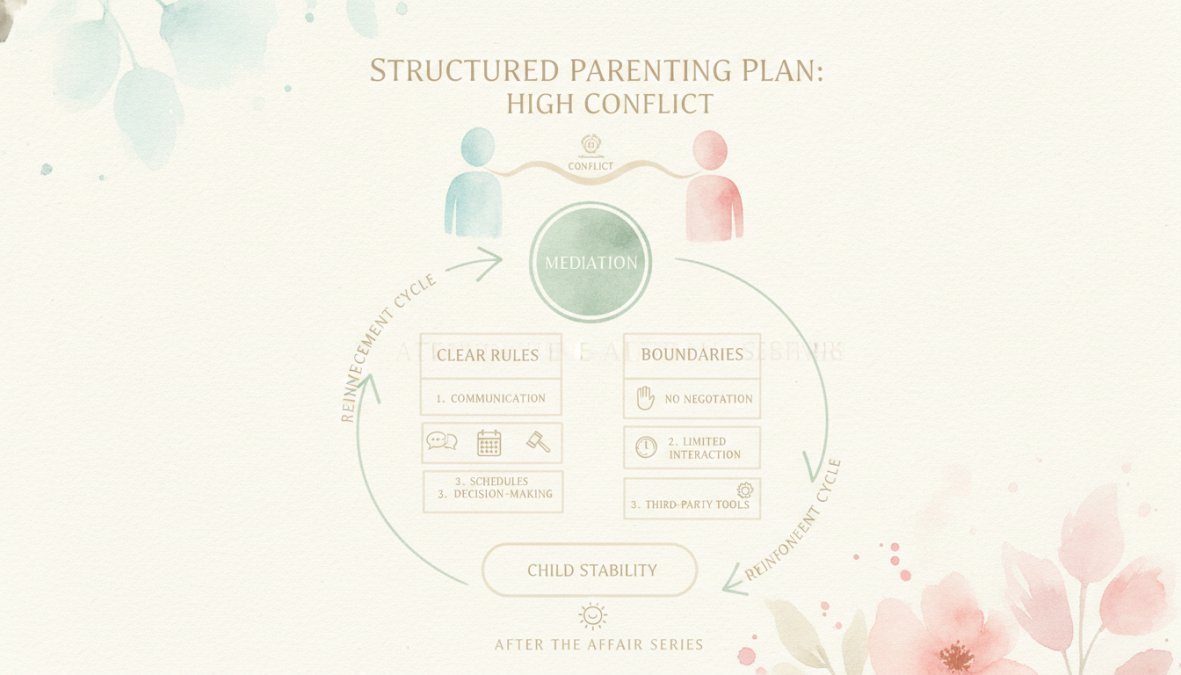
A structured parenting plan for high conflict is a detailed, court-approved agreement that removes ambiguity from co-parenting decisions and minimizes opportunities for conflict between separated or divorced parents. It specifies exactly when each parent has custody, how decisions get made, where child exchanges happen, and what happens when disputes arise. The core purpose is simple: reduce conflict by eliminating gray areas. When every detail is documented, there’s less room for misinterpretation, passive-aggressive behavior, or power struggles.
This approach differs fundamentally from cooperative co-parenting models that assume both parents communicate reasonably. High-conflict situations require parallel parenting frameworks, neutral communication channels, clear escalation procedures, and documented evidence trails.
A structured parenting plan for high conflict is not punishment, it’s protection. It protects your child from exposure to conflict, protects you from false accusations, and protects the plan itself by making it legally defensible.
Core Components of a High-Conflict Parenting Plan
Every structured parenting plan must address five foundational areas. Missing even one creates enforcement gaps that high-conflict parents will exploit.
Custody Schedules and Parenting Time
Your parenting schedule specifies exact days, times, and locations. A common schedule for younger children might be: one parent has Monday through Wednesday evenings plus every other weekend; the other parent has Thursday and Friday evenings plus the alternate weekend.
The schedule must account for school calendars, holidays, summer breaks, and special occasions. Many high-conflict plans build in specific rules: pickups happen at 6:00 PM sharp, and if a parent is more than 15 minutes late, the other parent may proceed with their own plans without penalty.
Include a makeup schedule. If one parent cancels parenting time, what happens to those hours? Without this, you’ll face repeated arguments about whether missed time was “forfeited” or “owed.”
Vague language like “reasonable notice” or “as agreed upon” creates conflict in high-conflict situations. Replace it with specific numbers: “48 hours’ notice required” or “makeup time must be scheduled within 30 days.” Specificity is your protection.
Decision-Making Authority and Legal Custody
Legal custody determines who has authority to make major decisions about the child’s upbringing: education, medical treatment, religious instruction, extracurricular activities. This is separate from physical custody.
In high-conflict situations, courts often award “joint legal custody with tie-breaking authority” to one parent. Both parents must agree on major decisions, but if they can’t, one parent (usually the primary custodian) has final say. Alternatively, some plans assign specific decisions to each parent: one parent controls educational decisions, the other controls medical decisions.
The plan must define what counts as a “major decision” versus routine matters. Routine decisions belong to whichever parent has physical custody at that moment. Major decisions require agreement or invoke the tie-breaking clause.
Financial Responsibilities and Child Support
The plan specifies who pays for what: child support, healthcare costs, extracurricular activities, school supplies, and special expenses. Many high-conflict plans include detailed breakdowns: “Parent A pays for health insurance premiums; Parent B reimburses 60% of out-of-pocket medical costs within 30 days of receipt of invoice.”
Include provisions for extraordinary expenses: summer camp, tutoring, orthodontia. Specify a dollar threshold above which both parents must agree before incurring the expense, or establish that extraordinary expenses are split 50/50 unless one parent unilaterally chooses to pay.
Require receipts and invoices to be submitted in writing within specific timeframes. This creates an evidence trail and prevents disputes months later.

Parallel Parenting vs. Co-Parenting: Choosing Your Model
Parallel parenting and co-parenting are two distinct approaches to high-conflict situations.
Co-parenting assumes both parents communicate directly, coordinate decisions, and present a united front to the child. This works when both parents can set aside their conflict for the child’s sake. Many high-conflict situations cannot support this model.
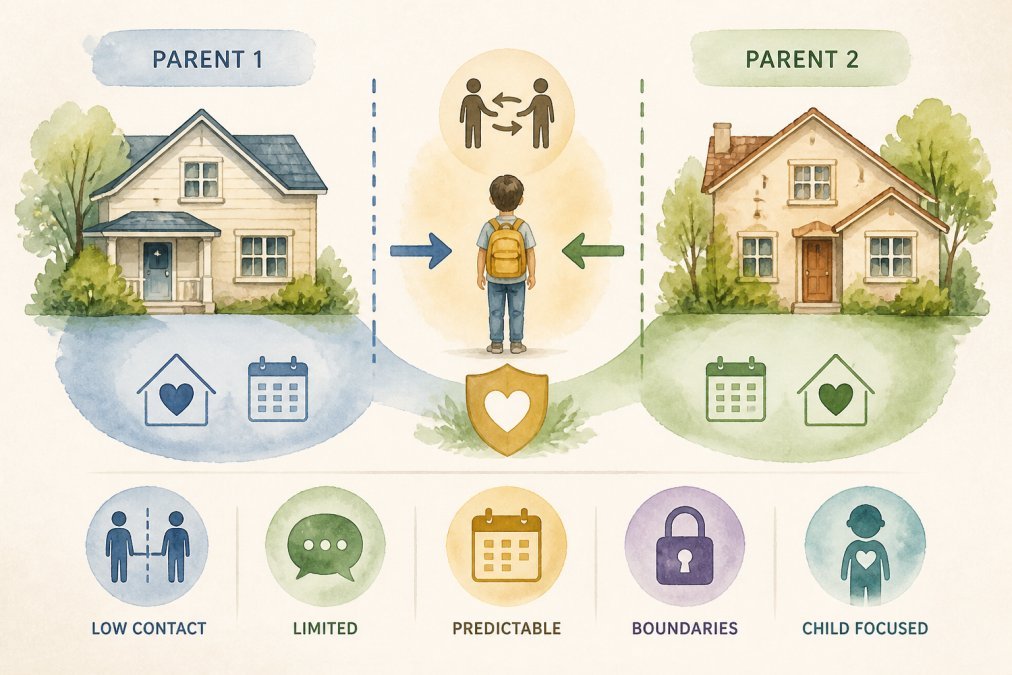
Parallel parenting minimizes direct communication between parents. Each parent makes independent decisions about the child during their custody time. The child may experience different rules and expectations in each household, and that’s acceptable under this model. The goal is reducing exposure to parental conflict, not perfect consistency.
A structured parenting plan typically adopts parallel parenting mechanics with specific guardrails. Communication happens through documented channels (email, co-parenting apps, written logs) rather than phone calls or in-person meetings. Major decisions still require agreement, but day-to-day parenting is autonomous.
Most high-conflict parents initially resist parallel parenting because it feels like “giving up” on unity. The reality: parallel parenting often reduces conflict faster than forced co-parenting attempts, which can escalate when one parent weaponizes communication.
Creating a Parenting Plan Template for High-Conflict Families
A functional template includes specific sections that address every potential friction point.
Communication Protocols and Boundary Setting
High-conflict parenting plans must establish strict communication rules: what methods are acceptable, response timeframes, and consequences for violations.
Common protocols:
- Email only for non-emergency matters. Phone calls or texts are reserved for genuine emergencies.
- 24-hour response requirement for routine messages. If a parent doesn’t respond within 24 hours, the sending parent may proceed with their own decision.
- No personal attacks or demeaning language in written communication. Messages that violate this standard can be used as evidence of parental alienation or contempt of court.
- Co-parenting app use (OurFamilyWizard, CustodyXchange) for all non-emergency coordination. These apps create timestamped records and prevent disputes.
Set explicit boundaries around topics that are off-limits: the other parent’s personal life, romantic relationships, and financial matters unrelated to the child.
Include a de-escalation clause: if a conversation becomes hostile, either parent can end it immediately and resume via email within 24 hours.
Child Exchange Logistics and Neutral Drop-Off Locations
Where and how the child transfers between parents matters enormously in high-conflict situations. Pickup and drop-off moments are flash points for conflict.
Specify exact locations: “Pickups occur at the McDonald’s parking lot at 123 Main Street, in the northwest corner near the entrance.” Include time windows, not exact times. “Pickup window: 5:00-5:15 PM on Fridays” allows for minor traffic delays without creating a violation.
Require that only the parent (not a new romantic partner or friend) performs the exchange unless explicitly authorized in writing. Many plans include a “no communication at exchange” rule: parents do not engage in conversation beyond logistical necessities.
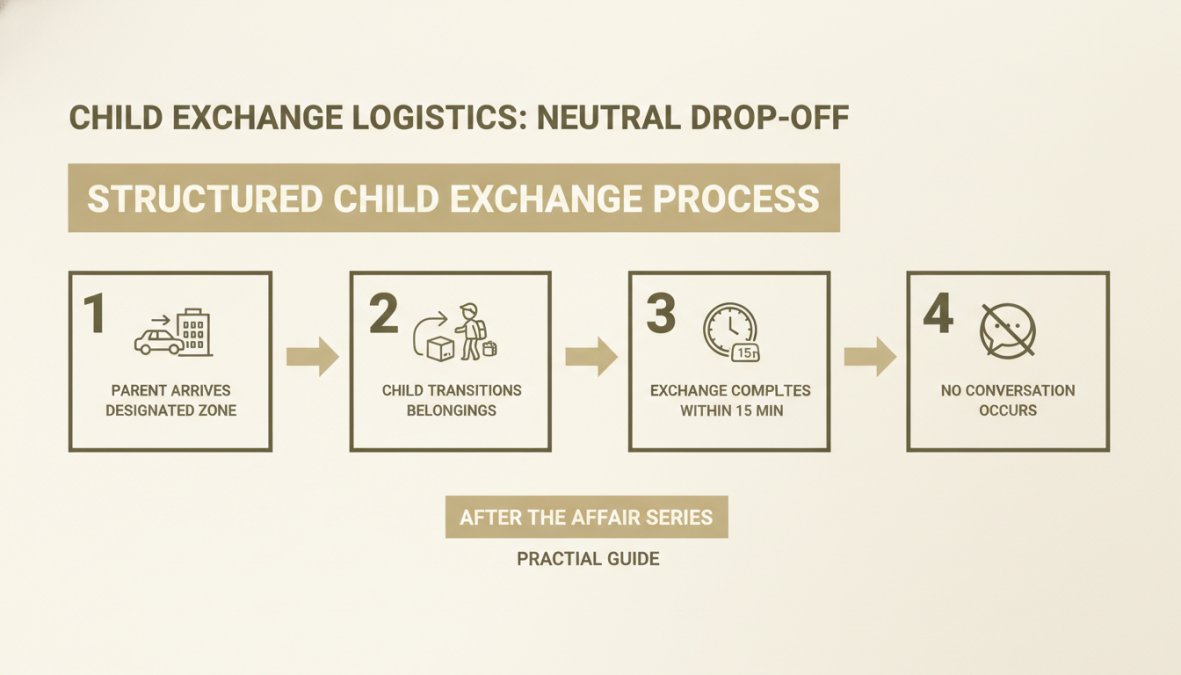
Some high-conflict situations warrant a third-party exchange service. A neutral professional handles the handoff, eliminating direct contact entirely.
Co-Parenting Apps for High-Conflict Situations
Co-parenting apps create an objective record of communication and coordination, making accusations of violation difficult to sustain.
OurFamilyWizard is the industry standard for high-conflict families. It provides timestamped messaging, shared calendars, expense tracking, and a “tone meter” that flags hostile language before messages are sent. The platform is designed specifically for contentious situations and is admissible as evidence in court.
CustodyXchange focuses on exchange logistics and scheduling. It sends automatic reminders, tracks pickup and drop-off compliance, and allows both parents to document violations in real time.
Talking Parents offers similar features with lower cost and is HIPAA-compliant for medical information coordination.
The key advantage: every message, scheduling change, and expense claim is documented and timestamped. In court, this evidence is nearly impossible to refute.
Do not use personal text messages or email for child-related coordination if your situation is high-conflict. Every message can be screenshotted and used against you. Apps create a professional record that protects both you and the child.
Enforcing High-Conflict Parenting Plans: Documentation and Dispute Resolution
A plan is only as good as its enforcement mechanism. Without clear procedures for addressing violations, the plan becomes unenforceable.
Digital Evidence and Record-Keeping
In high-conflict situations, documentation is your only protection against false accusations or contract violations. Keep detailed records of:
- Custody exchanges: times, locations, whether the child was on time or late, any incidents
- Communication: all messages related to the child
- Expenses: receipts for any shared costs, with dates and amounts
- Medical records: appointments, medications, treatments, and which parent authorized each decision
- School communications: report cards, teacher notes, attendance records
- Behavioral incidents: if the child reports neglect or inappropriate behavior, document the conversation
Create a simple log: date, time, incident, who was involved, what happened, any witnesses. Keep it factual and unemotional. “Parent B arrived 23 minutes late for pickup on July 15, 2026. Child was waiting at the designated location. No explanation was provided” is stronger than “Parent B is always late.”
Digital evidence is admissible in court. Screenshots of app messages, calendar entries, and expense logs all count as evidence.
Mediation and Legal Modification Procedures
Most high-conflict plans include a mandatory mediation clause before returning to court. If a dispute arises, both parents must attempt mediation with a neutral third party before filing for modification.
The plan should specify:
- Who pays for mediation (often split 50/50)
- Which mediator or mediation service to use
- Timeframe for scheduling mediation (typically within 30 days)
- Whether mediation is binding or advisory
Include an emergency modification clause for situations that cannot wait: if a child is in immediate danger, a parent can petition the court for emergency relief without attempting mediation first.
Mediation is not about reconciliation or fairness. It’s about resolving the specific dispute efficiently. Going to mediation does not mean you’re abandoning your position; it means you’re following the contract you both signed.
Protecting Your Child’s Emotional Wellbeing During High-Conflict Co-Parenting
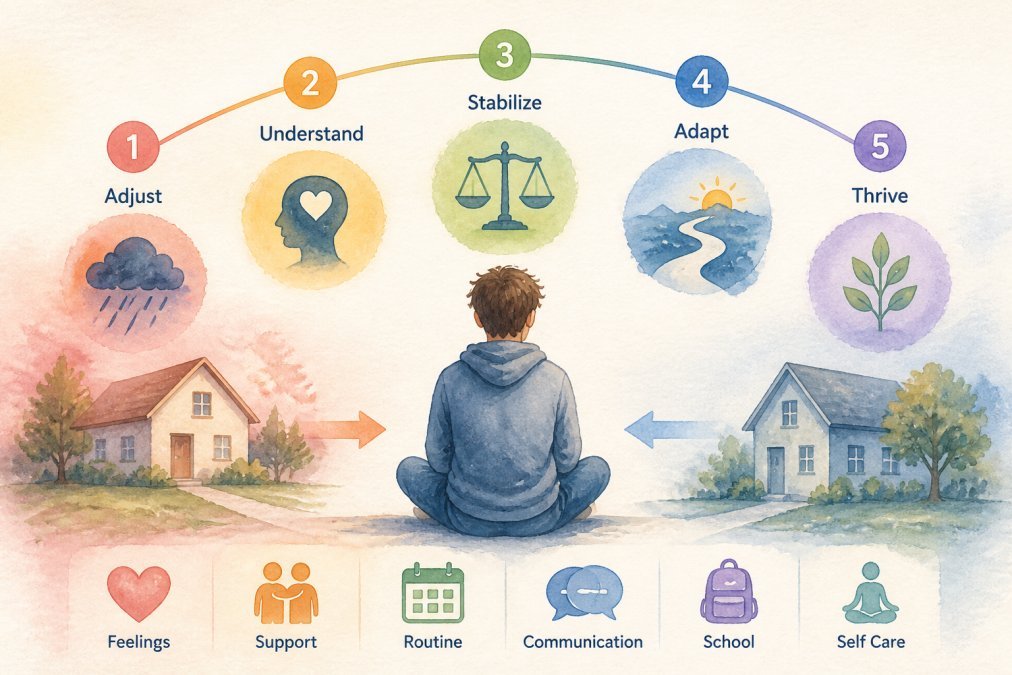
High-conflict situations harm children even when parents are not fighting directly in front of them. A structured parenting plan should include explicit protections for the child’s emotional wellbeing.
No badmouthing the other parent. The plan should state: “Neither parent will speak negatively about the other parent to the child, in the child’s presence, or in contexts where the child might hear such comments.”
No involving the child in adult conflict. The child is not a messenger, spy, or mediator. The plan should prohibit asking the child about the other household or using the child to relay messages.
Therapy or counseling access. Many high-conflict plans include provisions for the child to see a therapist, with costs split between parents. The therapist is neutral and does not report to either parent about what the child discusses (except in cases of abuse or danger).
Age-appropriate explanations. The child should understand that the separation is not their fault and that both parents love them. This conversation should happen once, clearly, and not be revisited repeatedly.
Self-Care and Managing Conflict as the Reasonable Parent
High-conflict co-parenting is emotionally exhausting. If you’re the parent trying to maintain boundaries while the other parent violates them repeatedly, you’re absorbing enormous stress.
Establish your own boundaries. You do not have to respond to hostile messages immediately. Read the message, take 24 hours, then respond factually and briefly. This prevents you from being drawn into conflict cycles.
Use a therapist or coach. Having someone neutral to process your frustration and help you stay grounded is invaluable.
Document your own compliance. Keep records of every time you follow the plan, every exchange you make on time, every expense you pay. If the other parent claims you’re violating the agreement, you have evidence that you’re not.
Avoid the trap of “proving” yourself. Your job is to follow the plan, protect your child, and document violations. That’s it.
Manage your expectations about the other parent. If the plan includes a clause requiring their cooperation and they consistently refuse, your recourse is court modification, not trying harder to convince them.
| Challenge | Self-Care Strategy | Expected Outcome |
|---|---|---|
| Reactive anger to hostile messages | Wait 24 hours before responding; use a template | Clearer thinking; fewer regrettable statements |
| Anxiety about violations | Document compliance; keep records | Evidence trail; reduced anxiety |
| Emotional exhaustion | Weekly therapy or coaching | Sustained capacity to enforce boundaries |
| Guilt about conflict’s impact on child | Therapy for child; minimize exposure | Child has professional support |
| Temptation to violate the plan | Review the plan and your reasons for it | Maintained integrity; model consistency |
A structured parenting plan for high conflict cannot eliminate the pain of separation or the difficulty of co-parenting with someone you don’t trust. What it does is create a framework that minimizes daily friction, protects your child from exposure to adult conflict, and gives you legal recourse when the other parent violates the agreement. After the Affair Series specializes in helping parents implement these frameworks with practical scripts, communication templates, and strategies for managing the emotional toll of high-conflict situations.
Frequently Asked Questions
What is a structured parenting plan for high conflict?
A structured parenting plan for high conflict is a court-ordered or legally binding agreement that details custody schedules, parenting time, decision-making authority, communication protocols, and dispute resolution methods. Unlike standard parenting agreements, high-conflict plans include specific boundaries, neutral exchange logistics, and documented communication channels to minimize direct interaction and reduce opportunities for conflict escalation.
How do I choose between parallel parenting and co-parenting?
Parallel parenting works best when conflict is severe and direct communication is impossible or unsafe. In this model, parents operate independently with minimal coordination. Co-parenting requires more collaboration and works when parents can communicate respectfully about major decisions. Assess your ability to communicate without hostility, if conversations consistently escalate, parallel parenting is likely the better choice for your family.
What should I include in a parenting plan template for high-conflict situations?
A comprehensive high-conflict parenting plan template should include: detailed custody schedules and parenting time, decision-making authority (legal custody), financial responsibilities, communication protocols with specific apps or methods, neutral child exchange locations, holiday and vacation schedules, emergency procedures, and a dispute resolution process. Document everything in writing to eliminate ambiguity and provide legal protection.
How can co-parenting apps for high conflict help reduce disputes?
Co-parenting apps create a documented record of all communication, removing he-said-she-said conflicts. They enforce neutral tone, provide templates for common messages, and allow you to share schedules and documents in one place. Apps also prevent direct communication, which is critical when interactions tend to escalate. This digital trail becomes valuable evidence if enforcement or modification is needed in court.
What’s the best way to enforce a high-conflict parenting plan?
Enforce through documentation, communication apps, and mediation before litigation. Keep detailed records of violations using digital evidence, screenshots, timestamps, and app-generated reports. Use neutral communication channels exclusively. If violations persist, file a motion for contempt or modification with the court. Many jurisdictions require mediation first, which is often more cost-effective than litigation and preserves the parenting relationship.
How do I protect my child emotionally during high-conflict co-parenting?
Shield your child from conflict by never discussing disputes in their presence, avoiding parental alienation language, and maintaining consistent routines across both homes. Use age-appropriate scripts to explain the situation without blame. Ensure your child has permission to love both parents and never use them as messengers. Consider counseling for your child to process emotions and maintain a stable sense of security despite the conflict.
Can I modify a structured parenting plan if circumstances change?
Yes, parenting plans can be modified through mutual agreement or court order. Document significant changes in circumstances, job loss, relocation, health issues, or parental misconduct, and file an emergency modification if the change affects your child’s safety or welfare. Many courts allow temporary modifications during emergencies, then require mediation or a hearing for permanent changes. Keep detailed records of why modification is necessary.