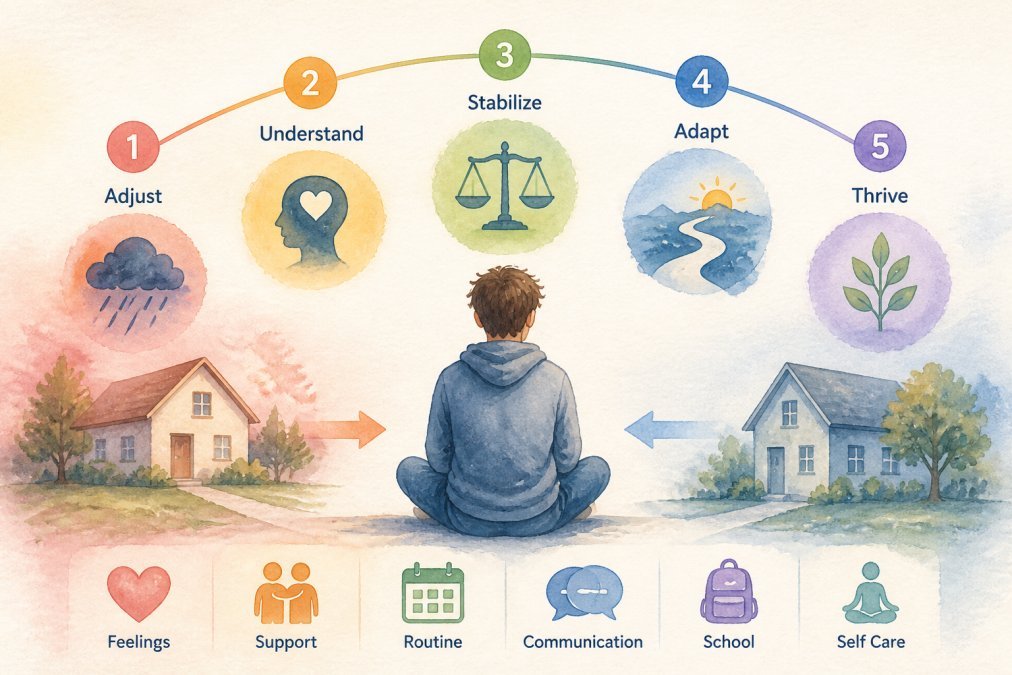
- Protect Children From Divorce Conflict: 7 Essential Strategies
- Why Conflict Protection Matters for Child Development
- Maintaining Stability and Routine During Separation
- Creating Predictable Schedules and Safe Spaces
- Co-Parenting With a High-Conflict Ex: Practical Communication Strategies
- Structured Communication Tools and Boundaries
- Divorce Communication Scripts for Parents: What to Say and What to Avoid
- Scripts for Different Age Groups and Situations
- Signs of Emotional Distress in Children of Divorce: Early Recognition
- When to Seek Professional Support
- Parallel Parenting vs Co-Parenting: Choosing the Right Model for Your Situation
- When Parallel Parenting Is the Better Choice
- Respecting Your Child's Relationship With Both Parents
- Avoiding Parental Alienation and Loyalty Conflicts
- Self-Care for the Parent: Your Emotional Regulation Protects Your Child
- Managing Stress and Setting Healthy Boundaries
- Frequently Asked Questions
Protect Children From Divorce Conflict: 7 Essential Strategies
Last Updated: July 13, 2026
When a marriage breaks down, children caught in the middle face a uniquely disorienting challenge. Their emotional stability depends less on the divorce itself and more on how the adults manage the conflict surrounding it. High-conflict divorce creates specific, predictable stressors for children, but parents armed with the right frameworks can neutralize most of them.
Children exposed to ongoing parental conflict show elevated stress markers, academic decline, and difficulty forming healthy relationships in adulthood. The good news: parents who implement structured communication boundaries, maintain consistent routines, and manage their own emotional regulation can reduce these risks dramatically.
Why Conflict Protection Matters for Child Development
Your child’s nervous system is wired to detect parental tension. When children experience ongoing parental conflict, their developing brain stays in a low-level threat state. Cortisol levels remain elevated, sleep becomes fragmented, and attention narrows. Over time, this rewires their stress response system, making them hypervigilant to conflict in all relationships.
Protecting children from divorce conflict doesn’t require parents to be friends. It requires a commitment to keeping the child out of the middle and maintaining predictable, safe interactions.
The single most protective factor for children during divorce is not the custody arrangement, it’s the absence of ongoing conflict between parents. Structured communication and emotional regulation create a psychological safety net that allows children to adjust.
Maintaining Stability and Routine During Separation
Children need predictability. When the family structure fractures, routines become the scaffolding that holds their world together. A child who knows exactly when they’ll see each parent experiences significantly less anxiety than one navigating unpredictable transitions.
Create a written custody schedule and stick to it religiously. Your child’s brain needs consistency more than the other parent deserves flexibility. If changes become necessary, communicate them well in advance and explain them simply to the child.
:::pro
Maintain the schedule even when it’s inconvenient, especially then. Consistency is your most powerful parenting tool during divorce.
:::
Creating Predictable Schedules and Safe Spaces
A predictable schedule operates on two levels: the macro level (which parent, which days) and the micro level (what happens during transitions and routines at each home).
At the macro level, create a custody schedule that minimizes transitions. Research suggests that frequent transitions (more than three per week) increase stress markers in children. Aim for two or three clear transition points per week.
At the micro level, establish a transition ritual that removes the child from the conflict space. Use a neutral location or third party for handoffs so the child never witnesses the exchange itself. Within each home, create a physical space that feels like the child’s own, with the same toys, books, and comfort items in the same place every visit.
| Schedule Element | Purpose | Implementation |
|---|---|---|
| Macro schedule (days/weeks) | Reduces transition frequency | 2-3 clear blocks per week, written agreement |
| Transition location | Removes child from conflict | Neutral location or third-party pickup |
| Bedroom consistency | Creates ownership and safety | Same layout, same items across both homes |
| Daily routine | Provides predictable structure | Consistent meal times, bedtime, activities |
Co-Parenting With a High-Conflict Ex: Practical Communication Strategies
Most parents fail here by trying to communicate with their ex as they would with a reasonable adult. When the ex is not reasonable, this creates repeated conflict cycles that the child witnesses or hears about.
Assume the other parent will interpret your words in the worst possible light. Instead of “Can you make sure he does his homework?” write: “Homework is due Thursday. Please have him complete math problems 1-10 by Wednesday evening.” This statement is factual, specific, and leaves no space for misinterpretation.
Structured Communication Tools and Boundaries
The most effective tool for high-conflict co-parenting is the Gray Rock Method: you become as uninteresting as a gray rock. You respond to requests and necessary information, but provide no emotional fuel for conflict.
Gray Rock responses are brief (one or two sentences), factual (no opinions or emotional language), neutral in tone, and direct. Example: Your ex sends a hostile message: “You’re ruining our son’s life by not letting him see me more often.” Gray Rock response: “The custody schedule is set per our agreement. If you’d like to discuss modifications, we can schedule a mediation session.”
For ongoing communication about the child’s needs, many high-conflict co-parents benefit from using a structured app like OurFamilyWizard, which provides time-stamped, documented communication that encourages self-regulation.
Never use your child as a messenger. All communication between parents goes directly between parents, never through the child.
Divorce Communication Scripts for Parents: What to Say and What to Avoid
When you need to communicate with your child about the separation, your words matter enormously. The core message should be: “Mom and Dad are no longer going to be married, but we both love you very much and that will never change. The divorce is about our relationship, not about you. You didn’t cause it, and you can’t fix it.”
You’re addressing the three fears every child has: Did I cause this? Will I lose a parent? Is this my responsibility to fix? You’re saying no to all three.
What you must avoid: any criticism of the other parent, any suggestion that the child must choose a side, any indication that the child’s behavior contributed to the divorce.
Scripts for Different Age Groups and Situations
For young children (ages 4-7):
“Mom and Dad are getting divorced. That means we won’t be married anymore, but we will both always be your mom and dad. You will spend time with both of us. This is not your fault. We both love you so much.”
For school-age children (ages 8-12):
“Your mom and I have decided to get divorced. That means we won’t be living together anymore, but we’re both still your parents and that won’t change. We’re going to work out a schedule so you spend time with both of us. It’s okay to have big feelings about it.”
For teenagers (ages 13+):
“Your mom and I have decided to separate. I know this affects you directly, so I want to be honest about what’s happening. Here’s the custody plan. Do you have questions?”
All age groups need reassurance that both parents still love them, clarity about logistics, and explicit permission to have feelings about the divorce without needing to fix it or choose sides.
Signs of Emotional Distress in Children of Divorce: Early Recognition
Children don’t always express emotional distress in ways adults recognize. A child who’s struggling might show behavioral, emotional, and academic changes that signal their nervous system is overwhelmed.
Behavioral warning signs: Regression, aggression, clinginess, withdrawal from activities, lying to avoid disappointing either parent.
Emotional warning signs: Persistent sadness, excessive worry, guilt or self-blame, anger directed at one parent, anxiety about transitions.
Academic warning signs: Sudden drop in grades, difficulty concentrating, increased absences, behavioral problems at school.
Some regression in the first few weeks is normal. But if behavioral changes persist beyond two to three months or intensify, professional support becomes important.
The most common mistake parents make is normalizing all distress as “part of adjusting to divorce.” Some adjustment is normal. Persistent behavioral, emotional, or academic decline signals that your child needs additional support.
When to Seek Professional Support
A child therapist becomes necessary when distress persists beyond three months, the child expresses hopelessness, behavioral problems are escalating, the child is caught in loyalty conflicts, either parent is using the child as an emotional support system, or the child shows signs of parentification.
A good child therapist doesn’t take sides and helps the child process feelings, develop coping strategies, and maintain healthy relationships with both parents. Children who receive professional support during the first year show better long-term outcomes in emotional regulation and relationship formation.
Parallel Parenting vs Co-Parenting: Choosing the Right Model for Your Situation
Not all separated parents can co-parent effectively. If you and your ex are locked in ongoing conflict, attempting to co-parent can actually increase your child’s exposure to that conflict. In these cases, parallel parenting is more realistic and protective.
Co-parenting means parents communicate regularly about the child’s needs, make major decisions together, and maintain consistent rules across both homes. Parallel parenting means each parent makes decisions independently within their own home, minimizes communication to logistics only, and accepts that the other parent may do things differently.
Parallel parenting is not ideal in theory, but in practice often protects children better than failed attempts at co-parenting that devolve into conflict.

When Parallel Parenting Is the Better Choice
Choose parallel parenting if you and your ex cannot communicate without escalating into conflict, one parent is actively hostile, one parent is using communication as a weapon, you have a history of domestic violence or emotional abuse, one parent is undermining the other’s parenting, or attempts at co-parenting have repeatedly failed.
In parallel parenting mode, you communicate only about logistics and accept that your child will experience different environments at each home. Children are remarkably adaptable to different rules in different places.
Respecting Your Child’s Relationship With Both Parents
One of the most damaging patterns in high-conflict divorce is parental alienation: one parent actively working to damage the child’s relationship with the other parent. Your child needs both parents. Even if you believe the other parent is flawed, your child’s wellbeing depends on maintaining a secure relationship with both of you.
Never criticize the other parent to your child, never quiz your child about what happens at the other parent’s house, never make your child feel guilty for loving the other parent, and never create situations where the child must choose.
Avoiding Parental Alienation and Loyalty Conflicts
Parental alienation happens gradually through small choices that accumulate. The antidote is deliberate protection of the other parent’s relationship with the child. This means speaking positively about the other parent, encouraging the child to enjoy their time with them without guilt, never asking the child to report on what happens at the other home, not competing for the child’s love or loyalty, and supporting the other parent’s involvement in school events.
This is difficult when the other parent has hurt you. But your child’s long-term wellbeing depends on it.
Self-Care for the Parent: Your Emotional Regulation Protects Your Child
Your child’s emotional regulation is directly tied to your own. A parent who is dysregulated, angry, anxious, or overwhelmed cannot create the calm, safe environment a child needs during divorce. Your emotional work is not selfish. It’s the most important parenting investment you can make.
Managing Stress and Setting Healthy Boundaries
Self-care during high-conflict divorce means three things: processing your own emotions, setting boundaries with your ex, and maintaining your own wellbeing.
Processing your own emotions: You need a space to be angry, hurt, and grieving that is completely separate from your child. This might be therapy, a support group, trusted friends, or journaling. Your child is never the container for your adult emotions.
Setting boundaries with your ex: A high-conflict ex will continue to provoke you as long as you engage. Setting boundaries means limiting communication, using the Gray Rock Method, refusing to engage with accusations, and maintaining the custody schedule regardless of the other parent’s behavior.
Maintaining your own wellbeing: Sleep, exercise, nutrition, friendships, and activities that bring you joy aren’t luxuries. They’re the foundation of your capacity to parent well.
:::pro
Your child needs a parent who is rested, regulated, and emotionally available. Taking care of yourself is taking care of your child.
:::
| Self-Care Element | Why It Matters | Implementation |
|---|---|---|
| Emotional processing | Prevents using child as emotional support | Weekly therapy, journaling, or support group |
| Boundary setting with ex | Reduces overall conflict exposure | Gray Rock Method, structured communication |
| Sleep and rest | Supports emotional regulation | Consistent sleep schedule |
| Physical activity | Reduces stress hormones | 30 minutes daily |
| Social connection | Prevents isolation | Weekly contact with friends or family |
| Meaningful activities | Restores sense of self | Hobbies, work, volunteer activities |
Protecting children from divorce conflict is about creating structure, consistent routines, clear boundaries, and emotional regulation that allows your child to adjust to a new reality without being caught in the crossfire of parental conflict. The frameworks in this guide, from the Gray Rock Method to parallel parenting to self-care practices, are specific, actionable strategies that parents in high-conflict situations use successfully every day.
Frequently Asked Questions
How does divorce conflict affect a child’s emotional development?
Ongoing parental conflict during and after divorce can impact a child’s emotional regulation, self-esteem, and ability to form healthy relationships. Children exposed to high-conflict environments often experience increased anxiety, difficulty concentrating, and behavioral changes. Research consistently shows that protecting children from conflict, rather than the divorce itself, is what supports healthy post-divorce adjustment. Stability, reassurance, and consistent parenting from both parents help buffer these effects.
What are the key signs of emotional distress in children of divorce?
Common signs include withdrawal from friends, changes in academic performance, sleep disruptions, increased irritability, regression to younger behaviors, or excessive worry about the other parent. Some children internalize stress (becoming anxious or depressed) while others externalize it (acting out or becoming defiant). Age matters: younger children may show clinginess or confusion, while teenagers might display anger or risk-taking behavior. If signs persist beyond a few weeks or intensify, professional therapeutic support can help your child develop healthy coping mechanisms.
How can I co-parent effectively with a high-conflict ex?
Establish clear boundaries and use structured communication tools that minimize direct conflict. Consider parallel parenting, where each parent makes independent decisions during their custody time rather than constantly negotiating, if direct co-parenting fuels conflict. Use digital co-parenting platforms for logistics to reduce hostile face-to-face interactions. Keep conversations child-focused and factual. Avoid discussing adult conflicts in front of your child, and never ask them to relay messages or take sides. Consistency across both homes, even with different parenting styles, provides the stability children need.
What should I never say to my child during a divorce?
Never disparage the other parent, ask your child to choose sides, or use them as a messenger. Avoid saying things like ‘Your parent doesn’t care’ or ‘This is their fault.’ Don’t burden them with adult financial or legal details, and don’t ask them to spy or report back. Avoid expressions of your anger toward the ex in front of your child. Instead, use age-appropriate scripts that acknowledge the divorce, reassure them of both parents’ love, and emphasize that the conflict is between adults, never their responsibility to fix or manage.
When should I seek professional help for my child after divorce?
Consider therapy if your child shows persistent signs of emotional distress lasting more than a few weeks, significant changes in behavior or mood, school refusal, or expressions of self-harm. A therapist can provide coping strategies tailored to your child’s age and temperament. Family counseling may also help if high conflict continues to affect your child’s adjustment. Additionally, take the free 23-point assessment available through After the Affair Series to evaluate your situation and receive personalized guidance on next steps for protecting your child’s emotional wellbeing.
How does parallel parenting differ from co-parenting, and which is right for us?
Co-parenting requires active communication and joint decision-making; parallel parenting allows each parent autonomy during their custody time. Parallel parenting works better when conflict is high, communication is hostile, or one parent is unwilling to collaborate. It reduces your child’s exposure to parental conflict by minimizing direct parent-to-parent interaction. However, both approaches can protect children if executed consistently. The key is choosing the model that minimizes conflict in your specific situation while maintaining your child’s relationship with both parents and clear custody arrangements.
How can I manage my own stress so I’m better equipped to support my child?
Your emotional regulation directly impacts your child’s ability to feel safe and stable. Prioritize self-care: therapy, exercise, trusted friendships, and stress-management techniques like meditation or journaling. Set firm boundaries with your ex to protect your peace. Avoid discussing adult conflicts with your child or leaning on them for emotional support. When you manage your own anxiety and anger, you’re better able to respond calmly to your child’s needs, model healthy coping mechanisms, and provide the reassurance they need. This is not selfish, it’s essential protection for your child.