Last Updated: September 14, 2026
Table of Contents
Signs Your Child Needs Professional Support During Divorce
Most parents wait too long before seeking help, often because they mistake normal adjustment for a crisis. According to the American Academy of Child and Adolescent Psychiatry, children typically need extra emotional support during a family transition, but persistent changes in behavior signal something deeper. Finding a child therapist for divorce adjustment works best when you act on patterns, not single bad days. This guide from After the Affair Series walks through the warning signs, the questions to ask, and the legal and financial realities most parents discover too late.
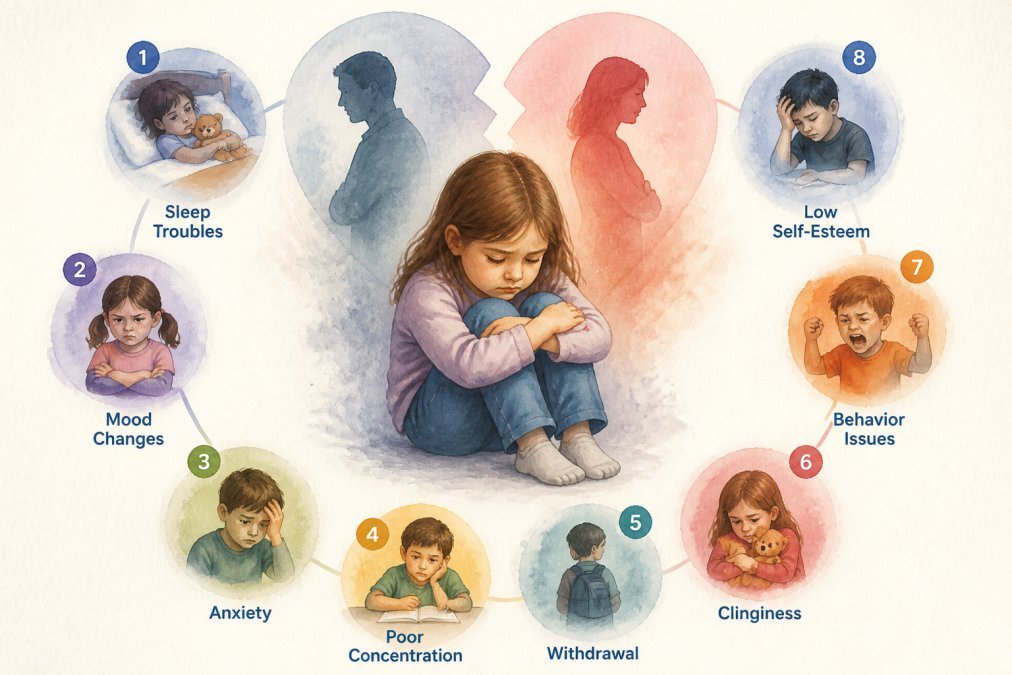
A child who cries after a custody exchange is adjusting; one who stops eating, withdraws from friends, or regresses for months is struggling.
Behavioral and Emotional Red Flags by Age
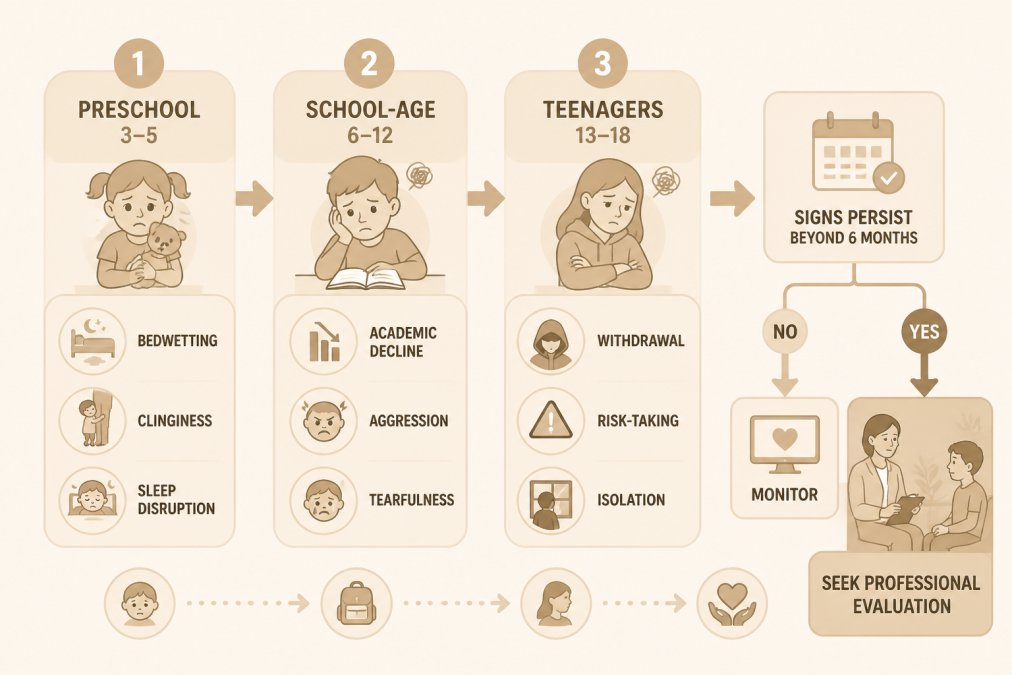
Preschoolers often regress: bedwetting returns, clinginess intensifies, sleep breaks down. School-age children externalize through aggression, declining grades, or sudden tearfulness. Teenagers withdraw, act out, or take out-of-character risks.
The key variable is duration and intensity. A common mistake is judging a single meltdown as a red flag while ignoring a slow six-month decline. When multiple signs persist beyond six months, a clinical assessment is warranted (Clinical Practice Guidelines).
Don’t wait for a crisis to justify therapy. Children who receive proactive support during separation tend to show stronger resilience and fewer long-term behavioral health issues than those who only get help after symptoms escalate.
How to Talk to Your Child About Divorce Therapy
Frame therapy as support, not punishment. The most effective approach is a short, honest conversation connecting counseling to a feeling your child already recognizes.
Try language like: “You’ve been carrying a lot lately. A counselor is someone whose whole job is helping kids with big feelings. I’ll be nearby the whole time.”
A few principles keep this conversation from backfiring:
- Avoid “you need help” framing, which implies something is wrong with them
- Normalize counseling as a routine form of emotional support
- Let them ask questions and answer honestly at their level
- Don’t promise they’ll like the therapist immediately
The first session is rarely the breakthrough; the therapeutic alliance builds over several visits, so prepare your child for a gradual process, not an instant fix.
Questions to Ask a Child Therapist During Consultation
A consultation is your interview, not just theirs. The right questions reveal whether a therapist has genuine divorce-related trauma-informed experience or is simply taking on another client.
Credentials, Experience, and Therapeutic Approach
Ask directly: Are you licensed in this state? How many children have you treated specifically for divorce or separation adjustment? Do you use play therapy, cognitive behavioral therapy, or another modality? Understanding the specific techniques a therapist employs provides a clearer picture of how they approach the delicate process of preparing children for divorce and supporting their emotional stability during the transition.
For younger children, play therapy is often primary because children process emotion through action rather than conversation; for older kids, cognitive behavioral therapy may fit better. A therapist who explains why they’d choose one approach for your child has actually thought about it.
Logistics: Scheduling, Cancellation Policy, and Parent Involvement
Cover the practical details before you commit:
- How often are sessions, and how long is each one?
- What is the cancellation policy, and what happens if your ex cancels?
- How much parent involvement is expected, and how is confidentiality handled?
- Will the therapist coordinate with your child’s school or pediatrician?
Ask the therapist how they handle it when one parent is uncooperative or hostile. Their answer tells you more about their real-world experience than any credential on the wall.

Legal and Custody Considerations for Therapy
In many custody arrangements, one parent cannot unilaterally enroll a child in ongoing therapy without the other’s consent or a court order (americanbar.org). This is the most common logistical barrier parents hit, derailing treatment before the first session. Review your parenting plan before booking a consultation.
The controlling language is usually buried in the “medical decisions” or “joint legal custody” clause. Three configurations determine what you can do:
- Joint legal custody with shared medical decision-making. You generally need the other parent’s written consent for ongoing therapy. A one-time evaluation may be permitted, but recurring sessions typically are not.
- Sole legal custody or sole medical decision-making. You can enroll your child without the other parent’s signature. Keep documentation of your authority in case the therapist’s intake office asks.
- Joint legal custody with a tie-breaker or dispute-resolution clause. If you and your ex disagree, the plan may require mediation or a parenting coordinator before either of you can proceed. Read that clause carefully; it often has a timeline.
If your agreement requires joint medical decisions, get written consent or document your attempts to obtain it. A dated email or text asking for consent, followed by a reasonable response window, creates a paper trail courts and therapists recognize. If the other parent refuses without legitimate reason, some jurisdictions allow a motion to compel medical care; consult a family law attorney licensed in your state before filing.
A therapist treating a child of divorce may be subpoenaed in a custody dispute, so ask upfront how they handle records requests and what they disclose. Therapists generally fall into three camps: those who keep minimal records to reduce subpoena exposure, those who keep full clinical notes and release them under court order, and those who provide a summary letter to the court without releasing raw notes. None is inherently better, but know which one you’re hiring before your child discloses something sensitive.
A few practical safeguards:
- Ask the therapist for their written records and subpoena policy during the consultation, not after treatment begins.
- Confirm whether the therapist will accept a court order as sufficient authority if the other parent later objects.
- If your ex is hostile, choose a therapist who has testified or provided court summaries before; they understand the boundary between clinical care and legal exposure.
- Keep therapy focused on the child’s adjustment, not on building a case. Therapists who sense they are being used as a litigation tool may terminate or refer out.
After the Affair Series provides structured communication tools to help manage hostile exchanges, so your efforts to get your child help don’t become another point of conflict.
If your parenting plan is silent on mental health treatment, do not assume you have authority. Silence is often read as requiring joint consent. Get a written clarification from your attorney or a stipulation signed by both parents before scheduling recurring sessions.
Ask the therapist how they handle it when one parent is uncooperative or hostile. Their answer tells you more about their real-world experience than any credential on the wall.
Insurance and Cost Navigation for Child Therapy
Coverage varies widely, and families get blindsided. The biggest factor in what you pay is not the therapist’s hourly rate but the diagnostic code submitted to your insurance company, which determines whether your plan treats the visits as medically necessary mental health treatment or something it can deny.
The Diagnostic Code Is the Whole Game
When a child sees a therapist for divorce adjustment, the therapist assigns a diagnosis from the DSM-5-TR. The most common codes for this situation are:
- Adjustment disorder (F43.2x). This is the most frequent diagnosis for children reacting to divorce. It is considered a legitimate mental health condition and is usually covered under mental health benefits. However, some plans limit the number of sessions or require a treatment plan review after a set period.
- Anxiety or depressive disorders (F41.x, F32.x). If the child’s symptoms meet full criteria, the therapist may diagnose a specific anxiety or depressive disorder. These often carry better long-term coverage but may require a higher level of documented impairment.
- No diagnosis / “divorce counseling.” Some therapists offer sessions without a diagnosis, often marketed as “divorce counseling” or “adjustment support.” These are almost never covered by insurance because there is no billable medical condition. You pay out of pocket.
The practical takeaway: if you want insurance to pay, the therapist must diagnose a covered condition and document medical necessity. Ask during the consultation which code they typically use for divorce adjustment and whether your plan has historically covered it.
In-Network vs. Out-of-Network Economics
In-network therapists have a contracted rate with your insurer. You pay your copay or coinsurance, the insurer pays the rest, and the therapist cannot balance-bill above the contracted rate.
Out-of-network therapists bill their full rate. You pay upfront, then submit a superbill for reimbursement, typically a percentage of the “allowed amount,” often lower than the actual fee. A therapist charging $200 per session might have an allowed amount of $140, and a plan reimbursing 60% of that leaves you responsible for the difference plus the original gap.
Before choosing out-of-network, call your insurer and ask three things: What is my out-of-network deductible? What percentage do you reimburse for outpatient mental health? And is there a separate out-of-network session limit?
What to Do When Coverage Is Denied
Denials are common, especially for adjustment disorder. You have the right to appeal. The process usually works like this:
- Request the denial in writing, including the specific reason and the clinical criteria used.
- Ask the therapist to submit a letter of medical necessity explaining why the child needs ongoing treatment.
- File a formal appeal with your insurer; most plans allow at least one internal appeal and an external review.
- If the plan is employer-sponsored, contact your HR benefits administrator; they can sometimes intervene.
Lower-Cost Alternatives
If insurance will not cover the sessions, several options remain:
- Sliding scale. Many private practices reserve a percentage of slots for reduced-fee clients. Ask directly.
- Community mental health centers. Federally qualified health centers and community clinics provide child counseling on an income-based scale.
- University training clinics. Doctoral and master’s programs in clinical psychology and counseling often run supervised clinics with reduced rates.
- Employee assistance programs (EAPs). Many employers offer a set number of free counseling sessions per year for family members.
- School-based services. Public schools may provide counseling through an IEP or 504 plan if the child’s adjustment affects learning.
| Question to Ask | Who to Ask | Why It Matters |
|---|---|---|
| Which diagnostic code will you submit? | Therapist | Determines whether insurance covers the visits at all |
| In-network or out-of-network? | Insurance provider | Sets your per-session out-of-pocket cost |
| Mental health deductible met? | Insurance provider | Affects when coverage actually begins |
| Sessions covered per year? | Insurance provider | Prevents mid-treatment coverage gaps |
| Sliding scale available? | Therapist’s office | Reduces cost if paying out-of-pocket |
| Superbill provided? | Therapist’s office | Needed to claim out-of-network reimbursement |
| What is the appeal process? | Insurance provider | Gives you recourse if coverage is denied |
Pricing depends on your plan, your location, and the therapist’s credentials, so confirm current rates directly with the provider rather than assuming. A therapist who cannot clearly explain their diagnostic and billing approach is a therapist who will create financial surprises later.
Ask the therapist’s office to run a benefits check before your first appointment. They can often confirm coverage, deductible status, and session limits in advance, so you know your real cost before you commit.
How Long Does Divorce Counseling Take for Children?
There is no fixed timeline, but most children attend therapy for several months to a year, depending on age, symptom severity, and ongoing parental conflict.
A child in a stable, low-conflict co-parenting situation may need only a short course of sessions to build coping skills; a child caught in ongoing parental conflict often needs longer-term support. The biggest factor in how quickly a child improves is not the therapist’s method but the level of conflict they’re exposed to at home.
Therapy helps a child process divorce, but it cannot outrun an ongoing hostile environment. Reducing conflict between parents does more for a child’s mental well-being than any single therapeutic technique.
Progress looks like this: fewer behavioral changes, better emotional regulation, a return to developmental milestones, and a child who talks about both parents without distress.
Frequently Asked Questions
How do I know if my child needs therapy after a divorce?
Watch for persistent changes lasting more than six weeks: sleep problems, declining grades, aggression, withdrawal from friends, or repeated statements of self-blame. A clinical assessment by a mental health professional can distinguish normal adjustment from a condition requiring intervention. Trust your instincts; if your child’s daily functioning is impaired, a psychological evaluation is a proactive step, not an overreaction.
What should I look for in a child therapist for divorce adjustment?
Seek a licensed therapist with specific training in child-centered play therapy or cognitive behavioral therapy for family transitions. Ask about their experience with high-conflict co-parenting and whether they involve both parents when appropriate. A strong therapeutic alliance with your child matters more than a fancy office. Also confirm they accept your insurance and can provide a treatment plan that includes measurable goals.
How long does divorce counseling usually take for children?
The duration of therapy depends on age, temperament, and the level of parental conflict. Review progress with the therapist regularly to decide whether to continue, adjust, or end therapy.
Does insurance cover child therapy for divorce adjustment?
Most major insurance plans cover medically necessary mental health treatment, including therapy for adjustment disorders. Check your plan’s behavioral health benefits, deductibles, and copays. You may need a referral from your pediatrician. If coverage is limited, ask about sliding-scale fees, community mental health centers, or telehealth options. Always confirm coverage before the first appointment to avoid surprise bills.