Table of Contents
Last Updated: September 29, 2026
Why Parallel Parenting Stress Hits Harder Than Regular Co-Parenting
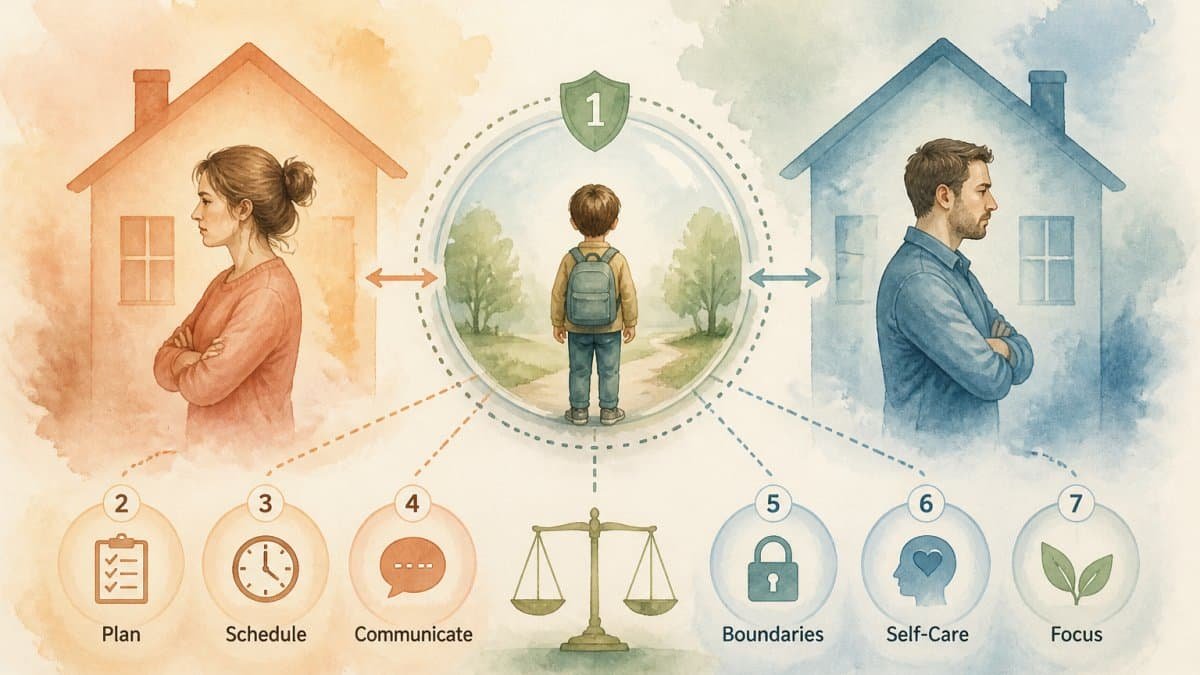
Coping strategies for parallel parenting emotional stress start with one hard truth: this arrangement asks more of you than co-parenting does. Parallel parenting is a structured approach where separated parents disengage and communicate only through minimal, businesslike channels, running two separate households under one parenting plan.
Three factors make the stress sharper:
- No emotional outlet. You cannot process conflict with the person causing it.
- Constant exposure. Drop-offs, pickups, and messages keep the conflict alive.
- Child-centered worry. You watch your kids absorb the tension between homes.
Parallel parenting stress is not a sign you’re doing it wrong. It’s the predictable cost of protecting your children from ongoing conflict. Managing it is a skill, not a personality trait.
Parallel Parenting Communication Scripts That Keep Conflict From Escalating
Try these templates:
For schedule changes:
“Thanks for the notice. I can’t accommodate that change. The schedule stands as written.”
A few rules keep scripts from backfiring:
- Keep every message under 50 words
- Stick to facts over feelings
- Never respond within the first hour of a heated message
- Move all communication to one written channel
Replying to a hostile message with your own heated reply gives your ex exactly what they want: proof that you’re reactive. That screenshot can end up in a court file. Write the reply, save it, and send nothing.
Managing Anxiety During Custody Handoffs: A Step-by-Step Protocol
Anxiety during custody handoffs is a physiological event, not a character flaw. Your body reads the approaching exchange as a threat and floods you with stress hormones. Managing anxiety during custody handoffs means working with your nervous system, not against it.
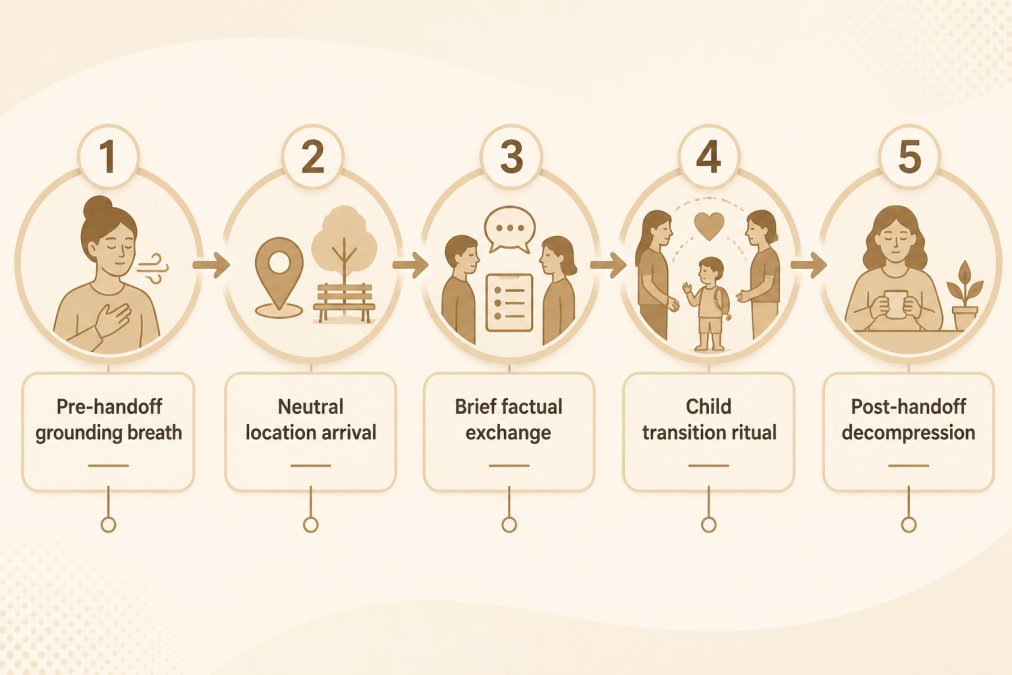
Here is a protocol you can run every time:
- Ground yourself before you leave. Take five slow breaths, exhaling longer than you inhale. This calms the stress response.
- Arrive at a neutral location. A parking lot or public spot limits drama.
- Keep the exchange under two minutes. Hand over the bag, confirm the next date, walk away.
- Give your child a drop-off ritual. A consistent phrase like “I love you, see you Sunday” creates predictability.
- Decompress after. A short walk or a few minutes of quiet helps your body settle.
The Pre-Handoff Hour Is Where Anxiety Lives
Most handoff advice focuses on the two minutes of the exchange. The harder part is the hour before. Anticipatory anxiety builds because your brain is rehearsing a threat it can’t control. Two tools help:
- Script the exchange in advance. Write the exact three sentences you’ll say. Rehearsing a known script reduces the cognitive load of the moment.
- Set a hard departure time. Ambiguous timing gives anxiety room to grow. Leave at the same minute every time.
Adjusting the Protocol by Your Child’s Age
The same handoff looks completely different depending on who you’re handing over.
When Handoffs Keep Going Wrong
- Third-party exchange location. A neutral public place, or a trusted friend or family member who supervises the handoff.
- Curbside or door-to-door only. One parent stays in the car; the child walks to the other. Minimal contact, minimal friction.
- School or daycare as the exchange point. The child transitions between parents through a neutral setting, and the adults never meet.
- Written-only confirmation. No verbal exchange at all beyond a greeting.
Do not use your child as a messenger for schedule changes, complaints, or anything else you’d rather not say to your ex directly. It puts the child in the middle of the conflict and is one of the most common patterns family courts look at unfavorably.
Consistency matters more than perfection: the same steps teach your body the handoff is survivable, and teach your child that the transition between homes is predictable, even when the relationship between parents is not.

Parallel Parenting Boundaries Examples You Can Use This Week
Boundary setting in parallel parenting isn’t about punishing your ex. It’s about defining what you will and won’t accept to protect your energy and your children’s stability.
- Communication hours. “I respond to messages between 8 a.m. and 6 p.m. on weekdays only.”
- One channel. “All scheduling goes through email. I won’t discuss plans by phone.”
- No drop-ins. “Please don’t come to my home without written agreement.”
- Third-party pickups. “If you can’t make pickup, send a named adult in writing.”
- No new partners at exchanges. “Handoffs stay between us.”
- Medical and school info. “Send updates within 24 hours by email.”
Boundaries fail when they come with a lecture. State the rule in one sentence and stop. The silence after is what makes it stick.
Emotional Regulation Techniques for High-Conflict Co-Parenting
Emotional regulation is the ability to manage your feelings so they don’t drive your actions. In high-conflict co-parenting, it’s the difference between responding and reacting, and it protects your child’s well-being more than any legal agreement.
What Actually Happens in Your Body
When you open a hostile email, your amygdala flags a threat before your prefrontal cortex, the part that reasons and plans, finishes reading the subject line. Adrenaline and cortisol release, heart rate climbs, breathing gets shallow, and blood flow shifts toward your muscles. This fight-or-flight response takes roughly 20 to 30 minutes to clear.
In-the-Moment Somatic Protocol
These are physical interventions, not mindset shifts. They work on the nervous system directly.
- Physiological sigh. Two quick inhales through the nose, then one long exhale through the mouth. This is one of the fastest known ways to downshift arousal, because the extended exhale activates the parasympathetic branch of the nervous system. Do it three times.
- Temperature shift. Cold water on your wrists, the back of your neck, or your face triggers the mammalian dive reflex, which slows heart rate. A cold pack from the freezer works if you’re at home.
- Orienting. Slowly turn your head and let your eyes rest on objects in the room, a lamp, a window, a plant. This tells your brain the environment is safe and pulls you out of the threat loop.
- Bilateral movement. Walk for two minutes, or tap alternating knees with opposite hands. Rhythmic left-right motion helps discharge the activation rather than storing it.
- Muscle release. Clench your fists for five seconds, then release. Clench your shoulders up toward your ears, then drop them. The contrast teaches your body what “relaxed” feels like when it has forgotten.
The 20-Minute Rule in Practice
When a hostile message lands: notice the spike, run one somatic tool, then physically leave the device. Set a 20-minute timer and do something with your hands, dishes, a walk, folding laundry. When it ends, reread the message. You’ll almost always see it differently, and many don’t need a reply.
Daily Regulation, Not Just Crisis Regulation
In-the-moment tools work better when your baseline is lower. A daily practice keeps stress from compounding:
- Morning check-in. Two minutes: what am I feeling, and what do I need today? Name the emotion specifically, “dread about Thursday’s handoff” beats “stressed.”
- Movement. A 15-minute walk counts. Movement metabolizes stress hormones.
- Sleep on a schedule. Same bedtime most nights. Sleep debt lowers your threshold for every trigger.
- Somatic release. Stretching, slow breathing, or a warm shower at night helps your body finish the stress cycle instead of carrying it into tomorrow.
The goal is not to feel nothing when your ex provokes you. The goal is to feel it, let your body complete the stress cycle, and choose your response from a regulated state. That choice is the whole skill.
Digital Boundaries and Documentation: Protecting Yourself Without Escalating
Digital boundaries are where a lot of conflict now lives. Text threads, shared calendars, and messaging apps can become weapons if you let them.
Rules that work:
- Move everything to one written platform. Email or a co-parenting app keeps a clean record.
- Never argue by text. Long threads are easy to screenshot and easy to misread.
- Document facts, not feelings. Log dates, times, and what was said. Skip the commentary.
- Set response windows. You are not on call. A 24-hour reply window is reasonable.
- Screenshot sparingly. Save only what matters for legal or safety reasons.
Self-Care and Stress-Relief Strategies for Parallel Parenting Parents
Self-care isn’t a luxury in parallel parenting, it’s maintenance. Unmanaged parental stress shows up as anxiety, sleep problems, and a shorter fuse with your kids, the opposite of what you’re trying to build.
Stress-relief strategies that actually fit a busy parent’s life:
- Protect one hour a week for yourself. Non-negotiable.
- Move your body daily. A 15-minute walk counts.
- Sleep on a schedule. Same bedtime, most nights.
- Talk to someone. A therapist, a support group, or a trusted friend.
- Limit exposure to your ex’s world. Unfollow, mute, or block on social media.
- Name your coping mechanisms. Know your two or three go-to resets and use them.
Conclusion
Parallel parenting stress is manageable when you stop trying to fix your ex and start building systems around them. Scripts, handoff protocols, boundaries, and self-care are tools you control.
Frequently Asked Questions
What are the core principles of parallel parenting?
Parallel parenting rests on four principles: limited direct communication, structured schedules, child-focused decision-making, and emotional detachment from the other parent’s behavior. Unlike co-parenting, which requires ongoing collaboration, parallel parenting accepts that joint decision-making may not be possible. Each parent runs their own household with minimal interference. Communication stays businesslike and documented. The goal is reducing conflict exposure for children, not repairing the adult relationship. This approach works best when high-conflict patterns are entrenched and cooperative co-parenting has repeatedly failed.
How do you emotionally detach from a high-conflict co-parent?
Detachment starts with accepting that you cannot control your ex’s behavior, only your response. Use the Gray Rock Method: keep replies brief, neutral, and unemotional. When your ex provokes, respond with facts over feelings. Practice somatic regulation before checking messages: take three slow breaths, relax your shoulders, then read. If a message triggers you, wait 24 hours before replying unless it involves immediate child safety. Over time, this reduces the emotional burden and protects your psychological safety. Therapy or a structured toolkit can speed up this process.
What are effective ways to manage stress during custody exchanges?
Managing anxiety during custody handoffs starts before you leave the house. Try a grounding technique: name five things you can see, four you can touch, three you can hear. Arrive at a neutral environment like a parking lot or school rather than each other’s homes. Keep the exchange under two minutes and stick to logistics only. After handoff, give yourself ten minutes to decompress before driving or starting your next task. Consistent drop-off rituals signal safety to your child and reduce your own stress response.
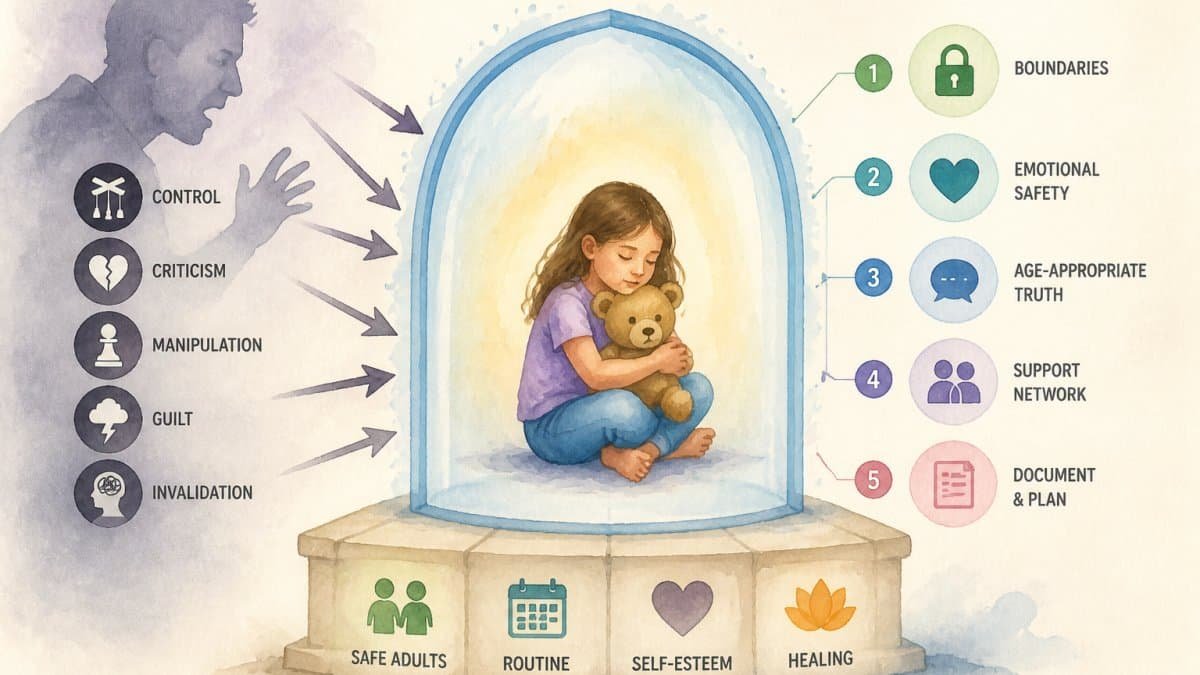
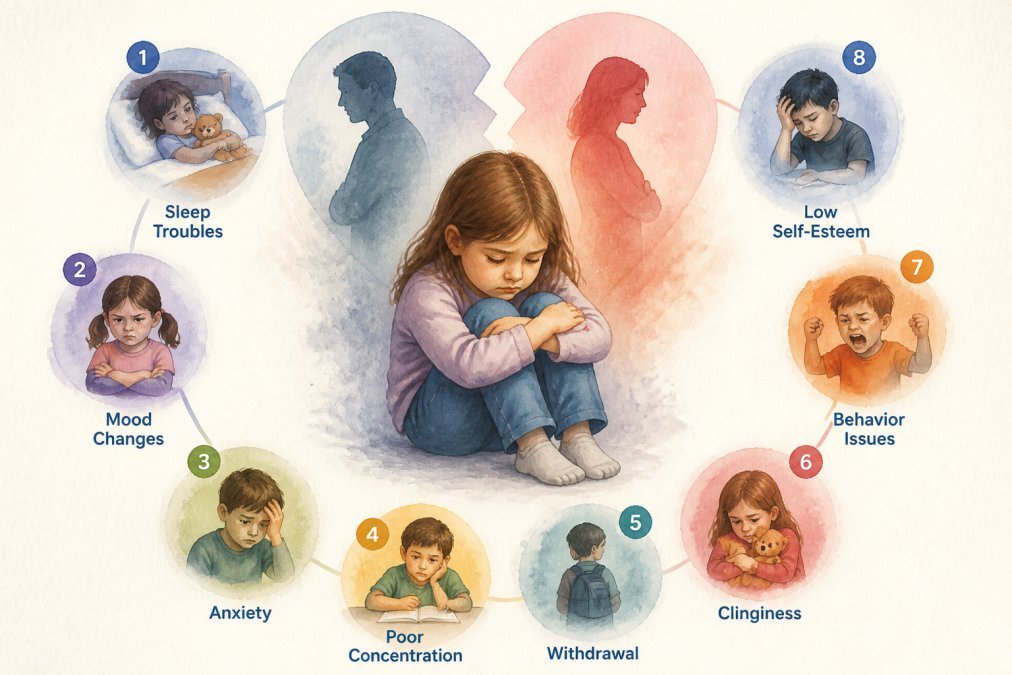
How can I protect my children from the stress of parallel parenting?
Children absorb conflict even when you think they are not watching. Protect them by never discussing adult disputes in their presence, keeping transitions predictable, and using age-appropriate scripts to answer their questions. A stable environment at both homes, with consistent routines, reduces behavioral problems. Document incidents privately rather than venting to your child. If your ex tries to communicate through the child, redirect: ‘That sounds like something for you and Dad to talk about.’ Your calm presence is the strongest buffer against conflict exposure.