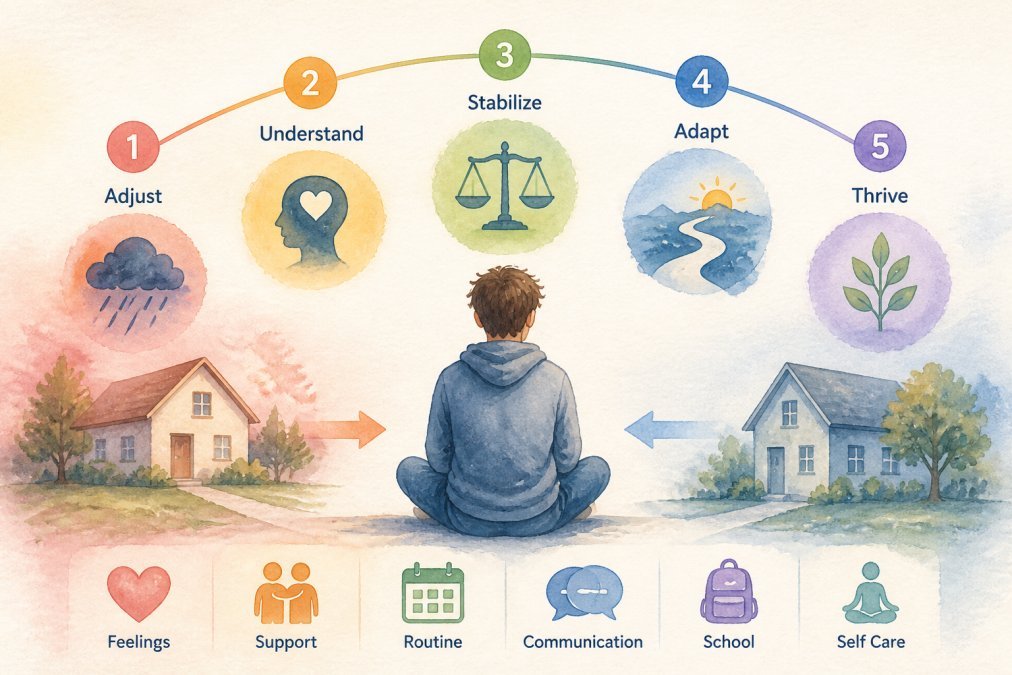
TL;DR:
- Many betrayed partners experience post-infidelity triggers that can persist for years. These triggers are emotional or sensory cues linked to trauma, often resembling PTSD symptoms. Managing triggers through identification, grounding, and therapy is key to lasting recovery.
Many people believe that healing after infidelity is just a matter of time. Give it a few months, stay busy, and the pain will fade. But for 30-60% of betrayed partners, emotional triggers persist for years, surfacing without warning and pulling them back into the rawness of the original betrayal. This guide explains exactly what post-infidelity triggers are, why they happen, and what you can do to manage them. Whether you’re six weeks or six years out from the affair, understanding your triggers is the foundation of real, lasting recovery.
Table of Contents
- What are post-infidelity triggers?
- The science behind emotional triggers after infidelity
- Common types of post-infidelity triggers
- Strategies to manage and reduce post-infidelity triggers
- A fresh perspective: Why trigger management, not avoidance, builds lasting resilience
- Empower your healing journey
- Frequently asked questions
Key Takeaways
| Point | Details |
|---|---|
| Triggers are normal | Experiencing emotional triggers after infidelity is a common and recognized response, not a personal failing. |
| Recovery is a process | Healing from triggers often takes months or years but can be accelerated with focused strategies. |
| Know your triggers | Identifying and understanding your unique triggers is the first crucial step in managing them. |
| Active coping works | Using proven coping strategies helps reduce the power and frequency of emotional triggers. |
| Support is available | Targeted resources and expert guidance can make the journey through recovery less isolating and more effective. |
What are post-infidelity triggers?
A post-infidelity trigger is any emotional or sensory cue that brings the memory of betrayal rushing back. It could be a song, a smell, a certain time of year, or even a notification sound on your partner’s phone. These aren’t signs that you’re stuck or weak. They’re signs that your brain is doing exactly what brains do after trauma: staying alert to protect you from being hurt again.
The experience is so common and so distinct that researchers use the term Post-Infidelity Stress Disorder, or PISD, to describe it. PISD is not listed in the DSM (the official diagnostic manual for mental health), but it mirrors the symptoms of PTSD closely. Flashbacks, hypervigilance, emotional numbness, and intrusive thoughts are all part of the picture. Understanding triggers after infidelity as a trauma response, rather than a character flaw, changes how you relate to them.
Common post-infidelity triggers include:
- Anniversaries of the affair discovery or key dates
- Locations where the affair took place or was suspected
- Specific words, phrases, or names
- Technology habits, like a partner checking their phone frequently
- Arguments that echo the emotional tone of the betrayal period
- Physical intimacy with your partner
Not all triggers are obvious. Some are subtle and catch you completely off guard. The table below shows how obvious and subtle triggers differ in practice.
| Trigger type | Example | Why it activates |
|---|---|---|
| Obvious | The date of discovery | Direct association with the event |
| Obvious | A location tied to the affair | Sensory memory of that place |
| Subtle | A new habit your partner has | Reminds you of the secrecy period |
| Subtle | A stranger’s perfume | Unconscious sensory link |
| Subtle | A TV storyline about cheating | Emotional resonance with your experience |
The post-infidelity stress explained in clinical literature confirms that PISD affects 30-60% of betrayed partners, and without active management, symptoms can persist for one to three years. That’s not a small window. That’s years of your life shaped by something someone else did.
The science behind emotional triggers after infidelity
Understanding why triggers happen can take away some of their power. When you experience betrayal, your brain doesn’t just record the facts. It encodes the entire emotional and sensory environment: the lighting in the room, the words used, the physical sensations in your body. This is called emotional memory encoding, and it’s the same mechanism that makes combat veterans flinch at a car backfire.
Your brain’s threat-detection system, centered in the amygdala, learns to associate certain cues with danger. After infidelity, “danger” becomes anything that resembles the circumstances of the betrayal. So when you encounter one of those cues, your body responds before your conscious mind can catch up. Heart racing. Chest tight. Stomach dropping. These aren’t overreactions. They’re your nervous system doing its job, just with outdated information.
Research shows that healing can take up to 2-4 years even with active effort, and that 20-40% of betrayed partners experience PISD-like symptoms at a clinical level. Understanding the healing after infidelity timeline helps set realistic expectations, because most people assume they should feel better far sooner than is actually typical.
One of the most important findings in this area is that perceived betrayal is a stronger predictor of ongoing PISD than the objective facts of the affair. In other words, how violated and deceived you felt matters more than the number of times the affair occurred or how long it lasted. Your internal experience is the real driver of your recovery timeline.
“The subjective sense of betrayal, not the objective details of the affair, most strongly predicts the severity and duration of post-infidelity symptoms.”
The healing stages and recovery phases outlined in trauma-informed frameworks reflect this: early recovery is about stabilization, not resolution. Here’s a general timeline of what to expect:
- Acute phase (0-3 months): Triggers are frequent and intense. Emotional flooding is common.
- Stabilization phase (3-9 months): Triggers begin to have identifiable patterns. Some predictability emerges.
- Integration phase (9-24 months): Triggers decrease in frequency. Emotional responses become more manageable.
- Resolution phase (2-4 years): Triggers may still occur but no longer dominate daily life.
Pro Tip: Start tracking both your emotional and physical responses to triggers in a simple journal. Note the time, the cue, what you felt emotionally, and what happened in your body. Patterns will emerge faster than you expect, and that data becomes your roadmap.
Common types of post-infidelity triggers
With the science as context, let’s get specific. Triggers tend to cluster into recognizable categories, and knowing which category yours fall into helps you prepare for and respond to them more effectively.
Research confirms that triggers can involve anniversaries, tech use, fights, or unexpected reminders. But the lived experience is often more textured than any list can capture. A trigger isn’t always dramatic. Sometimes it’s the way your partner laughs at their phone. Sometimes it’s a Tuesday afternoon that feels exactly like the Tuesday you found out.
Obvious triggers are the ones most people anticipate: the anniversary of the discovery, the location where the affair happened, the name of the other person. These are painful, but they’re also predictable. You can plan around them.
Stealth triggers are harder. They arrive without warning and can feel disproportionate to the situation. Here are some of the most common ones that people often don’t recognize as triggers until after the fact:
- An ambiguous text message notification
- Your partner starting a new hobby or social group
- A song that was popular during the affair period
- Your partner being unusually kind or attentive
- A news story or film involving infidelity
- Feeling happy, then immediately feeling guilty for feeling happy
The last one deserves attention. Many betrayed partners describe a pattern where moments of joy are immediately followed by a wave of grief or anger. This is sometimes called a joy trigger, and it’s rooted in the brain’s attempt to stay vigilant. Happiness feels unsafe when your guard was down the last time you were happy.
Recognizing your personal trigger profile is the first real step in managing them. The infidelity relapse risks that couples face are often tied directly to unmanaged triggers that escalate into conflict before either partner understands what just happened.
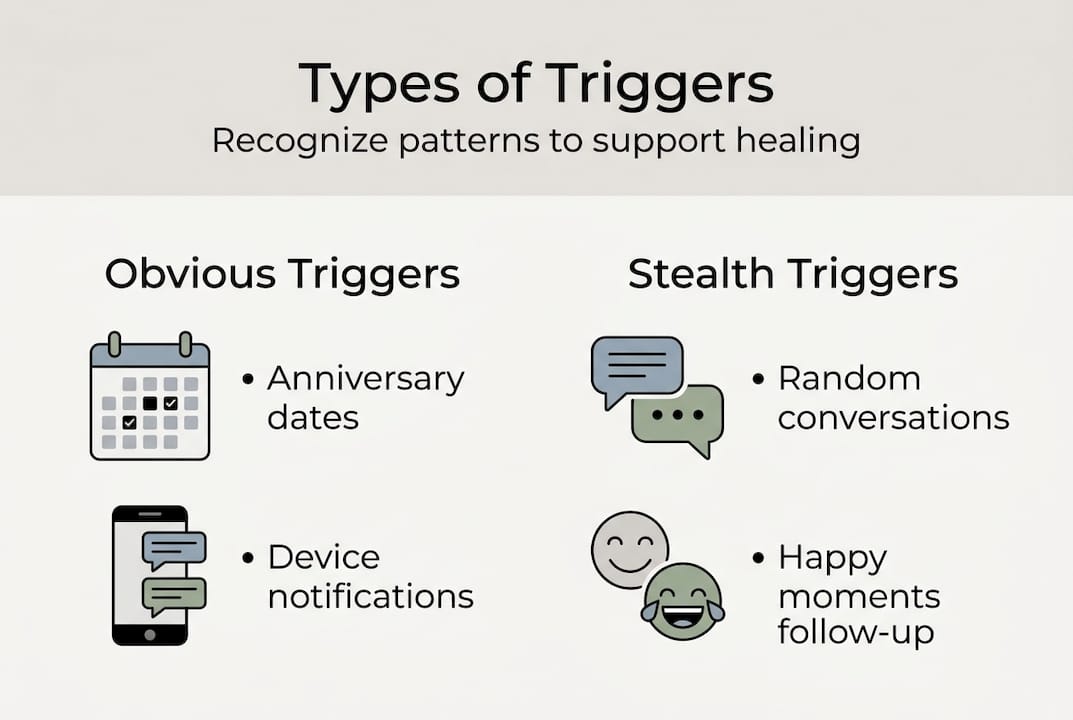
| Category | Obvious triggers | Stealth triggers |
|---|---|---|
| Time-based | Discovery anniversary | A random Tuesday |
| Location | Affair location | A similar-looking restaurant |
| Technology | Seeing the other person’s name | Any phone notification |
| Relational | Arguments about the affair | Unexpected kindness from partner |
| Emotional | Grief, anger | Unexpected joy or calm |
Strategies to manage and reduce post-infidelity triggers
Knowing your triggers is important. Knowing what to do when they hit is what actually changes your life. The goal isn’t to eliminate triggers entirely. It’s to reduce how often they occur, how intensely they land, and how long they linger.
Active management matters enormously here. Actively addressing triggers can shorten symptom duration from years to months, which is a significant difference in quality of life. Here’s a practical framework to start with:
- Identify the trigger. In the moment or shortly after, name what set off the response. “The notification sound triggered me.” Naming it interrupts the automatic cycle.
- Track it. Use a journal or even a notes app. Date, trigger, emotional response, physical response. Over two to three weeks, patterns become clear.
- Name the underlying fear. Most triggers are pointing to a core fear: “I’ll be betrayed again,” or “I wasn’t enough.” Getting to that fear is where the real work begins.
- Use grounding techniques. When a trigger floods your system, grounding brings you back to the present. Five things you can see, four you can hear, three you can touch. It sounds simple because it is, and it works.
- Process it in a structured way. Journaling, a trusted conversation with someone who understands, or processing emotional trauma with a therapist all help move the emotional charge through your system rather than letting it pool.
A trauma-informed therapist is worth seeking when triggers are occurring daily, when they’re affecting your ability to function at work or in relationships, or when physical symptoms like insomnia or panic attacks are present. Therapy isn’t a last resort. It’s often the thing that cuts years off the recovery timeline.
Pro Tip: Progress in trigger management is rarely a straight line. You will have weeks where you feel genuinely better, followed by a day that knocks you flat. That’s not failure. That’s how nervous system healing works. Expect the setbacks, and don’t let them rewrite the progress you’ve made.
A fresh perspective: Why trigger management, not avoidance, builds lasting resilience
Here’s what most standard recovery advice gets wrong: it treats triggers as problems to be avoided rather than opportunities to be used. “Stay away from that restaurant. Block that person on social media. Don’t listen to that song.” These strategies offer short-term relief, but they quietly reinforce the idea that you can’t handle the trigger. And that belief is more damaging than the trigger itself.
What we’ve seen, both in clinical work and in the stories shared by people who’ve genuinely healed, is that triggers lose their grip when you stop running from them and start getting curious about them. Not recklessly. Not without support. But deliberately and with self-compassion.
Every trigger is carrying information about what you need, what you fear, and what still needs to be processed. When you treat a trigger as data rather than an attack, you shift from victim to investigator. That shift is where what helps and hurts recovery becomes clear in a personal, not just theoretical, way.
The healing after betrayal that lasts isn’t built on avoidance. It’s built on the accumulated evidence that you faced the hard moments and survived them. Each time you move through a trigger rather than around it, you’re teaching your nervous system something new: this is survivable. That lesson, repeated enough times, becomes your new baseline.
Empower your healing journey
Understanding your triggers is a powerful first step, but having the right structure around you makes the difference between slow, painful progress and real, sustained healing. At aftertheaffair.uk, we’ve built resources specifically for this stage of recovery.
The infidelity recovery checklist walks you through seven concrete steps designed to move you from crisis to clarity, including how to identify and document your personal trigger patterns. If you’re working on rebuilding trust, the guide on relationship growth after infidelity addresses how triggers affect both partners. And for ongoing learning and support, the full recovery resource library is available whenever you need it.
Frequently asked questions
How long do post-infidelity triggers usually last?
Post-infidelity triggers can last from several months up to three years, with most people improving significantly faster when they use targeted intervention rather than waiting for time alone to do the work.
Are post-infidelity triggers a sign of weakness or not moving on?
No. Triggers are a normal psychological response to betrayal trauma, and PISD symptoms resemble PTSD in structure and intensity. They reflect your nervous system’s attempt to protect you, not a failure of character.
What are the first steps I can take to manage triggers?
Start by identifying and naming your triggers when they occur, then journal your emotional and physical responses. If symptoms feel overwhelming, active management shortens the recovery timeline significantly, and a trauma-informed therapist can accelerate that process.
Can triggers be completely eliminated, or only reduced?
Complete elimination is rare, but their frequency and intensity can be greatly reduced. Triggers lose power when they are processed rather than avoided, and most people find that well-managed triggers eventually become minor rather than disruptive.
Recommended
- 7 Steps-Infidelity Recovery Checklist – After the Affair Series
- How to Guide Clients After Infidelity for Healing – After the Affair Series
- Relationship Growth After Infidelity – After the Affair Series
- Navigate stages of infidelity recovery: structured guide – After the Affair Series
- Rebuilding Trust After Betrayal: A Step-by-Step Process – Mastering Conflict