TL;DR:
- Healing from resentment after ending a relationship with a married man involves releasing emotional energy tied to unmet expectations and trauma bonding. Strict no-contact and deliberate emotional processing are essential for neural rewiring and recovery. Self-compassion and small behavioral changes facilitate healing, which is ultimately a non-linear but achievable process.
Healing from resentment after letting go of a married man is defined as the process of reclaiming your emotional energy from a relationship that could never fully belong to you. Resentment in this context is not a character flaw. It is a signal that you invested deeply and were hurt. The good news is that letting go of resentment is an internal process focused entirely on healing yourself, not on forgiving him. This guide draws on 2026 therapeutic insights, research from Psychology Today, and the trauma-informed framework used by Aftertheaffair to walk you through every stage of recovery.
How to heal from resentment after letting go of a married man
Resentment is a secondary emotion. It sits on top of deeper feelings like grief, shame, fear, and loneliness. Therapists at Empathi describe resentment as a protective layer that guards you from the raw pain underneath. That is why it feels so persistent. You are not just angry at him. You are grieving the future you imagined, the version of yourself who believed it could work, and the time you cannot get back.
Why this relationship creates a specific kind of pain
Ending a relationship with a married man carries a particular emotional weight. You likely experienced secrecy, broken promises, and the constant awareness that you were not his priority. These conditions breed unmet expectations, which are one of the most reliable sources of resentment. The relationship also often involved trauma bonding, a neurological attachment pattern built through cycles of hope and disappointment that make detachment feel physically painful.
Resentment in this situation also differs from indifference. Indifference means you have stopped caring. Resentment means you still care deeply. That distinction matters because it tells you where your emotional energy is still tied up, and where the healing work needs to happen.
- Resentment often masks grief over the relationship you wished you had
- Shame about the relationship’s secrecy can deepen the emotional wound
- Unmet expectations about his leaving his wife are a core trigger
- Trauma bonding creates addictive attachment patterns that outlast the relationship itself
Pro Tip: Name the emotion beneath your resentment. Ask yourself: “If I weren’t angry right now, what would I feel?” The answer, usually grief or fear, is where your real healing begins.
Why no-contact is the most critical first step
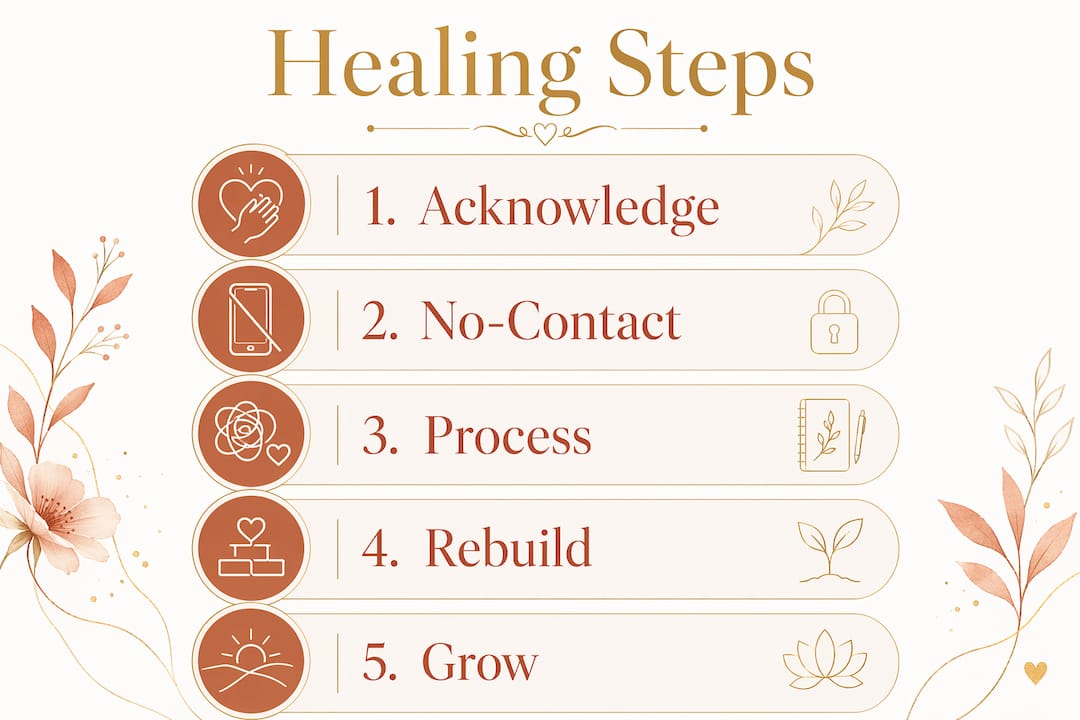
No-contact is not a punishment. It is a neurological necessity. Trauma bonds create addictive patterns in the brain that reinforce emotional attachment every time you make contact, even brief or accidental contact. Each text, each check of his social media, each conversation through a mutual friend resets the emotional clock and makes the resentment harder to release.
The 2026 expert consensus is clear: no-contact means removing all digital and social media connections, not just blocking his number. That includes unfollowing him on every platform, muting mutual friends who might share updates, and removing photos and reminders from your physical space.
| Contact behavior | Emotional outcome |
|---|---|
| Texting or calling him | Reinforces attachment, delays grief processing |
| Checking his social media | Triggers comparison, shame, and renewed resentment |
| Staying in touch through mutual friends | Keeps emotional door open, prevents detachment |
| Full no-contact including digital | Allows neural pathways to reset and grief to move |
Common pitfalls include what therapists call intermittent reinforcement. This is the pattern where occasional contact, even a single kind message from him, floods your brain with hope and undoes weeks of progress. Any contact reinforces emotional attachment and makes healing harder. Treat no-contact as a non-negotiable boundary, not a strategy you revisit when you feel strong enough.
Pro Tip: Tell one trusted friend about your no-contact commitment. Having someone who can hold you accountable in a moment of weakness is more effective than willpower alone.
How to process your emotions without getting stuck
Avoiding pain through distractions prolongs recovery. Research by O’Connor (2019) and Stroebe et al. (2024) confirms that emotional disclosure accelerates healing by activating neural pathways that would otherwise remain blocked. Sitting with the pain, rather than numbing it, is the faster route through it.
Here is a practical sequence for processing emotions after this kind of breakup:
- Name the emotion. Write down exactly what you feel without editing. “I feel humiliated that I believed him.” “I feel angry that I gave up years of my life.” Specificity reduces emotional overwhelm.
- Locate it in your body. Somatic experiencing, a body-based therapy approach, teaches that emotions live in physical sensations. Notice where you feel the resentment. Chest tightness, jaw tension, and stomach heaviness are common. Breathing into that area for 60 seconds begins to release it.
- Journal without a goal. Write for 10 minutes without trying to reach a conclusion. The act of writing, not the insight, is what processes the emotion.
- Allow somatic release. Crying, shaking, and even intense physical exercise are the body’s natural ways of completing an emotional stress cycle. Do not suppress these responses.
- Practice mindful breathing. A simple 4-7-8 breath pattern (inhale for 4 counts, hold for 7, exhale for 8) activates the parasympathetic nervous system and reduces acute emotional distress.
Self-compassion is central to recovery. Therapists identify self-kindness as the foundation of emotional safety during this process. That means speaking to yourself the way you would speak to a close friend who was going through the same pain.
- Avoid harsh self-judgment about your choices
- Validate your pain as real and proportionate to your experience
- Recognize that loving someone who was unavailable does not make you foolish
Pro Tip: Set a daily 15-minute “feeling window.” Give yourself full permission to feel everything during that time, then gently redirect your attention afterward. This prevents emotions from flooding your entire day while still honoring them.
How to rebuild self-worth and grow after this relationship
Recovering from a toxic relationship requires more than stopping the pain. It requires actively rebuilding who you are. Rebuilding self-esteem after betrayal involves reconnecting socially, changing self-talk patterns, and engaging in activities that reflect your values.
Start with your self-talk. The inner narrative that developed during this relationship, often one of unworthiness or self-blame, does not reflect reality. Challenge every thought that begins with “I should have known” or “I am not enough.” Replace it with a factual statement: “I made choices based on what I knew at the time.”
- Reconnect with friends and family you may have distanced during the relationship
- Take up one new activity that is entirely yours, a class, a sport, a creative practice
- Write a list of your personal values and assess which ones the relationship honored and which it violated
- Set one small, achievable goal each week to rebuild your sense of competence and direction
Forgiveness is optional. You do not need to forgive him to heal. What you do need is to redirect the emotional energy currently aimed at him back toward yourself. Therapy accelerates this process significantly. Trauma-focused approaches, including EMDR and somatic therapy, are particularly effective for processing infidelity trauma. Support groups, whether in person or online, also provide the specific validation that comes from others who have lived the same experience.
Personal growth after this kind of relationship is real and documented. Many people report that the clarity they gained about their own needs, boundaries, and values became the foundation for healthier relationships later. That outcome is available to you too, but it requires choosing yourself first.
Common mistakes that slow down your healing
Healing from emotional pain after this kind of relationship is non-linear by nature. Expecting a straight path from pain to peace is the most common mistake, and it causes unnecessary distress when setbacks occur. Neurologically, emotional rewiring takes time and repetition. A bad day three months in does not erase three months of progress.
Watch for these specific pitfalls:
- Premature forgiveness. Forcing yourself to forgive before you have processed the underlying grief creates a false resolution. Resentment returns, often stronger.
- Contact slips. A single moment of contact, especially if he responds warmly, can trigger a full emotional relapse. Have a plan for what you will do if you feel the urge to reach out.
- Social media surveillance. Checking his profiles or those of his wife keeps you emotionally tethered. This is one of the most common and most damaging behaviors during recovery.
- Rushing the timeline. Forcing speedy recovery increases distress. Progress includes small behavioral changes, not dramatic emotional shifts.
“Healing is unique for everyone. Credit even the smallest behavioral shifts. They are evidence that your nervous system is learning something new.” — Psychology Today
Seek professional help if resentment persists for several months without movement, if it is affecting your work or other relationships, or if you are experiencing symptoms of depression or anxiety. Therapy types that work best for this kind of trauma include EMDR, cognitive behavioral therapy, and somatic therapy. A counselor who specializes in infidelity recovery will understand the specific dynamics of this experience without judgment.
Key takeaways
Healing resentment after letting go of a married man requires strict no-contact, deliberate emotional processing, and a daily commitment to self-compassion over self-blame.
| Point | Details |
|---|---|
| Resentment signals connection | It means you still care; naming the emotion beneath it is where healing starts. |
| No-contact is non-negotiable | Any contact, including social media, resets the trauma bond and delays recovery. |
| Feel the pain fully | Avoiding emotions prolongs healing; emotional disclosure activates recovery pathways. |
| Forgiveness is optional | Redirecting emotional energy to yourself matters more than forgiving him. |
| Healing is non-linear | Small behavioral changes count as progress; setbacks do not erase what you have built. |
What I have learned about healing resentment that most guides miss
People often ask me when the resentment will stop. My honest answer is: when you stop treating it as the enemy. Resentment is not a sign that you are broken or that you made a catastrophic mistake. It is a sign that you cared. That care is not a weakness. It is the same capacity for love that will serve you well in a relationship that can actually hold you.
What I have seen, both in the research and in the stories people share with Aftertheaffair, is that the women who heal fastest are not the ones who push hardest to “get over it.” They are the ones who get curious about what the resentment is protecting. They sit with the grief underneath. They let themselves be sad about the future they imagined, not just angry at the man who could not give it to them.
The other thing most guides miss is this: action comes before emotional readiness. You do not wait until you feel ready to enforce no-contact. You enforce it, and then the feelings begin to shift. The brain rewires through behavior, not through intention. Every day you choose not to check his profile, not to send that message, not to ask a mutual friend for an update, you are literally building a new neural pathway. That is not a metaphor. That is neuroscience.
Be kind to yourself on the hard days. They are part of the process, not proof that the process is failing.
— S.J.Howe
Support for your recovery from Aftertheaffair
Aftertheaffair was built specifically for people navigating the emotional complexity of infidelity recovery. The resources here go beyond generic breakup advice to address the specific grief, shame, and attachment patterns that come with this kind of relationship.
The 7 Steps Infidelity Recovery Checklist gives you a structured, step-by-step path through the stages of healing, from the first days of no-contact through rebuilding your identity and sense of worth. For those dealing with persistent emotional attachment, the guide on trauma bonding signs and healing explains exactly why detachment feels so hard and what to do about it. These resources are grounded in clinical frameworks and written with the compassion this experience deserves.
FAQ
What does resentment after a breakup with a married man feel like?
Resentment typically feels like persistent anger, bitterness, and replaying painful memories. It often masks deeper emotions like grief, shame, and loneliness that need to be processed for healing to occur.
How long does it take to release negative feelings after this kind of relationship?
Healing timelines vary widely and forcing a deadline increases distress. Psychology Today experts note that progress shows up in small behavioral changes, not dramatic emotional shifts, and that is a normal and healthy pace.
Is no-contact really necessary when recovering from a toxic relationship?
Yes. Any contact, including checking social media, reinforces the trauma bond neurologically and delays emotional recovery. Strict no-contact including all digital channels is the most effective first step.
Do I need to forgive him to move on from infidelity?
Forgiveness is not required for healing. Therapist-led guidance confirms that releasing resentment is an internal process focused on reclaiming your own emotional energy, not on absolving the other person.
When should I seek professional help for healing from emotional pain?
Seek therapy if resentment persists for several months, affects your daily functioning, or is accompanied by depression or anxiety. Trauma-focused approaches like EMDR and somatic therapy are particularly effective for infidelity-related emotional pain.
Recommended
- How to heal when the affair partner won’t leave: 5 steps
- Relationship Growth After Infidelity – After the Affair Series
- How to Process Guilt After Infidelity: A Healing Guide
- How to Cope After Infidelity – After the Affair Series