TL;DR:
- Infidelity rates in long marriages are higher than many expect, especially after age 50.
- Emotional trauma from betrayal can mirror PTSD, requiring professional support and self-care.
- Recovery options include divorce, rebuilding together, or redefining the relationship, with each having benefits and risks.
Discovering that your partner of 30 or 40 years has been unfaithful is a specific kind of devastation. The ground shifts in ways that feel impossible to describe. What makes it harder is the assumption most of us carry: that long marriages are safe marriages. Yet infidelity rates for men 60 to 69 reach 24 to 29%, and women 50 to 59 experience rates of 16 to 17%. You are not alone, and you are not naive for being blindsided. This guide walks you through why late-life betrayal happens, what it does to you emotionally, and the real steps that lead to genuine healing, whatever direction you choose.
Table of Contents
- Understanding late-life betrayal: Why it happens after decades together
- The emotional impact of late-life betrayal: Trauma and response
- Key decisions after betrayal: Divorce, healing together, or redefining your marriage
- Rebuilding and moving forward: What actually works in healing after decades together
- The uncomfortable truth about late-life betrayal and second chances
- Guided support for healing and growth after betrayal
- Frequently asked questions
Key Takeaways
| Point | Details |
|---|---|
| Late-life betrayal is common | Infidelity after age 50 is more widespread than most assume, and not a personal failing. |
| Emotional trauma is real | Betrayal after decades together triggers deep trauma that needs time and support to heal. |
| Pathways to healing vary | Some couples recover, others part ways—your best approach depends on personal values and well-being. |
| Practical steps aid recovery | Structured healing, therapy, and consistent actions can rebuild trust and promote growth after infidelity. |
Understanding late-life betrayal: Why it happens after decades together
Betrayals in long marriages rarely come out of nowhere, even when they feel that way. Understanding the patterns behind late-life infidelity does not excuse what happened. It simply gives you a clearer picture of what you are actually dealing with.
Infidelity rates shift significantly with age, major life transitions, and changing personal priorities. The years after 50 are full of these transitions: children leaving home, retirement approaching, parents dying, bodies changing. These events force big questions about meaning and satisfaction that many couples never actually discuss together.
Some of the most common triggers for late-life affairs include:
- Mortality awareness: A sudden reckoning with aging can push people toward impulsive choices that feel like a last chance at something different.
- Empty nest shifts: When children leave, couples are often left facing each other without the buffer of parenting. Emotional distance that was manageable before can feel unbearable.
- Unaddressed emotional neglect: Years of feeling unseen, unappreciated, or emotionally alone create fertile ground for connection outside the marriage.
- Newly emerging needs: People change. What someone needed at 30 may look completely different at 60, and those needs do not always get communicated.
One important myth to challenge: a late-life affair does not automatically mean the marriage was always broken or that you failed as a partner. Research consistently shows that affair patterns by age are tied to developmental and circumstantial factors, not just relationship quality. Many betrayed partners describe their marriages as genuinely good, even warm, before the discovery.
| Life stage trigger | How it connects to late-life infidelity |
|---|---|
| Empty nest | Loss of shared purpose; reduced daily intimacy |
| Retirement | Increased proximity with unresolved conflicts |
| Health decline | Fear of mortality or feeling desirable |
| Grief or loss | Emotional vulnerability in seeking comfort elsewhere |
This does not mean there is nothing to repair or reckon with. It means that relationship growth after betrayal becomes possible when both partners understand what was actually happening beneath the surface, not just the act itself.
The emotional impact of late-life betrayal: Trauma and response
Recognizing why this happens is only the start. How you respond emotionally is just as important, and for most people over 50, the emotional impact of betrayal is far more intense than they expect.
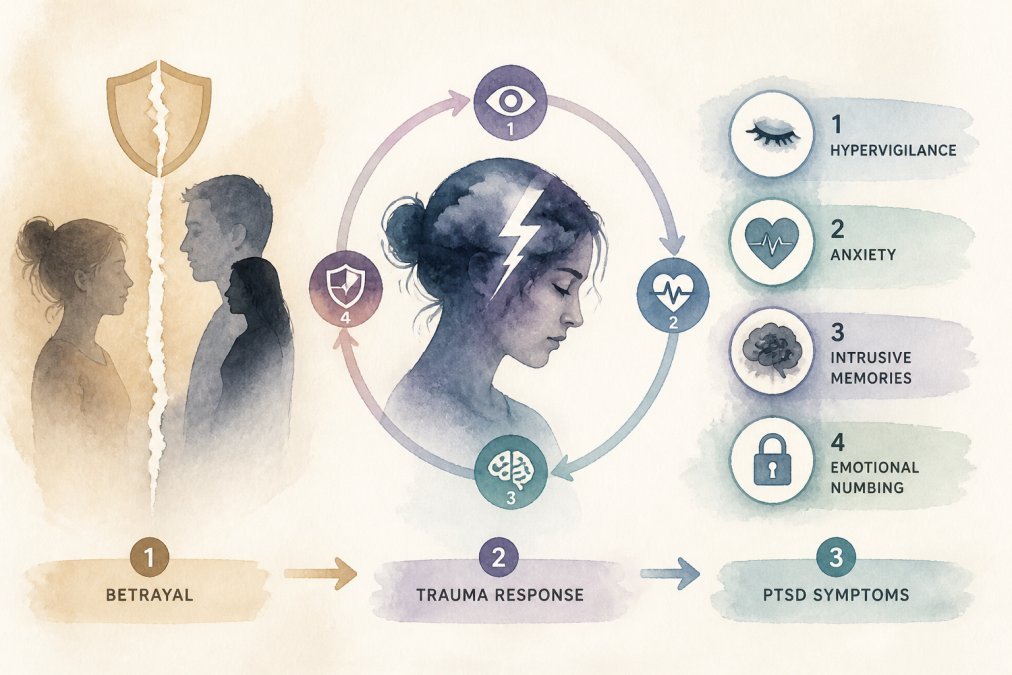
Betrayed partners over 50 often experience trauma that closely mirrors PTSD: obsessive thoughts, intrusive images, depression, sleep disruption, and a persistent feeling that reality has been rewritten. This is not weakness. It is a neurological response to a profound threat.
“The discovery of infidelity in a long-term marriage can shatter the entire foundation of a person’s identity, not just the relationship.”
Common trauma responses after late-life betrayal include:
- Shock and disbelief: The mind protects itself by struggling to accept what happened as real.
- Hypervigilance: Checking phones, retracing timelines, and constantly scanning for more lies.
- Grief: Mourning the marriage you thought you had, the future you planned, and the version of your partner you trusted.
- Rage and numbness cycling: Intense anger alternating with emotional flatness is completely normal.
- Loss of identity: For many people over 50, their role as a partner is deeply tied to who they are. Betrayal attacks that core sense of self.
The marriage outcomes after infidelity are significantly better for people who access professional support early. Therapy, both individual and couples-based, helps process the trauma systematically rather than letting it fester into chronic depression or rage.
Pro Tip: If you are struggling to function day to day, that is not a sign of emotional weakness. It is a clinical indicator that you need structured support. The betrayal trauma healing steps involved in real recovery are specific and learnable, not just a matter of “giving it time.”
Knowing when you need more than self-help matters. If intrusive thoughts are constant, if you cannot sleep or eat, or if you are having thoughts of self-harm, please reach out to a mental health professional. Learning how to begin processing emotional trauma after infidelity is one of the most valuable things you can do for yourself right now.
Key decisions after betrayal: Divorce, healing together, or redefining your marriage
With emotions running high, making decisions can feel impossible. But understanding your real options, and what the research shows about each, can help you approach this with more clarity.
Infidelity contributes to 20 to 27% of gray divorces, but a significant 60% of couples who enter counseling after betrayal stay together. That statistic does not tell you what you should do. It tells you that both paths are well-traveled, and both can lead to real healing.
Here are the three main pathways people in your position navigate:
- Gray divorce: Ending the marriage, particularly after 50, carries unique financial and social consequences. Women who divorce after 50 face a measurably higher risk of financial instability, reduced retirement income, and social isolation. This does not mean avoiding divorce if it is right for you, but it means going in with eyes open.
- Rebuilding together: Choosing to work on the marriage requires genuine commitment from both partners, professional support, and a willingness to rebuild something new rather than restore what existed before. Many couples find that the post-affair marriage becomes more honest and connected than what came before.
- Redefining the relationship: Some couples, particularly those with long shared histories, choose a middle path: staying connected without returning to a traditional marriage structure. This might look like companionate partnership, separate homes, or a renegotiated emotional contract.
| Pathway | Key benefit | Key risk |
|---|---|---|
| Gray divorce | Freedom and self-determination | Financial and social disruption |
| Rebuilding together | Deeper intimacy, shared history preserved | Requires sustained effort from both |
| Redefining the relationship | Flexibility, reduced pressure | Ambiguity can prolong emotional pain |
Before making any permanent decision, it helps enormously to work through the framework in navigate post-affair decisions, especially while emotions are still acute. Clarity is not a luxury here. It protects your future.
If you decide to stay and rebuild, the goal is not to grow your relationship after infidelity by pretending the betrayal did not happen. Growth comes from working through it honestly.
Rebuilding and moving forward: What actually works in healing after decades together
Once you have clarity on your direction, here is what genuinely helps you move forward. Not platitudes. Not generic advice. Specific, research-backed actions that make a measurable difference.
Consistent small actions rebuild trust more reliably than grand gestures. Research points to a two-year average for functional trust to return, with 15% of couples reporting their marriage became stronger after full recovery. That timeline matters because it sets realistic expectations and prevents despair during the harder stretches.
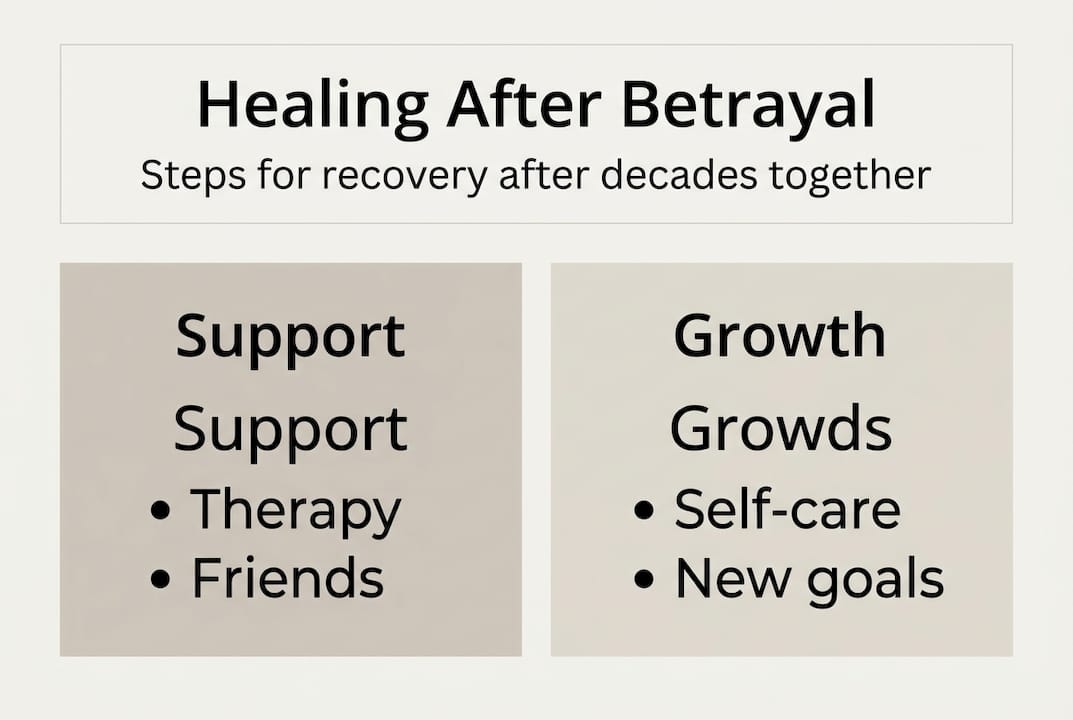
Core healing practices that actually work:
- Structured transparency: The unfaithful partner needs to demonstrate accountability consistently, not just apologize once and expect the past to be erased.
- Individual therapy for the betrayed partner: Your healing should not be dependent on your partner’s choices. Processing your own trauma separately is vital.
- Couples counseling with a betrayal-informed therapist: Not all therapists are equipped to handle infidelity trauma. Look for someone who specifically understands the dynamics.
- Monitoring the trust rebuilding timeline: Knowing where you are in the process prevents both premature pressure and unnecessary stagnation.
- Prioritizing post-affair self-care: Sleep, physical movement, nutrition, and social connection all directly affect your capacity to process trauma.
Two common traps to avoid: hysterical bonding (intense physical intimacy immediately after discovery that can feel like healing but often delays real processing), and premature reconciliation (declaring the crisis over before the underlying work is done).
Pro Tip: Structured exercises like the ones in couples trust-building exercises give you a practical framework rather than leaving you to improvise through one of the hardest experiences of your life.
Healing is not linear. Expect setbacks, especially around significant dates or new disclosures. That is part of the process, not evidence of failure.
The uncomfortable truth about late-life betrayal and second chances
Most advice on affair recovery is written with a quiet assumption baked in: that the goal is to save the marriage. For couples in their 30s or 40s, that framing has some logic. But for people over 50, the picture is genuinely more complicated, and the standard advice can actually get in the way.
Here is what we rarely say directly: staying together is not always healing. Sometimes it is avoidance dressed up as commitment. The financial fear of gray divorce and financial impact is real, particularly for women, but making a decision based primarily on financial fear is not the same as making a decision based on what you actually want and deserve.
True recovery, at this stage of life, sometimes means radically redefining what you want your remaining decades to look like. That might mean rebuilding your marriage into something genuinely better. It might mean leaving and building a new chapter alone or eventually with someone new.
What it should never mean is enduring pain quietly to maintain appearances. The most honest piece of guidance we can offer is this: honor your own post-betrayal reality. Growing after infidelity is real and possible. But growth is only growth when it reflects who you genuinely are now, not who you were expected to be.
Guided support for healing and growth after betrayal
If you are navigating the aftermath of late-life betrayal, you do not have to figure this out alone or from scratch. The resources at After the Affair are built specifically for people at this stage of recovery.
Whether you are still in shock, weighing your options, or actively working to rebuild, there are structured tools designed for exactly where you are. Start with the infidelity recovery checklist for a clear, step-by-step framework that does not assume a one-size-fits-all outcome. If you are focusing on what comes next for your relationship, the relationship growth after infidelity guide offers evidence-informed direction tailored to long-term partnerships. Recovery is not a single road. It is a process of honest choices, made one step at a time.
Frequently asked questions
How common is infidelity after decades of marriage?
Infidelity for couples aged 50 and over is more common than most people expect, with up to 29% of men and up to 17% of women experiencing it in this age group. Long marriages are not immune.
Can marriages really recover after late-life betrayal?
Yes. Research shows that 60% of couples who enter counseling after infidelity stay together, and 15% describe their marriage as stronger after recovery. Outcomes depend heavily on whether both partners commit to the process.
What does healing from betrayal trauma look like after 50?
Healing involves processing PTSD-like symptoms, rebuilding your sense of identity, prioritizing self-care, and usually working with a betrayal-informed therapist. Betrayed partners over 50 often experience trauma that mirrors clinical PTSD, which means real support is not optional.
Is divorce the only option after infidelity in a long marriage?
Not at all. While infidelity contributes to gray divorces in 20 to 27% of cases, the majority of couples who seek help either stay together or find a redefined form of partnership. Your options are wider than they may feel right now.
How long does it take to trust again after late-life betrayal?
Empirical research points to a two-year average for functional trust to return, even with consistent effort and professional support. Progress is rarely linear, and setbacks during that period are normal, not a sign that recovery has failed.
Recommended
- Step-by-step betrayal recovery: healing trust in 2026 – After the Affair Series
- How to address betrayal trauma: steps for healing
- How to Guide Clients After Infidelity for Healing – After the Affair Series
- How to build emotional resilience after betrayal: a guide