Recent research reveals a surprising finding: forgiveness tendency is the strongest positive predictor of relationship satisfaction following infidelity, surpassing even transparency or remorse. Most couples focus intensely on rebuilding trust through behavioral changes, yet overlook the emotional work of forgiveness as central to recovery. This guide unpacks forgiveness as a critical healing step after betrayal, explaining how it enables both individual growth and relationship repair. You’ll discover evidence-based insights into why forgiveness matters, how it rebuilds emotional connection, and practical steps to cultivate it in your unique recovery journey.
Table of Contents
- Key takeaways
- Understanding forgiveness after infidelity: what research reveals
- How forgiveness rebuilds trust and emotional reconciliation
- Nuances influencing forgiveness: gender, culture, and behavior after the affair
- Practical application: steps to cultivate forgiveness and support healing
- Explore resources to support forgiveness and healing after an affair
- Frequently asked questions about forgiveness after an affair
Key Takeaways
| Point | Details |
|---|---|
| Forgiveness predicts satisfaction | Forgiveness tendency is the strongest predictor of relationship satisfaction after infidelity, more influential than transparency or remorse. |
| Posttraumatic growth through forgiveness | Forgiveness uniquely predicts posttraumatic growth in couples who stay together after infidelity. |
| Emotional reconciliation rebuilds trust | Emotional reconciliation through forgiveness restores trust by replacing resentment with empathy and safety. |
| Therapy supports forgiveness process | Therapy helps reframe forgiveness as a personal choice and supports the healing process. |
Understanding forgiveness after infidelity: what research reveals
Forgiveness after an affair means intentionally releasing emotional resentment and choosing reconciliation despite profound hurt. It’s not forgetting what happened or excusing the betrayal. Instead, forgiveness involves acknowledging pain while making a conscious decision to move toward healing rather than remaining trapped in bitterness.
Research demonstrates that forgiveness tendency predicts higher relationship satisfaction more powerfully than other recovery factors. This finding challenges conventional wisdom that focuses primarily on the unfaithful partner’s behavioral changes. While transparency and remorse matter, your capacity to forgive emerges as the strongest predictor of whether you’ll experience satisfaction if you choose to stay together.
Even more striking, forgiveness is the only significant predictor of posttraumatic growth in couples continuing their relationship after infidelity. Posttraumatic growth refers to positive psychological changes that emerge from struggling with highly challenging circumstances. Partners who forgive don’t just survive the affair; they often develop deeper empathy, stronger personal values, and enhanced appreciation for their relationship.
Forgiveness brings core psychological benefits to both partners:
- Reduced resentment and emotional burden that otherwise drain mental energy
- Emotional relief from the exhausting cycle of anger and rumination
- Restored hope for the relationship’s future and personal wellbeing
- Decreased anxiety and depression symptoms related to the trauma
- Enhanced capacity for vulnerability and authentic connection
One betrayed partner described her forgiveness journey this way:
I realized holding onto rage was poisoning me more than him. Forgiveness wasn’t about letting him off the hook. It was about releasing myself from the prison of bitterness so I could heal, whether we stayed together or not.
Understanding forgiveness as a personal choice for emotional freedom, rather than a gift to your partner, shifts the entire recovery dynamic. The benefits of therapy after infidelity often center on developing this nuanced understanding of what forgiveness truly means and how it serves your healing.
How forgiveness rebuilds trust and emotional reconciliation
Forgiveness operates as a powerful mechanism for restoring marital trust through a process called emotional reconciliation. Emotional reconciliation happens when you replace resentment with empathy and rebuild emotional safety with your partner. This internal shift creates space for trust to gradually return.
Research reveals that forgiveness enhances marital trust through both direct and indirect pathways, with remarkably strong effect sizes:
| Pathway | Effect Size | Meaning |
|---|---|---|
| Direct effect of forgiveness on trust | β=0.62 | Forgiveness powerfully predicts trust restoration independent of other factors |
| Indirect effect through emotional reconciliation | β=0.23 | Forgiveness works through emotional healing to rebuild trust |
| Combined total effect | β=0.85 | Together, these pathways show forgiveness as central to trust recovery |
These numbers tell a compelling story. The direct pathway (β=0.62) shows that when you forgive, trust naturally begins rebuilding. The indirect pathway (β=0.23) reveals that forgiveness also works by healing emotional wounds, which then enables trust. Combined, forgiveness accounts for most of the variance in whether couples successfully rebuild trust.
Emotional reconciliation involves several interrelated processes. You begin recognizing your partner’s humanity and imperfection rather than viewing them solely through the lens of betrayal. You allow yourself to feel empathy for their struggles, even while holding them accountable. You create moments of emotional safety where vulnerability becomes possible again.
Pro Tip: Focus on nonverbal acts of forgiveness rather than repeatedly discussing the affair. Research shows that consistent supportive behaviors like physical affection, acts of service, and quality time together strengthen relationship bonds more effectively than discussion-oriented strategies. Your actions communicate forgiveness more powerfully than words.
Forgiveness also helps you accept that recovery follows an imperfect timeline. Some days you’ll feel progress; other days the pain resurfaces. This acceptance reduces pressure on both partners to perform healing according to arbitrary schedules. When you forgive, you grant yourself permission to heal at your own pace without judgment.
The rebuilding process requires patience and realistic expectations. Relationship growth after infidelity doesn’t happen linearly. You’ll experience setbacks, triggers, and difficult conversations. Forgiveness provides the emotional foundation that allows you to navigate these challenges without abandoning the recovery process.
Understanding the rebuilding trust timeline helps set realistic expectations. Most couples need 18 to 24 months of consistent effort before trust feels substantially restored. Forgiveness doesn’t accelerate this timeline artificially, but it makes the journey emotionally sustainable.
Nuances influencing forgiveness: gender, culture, and behavior after the affair
Forgiveness doesn’t happen in a vacuum. Multiple factors shape how partners experience and express forgiveness after infidelity. Understanding these nuances helps you apply forgiveness principles to your specific situation rather than following a generic formula.
Partner behaviors significantly influence forgiveness likelihood. When the unfaithful partner demonstrates genuine remorse, takes full responsibility, and maintains transparency, forgiveness becomes more accessible. Conversely, defensiveness, blame-shifting, or continued secrecy create substantial barriers to forgiveness.
Research shows that husbands’ remorse and transparency influence wives’ forgiveness in specific ways shaped by gender and cultural factors. Women often prioritize emotional accountability and relational repair in their forgiveness process. They need to see that their partner understands the emotional impact of the betrayal, not just the behavioral transgression.
Men’s forgiveness processes sometimes emphasize different elements. They may focus more on behavioral commitments and future-oriented solutions. However, these patterns vary widely based on individual personality, relationship history, and cultural background. Avoid assuming gender stereotypes apply to your specific situation.
Cultural values profoundly shape forgiveness attitudes and recovery approaches:
| Cultural Factor | Impact on Forgiveness |
|---|---|
| Individualistic cultures | Emphasize personal choice, self-care, and individual healing timelines |
| Collectivistic cultures | Prioritize family harmony, social reputation, and relationship preservation |
| Religious frameworks | Provide moral guidance, community support, and forgiveness as spiritual practice |
| Gender role expectations | Influence who bears responsibility for repair and what forgiveness looks like |
Additional moderating factors include:
- Differentiation of self: Your ability to maintain individual identity while emotionally connected affects forgiveness capacity
- Trauma severity: The affair’s duration, deception level, and emotional impact influence forgiveness difficulty
- Communication styles: How you and your partner discuss difficult emotions shapes the forgiveness process
- Previous relationship quality: Stronger pre-affair foundations often facilitate forgiveness
- Support systems: Friends, family, and professional help provide crucial resources for forgiveness work
- Attachment patterns: Secure attachment enables forgiveness more readily than anxious or avoidant styles
Recognizing these nuances prevents you from judging your forgiveness journey against others’ experiences. Your cultural background, gender socialization, and unique relationship dynamics create a specific context that deserves respect. How to guide clients after infidelity emphasizes tailoring recovery approaches to individual circumstances rather than applying one-size-fits-all solutions.
The unfaithful partner’s ongoing behavior matters more than initial apologies. Sustained transparency, emotional availability, and willingness to discuss the affair when you need to process feelings demonstrate authentic commitment to repair. These behaviors gradually rebuild the safety necessary for forgiveness to deepen over time.

Practical application: steps to cultivate forgiveness and support healing
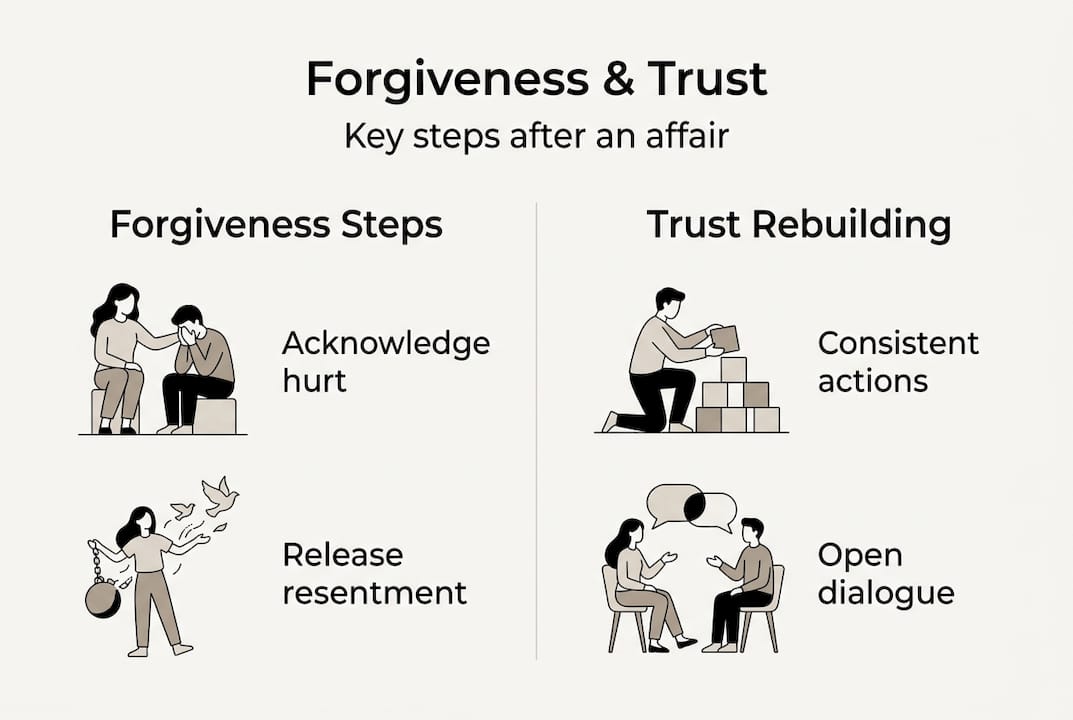
Cultivating forgiveness requires intentional effort and structured approaches. These steps provide a framework for developing forgiveness in yourself and supporting it in your relationship:
- Acknowledge the full impact of the betrayal without minimizing your pain or rushing to forgive prematurely
- Express your emotions honestly in safe contexts, whether through therapy, journaling, or conversations with trusted friends
- Practice empathic communication by listening to understand your partner’s perspective without excusing their behavior
- Rebuild trust through consistent, transparent actions over time rather than expecting immediate restoration
- Commit to ongoing healing as a long-term process that requires patience, self-compassion, and realistic expectations
- Seek professional support to navigate complex emotions and develop healthy forgiveness strategies
- Create new positive experiences together that aren’t defined by the affair’s shadow
Individual forgiveness work matters even when you struggle to forgive immediately. You can practice forgiveness as a personal healing choice before extending it relationally. This approach protects your emotional wellbeing while you process trauma at your own pace.
Some days forgiveness feels impossible. That’s normal and doesn’t mean you’re failing. Forgiveness often emerges gradually through small moments of letting go rather than one dramatic decision. Honor your emotional reality rather than forcing yourself to feel something you don’t.
Pro Tip: Focus on patience and self-compassion during your forgiveness journey to avoid common pitfalls like rushing the process or suppressing authentic emotions. Forgiveness that’s forced or premature often collapses under pressure, requiring you to restart the healing process. Genuine forgiveness develops naturally when you create the right conditions through honest emotional work.
Professional help significantly supports forgiveness development. Therapy that supports forgiveness is linked to 60-70% survival rates for couples after infidelity. Therapists provide structured frameworks, emotional validation, and expert guidance that accelerate healing while preventing common mistakes.
The infidelity recovery checklist 7 steps offers comprehensive guidance for navigating forgiveness alongside other recovery tasks. This resource helps you balance emotional processing with practical relationship repair.
Forgiveness requires joint effort when both partners commit to healing together. The unfaithful partner must create safety through transparency and accountability. The betrayed partner works on releasing resentment while maintaining healthy boundaries. Both invest in rebuilding emotional connection through quality time, vulnerable conversations, and shared experiences.
Sustaining forgiveness over time means treating it as an ongoing practice rather than a one-time event. You’ll encounter triggers, difficult anniversaries, and unexpected emotional setbacks. Each time you choose forgiveness again, you strengthen your capacity for resilience and deepen your healing.
Emotional healing after infidelity tips provides additional strategies for managing the emotional complexity of forgiveness work. How to cope after infidelity naturally offers complementary approaches that support forgiveness through holistic wellness practices.
Explore resources to support forgiveness and healing after an affair
Navigating forgiveness after infidelity requires more than willpower. You need structured guidance, evidence-based strategies, and compassionate support to successfully heal. After the Affair offers comprehensive resources designed specifically for couples and individuals working through betrayal recovery.
The infidelity recovery checklist 7 steps effective healing provides a complete roadmap for your forgiveness journey. This detailed guide walks you through each phase of recovery, from initial crisis management to long-term relationship transformation. You’ll find practical exercises, reflection questions, and expert insights that support genuine forgiveness development.
Explore additional resources addressing relationship growth after infidelity rebuild trust and therapeutic approaches through how to guide clients after infidelity. Our resource library offers expert guidance grounded in clinical experience and current research, helping you navigate forgiveness with clarity and confidence.
Frequently asked questions about forgiveness after an affair
How does forgiveness differ from forgetting an affair?
Forgiveness involves intentional emotional release and healing, not erasing memory or pretending the betrayal didn’t happen. You can fully forgive while still remembering what occurred. Forgiveness means choosing to process pain constructively rather than remaining trapped in bitterness, while maintaining awareness that protects you from future harm.
Can forgiveness lead to rebuilding trust?
Yes, forgiveness creates the emotional foundation necessary for trust restoration. Research shows forgiveness directly predicts trust recovery and works indirectly through emotional reconciliation. Without forgiveness, resentment blocks the vulnerability required for authentic trust. Forgiveness doesn’t guarantee trust will fully return, but it makes rebuilding possible.
What if I struggle to forgive my partner?
Struggling with forgiveness is completely normal after betrayal trauma. Forgiveness takes time and can’t be rushed or forced. Professional therapy provides crucial support for processing complex emotions and developing healthy forgiveness strategies. Practice self-compassion and recognize that forgiveness often emerges gradually through small moments of letting go rather than one dramatic decision.
Does forgiveness mean the relationship must continue?
Forgiveness benefits your individual wellbeing regardless of whether you choose to stay in the relationship or leave. You can forgive your partner while deciding the relationship no longer serves your needs. Forgiveness releases you from the emotional burden of resentment, supporting your healing whether you reconcile or move forward separately. It’s a gift you give yourself, not necessarily your partner.
How can couples support each other in forgiveness?
Couples support forgiveness through open communication, genuine empathy, and shared commitment to healing. The unfaithful partner must demonstrate consistent transparency, take full responsibility, and show authentic remorse. The betrayed partner practices expressing needs clearly while allowing space for gradual trust rebuilding. Both invest in creating new positive experiences together and seek benefits of therapy after infidelity to navigate challenges with professional guidance. Relationship growth after infidelity requires mutual effort, patience, and realistic expectations about the recovery timeline.
Recommended
- How to Guide Clients After Infidelity for Healing – After the Affair Series
- Healing together guide: rebuild trust after infidelity – After the Affair Series
- Effective tips for emotional healing after infidelity – After the Affair Series
- Transform after cheating: 7 steps to personal healing – After the Affair Series