TL;DR:
- Cheating men continue to sleep with their wives because the marriage and the affair fulfill different psychological functions simultaneously.
- Understanding that infidelity is driven by compartmentalization, fear, and unmet internal needs helps partners distinguish internal realities from assumptions.
- Why do cheating men still sleep with their wives?
- What emotional needs does an affair fulfill that marriage cannot?
- Why do men maintain sexual intimacy with their wives during an affair?
- How do marital dissatisfaction and personal struggles drive cheating behavior?
- What does this duality mean for you as a betrayed partner?
- Key Takeaways
- What I’ve learned from watching people rebuild after this specific kind of betrayal
- FAQ
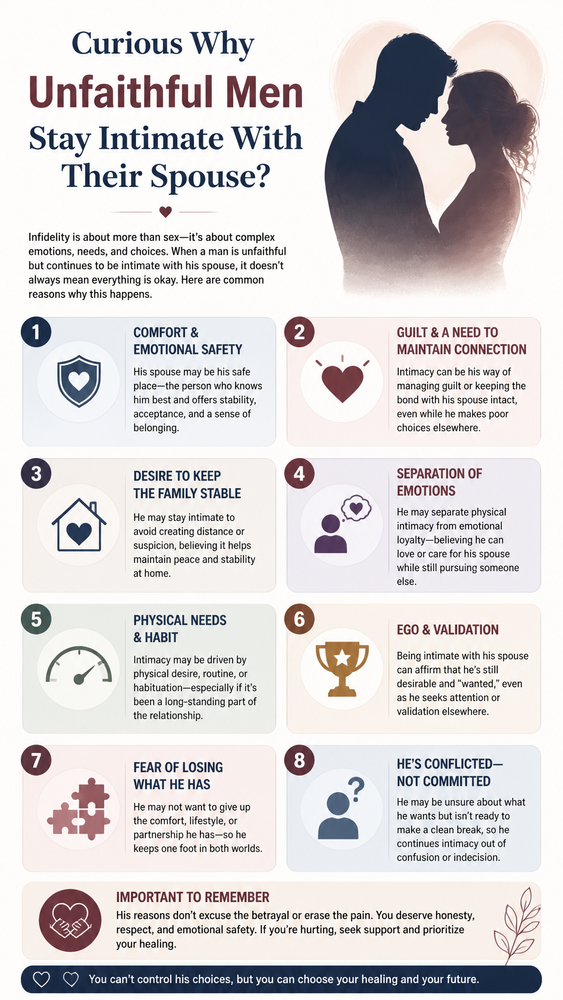
Cheating men continue to sleep with their wives because the marriage and the affair serve two entirely different psychological functions at the same time. Upwards of 40% of married couples face infidelity, with eight primary motivators identified including anger, low self-esteem, and lack of love. That statistic alone tells you this behavior is far more common than most people admit. The question of why cheating men still sleep with their wives is not about passion or preference. It is about compartmentalization, fear, and unmet internal needs that have little to do with how desirable or worthy a wife actually is. Understanding these motivations is the first step toward separating painful assumptions from psychological reality.
Why do cheating men still sleep with their wives?
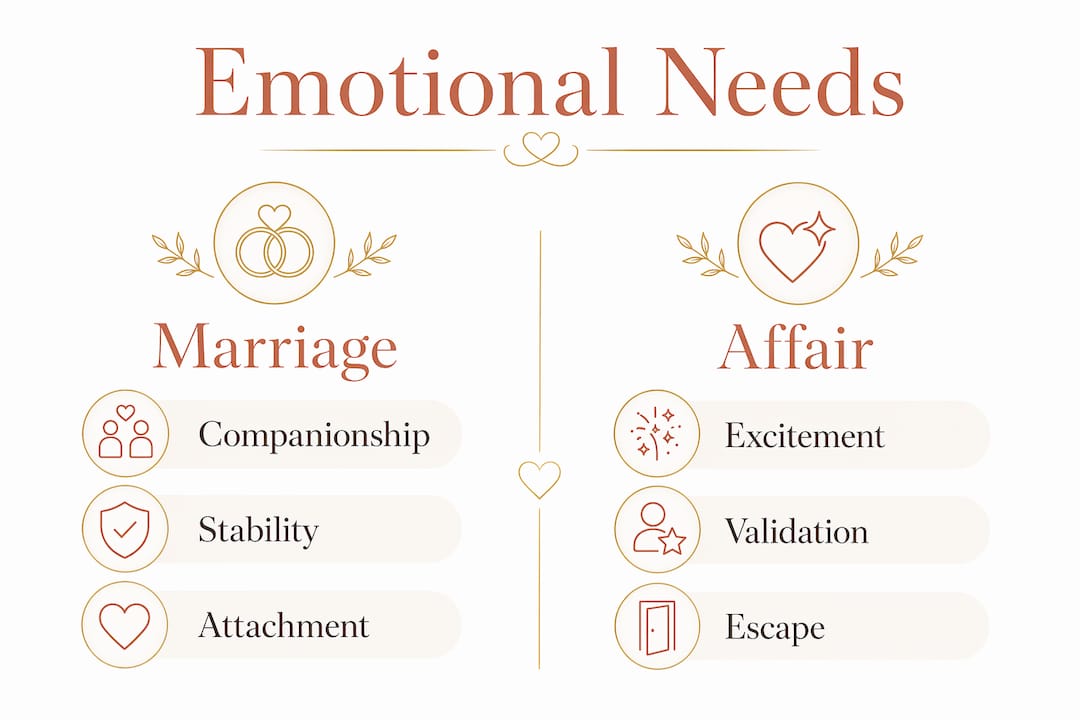
The short answer is that the marriage and the affair occupy separate psychological compartments. The affair does not replace the marriage. It runs alongside it, filling a different emotional slot entirely.
Affair partners typically fill a temporary psychological function rather than displacing the spouse as a better partner. That means the affair is not a referendum on the wife. It is a reflection of something the cheating man is trying to manage inside himself. Therapists describe this as a coping mechanism, not a love story.
The psychological term for this split is compartmentalization. A man can genuinely feel warmth and attachment toward his wife while simultaneously pursuing an affair partner for novelty, validation, or escape. These two experiences do not cancel each other out in his mind. They coexist in separate mental boxes, which is precisely why the behavior is so confusing to the betrayed partner.
Infidelity is a conscious choice linked to managing personal discomforts such as anxiety or fear rather than a direct reflection of the spouse’s worth. This is one of the most important reframes available to anyone trying to make sense of a partner’s betrayal. The cheating is about him. Not you.
What emotional needs does an affair fulfill that marriage cannot?
Affairs rarely begin because a man has fallen out of love. They begin because something inside him feels unmet, and the affair temporarily quiets that feeling.
Low self-esteem among cheating partners fuels a drive for external validation beyond the marriage. A new relationship offers the intoxicating experience of being seen as exciting, capable, and desirable again. That feeling is not something a long-term marriage can easily replicate, not because the wife is inadequate, but because familiarity naturally reduces novelty.
Common psychological needs that affairs temporarily satisfy include:
- External validation: Feeling admired and desired by someone new
- Escape from responsibility: A space with no bills, no parenting stress, and no history
- Emotional recognition: Being heard and understood without the weight of accumulated conflict
- Novelty and excitement: The neurochemical rush of a new connection
- A sense of control: Affairs can feel like the one area of life a man manages entirely on his own terms
Pro Tip: If your partner’s affair began during a period of high stress or personal failure at work or in identity, that context matters. It does not excuse the choice, but it does explain the timing.
Many cheating men feel lost internally and use affairs to temporarily numb feelings of inadequacy or anxiety rather than to end their marriages. The affair is a painkiller, not a replacement relationship. That distinction is worth holding onto when the confusion feels unbearable.
Why do men maintain sexual intimacy with their wives during an affair?
Continued sex with a wife during an affair is not evidence of love, and it is not evidence of indifference either. It is usually a product of practical anchors, psychological habit, and a calculated risk assessment that most cheating men do not even consciously recognize.
Logistical considerations such as children, homeownership, and financial ties often cause cheating men to remain in marriage while engaging in affairs. These are not small factors. They represent the entire architecture of a man’s daily life. Dismantling that structure is terrifying, even for someone who is actively betraying it.
Reasons men maintain sexual relations with their wives while having affairs include:
- Fear of divorce: The legal, financial, and social costs of separation are concrete and immediate
- Maintaining normalcy: Sex with a wife preserves the illusion that nothing has changed, reducing suspicion
- Genuine attachment: Long-term bonds do not disappear because an affair has started
- Avoiding loneliness: The marriage provides emotional stability that the affair, by its nature, cannot guarantee
- Protecting children: Many men rationalize continued intimacy as protecting family stability
The concept known as the “infidelity discount” describes a lowered perceived risk of losing the primary relationship, which enables ongoing cheating without triggering an immediate breakup. The man essentially recalibrates his internal risk meter. He tells himself the marriage is safe enough to sustain the affair. That recalibration is a form of self-deception, but it is a psychologically real one.
Pro Tip: Continued sexual intimacy during an affair does not mean your husband is satisfied in the marriage. It often signals the opposite: that he is too afraid of losing the marriage to stop performing within it.
For betrayed partners, recognizing betrayal trauma symptoms early can help distinguish between normal grief and the specific psychological injury that infidelity causes.
How do marital dissatisfaction and personal struggles drive cheating behavior?
Dissatisfaction with the marriage is the leading cause of infidelity, not novelty seeking. A survey of 138 men with affairs identified relationship dissatisfaction as the primary driver. That finding reframes the entire conversation. The affair is a symptom of something already broken, not the cause of the break.
The most common personal and relational factors that contribute to affairs include:
- Emotional neglect: Feeling unseen, unappreciated, or emotionally disconnected from a spouse over time
- Unresolved childhood trauma: Attachment wounds from early life often replay in adult relationships through avoidance or seeking external comfort
- Low self-worth: Men who do not feel adequate in their careers, bodies, or roles often seek affairs to restore a sense of value
- Unprocessed grief or loss: Major life transitions such as job loss, illness, or a parent’s death can destabilize identity and trigger risk-taking behavior
- Chronic anxiety: Some men use the intensity of an affair to regulate anxiety, the same way others use alcohol or overwork
Emotional neglect, unaddressed trauma, and childhood adversity increase the likelihood of infidelity through complex relational dynamics. This is not a character excuse. It is a clinical pattern. Understanding it helps betrayed partners stop asking “What did I do wrong?” and start asking the more accurate question: “What was he trying to avoid?”
Affair relationships often serve as compartmentalized psychological escapes, helping the cheating spouse deal with internal deficits like low self-worth or unprocessed trauma, entirely distinct from the functional marital relationship. The marriage handles the practical world. The affair handles the emotional wound. Neither relationship is complete. Both are being used.
What does this duality mean for you as a betrayed partner?
The confusion of continued intimacy during an affair is one of the most destabilizing parts of the betrayal experience. You may have had no idea anything was wrong. The sex may have felt normal, even loving. That gap between appearance and reality is its own form of trauma.
Understanding the psychological reasons behind this behavior does not excuse it. What it does is remove you from the center of the explanation. The affair was not about your inadequacy. It was about his internal state, his fears, and his coping strategies.
| Common misconception | Psychological reality |
|---|---|
| He kept sleeping with me because he loves me | Continued intimacy often reflects fear of losing the marriage, not active love |
| He had an affair because I wasn’t enough | Affairs are driven by internal dissatisfaction and personal deficits, not spouse failure |
| The affair partner must be better than me | The affair partner fills a temporary psychological role, not a superior relational one |
| He must have wanted to get caught | Most cheating men actively manage risk to preserve both relationships simultaneously |
| If he was unhappy, he should have just left | Fear of loss, financial ties, and children create powerful barriers to leaving |
Understanding the psychological and logistical reasons that keep cheating men in marriages helps betrayed partners separate facts from assumptions. That separation is not just intellectually useful. It is emotionally protective. When you stop carrying the weight of his choices, you free up energy for your own recovery.
Practical coping strategies after betrayal can help you process the specific confusion of continued intimacy during infidelity, including the grief, the anger, and the disorienting sense that reality was not what it appeared to be.

Key Takeaways
Cheating men maintain intimacy with their wives because the marriage and the affair serve separate psychological functions simultaneously, and dismantling one does not automatically end the other.
| Point | Details |
|---|---|
| Affairs fill internal voids | Cheating is driven by personal deficits like low self-esteem, not by a wife’s inadequacy. |
| Compartmentalization is the mechanism | Men mentally separate the affair and the marriage, allowing both to coexist without immediate collapse. |
| Logistics anchor men in marriage | Children, finances, and homeownership create powerful barriers to leaving, even during an affair. |
| The infidelity discount distorts risk | Cheating men recalibrate their internal risk meter to believe the marriage is safe enough to sustain the affair. |
| Understanding reduces self-blame | Knowing the psychological drivers helps betrayed partners stop internalizing a partner’s choices as their own failure. |
What I’ve learned from watching people rebuild after this specific kind of betrayal
The question I hear most often from betrayed partners is not “Why did he cheat?” It is “Why did he still want me if he was cheating?” That question carries so much pain. It implies that continued intimacy should have meant something. And it did mean something. Just not what most people assume.
What I have seen, working with people in the aftermath of infidelity, is that continued sex with a wife during an affair is rarely about desire in the romantic sense. It is about maintenance. It is about keeping the structure of a life intact while something else is happening in the shadows. That is a deeply unsatisfying answer, but it is an honest one.
The harder truth is that many cheating men genuinely do not want to lose their marriages. They want the marriage and the affair. That is not love in any healthy definition of the word. But it is also not the same as not caring. The stages of healing after an affair often require betrayed partners to hold both of those realities at once: he cared, and he still chose to betray you. Both things are true.
What I find most powerful is when a betrayed partner stops trying to make the cheating make sense in terms of their own worth, and starts seeing it as information about his internal world. That shift does not happen overnight. But when it does, it changes everything about how recovery feels.
— S.J.Howe
Support and resources for healing after betrayal
Discovering that a partner has been unfaithful while continuing to share a bed with you is a specific and disorienting kind of pain. The confusion is real, and it deserves structured, evidence-informed support.
Aftertheaffair offers a 7-step infidelity recovery checklist designed specifically for betrayed partners who need a clear path through the early chaos of discovery. The resources are built around the psychological realities of betrayal, not generic relationship advice. For those working through the deeper layers of trauma, the online affair recovery for couples section offers structured guidance for both partners. If you are also navigating the impact on children, Aftertheaffair addresses supporting kids through family disruption with the same evidence-grounded approach.
FAQ
Why do cheating men continue to have sex with their wives?
Continued sexual intimacy with a wife during an affair is usually driven by fear of losing the marriage, logistical ties like children and finances, and the psychological habit of maintaining normalcy. It is rarely a sign of active romantic love and more often a sign of compartmentalization and risk management.
Do cheating husbands still love their wives?
Many cheating husbands do retain genuine attachment to their wives, but that attachment coexists with the affair rather than preventing it. Infidelity is a coping mechanism for managing internal discomfort, not necessarily a sign that love has ended.
What are the main reasons men cheat while staying married?
The leading reasons men cheat include low self-esteem, emotional dissatisfaction, a need for external validation, fear of confronting marital problems directly, and logistical barriers to leaving the marriage.
What is the infidelity discount?
The infidelity discount is a psychological concept describing how cheating men lower their perceived risk of losing the primary relationship, which allows them to pursue an affair without triggering an immediate decision to leave the marriage.
Can understanding why men cheat help with healing?
Yes. Separating the psychological drivers of infidelity from assumptions about personal worth reduces self-blame and creates space for clearer emotional processing and recovery.
Recommended
- Why Do Cheaters Stay? The Truth About What Your Spouse Really Wants – After the Affair Series
- Why People Cheat: Psychology of Infidelity Explained
- Will a Married Partner Leave Their Spouse? A Realistic Guide – After the Affair Series
- Stay or Leave After Cheating – After the Affair Series