Finding betrayal trauma recovery resources that offer both practical exercises and personalized guidance without committing to a vague or generalized approach is difficult. Many sources provide either broad theoretical advice or require upfront payment before showing their full program details or pricing. This comparison names five betrayal trauma recovery resources with different structures and audiences so readers can match a source to their own needs for evidence, support, or counseling.
Table of Contents
- After the Affair Series
- Survive Your Partner’s Affair
- Beyond Affairs
- Affair Healing
- Women’s Infidelity
- Comparison of Alternatives
After the Affair Series
At a Glance
A step-by-step framework aligns every module to one of the 7 Types of Infidelity Framework, mapping tasks to specific betrayal patterns. The authors describe clinical expertise and lived experience as the foundation for the series. The materials combine staged recovery timelines with practical exercises and case studies.
Core Features
The collection uses a type-specific approach that ties each module to a betrayal profile while offering trauma-aware guidance across recovery stages. Actionable exercises and reflection prompts appear alongside real-life case studies and detailed Q&A sections. Personalized intervention strategies adapt content for individuals, couples, or clinicians working with clients.
Key Differentiator
The defining feature is the structured, step-by-step framework that matches recovery modules to distinct types of infidelity. That structure lets readers find targeted strategies rather than generic advice. Clinical concepts are translated into hands-on exercises and staged checkpoints for emotional stabilization and trust rebuilding.
Pros
The series provides holistic, stage-based guidance covering immediate safety through long-term growth, and it pairs practical exercises with reflection prompts for measurable progress. The trauma-informed methods support emotional stabilization, and the personalized strategies make it easier to apply interventions for different betrayal scenarios. Resources work for individuals, couples, and mental health professionals who want a repeatable clinical framework.
Cons
- Pricing details are not provided on the website, so cost evaluation requires contact or purchase inquiry.
Who It’s For
Adults aged 30-50 recovering from betrayal who want evidence-informed, practical plans will find this most useful. Couples working to rebuild trust and therapists or coaches seeking a clinical framework will also benefit. People looking for quick fixes or minimal intervention are a poor match.
Unique Value Proposition
The 7 Types of Infidelity Framework maps each recovery module to a clear betrayal profile, so readers skip one-size-fits-all steps and go straight to targeted work. That focused mapping reduces guesswork for therapists and shortens the time spent tailoring exercises. The format converts clinical concepts into usable tools for in-session or self-directed work.
Real World Use Case
A person newly informed of a partner’s affair identifies which type of betrayal applies, follows staged recovery steps, and uses targeted exercises to stabilize emotions. A therapist assigns case-study readings and module exercises between sessions to reinforce trust rebuilding. The Q&A sections address common stumbling blocks encountered during the early weeks.
Pricing
Pricing is not listed on the site. The offering generally involves purchasing digital books and companion resources, and specific cost details require contacting the publisher or checking sales pages. No subscription tiers are publicly listed.
Website: https://aftertheaffair.uk
Survive Your Partner’s Affair
At a Glance
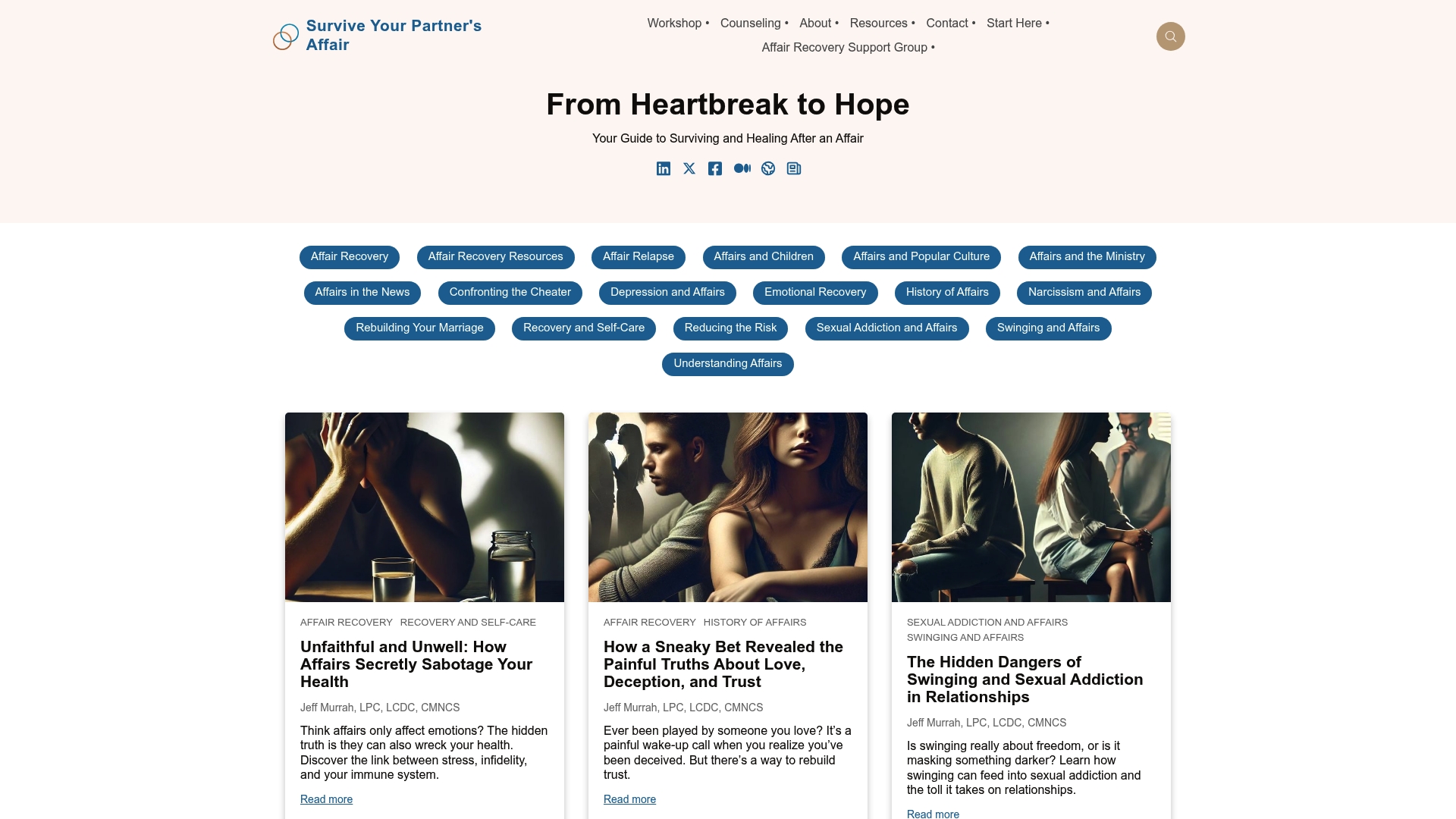
Jeff Murrah, LPC, LCDC, founded the site and leads its counseling-focused content and services. The platform blends articles, workshops, and support groups aimed at affair recovery and trust rebuilding. The material also examines relapse, children’s impact, and cultural factors that influence infidelity.
Core Features
Survive Your Partner’s Affair publishes articles and posts that cover emotional healing, confronting infidelity, and related topics, and it pairs that writing with workshops and counseling services tailored to couples and individuals. The site hosts support groups to provide ongoing peer accountability and offers resource lists including books and recovery guides. Counseling options and workshop schedules are presented alongside practical steps for addressing relapse and family effects.
Key Differentiator
The site centers clinical counseling as the organizing principle, combining therapist-led guidance with peer support and written resources. That blend gives people both one-on-one therapeutic options and community-based check ins. The approach explicitly notes emotional recovery, underlying causes, and faith perspectives in its material.
Pros
Survive Your Partner’s Affair offers clear clinical leadership under Jeff Murrah, which lends professional context to the articles and group work. The mix of articles, workshops, and support groups gives people multiple access points to care, from reading to active participation. The content integrates personal experience with research and biblical principles, so readers looking for faith-informed resources will find consistent guidance.
Cons
- The content is primarily online; in-person support may be limited depending on where you live.
- Results depend heavily on individual commitment and willingness to follow recommended work and counseling.
- The program asks for sustained emotional effort, which can be hard while someone is in acute distress.
When It May Not Fit
This site may not fit someone who needs immediate face-to-face therapy in their local area. The online format makes local referral and in-person scheduling inconsistent for some readers. People unwilling to engage emotionally or to follow through with counseling and group work will not get the most from the material.
Who It’s For
Partners and couples dealing with recent or past infidelity who want therapist-informed resources and community-based support will benefit most. Individuals seeking help that integrates clinical counseling and faith-based perspectives will find relevant material. Those who prefer entirely secular or purely academic treatment may want a different match.
Real World Use Case
A couple who discovered an affair uses the site to find online counseling and joins a weekly support group while reading targeted articles on relapse prevention. They attend a workshop to learn communication tools and consult recommended recovery guides between sessions. The combined counseling and group rhythm helps them maintain accountability and apply the reading to real conversations.
Website: https://surviveyourpartnersaffair.com
Beyond Affairs
At a Glance
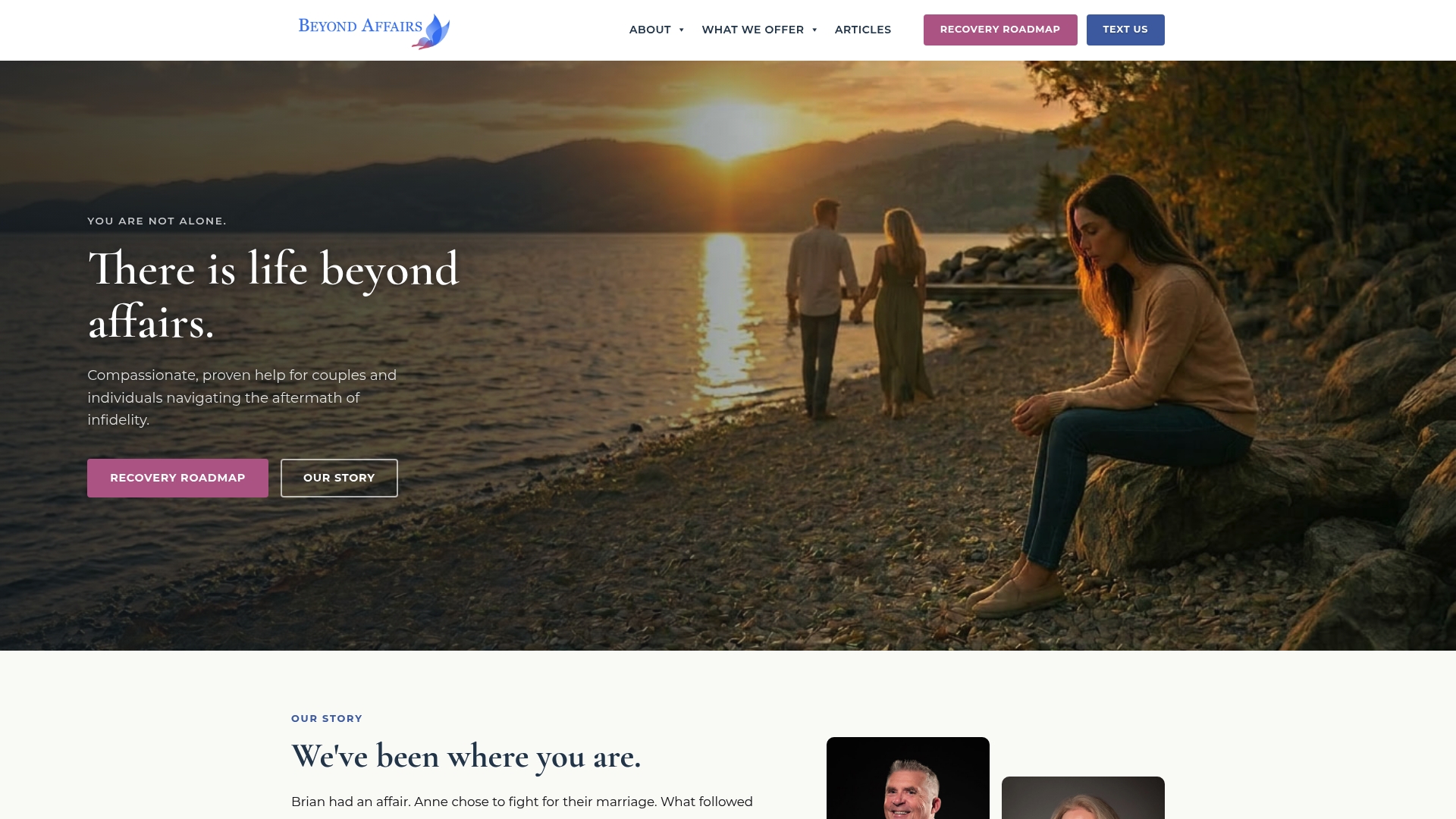
Anne and Brian Bercht overcame infidelity in their own marriage and now run retreats, coaching, and courses focused on recovery. Their approach centers on experiential work that asks for active participation and honesty. Many people come for concentrated retreats that accelerate the practical steps of rebuilding trust.
Core Features
Beyond Affairs combines one-on-one and couples coaching with immersive retreats and self-guided materials, including books and online courses. The catalog includes a named curriculum for home study and public speaking engagements that train professionals on affair recovery. Facilitators bring personal lived experience to sessions, and the community element expands through an active network for peer support.
Key Differentiator
The founders’ own recovery story shapes program design and facilitation in ways few peer offerings match. That lived experience shows up in facilitation style, exercises used in retreats, and the framing of difficult conversations between partners. For readers seeking guidance from facilitators who have worked the same issues personally, this focus will feel direct and familiar.
Pros
Beyond Affairs reports a high success rate in helping couples rebuild or find closure. The service mix spans coaching, retreats, online courses, and books, which lets people pick short or deep engagement paths. The community support through the Beyond Affairs Network complements guided work, while Immersive retreats and the Healing from Affairs at Home course provide structured options for different commitment levels.
Cons
- No publicly listed pricing. Prospective participants must inquire to learn exact fees before committing.
- Requires active commitment and long-term effort. The programs do not suit people seeking a quick or passive fix.
- Focus is mainly on infidelity and betrayal. Those with other relationship issues may find the scope limited.
When It May Not Fit
If you need immediate, brief advice without ongoing work, this program will not match that need. If your primary relationship concerns do not involve betrayal, the material will feel narrowly focused. If transparent, upfront pricing is essential for your decision process, you should plan to request a consultation before proceeding.
Who It’s For
Individuals and couples committed to working through betrayal will get the most from this offering. People who value facilitators with personal recovery experience and who prefer experiential formats will find the style appropriate. Professionals seeking training or speaking on affair recovery will also benefit from the founders’ public speaking and training options.
Real World Use Case
A couple discovers an affair and chooses a weekend retreat to create a held space for honest disclosure and facilitated repair work. They follow the retreat with monthly coaching and the home course to maintain progress between sessions. Others enroll in the online course and join the community to process betrayal when in-person retreats are not an option.
Website: https://beyondaffairs.com
Affair Healing
At a Glance
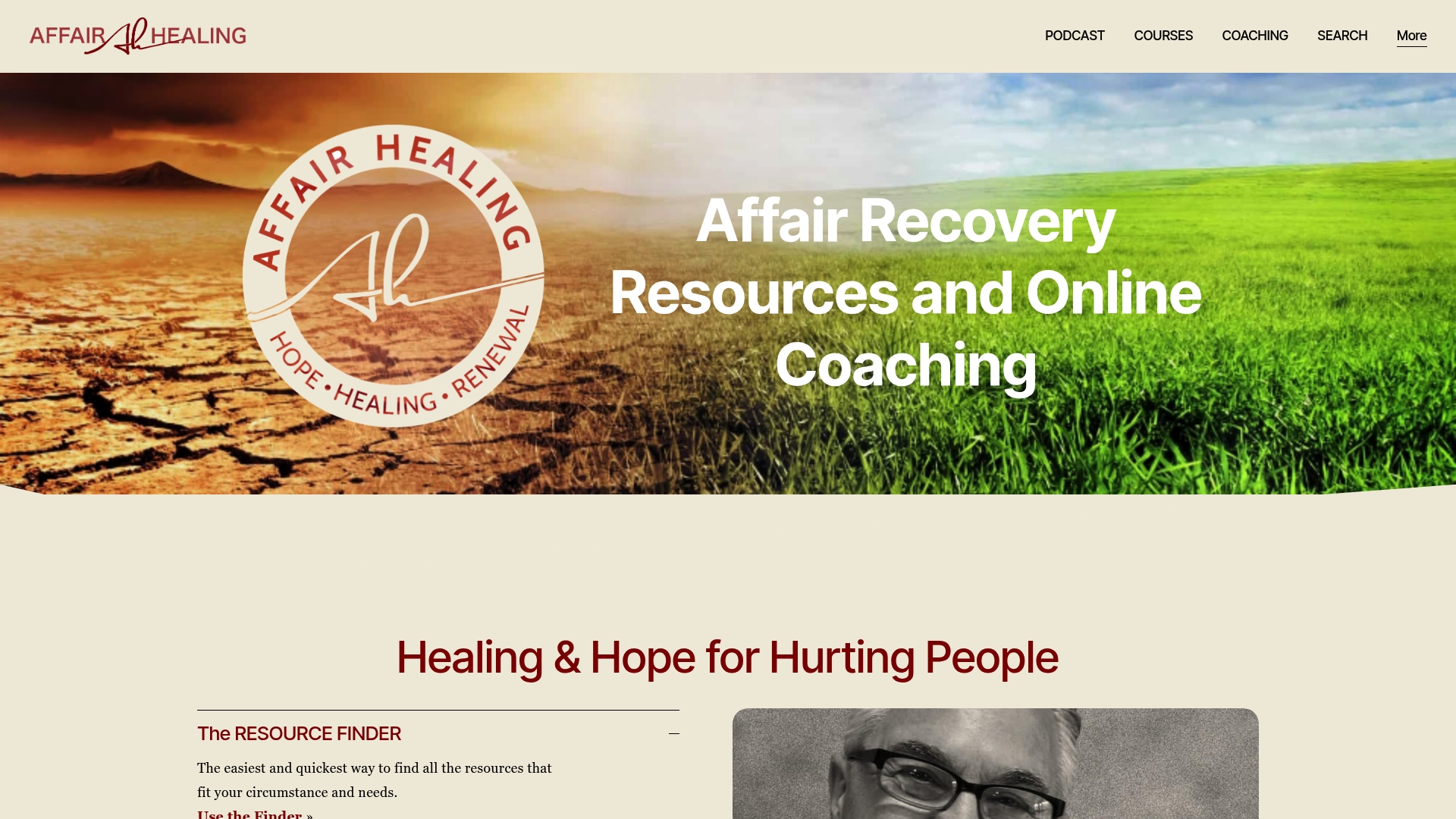
Affair Healing’s materials state its counselors have over 20 years of specialized practice in infidelity recovery. The site pairs free articles, podcasts, and real stories with paid online courses and one on one coaching. Materials emphasize hope, healing, and renewal while following therapist developed methods.
Core Features
A resource finder helps people locate tailored support options and community nodes across topics and stages. The site bundles online courses with video coaching and a searchable library of articles, podcasts, and real stories. Users can book personal coaching sessions with licensed counselors who focus on betrayal trauma recovery.
Key Differentiator
The vendor says the material combines research backed methods developed by licensed therapists with direct coaching. That mix targets both education and guided emotional work. Counselor led coaching ties course lessons to practical coping steps and relational repair tasks.
Pros
Affair Healing covers a spectrum of support from free resources to paid courses and coaching. That tenure in counselor practice supports work with betrayal trauma and complex trust repair. The resource mix serves people who prefer self paced learning and those who benefit from live counselor guidance. The site is accessible worldwide and provides tailored material for different relationship stages.
Cons
- Focuses mainly on infidelity and betrayal trauma, so broader relationship issues get less coverage.
- Program pricing details are scarce on the site. You must contact staff to get exact costs.
- No consolidated third party review summaries appear on the site to gauge effectiveness from independent perspectives.
When It May Not Fit
This offering focuses on betrayal and will feel narrow for couples seeking general relationship counseling. People who want clearly published program pricing will need to contact the team or look elsewhere. Those seeking large samples of independent user reviews should expect limited third party summaries on the site.
Who It’s For
This is for individuals and couples coping with betrayal or an active affair who want structured learning and counselor support. It fits readers who value therapist developed material plus opportunities for one on one coaching. The platform also suits involved partners trying to understand their role and heal.
Real World Use Case
A partner who discovers an affair can start with free articles and podcasts to stabilize emotions. They can enroll in a course to learn concrete repair steps and then book coaching to apply those steps. Community stories offer perspective while counselor sessions focus on trauma processing and next steps.
Website: https://affairhealing.com
Women’s Infidelity
At a Glance
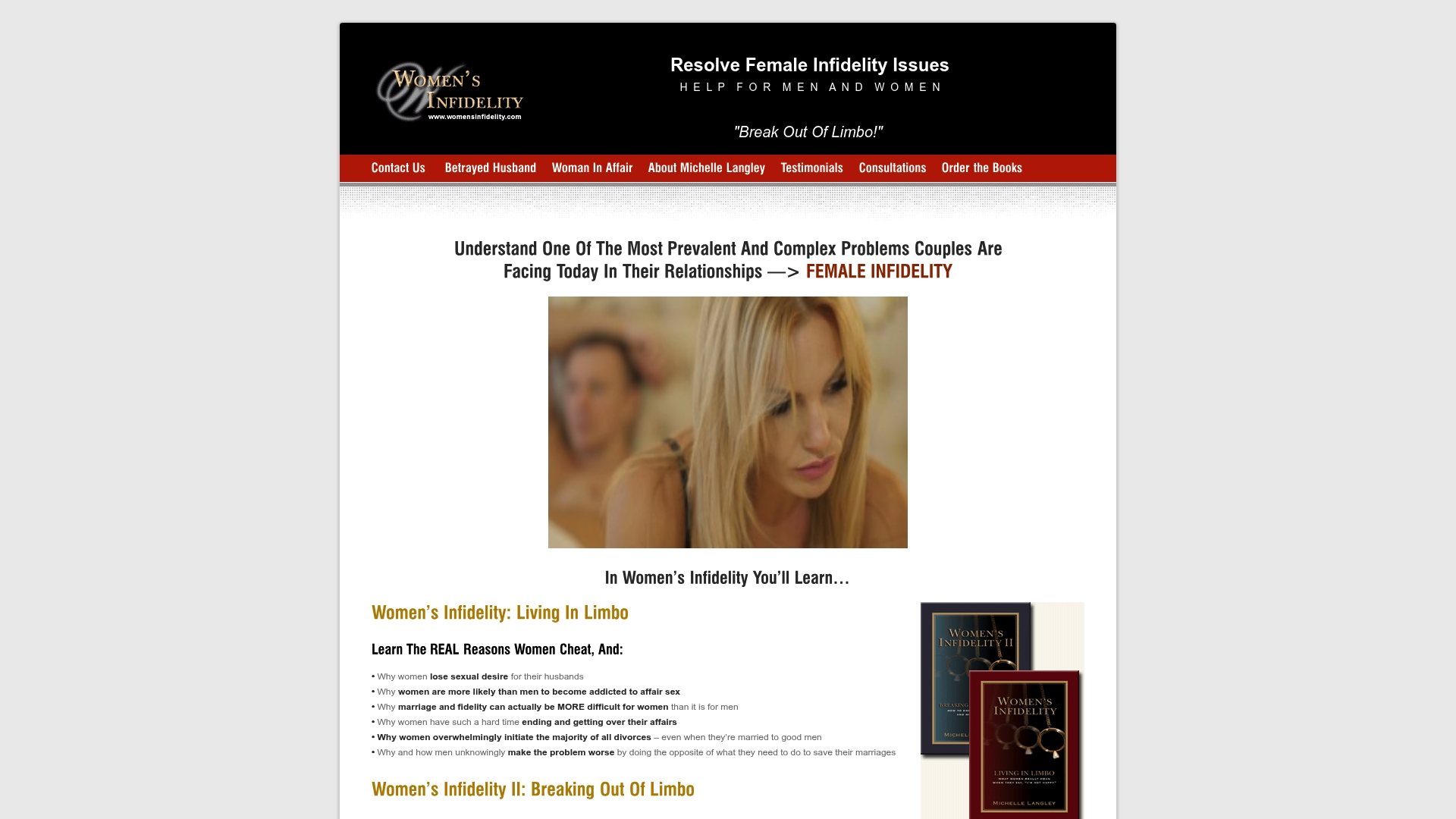
A focused library of books and courses maps the stages women go through during and after affairs. The site pairs those materials with private consultations and structured online lessons to move people from confusion toward decisions. Professionals in relationship counseling frequently cite the program as a practical resource for clients.
Core Features
The resource set centers on books that explain female infidelity stages and motives, and on step by step guidance to handle betrayal and rebuild trust. It also offers private consultations and multiweek online courses for men and women who want guided support. The materials include advice on ending marriages or extramarital affairs when that course suits a person or couple.
Key Differentiator
The most distinctive element is the narrow focus on women’s infidelity stages combined with action oriented guidance and many personal testimonials. The site reports endorsements from counselors and therapists worldwide. That focus makes the content particularly useful for people who need stage based explanations rather than general relationship theory.
Pros
The materials draw on interviews and research to deliver expert insights that read as grounded and pragmatic. That recommendation claim from professionals shows up in referral patterns among some counselors. The offering mixes reading material, courses, and one on one consultations so people can choose quiet study or direct feedback. The step by step framing keeps advice concrete and usable during emotional moments. Support is explicitly aimed at both partners, so men and women find tailored guidance.
Cons
- Not a licensed medical or psychological service. Michelle Langley is not a doctor or psychologist, so clinical treatment is not provided.
- Legal and separation advice may not translate across different countries and court systems.
- Some readers report highly personal emotional detail that can feel triggering or too intimate for casual readers.
When It May Not Fit
People who need licensed mental health treatment should seek a psychologist or psychiatrist instead. Those looking for verified clinical outcomes or formal therapy credentials will find the offering lacking. If quick legal answers about divorce are the priority, this resource will not replace local legal counsel. Success depends on personal commitment and the specifics of each case.
Who It’s For
People experiencing or suspecting infidelity who want clear explanations of female behavior will find direct value. Couples deciding whether to reconcile or separate can use the course structure and consultations to work through options. Men aiming to rebuild a marriage and women needing emotional processing both match the stated audience.
Real World Use Case
A husband who suspects his wife of an affair reads the books to identify likely stages and then books a consultation to ask targeted questions. A woman who had an affair uses the online course to sort feelings and plan next steps. A couple takes a course together and follows the step by step exercises before committing to counseling.
Website: https://womensinfidelity.com
Comparison of Alternatives
Recovering from betrayal trauma requires tailored approaches to meet individual needs, and AfterTheAffair.uk excels in providing a structured framework for managing diverse infidelity types effectively. Below, we explore key distinctions among these offerings for betrayal trauma recovery.
Tailored Framework vs Experiential Learning
AfterTheAffair.uk employs a deliberate modular approach, enabling users to work through the intricacies of betrayal by type, such as emotional, financial, or physical infidelity. This targeted methodology ensures readers address individual circumstances with precision. In contrast, Beyond Affairs emphasizes experiential learning through immersive retreats and coaching, providing direct interpersonal support rooted in the facilitators’ lived experiences. Both methods target recovery, but their focus—structured tasks versus active engagement—caters to different preferences.
Accessibility of Resources
While platforms like Survive Your Partner’s Affair and Affair Healing provide digital articles, courses, and group support, they emphasize wide-ranging accessibility with free and paid options to suit diverse scenarios. Women’s Infidelity distinguishes itself with unique gender-specific insight, drawing from interviews and case studies to offer stage-based explanations of motives and decisions in infidelity cases. Users seeking straightforward narratives will find these resources valuable but less adaptable than AfterTheAffair.uk’s type-focused modules.
Best Fit
- Structured recovery plans: Adults aged 30-50 coping with varied betrayal types will find the staged modules of AfterTheAffair.uk the best match due to tailored exercises and insights.
- Active experiential retreats: Couples committed to hands-on learning should consider Beyond Affairs for its retreats and coaching that foster honesty and closure.
- Free, accessible resources: Individuals preferring independent study alongside professional reliability can use Affair Healing’s articles and global support framework.
- Gender-specific insights: Readers impacted by female infidelity stages will align well with Women’s Infidelity’s step-by-step explanations.
- Support groups with faith inclusion: Users desiring therapist-led, faith-informed group resources should explore Survive Your Partner’s Affair.
Our Pick
For individuals seeking clinically validated, betrayal type-specific guidance that advances recovery across stages while emphasizing resilience, AfterTheAffair.uk stands as the top choice for structured, universal solutions. However, for readers favoring fully immersive experiential work or faith-based interventions, Beyond Affairs and Survive Your Partner’s Affair offer capabilities better suited to those themes.
The following table highlights the distinctive features of betrayal trauma recovery resources to aid in selecting a suitable option.
| Product Name | Primary Feature | Key Differentiator | Best For | Pricing | Notable Limitation |
|---|---|---|---|---|---|
| Aftertheaffair | Type-specific guidance, staged recovery | 7 Types of Infidelity framework for targeted strategies | Adults, couples, and clinicians | Price not published | Pricing details require direct inquiry |
| Survive Your Partner’s Affair | Articles, workshops, support groups | Therapist-led guidance with peer support | Couples seeking online counseling with a counselor and group themes | Price not published | Limited in-person support |
| Beyond Affairs | Coaching, retreats, and courses | Recovery process informed by lived experience | Experiential learners and committed couples | Price not published | Requires long-term active participation and effort |
| Affair Healing | Free resources, online courses, coaching | Research-driven therapy developed by licensed counselors | Betrayal trauma survivors | Price not published | Narrow focus on infidelity and betrayal trauma |
| Women’s Infidelity | Courses and consultations focused on women’s perspectives | Specialized in female infidelity with stage-based guidance | Those focused on female infidelity stages | Price not published | Lack of licensed clinical or psychological services |
Finding Reliable Alternatives for EmotionalAffair.org Challenges
Many adults aged 30–50 and couples struggling with betrayal seek focused, practical support tailored to specific infidelity types. Emotionalaffair.org alternatives can feel scattered or too general, leaving people unsure where to turn for clear guidance. Aftertheaffair offers a structured recovery framework aligned with Affair Types & Signs – After the Affair Series. This helps readers pinpoint their betrayal pattern and apply targeted healing steps rather than generic advice.
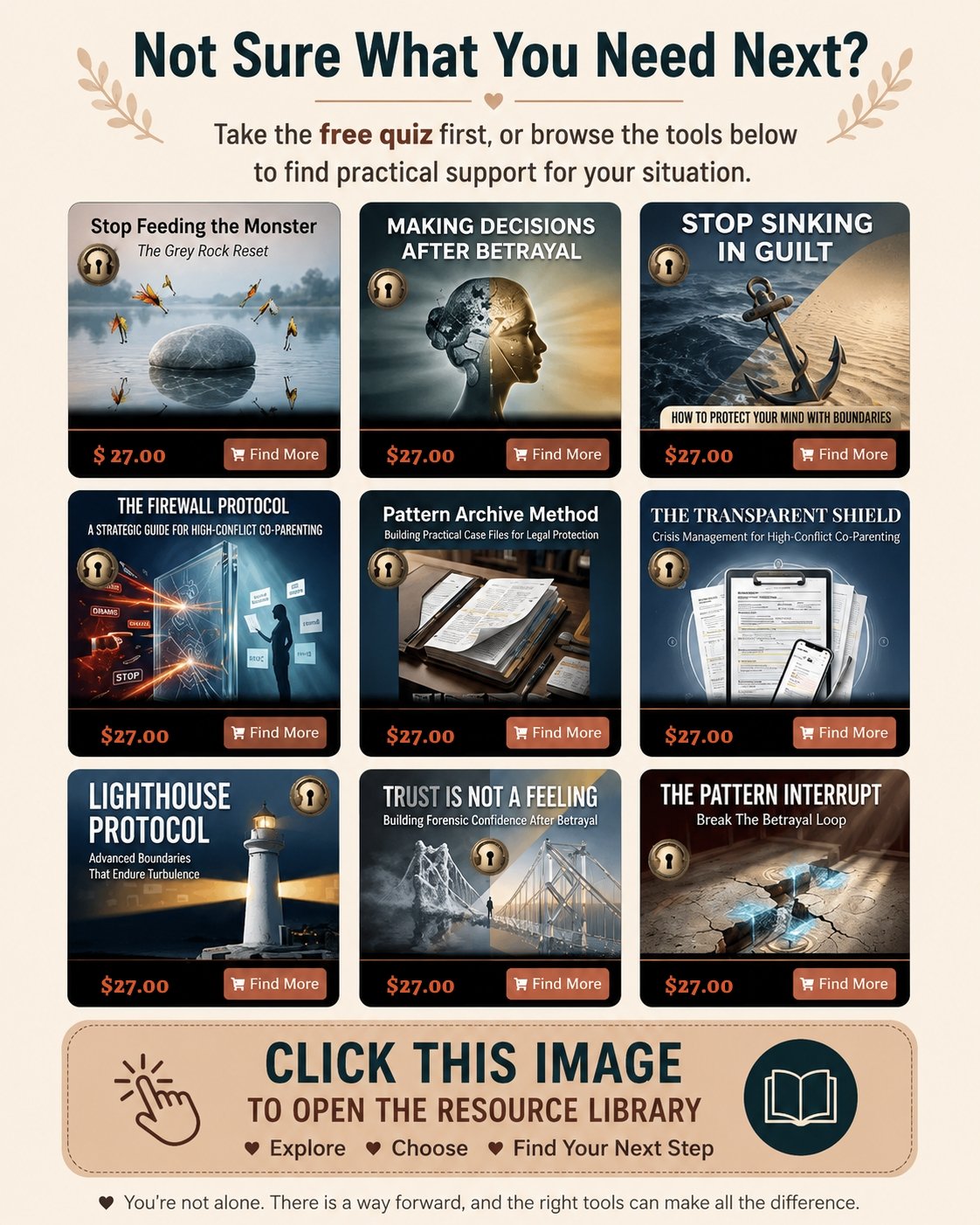
Explore the Essential Crisis Guides and resources for handling children’s struggles after infidelity at Helping Your Children – After the Affair Series. Visit https://aftertheaffairhub.com to access evidence-informed materials designed to support emotional recovery and ongoing trust rebuilding with clear, practical plans you can trust.
FAQ
What is Aftertheaffair’s approach to betrayal trauma recovery?
Aftertheaffair offers a structured, step-by-step framework that aligns recovery modules to specific types of infidelity. This aligns each task to the 7 Types of Infidelity Framework, enabling users to find targeted strategies for their situation. Users can expect personalized guidance tailored to their unique experiences.
How does Survive Your Partner’s Affair compare to Aftertheaffair in terms of support?
Survive Your Partner’s Affair excels in providing a mix of articles, workshops, and peer support groups aimed at affair recovery. While it focuses on community-based support, Aftertheaffair stands out by offering targeted interventions through its type-specific approach that addresses individual and couple needs. Users should select the resource that best fits their preferred method of support.
Which platform offers more comprehensive exercises for rebuilding trust?
Aftertheaffair generates actionable exercises and reflection prompts that accompany real-life case studies. This practical approach allows users to engage deeply with their recovery process. Readers can expect structured exercises that help facilitate emotional stabilization and trust rebuilding, making it a suitable choice for those committed to the process.
Can I benefit from Aftertheaffair if I’ve experienced multiple types of betrayal?
Yes, Aftertheaffair’s 7 Types of Infidelity Framework allows users to tailor their recovery based on different betrayal experiences. This flexibility helps individuals and couples navigate complex feelings related to various types of infidelity effectively. Users with diverse experiences will find practical steps that are relevant to their specific healing journeys.
What additional resources accompany Aftertheaffair’s core materials?
Aftertheaffair pairs its primary resources with case studies and detailed Q&A sections. This comprehensive structure enhances understanding and provides immediate support for those dealing with betrayal trauma. Readers can look forward to a well-rounded approach that combines theory with practical applications.
Recommended
- Top 5 Surviving-the-Affair.com Alternatives in 2026 – After the Affair Series
- Top 5 alternativas a beyondaffairs.com 2026
- Top 5 alternativas a womensinfidelity.com 2026
- Top 5 Alternativen zu beyondbetrayalrecoverybook.com 2026