Table of Contents
- Co-Parenting Strategies After Parental Betrayal: A Structured Approach
- Establish Consistent Routines and Schedules
- Co-Parenting Boundaries After Betrayal
- Co-Parenting Scripts After Infidelity
- Parallel Parenting After Betrayal
- Talking to Children About Infidelity
- Managing Your Emotions and Seeking Support
- Documentation and Legal Considerations
- Frequently Asked Questions
Last Updated: October 11, 2026
Co-Parenting Strategies After Parental Betrayal: A Structured Approach
Discovering a partner’s infidelity shakes everything. Your sense of safety crumbles, your trust evaporates, and then comes the hardest part: figuring out how to co-parent with someone who betrayed you.
This isn’t just about managing anger. It’s about protecting your children from the fallout while you rebuild stability. Co-parenting strategies after parental betrayal require a different framework than standard advice. You can’t pretend the betrayal didn’t happen, and you can’t let your children become caught in the wreckage.
The parents who stabilize fastest aren’t the ones who forgive quickest, they’re the ones who establish clear structures, use specific communication tools, and separate emotional recovery from parenting decisions.
This guide covers routines that protect your children, boundaries that hold, scripts that keep conversations focused on parenting, and when parallel parenting becomes necessary.
Establish Consistent Routines and Schedules
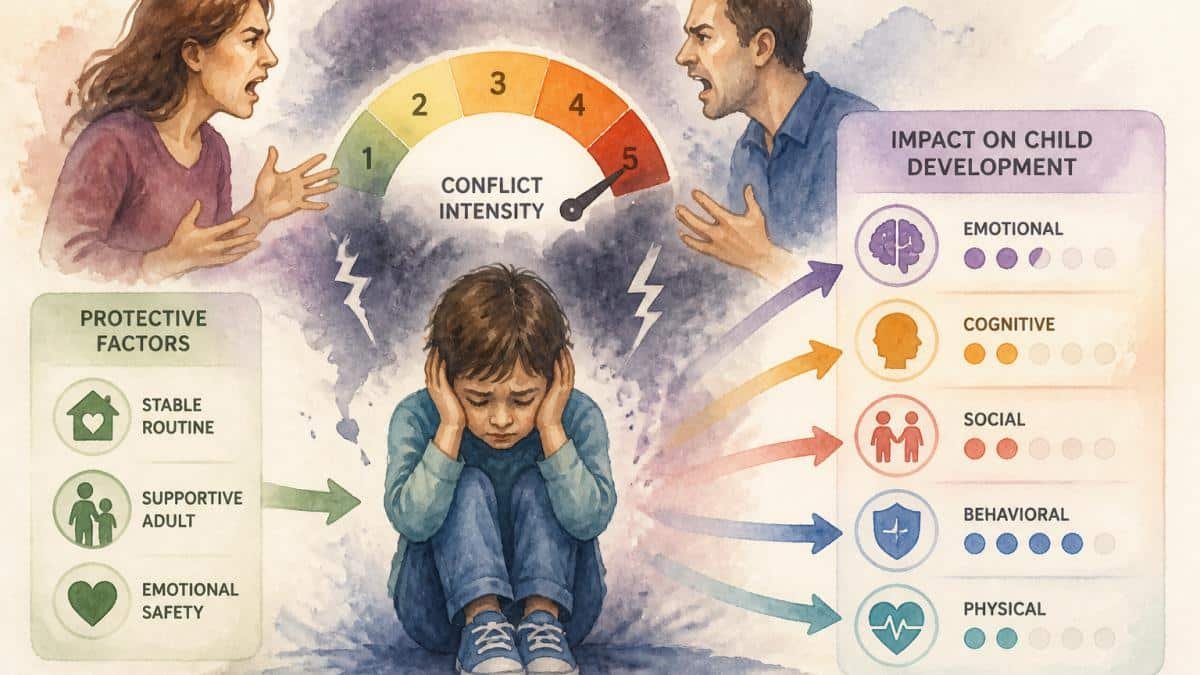
Your children need predictability more than ever. Betrayal disrupts the family system, and when routines dissolve, children feel that instability acutely.
Consistent routines reduce anxiety and give children a sense of control. They know what happens next and that bedtime happens at 8 PM at either house.
Start here:
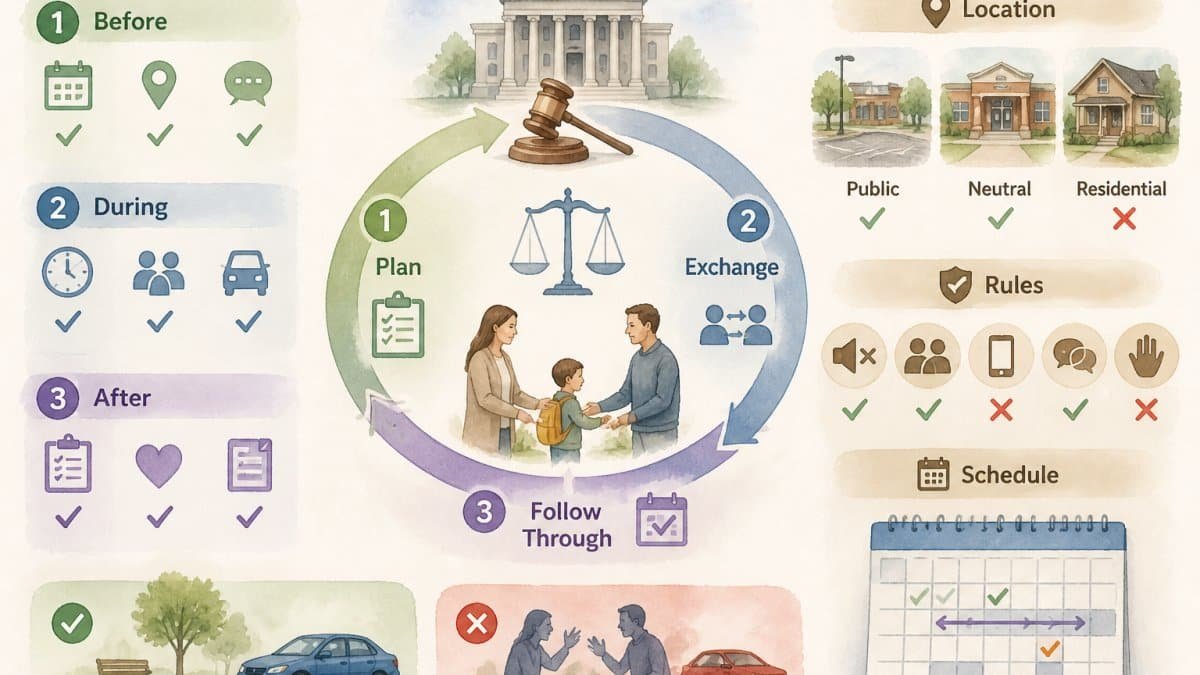
- Create a written custody schedule that covers weekdays, weekends, holidays, and school breaks. Use a shared calendar app so both parents see the same information.
- Align bedtimes, meal times, and homework routines across both households. Children shouldn’t go to bed at 7 PM at one house and 10 PM at the other.
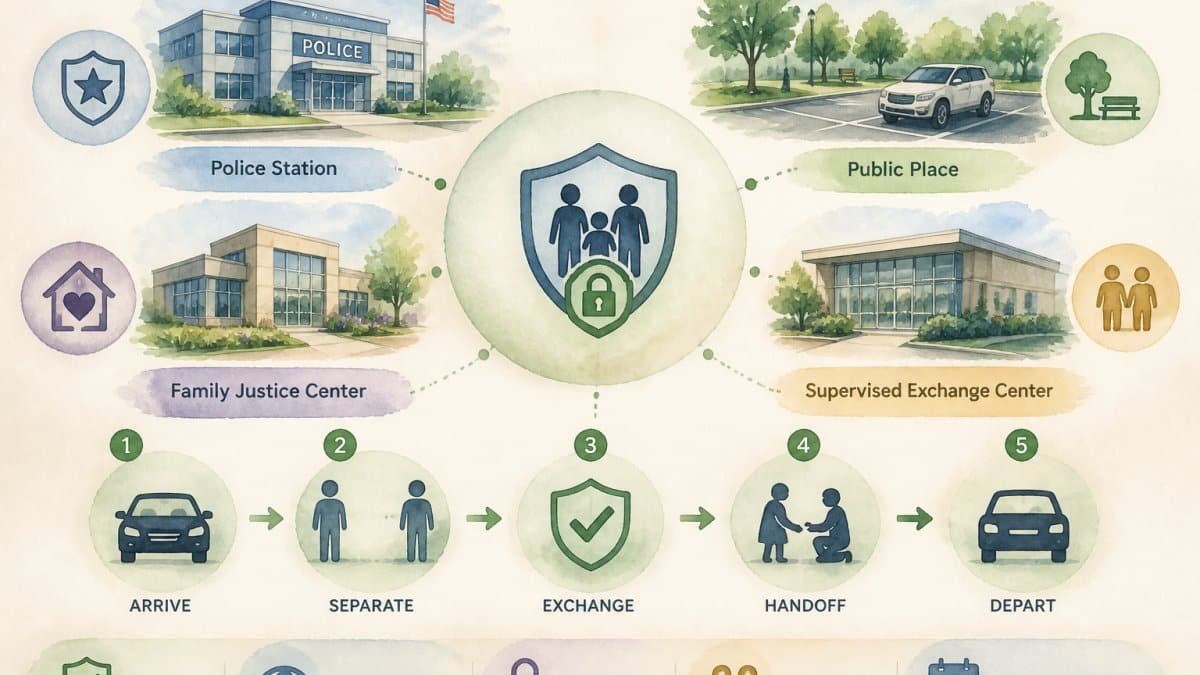
- Document transitions clearly. Specify pickup times, drop-off locations, and what happens if someone is late. Write it down rather than relying on memory or text exchanges that spiral into conflict.
- Keep routines stable even when emotions are high. Your child’s soccer practice doesn’t stop because you’re angry.
- Plan around major events. For birthdays, school performances, and holidays, decide in advance who attends and what happens if the event falls on the other parent’s custody time.
The goal isn’t perfection. It’s predictability. Children who know what’s coming next recover faster.
Co-Parenting Boundaries After Betrayal
Boundaries are the skeleton of functional co-parenting after betrayal. Without them, old conflicts resurface and parenting conversations become opportunities to rehash relationship issues.
A boundary is a limit on what you will and won’t accept. It’s protection, not punishment.
- Keep conversations about parenting only. Your ex’s personal life, your relationship history, and your feelings about the betrayal don’t belong in co-parenting discussions. If a conversation drifts there, stop it: “This isn’t about parenting. I’m not discussing this.”
- Use written communication for important decisions. Email or a co-parenting app creates a record and gives you time to think before you type.
- Don’t discuss the betrayal with your children. Ever. Not when you’re angry, not to justify your decisions. Your children need to maintain their own relationship with their other parent.
- Separate financial matters from parenting. Child support, alimony, and property division belong in legal conversations, not custody or school discussions.
- Don’t use children as messengers. Don’t ask them to relay information, money, or messages, and don’t ask them to spy or report back.
- Establish response time expectations. “I will respond to co-parenting messages within 24 hours on weekdays.” Then stick to it, preventing the spiral where unanswered messages trigger escalation.
Boundaries feel harsh at first. They’re not. They’re the difference between co-parenting that works and co-parenting that keeps reopening the wound.
Co-Parenting Scripts After Infidelity
When emotions run high, your brain doesn’t think clearly.
Script 1: Redirecting a conversation back to parenting
Your ex brings up the betrayal or makes a dig about your relationship.
Say: “I understand you’re upset.
This acknowledges their emotion without engaging with it.
Script 2: Refusing to discuss non-parenting topics
Your ex wants to process the betrayal or argue about what happened.
Say: “I’m not able to have that conversation with you.
You’re not being cold, just clear. You can’t heal together.
Script 3: Setting a boundary about communication timing
Your ex sends urgent messages at 11 PM or during your custody time.
Say: “I check co-parenting messages once a day during business hours.
Then follow through. Don’t check messages outside that window. Don’t respond to non-emergencies at night.
Script 4: Handling accusations or blame
Your ex accuses you of something or brings up past conflicts.
Say: “I’m not going to defend myself or rehash the past.
You’re not engaging with the accusation. You’re staying focused.
Script 5: Agreeing on a parenting decision despite disagreement
You and your ex have different opinions about school, activities, or medical decisions.
Say: “We don’t agree on this, and that’s okay.
This opens dialogue without requiring agreement on everything.
Write these scripts down and practice them.
Parallel Parenting After Betrayal
Sometimes co-parenting doesn’t work. The other parent is hostile, unpredictable, or refuses to communicate respectfully, and the betrayal has created too much damage for cooperative parenting.
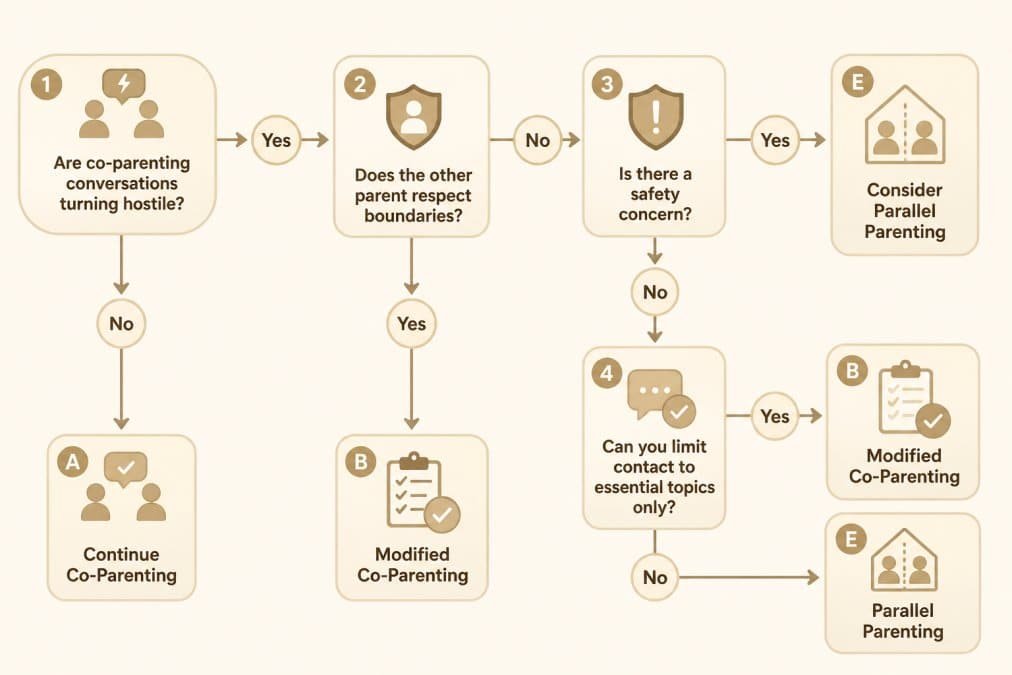
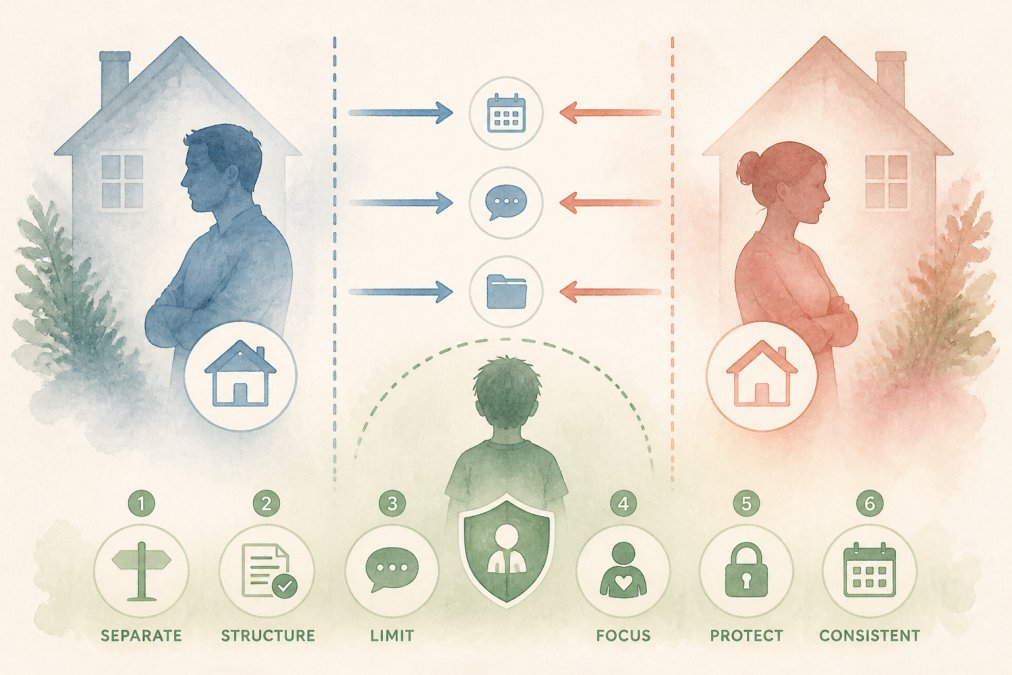
Parallel parenting is a strategy where each parent makes independent decisions in their own household. You’re not coordinating, you’re creating two separate environments that both prioritize the child’s wellbeing.
This approach makes sense when:
- Communication attempts consistently escalate into conflict
- The other parent uses parenting decisions as a way to punish or control you
- Safety concerns exist (abuse, substance use, coercive control)
- The other parent refuses to respect boundaries
- Your child’s anxiety increases with each interaction between parents
- Each parent runs their household independently. Bedtime is 8 PM at your house, 9 PM at theirs. You don’t negotiate or align; each household has its own rules.
- Communication stays minimal and factual. Share only what the other parent needs to know: schedule changes, medical appointments, school events. Don’t discuss parenting philosophy or ask for input on decisions.
- Use a co-parenting app or email only. No phone calls or text exchanges. Written communication creates a record and reduces escalation.
- Make decisions independently in your custody time. School choice, activities, medical care, discipline, you decide, and the other parent decides during their time.
- Children move between two different parenting styles. This is okay. Children are resilient and adapt to different environments. What matters is that both are safe and loving.
- Reduce expectations for unity. You’re not a team but two separate parents managing two households. The goal is for your child to feel secure in both places.
Parallel parenting isn’t ideal, cooperative co-parenting is better when possible. But it’s infinitely better than high-conflict co-parenting where every interaction becomes a battle. Your child benefits more from two calm, separate parents than two locked in conflict.

Talking to Children About Infidelity
Your child will ask questions. They’ll sense the tension. They’ll notice the change. You need a plan for what to say.
The core principle: Protect your child’s relationship with their other parent. You may be furious.
Age-appropriate guidance:
For young children (ages 5-8):
Keep it simple and factual. “Mom and Dad have decided to live in different houses. This is not your fault. We both love you. That doesn’t change.”
Don’t mention infidelity or say anything negative about their other parent.
For school-age children (ages 9-12):
You can offer a bit more context.
Again: No details about infidelity. No blame. No asking them to take sides.
For teenagers (ages 13+):
Teenagers often sense that something bigger happened. You can be more honest without oversharing.
“Your mom/dad made a choice that broke my trust. That’s why we’re separating. This is between your mom and me.
This is honest without dumping adult trauma onto your teenager.
What not to do:
- Don’t use your child as a confidant. They’re not your therapist.
- Don’t ask them to keep secrets from their other parent.
- Don’t speak negatively about their other parent, even if you’re furious.
- Don’t make them feel responsible for your emotional wellbeing.
- Don’t expect them to understand or validate your feelings about the betrayal.
Your child’s job is to be a kid. Process your betrayal with a therapist, support group, or trusted friends, not your child.
Managing Your Emotions and Seeking Support
You cannot co-parent effectively while in crisis. Your nervous system is activated, your judgment is compromised, and your patience is depleted.
Your emotional recovery directly impacts your ability to parent well. This isn’t selfish. It’s essential.
Start here:
- Find a therapist who specializes in betrayal trauma. Someone who understands the neurobiology of betrayal, its impact on attachment, and the challenge of maintaining boundaries with someone who hurt you.
- Join a support group. Hearing from others who survived infidelity and co-parenting reduces shame and isolation.
- Set up a support network outside your ex. Friends, family, mentors, online communities, people who listen without judgment when you’re struggling.
- Practice emotional regulation tools. Breathing exercises, grounding techniques, journaling. When triggered, you need a way to calm your nervous system before responding.
- Limit contact with your ex when you’re emotionally activated. If you’re angry, hurt, or triggered, wait until you’re calm to have a conversation.
- Don’t make big decisions when you’re in pain. Decisions about custody, communication, or the relationship should happen when you’re thinking clearly, not in the depths of betrayal trauma.
According to research from the American Psychological Association on betrayal trauma, individuals who seek professional support recover significantly faster and maintain better co-parenting relationships than those who try to process the betrayal alone.
Your healing matters. Not just for you. For your children. When you’re stable, they’re stable.
Documentation and Legal Considerations
Betrayal often complicates legal matters. Infidelity may affect custody decisions in some jurisdictions, and it almost always affects how you document co-parenting interactions.
Documentation protects you. It creates a record and provides evidence if disputes arise.
What to document:
- All co-parenting communication. Use email or a co-parenting app rather than text messages that disappear. Keep records of agreements, decisions, and any concerning behavior.
- Custody schedule compliance. Note pickups, drop-offs, and any changes or violations.
- Incidents involving your children. Injuries, behavioral changes, concerning statements about their time with the other parent. Document the date, time, and exactly what happened or was said.
- Missed appointments or financial obligations. If the other parent misses scheduled time or fails to pay child support, document it.
- Any threatening, abusive, or concerning communication. Save it. Don’t delete it.
Legal boundaries to understand:
The legal system in your state may consider infidelity in custody decisions. Family law varies significantly by state regarding infidelity’s impact on custody, some states weigh it heavily, others don’t consider it at all.
Importantly: Your children should never be used as use in legal disputes.
Consider mediation or co-parenting counseling. Many courts now require it. A neutral third party can help you establish communication patterns and agreements that reduce future conflict.
Resources like the Association for Conflict Resolution can help locate qualified mediators in your area.
You don’t have to figure this out alone. After the Affair Series provides structured frameworks specifically designed for parents navigating co-parenting after betrayal. Generic advice assumes baseline trust and goodwill.
Your children need you stable more than they need you perfect. Focus on that.
Frequently Asked Questions
How do you co-parent with someone who betrayed you?
Co-parenting after betrayal requires separating your relationship issues from parenting decisions. Focus on your children’s needs, use neutral communication channels (email or co-parenting apps), establish clear boundaries about discussion topics, and avoid discussing the affair with your children. Consider parallel parenting if cooperation feels unsafe or unrealistic. Many parents find structured scripts and documentation protocols help them stay focused on logistics rather than relationship hurt.
Can parallel parenting help after a high-conflict breakup?
Yes. Parallel parenting reduces direct interaction by dividing responsibilities rather than requiring constant cooperation. Each parent makes independent decisions during their parenting time, with minimal coordination needed. This approach works well when trust is broken, communication is hostile, or one parent refuses to cooperate reasonably. You’ll still need clear written agreements about major decisions, schedules, and financial responsibilities, but day-to-day parenting operates independently.
What should I say to my children about a parent’s affair?
Age matters significantly. Young children (under 8) need simple, honest explanations: ‘Mom and Dad are not going to be together anymore, but we both love you.’ School-age children can handle slightly more detail: ‘Sometimes grown-ups make choices that hurt each other, and we decided it’s better to live apart.’ Teens may ask directly; answer truthfully without graphic details or blame. Focus on reassuring them the affair was not their fault and that both parents remain committed to them.
How do I keep conflict with my co-parent away from my children?
Never discuss the affair, custody disputes, or co-parenting disagreements in front of your children. Schedule difficult conversations for times when kids are not present or use written communication (email, co-parenting apps) to avoid heated exchanges. Maintain calm, respectful behavior during transitions and pickups. If your ex brings up conflict in front of the children, redirect calmly: ‘This is grown-up business. Let’s talk about it later.’ Protect your children’s emotional wellbeing by keeping them out of adult disputes.