- Defining Infidelity and Common Myths
- Types of Affairs and Betrayals Explained
- The Psychological and Emotional Impact of Cheating
- Attachment, Trust, and Betrayal Trauma
- Long-Term Effects on Mental Health and Relationships
- Understand the Deep Emotional Impact of Infidelity and Begin Your Healing Journey Today
- Frequently Asked Questions
- Recommended
Feeling lost after betrayal touches every part of life, leaving many wondering how to rebuild trust and reclaim emotional security. Infidelity is more than just a broken promise—it is a deeply personal, complex breach of trust that takes many forms, shaped by unique relationship agreements and cultural contexts. Unpacking the myths and truths about affairs is a crucial step on the path toward healing. This guide offers clear definitions and insights to support those working toward recovery after infidelity.
Key Takeaways
| Point | Details |
|---|---|
| Understanding Infidelity | Infidelity encompasses emotional, sexual, and psychological dimensions that breach trust beyond physical encounters. It reflects varied individual and cultural values regarding relationship boundaries. |
| Types of Affairs | Infidelity can manifest through sexual, emotional, digital, and opportunistic affairs, each leading to unique emotional challenges and impacts on trust. |
| Psychological Consequences | Cheating can cause profound psychological issues, including betrayal trauma, emotional destabilization, and long-term mental health effects that reshape relational dynamics. |
| Healing Process | Recovery from the emotional wounds of infidelity is a nonlinear journey that often requires professional support, self-compassion, and a commitment to understanding personal dynamics. |
Defining Infidelity and Common Myths
Infidelity represents a complex breach of trust that extends far beyond simple physical encounters. Scientific research on relationship dynamics reveals infidelity as a multifaceted phenomenon involving emotional, sexual, and psychological dimensions.
At its core, infidelity involves violating the agreed-upon boundaries of a committed romantic relationship. These boundaries differ significantly across individuals, cultures, and relationship structures. Some key characteristics include:
- Breaking explicit or implicit monogamy agreements
- Engaging in secretive emotional or sexual connections outside the primary relationship
- Developing intimate connections that compromise relationship trust
- Maintaining hidden communication or interactions that suggest romantic or sexual interest
Emotional infidelity can be as damaging as sexual encounters, involving deep personal connections that undermine the primary relationship’s intimacy. Technology-facilitated infidelity has further complicated traditional definitions, introducing new forms of betrayal through digital platforms.
Infidelity is not a singular, universal experience but a complex interaction of personal values, relationship dynamics, and individual interpretations.
Common myths about infidelity often oversimplify this nuanced experience. Many people mistakenly believe that infidelity always indicates a fundamental relationship failure or represents a clear moral failing. However, scientific perspectives on relationship breaches demonstrate that motivations are far more intricate.
The reasons behind infidelity are diverse and can include:
- Unresolved personal emotional needs
- Communication breakdowns
- Individual psychological challenges
- External stressors affecting relationship dynamics
Pro tip: Recognize that understanding infidelity requires compassion, nuanced perspective, and a willingness to explore complex emotional landscapes without immediate judgment.
Types of Affairs and Betrayals Explained
Romantic betrayals manifest in complex and nuanced ways, with multiple categories of infidelity challenging traditional understanding of relationship boundaries. Understanding these variations helps individuals navigate the intricate emotional landscape of relationship breaches.
Research identifies several primary types of affairs:
- Sexual Affairs: Physical encounters involving sexual intimacy outside the primary relationship
- Emotional Affairs: Deep emotional connections characterized by intimate communication and psychological bonding
- Digital/Electronic Affairs: Intimate interactions facilitated through technological platforms
- Opportunistic Affairs: Situational encounters driven by momentary circumstances
Emotional infidelity often proves more devastating than physical encounters. These connections involve profound psychological intimacy that can undermine relationship trust more deeply than sexual interactions. Psychological research highlights significant gender differences in how emotional betrayals are experienced and processed.
Not all affairs represent deliberate relationship destruction—many emerge from complex personal and relational dynamics.
The impact of different affair types varies substantially. Some key distinctions include:
Here’s a comparison of the main types of affairs and their unique challenges:
| Affair Type | Core Feature | Common Emotional Challenge |
|---|---|---|
| Sexual | Physical intimacy outside relationship | Guilt and shame for both partners |
| Emotional | Deep psychological connection | Intense trust erosion and grief |
| Digital | Online or tech-facilitated bonds | Increased secrecy and anxiety |
| Opportunistic | Situational, one-time event | Confusion and lingering insecurity |
- Emotional Affairs: Prioritize psychological connection
- Physical Affairs: Focus on sexual engagement
- Digital Affairs: Leverage technological platforms for intimacy
- Opportunistic Affairs: Result from specific situational triggers
Pro tip: Recognize that understanding the nuanced nature of affairs requires compassionate self-reflection and a willingness to explore underlying relationship dynamics without immediate judgment.
The Psychological and Emotional Impact of Cheating
Cheating’s profound psychological impact creates a complex emotional landscape of trauma, betrayal, and deep psychological disruption. The aftermath of infidelity extends far beyond the immediate relationship breach, triggering intricate emotional responses that can fundamentally alter an individual’s mental well-being.
The psychological consequences of cheating manifest through multiple devastating dimensions:
- Betrayal Trauma: Similar to PTSD symptoms
- Emotional Destabilization: Profound trust erosion
- Self-Worth Destruction: Intense personal questioning
- Anxiety and Depression: Long-term mental health challenges
- Hypervigilance: Persistent emotional protection mechanisms
Emotional infidelity generates particularly intense psychological wounds. The betrayed partner often experiences a complex grief process that goes beyond traditional loss, involving deep psychological fragmentation. These emotional injuries can create long-lasting neurological and psychological imprints that fundamentally reshape an individual’s relational understanding.
Cheating represents a profound breach of emotional contract, shattering foundational trust and personal security.
Research indicates different psychological impacts for various individuals:
- Betrayed Partners: Experience intense emotional dysregulation
- Unfaithful Partners: Wrestle with guilt and shame
- Children in Affected Families: Develop complex attachment issues
- Extended Family Systems: Experience secondary traumatic stress
The intricate dynamics of psychological cheating behaviors reveal that emotional motivations are rarely simplistic, involving complex personal and contextual factors.
Pro tip: Recognize that healing from cheating’s psychological impact requires professional support, self-compassion, and a commitment to understanding the deeper emotional dynamics underlying the betrayal.
Attachment, Trust, and Betrayal Trauma
Partner betrayal trauma fundamentally shatters the core psychological mechanisms of trust, attachment, and emotional security. The experience of betrayal goes beyond a simple relationship rupture, creating profound neurological and emotional disruptions that can reverberate through an individual’s entire relational landscape.
Betrayal trauma manifests through multiple complex psychological dimensions:
- Attachment Disruption: Transformation of relational security patterns
- Trust Erosion: Fundamental questioning of interpersonal safety
- Self-Concept Modification: Radical reevaluation of personal worth
- Emotional Regulation Challenges: Destabilized psychological responses
- Relational Hypervigilance: Persistent defensive emotional mechanisms
Attachment styles undergo significant transformation following betrayal. Individuals may shift from secure attachment to anxious or avoidant patterns, creating long-term challenges in forming and maintaining intimate connections. These psychological adaptations represent complex survival mechanisms designed to protect against future emotional harm.
Betrayal trauma does not just break trust—it fundamentally rewrites an individual’s internal relational blueprint.
The psychological impacts of betrayal vary across different relationship contexts:
- Romantic Partners: Experience most intense emotional disruption
- Family Members: Develop complex intergenerational trust issues
- Professional Relationships: Create systemic trust challenges
- Personal Support Networks: Trigger broader relational reevaluation
Psychological healing from betrayal requires comprehensive strategies that address both emotional and neurological dimensions of trauma.
Pro tip: Recognize that healing from betrayal trauma is a nonlinear journey requiring professional support, self-compassion, and a commitment to gradual emotional reconstruction.
Long-Term Effects on Mental Health and Relationships
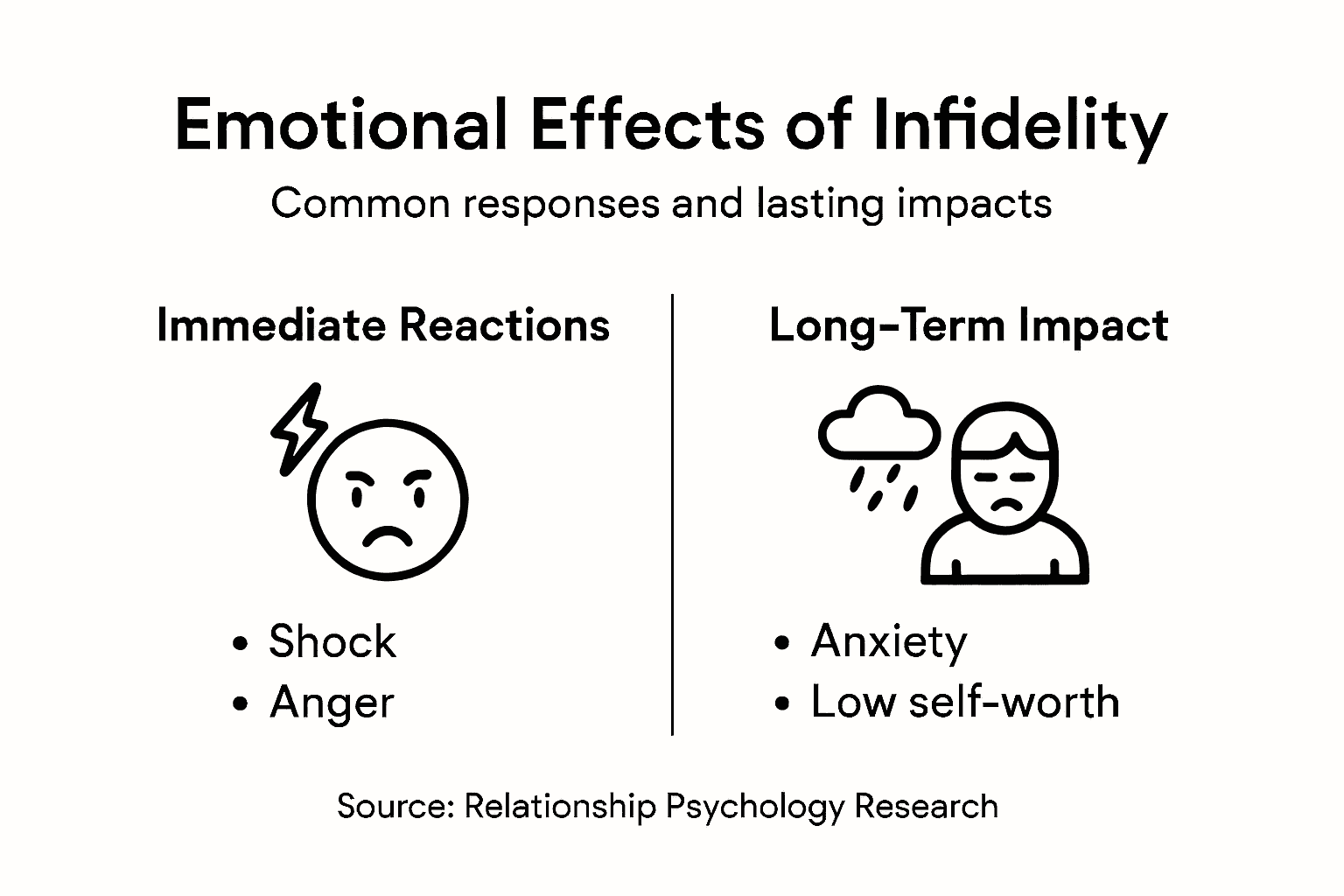
Infidelity’s profound impact extends far beyond the immediate emotional rupture, creating complex and enduring psychological consequences that can dramatically reshape an individual’s mental health and future relationship dynamics.
The long-term mental health implications of betrayal manifest through multiple interconnected domains:
- Chronic Psychological Stress: Persistent anxiety and emotional dysregulation
- Trust Impairment: Systematic breakdown of relational confidence
- Self-Concept Disruption: Fundamental reevaluation of personal worth
- Attachment Pattern Transformation: Fundamental shifts in relationship approach
- Emotional Resilience Challenges: Ongoing difficulty maintaining emotional stability
Psychological recovery is rarely linear. Individuals who experience infidelity often encounter complex emotional landscapes that extend years beyond the initial betrayal, creating intricate challenges in personal and professional relationships. These experiences can fundamentally alter how individuals perceive intimacy, safety, and emotional connection.
Infidelity does not merely end a relationship—it rewrites an individual’s entire emotional narrative.
The long-term mental health consequences manifest across different life domains:
This table summarizes how infidelity affects different areas of life long-term:
| Life Domain | Common Effect | Typical Long-Term Outcome |
|---|---|---|
| Personal Relationships | Emotional withdrawal | Difficulty building future trust |
| Professional Life | Decreased focus | Reduced work performance or absenteeism |
| Physical Health | Increased stress symptoms | Higher risk of chronic illness |
| Social Support | Social isolation | Smaller, less supportive network |
- Personal Relationships: Heightened emotional guardedness
- Professional Performance: Potential productivity and concentration impacts
- Physical Health: Increased stress-related physiological symptoms
- Social Interactions: Potential social withdrawal and isolation
Psychological distress from infidelity can create complex, persistent challenges that require comprehensive, nuanced therapeutic approaches.
Pro tip: Recognize that healing is a deeply personal journey requiring professional support, self-compassion, and a commitment to gradual emotional reconstruction.
Understand the Deep Emotional Impact of Infidelity and Begin Your Healing Journey Today
Infidelity causes profound emotional pain that can shake the very foundations of trust, attachment, and self-worth. If you are struggling to process betrayal trauma or the complex psychological effects described in this article, you are not alone. Our comprehensive resources on Recovery Strategies – After the Affair Series offer evidence-informed guidance to help you navigate emotional destabilization, rebuild trust, and reclaim your mental well-being.
Take the first step toward healing your heart and mind by exploring detailed insights into different Affair Types & Signs – After the Affair Series that can deepen your understanding of what happened. Whether you want to support yourself or your family, including Helping Your Children – After the Affair Series, the carefully curated resources at https://aftertheaffair.uk/resource-library provide structured, compassionate tools to help you move forward with renewed strength. Begin your transformation now to restore emotional security and find peace beyond betrayal.
Frequently Asked Questions
What are the emotional impacts of infidelity?
Infidelity can lead to betrayal trauma, emotional destabilization, anxiety, depression, and feelings of low self-worth. The psychological effects can create deep emotional scars that may take time to heal.
How does infidelity affect trust in relationships?
Infidelity fundamentally erodes trust between partners, leading to intense questioning of interpersonal safety and security. The betrayed partner often finds it difficult to rebuild trust in the relationship or in future relationships.
What types of infidelity exist beyond physical cheating?
Infidelity can manifest in various forms including emotional affairs, digital relationships, and opportunistic encounters. Each type creates different emotional challenges and impacts the relationship in unique ways.
Can infidelity have long-term mental health effects?
Yes, infidelity can result in chronic psychological stress, emotional dysregulation, and challenges in forming stable relationships. The long-term effects may disrupt not only personal relationships but also professional life and overall mental health.
Recommended
- 7 Types of Infidelity Explained for Healing and Recovery – After the Affair Series
- Trauma of an Emotional Affair-Why Emotional Affairs Hurt?
- How Infidelity Affects Children Emotionally and Developmentally
- How to Cope After Infidelity – After the Affair Series