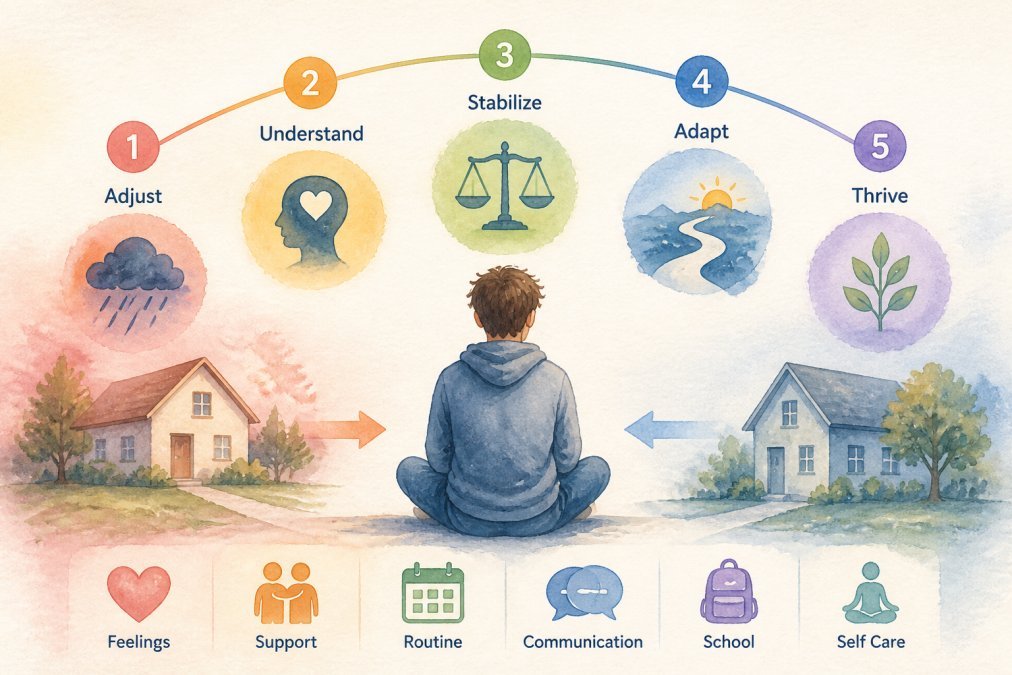
Discovering infidelity shatters your sense of safety and leaves you wondering what comes next. The emotional aftermath can feel chaotic and unpredictable, making it hard to know if what you’re experiencing is normal or how long healing will take. Understanding the stages of healing after an affair offers a roadmap through this difficult journey, helping you recognize where you are and what to expect as you move forward. This article breaks down each recovery stage with practical guidance to support your path toward healing and rebuilding trust.
- Key Takeaways
- Understanding the stages of infidelity recovery
- Stage 1: shock, denial, and emotional upheaval
- Stage 2: processing, understanding, and acceptance
- Stage 3: rebuilding trust and relationship healing
- Stage 4: renewal, growth, or closure
- Comparison of stages and their focus areas
- Frequently asked questions
Key Takeaways
| Point | Details |
|---|---|
| Stages unfold nonlinearly | Recovery is not a straight path and often includes revisiting earlier emotions as partners progress at different speeds. |
| Acknowledge emotions openly | Expressing emotions openly is essential for progress and prevents healing delays. |
| Seek professional support | Structured guidance from therapists and couples counselors improves outcomes for individuals and couples. |
| Rebuild trust gradually | Trust develops through consistent communication, transparency, and patient commitment from both partners. |
Understanding the stages of infidelity recovery
The recovery process involves emotional, relational, and personal healing stages that unfold over time. Each stage has unique challenges and growth opportunities that require different skills and support. Recognizing these stages assists in setting realistic expectations about your healing timeline and emotional needs. While everyone’s journey is unique, most people move through similar phases:
- Shock and denial as initial protective responses
- Emotional turmoil including anger, grief, and confusion
- Processing and understanding what happened and why
- Rebuilding trust through transparent communication
- Renewal of the relationship or healthy closure
These stages often overlap and circle back, so you might revisit earlier emotions even after making progress. Understanding this non-linear pattern helps you stay patient with yourself and your partner. The framework provides structure without rigid timelines, acknowledging that healing happens at different paces for different people. Some couples move through stages together while others progress independently, requiring ongoing communication about where each person stands emotionally.
Pro Tip: Keep a private journal to track your emotional patterns and progress through recovery stages, helping you recognize growth that might otherwise feel invisible during difficult moments.
Stage 1: shock, denial, and emotional upheaval
Initial shock often leads to denial or numbness to reduce overwhelming feelings. Your brain protects you from the full weight of betrayal by creating temporary emotional distance. This protective mechanism is completely normal and serves an important function in preventing emotional overload. You might feel disconnected from reality, question what you know to be true, or experience physical symptoms like difficulty sleeping or eating.
Emotional upheaval can include anger, sadness, confusion, and anxiety that shift rapidly throughout the day. One moment you might feel rage toward your partner, the next overwhelming grief about what you’ve lost. These intense emotional swings are exhausting but represent your psyche processing emotional trauma after infidelity. Communication may be impaired during this phase, with both partners struggling to express themselves clearly or hear each other without defensiveness.
Processing trauma gently is essential for moving forward without causing additional harm to yourself or your relationship. Rushing through this stage or suppressing difficult emotions only prolongs recovery. Allow yourself to feel whatever comes up without judgment, even when emotions seem contradictory or irrational. Seeking support from trusted friends, family, or professionals helps you navigate this turbulent period without making impulsive decisions you might regret later.
Common experiences during this stage include:
- Intrusive thoughts about the affair replaying constantly
- Physical stress responses like headaches or stomach problems
- Difficulty concentrating on work or daily responsibilities
- Alternating between wanting answers and fearing more details
- Questioning your judgment and ability to trust your perceptions
Pro Tip: Create a daily routine with basic self-care activities like eating regular meals and taking short walks, providing structure when everything else feels chaotic and helping your body manage stress more effectively.
Many people find it helpful to cope after infidelity naturally by combining professional support with personal coping strategies. This might include mindfulness practices, physical exercise, or creative outlets that help process emotions without words.
Stage 2: processing, understanding, and acceptance
Reflection and emotional work help transform pain into understanding as the initial shock begins to fade. You start asking deeper questions about what led to the affair, what it means for your relationship, and what you truly want moving forward. This stage requires courage to face uncomfortable truths about yourself, your partner, and your relationship dynamics. Acceptance involves acknowledging what happened without minimizing or blaming, enabling healing to progress.
Acceptance does not mean condoning behavior or pretending the betrayal didn’t hurt. Instead, it means facing reality as it is rather than as you wish it were. This distinction is crucial because many people confuse acceptance with giving up their right to feel hurt or angry. You can accept what happened while still holding your partner accountable and requiring meaningful change. The goal is releasing the constant mental battle against reality that keeps you stuck in suffering.
Rebuilding personal boundaries and trust begins here as you clarify your non-negotiables and requirements for moving forward. This involves honest self-reflection about what you can genuinely forgive and what behaviors you cannot tolerate. Some people discover they need more independence and personal space, while others realize they want deeper emotional intimacy than before. Understanding why healing takes time helps you resist pressure to rush this crucial stage.
Engaging in therapy or guided support improves acceptance and insight by providing tools and perspectives you might not access alone. A skilled therapist helps you distinguish between productive processing and rumination that keeps you stuck. They can also facilitate difficult conversations with your partner in ways that promote understanding rather than defensiveness. Following step by step betrayal recovery approaches provides structure during this emotionally complex phase.
Key activities during this stage include:
- Identifying patterns in your relationship that contributed to vulnerability
- Exploring your own needs and desires independently from your partner
- Practicing self-compassion when you have setbacks or difficult days
- Gradually sharing your process with your partner when ready
- Making preliminary decisions about whether to rebuild or separate
Pro Tip: Schedule regular check-ins with yourself to assess whether you’re making genuine progress or simply going through motions, adjusting your approach based on honest self-evaluation rather than external pressure.
Stage 3: rebuilding trust and relationship healing
Trust grows through open communication and honest behaviors consistently demonstrated over time. Rebuilding trust requires consistent transparency, accountability, and emotional safety that both partners actively create. The unfaithful partner must prove reliability through actions, not just words, while the betrayed partner works on gradually opening up to vulnerability again. This mutual effort creates the foundation for genuine relationship growth after infidelity.
Couples therapy and professional guidance are usually necessary because rebuilding trust involves complex emotional dynamics that are difficult to navigate alone. The role of therapists infidelity recovery includes teaching communication skills, managing triggers, and helping both partners understand each other’s perspectives. Therapists also hold both people accountable for their commitments while providing compassionate support through inevitable setbacks.
Patience with oneself and partner is key during this gradual process that unfolds over months or years. The rebuilding trust timeline varies widely based on numerous factors including the nature of the affair, previous relationship health, and both partners’ commitment to healing. Expecting quick results sets you up for disappointment and discouragement. Small consistent improvements matter more than dramatic breakthroughs.
Common challenges include managing triggers, jealousy, and setbacks that can feel like starting over. A trigger might be a song, location, or situation that suddenly floods you with painful memories and emotions. Learning to anticipate and cope with triggers reduces their power over time. Jealousy and hypervigilance are normal protective responses that gradually decrease as safety is reestablished through reliable behavior.
| Trust-Building Action | Unfaithful Partner Responsibility | Betrayed Partner Responsibility |
|---|---|---|
| Transparency | Share passwords, schedules, whereabouts freely | Acknowledge efforts without constant testing |
| Communication | Answer questions honestly, even when uncomfortable | Ask for what you need clearly |
| Boundaries | Respect all boundaries without defensiveness | Communicate boundaries explicitly |
| Accountability | Accept consequences and make amends | Allow space for genuine change |
Challenges during rebuilding include:
- Balancing the need for information with avoiding obsessive questioning
- Managing anxiety when your partner is out of sight
- Dealing with well-meaning friends or family who influence your decisions
- Recognizing genuine progress versus superficial compliance
- Maintaining your own identity while rebuilding as a couple
This stage demands vulnerability from both partners in different ways, creating opportunities for deeper intimacy than existed before the affair when approached with commitment and skill.
Stage 4: renewal, growth, or closure
Outcomes vary widely, with some couples achieving renewed relationships, others finding individual strength, or choosing amicable closure. This stage represents the culmination of your healing work, though growth continues beyond this point. Renewal means creating a relationship that feels genuinely different and better than before, not just returning to how things were. Some couples discover deeper intimacy and communication skills that make their relationship stronger than ever.
Many individuals find personal strength and growth even if the relationship does not continue. Choosing healthy closure after genuine effort is not failure but rather honoring your authentic needs and boundaries. The skills you developed during recovery serve you regardless of relationship outcome. Personal empowerment comes from knowing you faced one of life’s most difficult challenges with courage and integrity.
Commitment to self-care and ongoing healing remains important even after reaching this stage. Recovery is not a destination but an ongoing practice of maintaining emotional health and relationship skills. Continue prioritizing activities and relationships that support your wellbeing. Stay connected to support systems that helped you through the crisis. Understanding healing after infidelity as a lifelong journey prevents complacency.
Some find purpose in sharing experiences to help others navigate similar challenges. This might involve joining support groups, writing about your experience, or simply being available to friends facing betrayal. Helping others can provide meaning and closure while reinforcing your own growth and healing.
Possible outcomes at this stage include:
- Renewed relationship with deeper intimacy and trust
- Peaceful separation with mutual respect and closure
- Individual transformation leading to new life directions
- Commitment to ongoing relationship maintenance and growth
- Integration of the experience into your life story with reduced pain
The key is recognizing that reaching this stage represents significant achievement regardless of whether you stayed together or separated. You survived something that felt unsurvivable and emerged with greater self-knowledge and emotional resilience.

Comparison of stages and their focus areas
Understanding how transitioning through stages is non-linear but identifying core needs at each helps recovery progress more smoothly. This comparison clarifies what to expect emotionally and practically at each phase, helping you recognize where you are and what you need most.
| Stage | Emotional Focus | Common Challenges | Recommended Actions |
|---|---|---|---|
| Shock and denial | Survival and protection | Numbness, disbelief, physical symptoms | Allow feelings, seek immediate support, avoid major decisions |
| Processing and acceptance | Understanding and meaning-making | Rumination, blame, confusion | Engage therapy, practice self-compassion, explore patterns |
| Rebuilding trust | Safety and connection | Triggers, jealousy, setbacks | Communicate needs, demonstrate consistency, practice patience |
| Renewal or closure | Empowerment and direction | Decision fatigue, fear of future | Commit to chosen path, maintain self-care, integrate lessons |
The emotional focus shifts from immediate survival in early stages to future-oriented growth in later stages. Common challenges evolve from managing overwhelming feelings to making complex decisions about your life direction. Recommended actions become more proactive and less reactive as you move through recovery.
Recognizing your current stage helps you access appropriate resources and set realistic expectations. If you’re still in shock, expecting yourself to rebuild trust is premature and frustrating. If you’re ready to rebuild but your partner is still processing, couples therapy can help synchronize your healing timelines. The stages of healing after an affair provide a map, not a rigid schedule, allowing flexibility while offering direction.
Some people move through stages quickly while others need more time at each phase. Both patterns are valid and depend on factors like affair type, relationship history, personal resilience, and available support. Comparing your timeline to others’ creates unnecessary stress and discouragement.
Explore supportive resources for effective infidelity recovery
Navigating recovery stages becomes more manageable with expert guidance and structured support. Professional resources provide the frameworks and tools that accelerate healing while reducing confusion about what to do next. The infidelity recovery checklist offers practical steps tailored to each recovery stage, helping you take concrete action even when emotions feel overwhelming.
Structured approaches enhance your healing journey by breaking down the complex recovery process into manageable steps. Professional-led resources offer practical advice based on clinical experience and research, not just generic suggestions. These tools help you avoid common pitfalls while building skills that serve you throughout life. Exploring relationship growth after infidelity resources provides hope and direction when you need it most.
Ongoing support improves chances of relationship renewal and personal growth by keeping you accountable and encouraged. The resource library contains comprehensive materials addressing every aspect of recovery, from immediate crisis management to long-term relationship maintenance. Accessing these resources demonstrates commitment to your healing and future wellbeing.
Frequently asked questions
How long does the infidelity recovery process usually take?
Recovery typically takes anywhere from several months to several years depending on numerous individual and relationship factors. Progress is rarely linear, with periods of improvement followed by temporary setbacks that are normal parts of healing. Healing timelines vary widely based on affair type, relationship history, both partners’ commitment, and available support systems. Patience with the process reduces frustration and allows genuine healing rather than superficial reconciliation.
What role does therapy play in stages of recovery after infidelity?
Therapy provides essential support for managing complex emotions, improving communication, and navigating difficult decisions throughout recovery. Therapy offers tools, safe spaces, and guidance critical for healing individual trauma and relationship repair that are difficult to achieve alone. Therapists help both partners understand each other’s perspectives while holding everyone accountable for their commitments. The role of therapists infidelity recovery includes teaching specific skills for rebuilding trust and managing triggers effectively.
Can individuals recover if the relationship ends after infidelity?
Absolutely. Recovery embraces personal empowerment and healing regardless of whether the relationship continues or ends. Many regain self-worth and emotional health even when choosing closure instead of reconciliation, often discovering strengths they didn’t know they possessed. Self-care, professional support, and healthy boundaries remain vital whether you stay together or separate. Personal growth after betrayal can lead to fulfilling new relationships and life directions when you’ve processed the trauma fully.
What are practical first steps after discovering infidelity?
Allow yourself time to process overwhelming feelings without pressuring yourself to make immediate major decisions about the relationship. Immediate steps include managing shock, seeking support from trusted people, and avoiding impulsive actions driven by intense emotions. Reach out to friends, family, or professionals who can provide perspective and emotional support during this crisis. Learning how to cope after infidelity naturally through self-care practices helps stabilize your emotional state before tackling bigger decisions.
Recommended
- How to Guide Clients After Infidelity for Healing – After the Affair Series
- 15 Workbook Exercises for Recovery – After the Affair Series
- Infidelity Recovery in 6-Month Phases – After the Affair Series
- 7 Steps-Infidelity Recovery Checklist – After the Affair Series