TL;DR:
- Survival phase recovery is a neurobiological process that stabilizes the nervous system after trauma, such as infidelity. It requires 8 to 16 weeks of consistent regulation practice before deeper emotional work can safely begin. Skipping this foundational phase risks re-traumatization and hampers overall healing progress.
- What is survival phase recovery and why it comes first
- What happens biologically and emotionally during the survival phase
- How long does the survival phase last?
- Survival work vs. deeper recovery work: what’s the difference?
- Practical strategies to support survival phase recovery
- Key takeaways
- What I’ve learned from watching people survive the unsurvivable
- FAQ
Survival phase recovery is the neurobiological process where your body shifts from chronic defensive activation toward restoring safety and emotional regulation after a trauma like infidelity. In clinical terms, this is often called the stabilization phase, and it forms the foundation of all recovery work that follows. Without it, deeper healing cannot take hold. Nervous system regulation requires 8 to 16 weeks of consistent daily practice before the brain begins shifting away from survival mode. If you are in the raw, disorienting aftermath of betrayal right now, understanding what is survival phase recovery is not just reassuring. It is the first step toward doing something about it.
What is survival phase recovery and why it comes first
Survival phase recovery is defined as a neurobiological state focused on physiological stabilization and safety rather than personal growth or emotional insight. The term “survival phase” is widely used in infidelity recovery literature, but the recognized clinical framework is the stabilization phase, drawn from Judith Herman’s three-stage trauma recovery model used by therapists worldwide. Both terms describe the same reality: your nervous system has been hit by a seismic shock, and its first job is to stop the bleeding, not to rebuild the house.
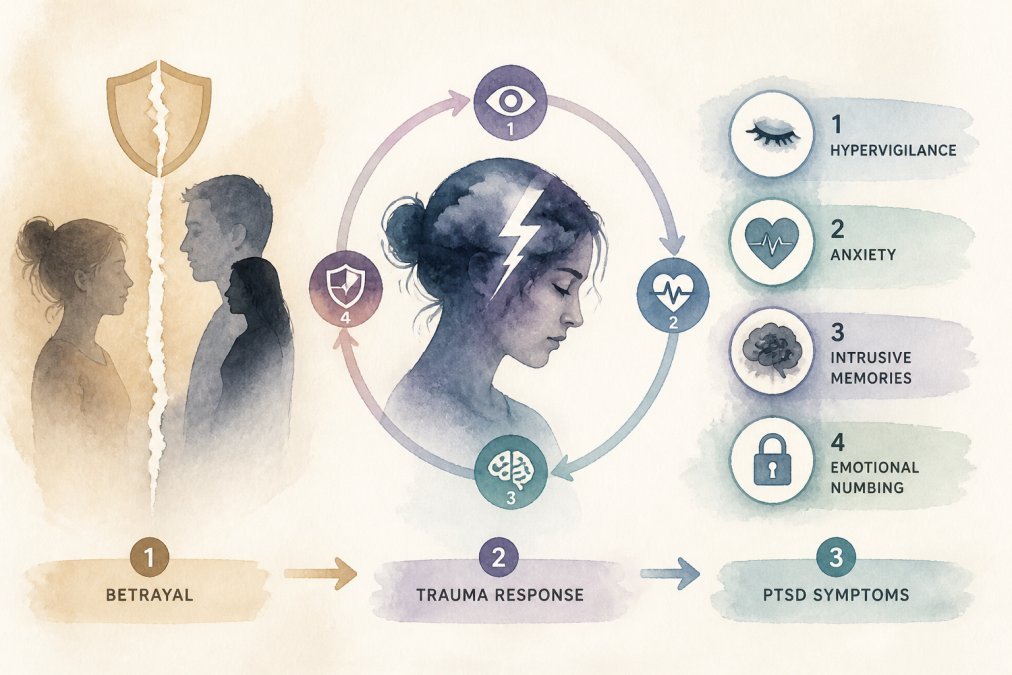
After discovering a partner’s affair, the brain registers the event as a genuine threat to survival. This is not metaphor. The amygdala fires, cortisol floods the body, and the prefrontal cortex, the part responsible for rational thought and emotional regulation, goes partially offline. You are not overreacting. You are experiencing a textbook trauma response.
The survival phase meaning centers on one goal: making the present moment tolerable. That means managing overwhelming emotions, maintaining basic physical functioning, and preventing impulsive decisions that could cause further harm. Everything else, including processing the affair’s meaning, deciding about the relationship, and rebuilding trust, belongs to later stages. Attempting that work now is like trying to renovate a house during an earthquake.
Aftertheaffair structures its recovery resources around this exact sequence, recognizing that individuals need phase-specific guidance rather than generic healing advice.
What happens biologically and emotionally during the survival phase
The body in survival mode operates under chronic defensive activation, a state where the nervous system stays locked in high alert even when no immediate danger is present. This produces a recognizable cluster of symptoms that many people mistake for personal weakness or mental illness.
Common biological and emotional signs include:
- Hypervigilance: Constant scanning for threats, inability to relax, startling easily at sounds or messages
- Emotional numbing: Feeling detached, flat, or disconnected from yourself and others
- Sleep disruption: Difficulty falling asleep, waking at 3 a.m. with racing thoughts, or sleeping excessively as a shutdown response
- Cognitive fog: Trouble concentrating, forgetting simple things, inability to make decisions
- Emotional flooding: Sudden waves of grief, rage, or panic that feel impossible to control
- Physical symptoms: Chest tightness, nausea, appetite changes, and persistent fatigue
These responses are protective, not pathological. The nervous system is doing exactly what it evolved to do: keeping you alive under perceived threat. The problem is that it cannot distinguish between a predator and a betrayal. Both trigger the same alarm system.
Allostatic load, the cumulative wear on the body from prolonged stress, builds rapidly during this phase. Cortisol remains elevated, disrupting sleep architecture and impairing memory consolidation. This is why you may replay the same thoughts obsessively. Your brain is trying to process an event it cannot yet make sense of, and the hippocampus, which organizes memory, is working under severe strain.
Pro Tip: When emotional flooding hits, place both feet flat on the floor, name five things you can see, and take three slow exhales. This activates the parasympathetic nervous system within 60 to 90 seconds and interrupts the alarm cycle.
After infidelity, premature reconciliation discussions before stabilization can cause further emotional exhaustion. Knowing this protects you from pushing yourself into conversations you are not yet equipped to have.
How long does the survival phase last?
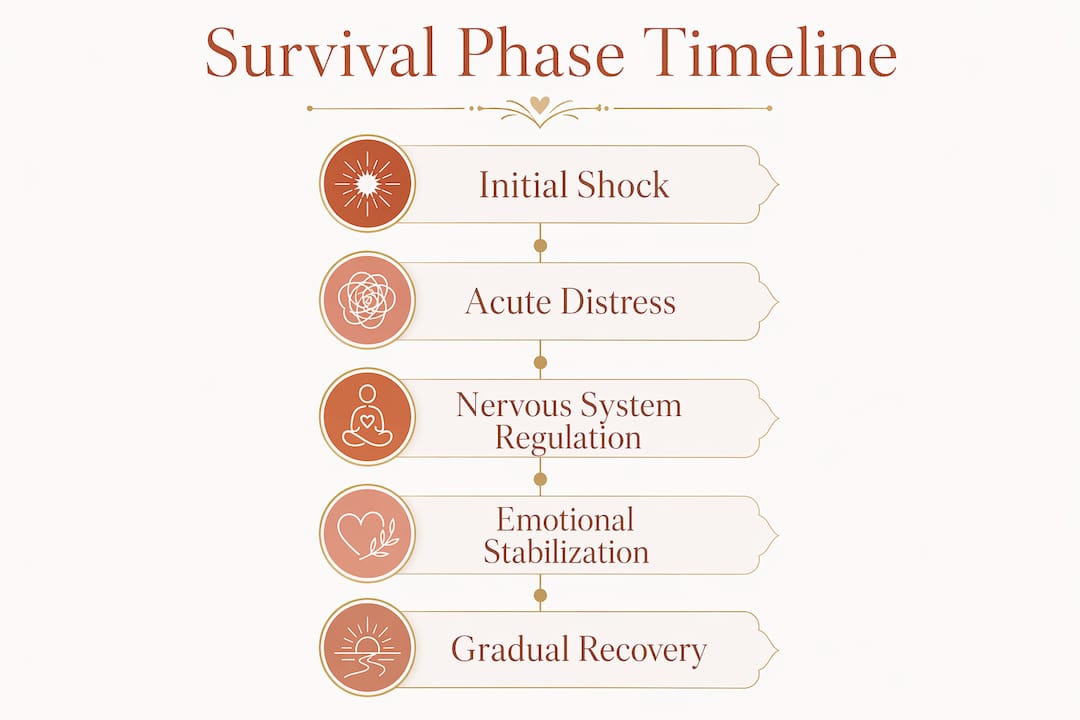
The survival phase does not follow a fixed calendar, but research provides a useful anchor. Consistent nervous system regulation over 8 to 16 weeks is required before the brain begins rewiring away from chronic defensive activation. That means daily practice, not occasional effort.
| Milestone | Approximate timeframe |
|---|---|
| First reduction in acute panic episodes | Weeks 2 to 4 |
| Modest improvement in sleep quality | Weeks 4 to 6 |
| Reduced hypervigilance in daily life | Weeks 6 to 10 |
| Ability to hold a focused conversation | Weeks 8 to 12 |
| Beginning capacity for emotional processing | Weeks 12 to 16 |
These windows vary significantly based on individual circumstances. Ongoing exposure to the person who caused the betrayal, financial stress, parenting demands, and lack of social support all extend the timeline. Conversely, consistent professional support, stable housing, and reliable daily routines can shorten it.
Trauma practitioners observe that clients consistently underestimate the time needed for regulation, which leads to premature attempts at deep recovery work and re-traumatization. The most common mistake is treating a six-week reduction in acute symptoms as a signal that the hard work is done. It is not. It is a signal that the foundation is beginning to set.
Pro Tip: Track one small daily win, not your overall emotional state. Note when you slept an extra hour, ate a full meal, or got through a work meeting without dissociating. These micro-improvements are neurological evidence that your system is shifting.
Recovery phases in survival are not linear. Progress follows a rhythm of two steps forward and one step back, and that pattern is normal brain biology, not failure.
Survival work vs. deeper recovery work: what’s the difference?
Understanding survival recovery requires a clear distinction between two types of work that are often confused.
| Dimension | Survival work | Deep recovery work |
|---|---|---|
| Primary goal | Make distress tolerable | Process trauma and rebuild meaning |
| Techniques used | Grounding, breathing, distraction | Therapy, journaling, narrative processing |
| Timing | Immediately post-trauma | When daily stressors are manageable |
| Risk if rushed | Overwhelm, re-traumatization | N/A when properly timed |
| Outcome | Physiological stability | Emotional insight and identity rebuilding |
Survival work focuses on coping mechanisms like grounding and breathing techniques to make immediate distress tolerable. It is not avoidance. It is strategic triage. Deep recovery work, by contrast, involves sitting with painful emotions, examining beliefs about yourself and your relationship, and rebuilding your sense of identity. That work requires a regulated nervous system as its starting point.
Dr. Emma Durham emphasizes that survival work takes priority when life stressors are high, and that attempting deep recovery prematurely risks re-traumatization and emotional exhaustion. This is not a minor caution. It is the difference between healing and spinning in place for years.
The transition from survival to deeper recovery is not a single moment. It is a gradual shift, marked by an increasing capacity to tolerate difficult emotions without being overwhelmed by them. Aftertheaffair’s step-by-step betrayal recovery framework maps this transition clearly, helping individuals recognize when they are ready to move forward rather than guessing.
Practical strategies to support survival phase recovery
The importance of survival phase work lies in its practicality. These are not aspirational wellness habits. They are daily interventions that directly regulate your nervous system.
Nervous system regulation techniques:
- Box breathing: Inhale for 4 counts, hold for 4, exhale for 4, hold for 4. Repeat for 5 minutes. This directly activates the vagus nerve and reduces cortisol.
- Cold water grounding: Splash cold water on your face or hold ice cubes for 30 seconds. This triggers the dive reflex and slows heart rate rapidly.
- 5-4-3-2-1 sensory grounding: Name 5 things you see, 4 you can touch, 3 you hear, 2 you smell, 1 you taste. This interrupts rumination by anchoring attention in the present.
- Movement: A 20-minute walk discharges stress hormones more effectively than sitting with distressing thoughts. It does not need to be vigorous.
Beyond techniques, energy management and micro-boundaries are crucial to recovery success. A micro-boundary is a small, specific limit you set to protect your limited emotional resources. Turning off notifications for two hours, declining a social obligation, or asking a colleague to handle one task. These are not luxuries. They are medical decisions.
Rebuilding basic self-care routines adapted to real-life constraints matters more than idealized wellness plans. You do not need a meditation retreat. You need to eat three meals, sleep in a dark room, and drink enough water. Start there.
Social support accelerates nervous system regulation. Isolation prolongs it. You do not need to explain everything to someone. You need one person who can sit with you without trying to fix you. If that person is not available in your life right now, a therapist, a support group, or a structured resource like Aftertheaffair’s coping after infidelity guide can fill that role.
Pro Tip: Set a daily “regulation window,” a 10-minute block at the same time each day dedicated to one grounding practice. Consistency matters more than duration. The nervous system responds to predictability.
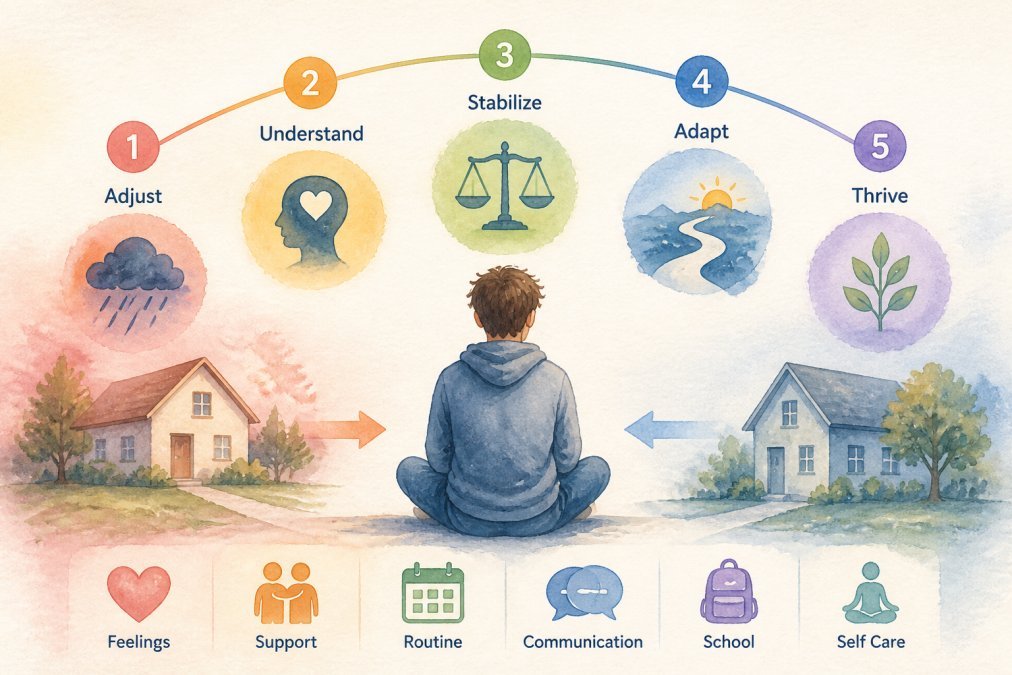
The transition from surviving to thriving requires more than symptom management. It involves rebuilding self-identity and constructing a meaningful life. But that work becomes possible only after the survival phase has done its job.
Key takeaways
Survival phase recovery is the non-negotiable first stage of healing after infidelity, and skipping it causes more harm than the delay it prevents.
| Point | Details |
|---|---|
| Definition of survival phase | A neurobiological stabilization state focused on safety, not growth or insight. |
| Timeline for regulation | Consistent daily practice over 8 to 16 weeks is required before the brain begins to shift. |
| Survival vs. deep recovery | Survival work must precede deep recovery to prevent re-traumatization and emotional exhaustion. |
| Progress is non-linear | Two steps forward and one step back is normal brain biology, not personal failure. |
| Practical starting point | Energy management, micro-boundaries, and basic self-care are the foundation of survival phase work. |

What I’ve learned from watching people survive the unsurvivable
I have worked with many people who arrived at the survival phase convinced they were doing it wrong. They were sleeping too much or not at all. They could not stop crying or could not cry at all. They felt nothing, then felt everything at once. Every single one of them was doing it exactly right.
The survival phase is not a detour from healing. It is healing. The brain is doing something extraordinary under impossible conditions, and the fact that you are still here, still reading, still trying to understand what is happening to you, is evidence of that.
What I have observed consistently is that the people who struggle most in this phase are the ones who fight it. They push for answers before they have stability. They demand emotional conversations before their nervous system can hold them. They measure their progress against where they think they should be rather than where they actually started.
Recovery is not linear, and accepting that is itself a therapeutic act. The two-steps-forward, one-step-back rhythm is not a sign that something is broken. It is the signature of a nervous system doing the slow, unglamorous work of rewiring itself.
Give yourself the 8 to 16 weeks. Not because it is a magic number, but because your brain deserves the time it actually needs. Small wins matter. Sleeping through the night once is a neurological event worth acknowledging. Getting through a workday without a panic episode is data that your system is shifting.
The survival phase is only the first chapter. Building confidence in facing life challenges without being overwhelmed is what makes the next chapters possible. You are not stuck. You are at the beginning.
— S.J.Howe
Start your recovery with a structured plan
If you are in the survival phase right now, the worst thing you can do is try to figure out the entire recovery path at once. What you need is a clear, structured starting point that meets you where you are.
Aftertheaffair’s 7-step infidelity recovery checklist gives you exactly that. It breaks the recovery process into manageable steps designed to work within the real constraints of your life, including limited energy, ongoing stress, and the non-linear nature of healing. The checklist is built around the same phased approach described in this article, starting with stabilization and moving forward only when you are ready. You do not need to have it all figured out. You just need the next step.
FAQ
What is the survival phase of recovery?
The survival phase is the initial stage of trauma recovery focused on physiological stabilization and making immediate distress tolerable. It precedes deeper emotional processing and requires consistent nervous system regulation before the brain can begin shifting toward stability.
How long does survival phase recovery take after infidelity?
Research indicates that 8 to 16 weeks of consistent daily nervous system regulation practice is required before the brain begins moving away from chronic defensive activation. Individual timelines vary based on stress levels, support systems, and ongoing exposure to the source of trauma.
What is the difference between survival work and recovery work?
Survival work uses grounding, breathing, and distraction techniques to manage acute distress in the present moment. Recovery work involves deeper emotional processing and identity rebuilding, and it should only begin once the nervous system has reached a baseline level of stability.
Why do I feel emotionally numb during the survival phase?
Emotional numbing is a protective neurobiological response to overwhelming trauma. The nervous system suppresses emotional intensity to prevent complete shutdown, and it is a normal feature of the survival phase rather than a sign of permanent damage.
Can I skip the survival phase and go straight to healing?
Attempting deep recovery work before stabilization is achieved risks re-traumatization and emotional exhaustion. Dr. Emma Durham’s guidance confirms that survival work must take priority when life stressors are high, and that premature processing can worsen long-term outcomes.
Recommended
- Navigate stages of infidelity recovery: structured guide – After the Affair Series
- Infidelity Recovery in 6-Month Phases – After the Affair Series
- 15 Workbook Exercises for Recovery – After the Affair Series
- Relationship Growth After Infidelity – After the Affair Series