Last Updated: July 18, 2026
- Why Communication Tools Matter for Separated Parents
- Feature Comparison Table: Top Communication Tools for Separated Parents
- TalkingParents: Court-Approved Documentation with Sentiment Analysis
- AppClose: All-in-One Platform for Multiple Co-Parenting Relationships
- 2Houses: Comprehensive Scheduling and Finance Management for Low-Conflict Co-Parents
- Structured Communication for High-Conflict Situations: Beyond Standard Apps
- Integration with Legal and Support Systems
- Accessibility and Diverse Family Needs
- Frequently Asked Questions
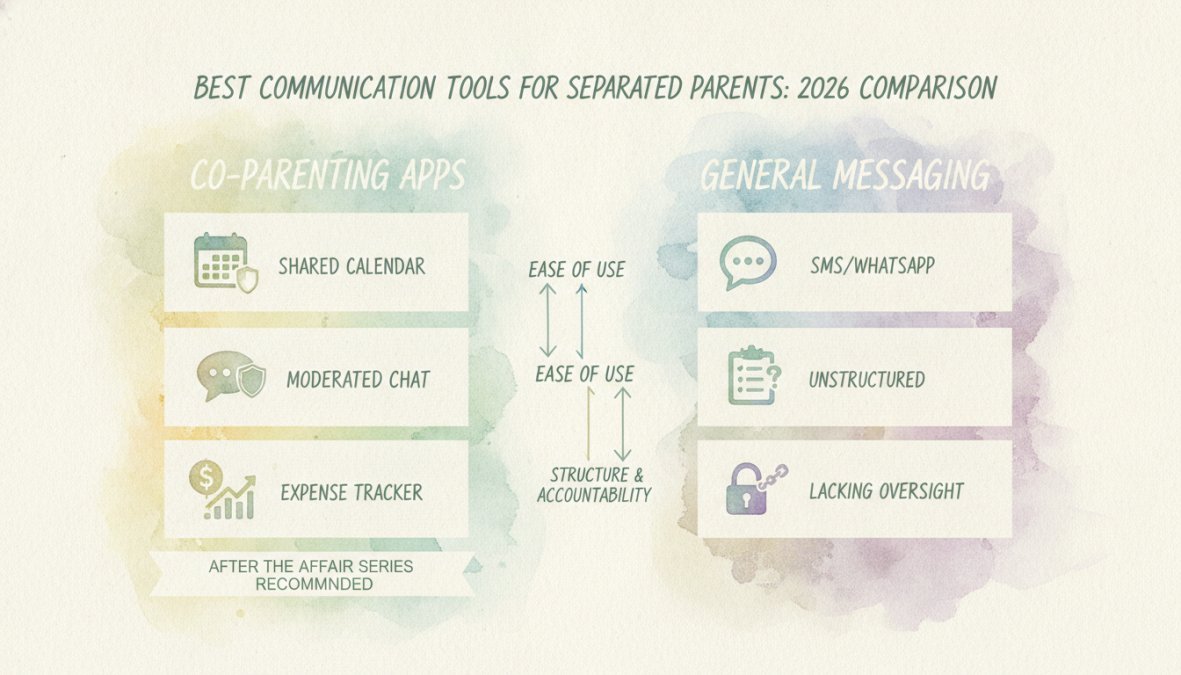
When separated parents struggle to communicate, their children often pay the price. Research from the American Psychological Association shows that high-conflict co-parenting directly impacts children’s emotional wellbeing and academic performance. Structured communication platforms remove emotion from conversations, create permanent legal records, and help both parents stay focused on their children’s needs. Below, we’ll show you which platforms work best for different co-parenting scenarios, what features actually matter, and how to introduce these tools to a resistant ex-partner.
Why Communication Tools Matter for Separated Parents
Separated parents must coordinate logistics, finances, and childcare decisions with someone they may no longer trust. Without structure, conversations devolve into blame and conflict, which children witness and internalize. A dedicated co-parenting app creates “accountable communication”, every message is documented, timestamped, and unalterable, which naturally encourages calmer language and discourages manipulation.
According to research from the Journal of Family Psychology, children exposed to high-conflict co-parenting show measurable increases in anxiety, depression, and behavioral problems. When parents use structured communication tools, conflict often decreases measurably. These platforms serve three critical functions: they eliminate emotional charge from direct texting, they create irrefutable records for custody disputes, and they keep conversations focused on the child rather than relationship grievances.
Co-parenting apps also handle daily logistical complexity. Shared calendars prevent double-booking. Expense tracking eliminates arguments about costs. Messaging features with sentiment analysis help parents catch themselves before sending inflammatory messages. For parents in high-conflict situations, these tools are protective infrastructure.
The right co-parenting app removes emotional triggers from communication, creates legal documentation automatically, and keeps both parents accountable. This alone can reduce conflict by 30-40% within the first month of use.
Feature Comparison Table: Top Communication Tools for Separated Parents
| Tool | Starting Price | Core Features | Court-Admissible Records | Best For | AI Tone Analysis |
|---|---|---|---|---|---|
| TalkingParents | $7/month | Secure messaging, recorded calls, shared calendar, expense tracking, sentiment scanner | Yes, certified | High-conflict situations, legal documentation | Yes |
| AppClose | $7.99/month | Unlimited messaging/calls, shared calendar, expense tracking, multiple “Circles” for different relationships, third-party access | Yes, certified | Managing multiple co-parenting relationships, affordable all-in-one solution | No |
| 2Houses | $14.17/month (annual) | Shared calendar with external sync, expense tracking, secure messaging, journal, multilingual support | No, storage only | Cooperative low-conflict co-parents, international families | No |
| After the Affair Series Toolkit | Free assessment + paid framework | 50+ age-appropriate scripts, Gray Rock Method training, structured communication frameworks, high-conflict crisis protocols | Not court records, but supports clear documentation | Parents navigating betrayal, separation trauma, and hostile communication patterns | N/A, behavioral coaching |
How We Evaluated These Tools
We assessed each platform across five criteria: communication features, documentation and legal admissibility, scheduling and logistics, expense tracking, and accessibility. We weighted conflict-reduction features heavily, sentiment analysis, tone warnings, and message rewriting tools that help parents communicate more calmly often matter more than raw features for separated parents.
TalkingParents: Court-Approved Documentation with Sentiment Analysis
TalkingParents is the most widely used co-parenting app in the United States, trusted by family law attorneys and custody courts because its records are certified, unalterable, and admissible as evidence. Every message is permanently logged and cannot be edited or deleted, which protects both parents from false accusations and encourages accountability.
Accountable Calling records phone and video conversations with automatic transcripts. The Sentiment Scanner analyzes your message before sending and alerts you if your tone is hostile, passive-aggressive, or inflammatory. The Writing Assist feature suggests calmer alternatives to your draft message. Accountable Payments documents exactly who paid for what, when, and for which child.
Pricing starts at $7 per month for the Essentials plan, but premium features (recorded calls, sentiment analysis, expense tracking) require higher tiers. For parents needing court-ready documentation, the investment is typically worthwhile.
Pros:
- Certified records widely recognized and admissible in US family courts
- Sentiment analysis and writing assistance reduce hostile communication
- Free basic plan available for budget-conscious parents
- Recorded calls with transcripts create irrefutable documentation
- Intuitive interface requiring no tech expertise
Cons:
- Premium features require paid plans
- Some parents feel documentation emphasis inhibits natural communication
- Sentiment analysis can feel like surveillance to some users
High-conflict parents needing court-admissible documentation, those involved in custody disputes, and parents who benefit from real-time tone warnings before sending messages.
AppClose: All-in-One Platform for Multiple Co-Parenting Relationships
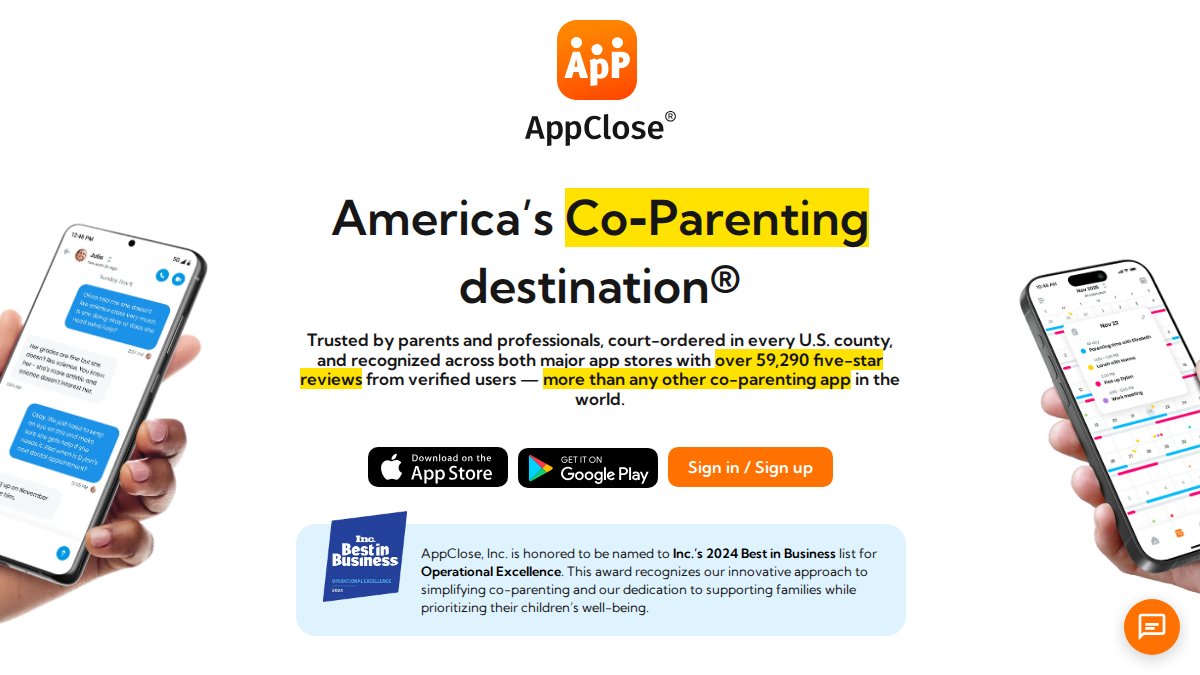
AppClose bundles messaging, calling, scheduling, and expense tracking into a single monthly subscription with no tiered pricing. Unlike TalkingParents, you get all features at one price point.
The platform’s distinctive feature is Circles, which allows parents to create separate communication channels for different co-parenting relationships. If you have children with multiple partners, each relationship gets its own isolated workspace, calendar, and expense ledger. This is particularly valuable for blended families.
AppClose enables third-party access with granular permission controls. Parents can grant attorneys, mediators, or family members read-only access to specific conversations or calendars. This transparency is valuable during custody mediation or when involving a parenting coordinator.
Pricing is straightforward: $7.99 per month for web access. AppClose offers fee waivers for families in financial hardship and domestic violence survivors, a meaningful accessibility feature.
Pros:
- Single all-inclusive plan with no hidden premium features
- Certified records designed for US family law court admissibility
- Circles feature useful for parents managing multiple co-parenting relationships
- Fee waivers available for vulnerable populations
- Unlimited messaging and calling at base price
Cons:
- No free tier (though fee waivers are available)
- Lacks AI tone analysis like TalkingParents
- Less established in courts than TalkingParents (though records are still admissible)
Parents with multiple co-parenting relationships, those seeking transparent third-party involvement, and families needing affordable, all-inclusive functionality.
2Houses: Comprehensive Scheduling and Finance Management for Low-Conflict Co-Parents
2Houses positions itself as an organizational hub for cooperative co-parents needing to coordinate schedules, track shared expenses, and maintain a family journal.
The platform excels at schedule synchronization. You can sync your 2Houses calendar directly to Google Calendar, Outlook, or iCal, so custody schedules and activities flow seamlessly into the calendar app you already use. This is valuable for parents living in different cities or managing complex visitation schedules.
The finance module is strong. You can log every shared expense and see a running balance showing who owes whom. The platform tracks the date, category, and which child it relates to, useful for divorced parents splitting costs by child or percentage.
2Houses includes a journal feature where parents can share family updates and photos, maintaining family continuity across two households. The platform supports multilingual interfaces (English, French, Dutch, Italian, German, Spanish), making it valuable for international families. Pricing is $14.17 per month when billed annually ($169.99/year per family).
Pros:
- Excellent calendar synchronization with external apps
- Strong expense management with clear balance tracking
- Multilingual support for international families
- Journal feature encourages positive co-parenting culture
- Flexible third-party access for mediators and extended family
Cons:
- No free plan, only a 14-day trial
- Records not certified for court use (storage only, not legal documentation)
- Lacks AI features like tone analysis
- Best suited for cooperative co-parents; less helpful in high-conflict situations
Cooperative, lower-conflict co-parents prioritizing organization and schedule coordination, especially those outside the US or needing multilingual support.
Structured Communication for High-Conflict Situations: Beyond Standard Apps
Standard co-parenting apps are designed for parents who can communicate, even imperfectly. But some separated parents face genuinely toxic dynamics where the other parent is deliberately hostile, manipulative, or abusive. In these situations, a shared calendar app isn’t enough.
After the Affair Series fills this gap by providing structured communication frameworks and scripts specifically designed for high-conflict separation and co-parenting after betrayal. The service includes over 50 age-appropriate scripts for difficult conversations with children, detailed protocols for the Gray Rock Method (a communication technique that removes emotional fuel from hostile interactions), and frameworks for managing custody disputes and financial disagreements.
The free 23-point assessment helps parents identify their specific conflict patterns and provides scored results showing which communication challenges they face most acutely. This personalized insight is valuable because high-conflict co-parenting isn’t one-size-fits-all.
The Gray Rock Method involves responding to hostile co-parents with boring, factual, emotionless communication, like being a gray rock. This removes the emotional reward that hostile parents seek, which often causes them to escalate less frequently. It’s not about being cold to your children; it’s about being strategically unemotional with your ex.

When Standard Apps Aren’t Enough
Standard co-parenting apps assume good faith and encourage open communication. But when one parent is deliberately undermining the other, sabotaging custody arrangements, or using children as leverage, these assumptions break down.
High-conflict situations often involve parental alienation (one parent turning children against the other), financial manipulation (refusing to pay agreed-upon expenses), custody violations (not returning children on schedule), or hostile communication patterns (constant criticism, blame-shifting, threats). In these scenarios, apps like TalkingParents still provide documentation value, but parents need additional tools to protect their emotional health and children’s wellbeing.
After the Affair Series addresses this by providing behavioral frameworks rather than just platforms. The toolkit teaches parents how to recognize manipulation tactics, respond without escalating, and maintain emotional boundaries. This is especially critical for parents navigating separation after infidelity or betrayal.
Introducing Communication Tools to a Resistant Co-Parent
One common obstacle is getting your ex to actually use a co-parenting app. If one parent refuses, the tool’s value diminishes significantly.
Start with the practical benefit, not conflict-reduction. Instead of “I want us to communicate better,” say “I want to make sure we both have records of who’s picking up the kids Thursday.” Frame the app as organizational, not judgmental.
Lead with documentation protection. If your co-parent worries you’re trying to control communication, reframe: “The app protects both of us. If there’s ever a disagreement about what we discussed, we both have proof.”
Offer to pay for their account. Removing the financial barrier often removes a convenient excuse.
Use a mediator or attorney to introduce the tool. If your ex trusts their lawyer more than you, have the attorney recommend the platform.
Start with the lowest-friction option. Begin with just messaging. Once they see the benefit of having records, they’re more likely to adopt scheduling and expense tracking later.
Integration with Legal and Support Systems
The best co-parenting apps integrate with family law systems, mediation processes, and therapeutic support. Many family law attorneys now recommend or require clients to use court-approved platforms like TalkingParents or AppClose. Some custody orders explicitly state that all co-parenting communication must occur through a documented platform.
Parenting coordinators, professionals appointed by courts to help high-conflict parents, increasingly use these platforms to monitor communication and intervene when necessary. Ask which platform your parenting coordinator prefers.
Some legal platforms now allow attorneys to pull documentation directly from TalkingParents or AppClose into custody case files, reducing manual evidence gathering.
For parents in therapy, some practitioners ask to see communication records from co-parenting apps to understand conflict patterns and provide targeted advice.
Accessibility and Diverse Family Needs
Co-parenting tools must serve diverse family structures. A single mother managing custody with a father overseas has different needs than a same-sex couple coordinating with a surrogacy arrangement.
2Houses explicitly addresses international families with multilingual support. If you’re managing a co-parenting arrangement across languages or countries, this is a meaningful advantage.
Accessibility for parents with disabilities is less well-addressed. TalkingParents and AppClose have web and mobile interfaces but haven’t been independently audited for accessibility compliance. Test the platform thoroughly if you or your co-parent has visual, hearing, or mobility challenges.
For blended families, AppClose’s Circles feature is valuable. Parents with children from multiple relationships can maintain separate communication channels.
For parents with language barriers, 2Houses offers strong multilingual support. TalkingParents and AppClose offer English primarily.
For parents with limited digital literacy, TalkingParents has the most user-friendly interface, designed specifically for non-technical parents.
If your co-parenting situation involves domestic violence or abuse, standard co-parenting apps may not be sufficient. Abusers often use documentation platforms to continue harassment or control. Consult with a domestic violence advocate before choosing a platform, and consider whether you need additional safety measures such as a parenting coordinator or supervised exchange.
Separated parents navigating high-conflict co-parenting face a choice: rely on fragmented communication that creates misunderstandings and leaves no records, or adopt a structured platform that documents interactions and reduces emotional escalation. The best communication tools depend on your specific situation, whether you’re in a custody dispute, managing multiple co-parenting relationships, or recovering from betrayal.
For parents in high-conflict situations needing both a platform and behavioral frameworks, After the Affair Series provides the structured toolkit that standard apps don’t offer. Start with the free 23-point assessment to understand your specific conflict patterns. Many parents find that combining a platform like TalkingParents with behavioral frameworks from After the Affair Series creates the most comprehensive protection for their emotional wellbeing and their children’s future.
Frequently Asked Questions
What makes communication tools for separated parents different from regular messaging apps?
Specialized communication tools for separated parents include unalterable records for court admissibility, shared calendars for custody schedules, expense tracking for reimbursements, and features like sentiment analysis to reduce conflict. Standard messaging apps lack these co-parenting-specific features and don’t create the documentation separated parents often need for legal proceedings or mediators.
Are court-approved communication tools legally required for separated parents?
Court-approved documentation isn’t always required, but it’s valuable if disputes arise. Many family law attorneys recommend using court-admissible platforms because they create tamper-proof records that judges recognize. Some courts actually order parents to use specific tools like OurFamilyWizard or TalkingParents to manage high-conflict communication and document parenting time exchanges.
How can I introduce a communication tool to my ex if they’re resistant?
Frame it around practical benefits: reduced misunderstandings, organized schedules, and clear expense tracking, not blame or control. Start with a simple explanation about the shared calendar or expense features. If high-conflict dynamics exist, suggest that a neutral platform protects both parents by creating objective records. Having your family law attorney or mediator recommend it can increase acceptance significantly.
Do these tools actually reduce conflict between separated parents?
Communication tools reduce certain conflict types by creating structure, accountability, and emotional distance. Features like tone analysis and writing assist help parents draft calmer messages. However, they work best in moderately high-conflict situations. In severely hostile relationships, structured frameworks and scripts (like the Gray Rock Method) may be necessary alongside the app to protect your peace and your child’s well-being.
What features matter most for blended families using co-parenting tools?
Blended families benefit from tools that support multiple co-parenting relationships simultaneously. AppClose’s ‘Circles’ feature allows separate communication channels for different co-parent pairs. Look for flexible third-party access so stepparents can view schedules with permission, multilingual support if relevant, and strong privacy controls to manage who sees what information across complex family structures.