TL;DR:
- A narcissistic co-parent refuses to cooperate and uses the relationship for control rather than partnership. Parallel parenting, with documented communication and clear decision boundaries, protects children and reduces conflict. Consistent, unemotional records and strategic legal actions are essential for safeguarding your family.
- What makes a narcissistic co-parent different from a normal one?
- Why does traditional co-parenting fail with a narcissistic ex?
- How should you communicate with a narcissistic co-parent?
- How do you handle legal challenges with a narcissistic co-parent?
- How do you protect your children and maintain your own stability?
- Key takeaways
- What I’ve learned from watching parents survive this
- FAQ
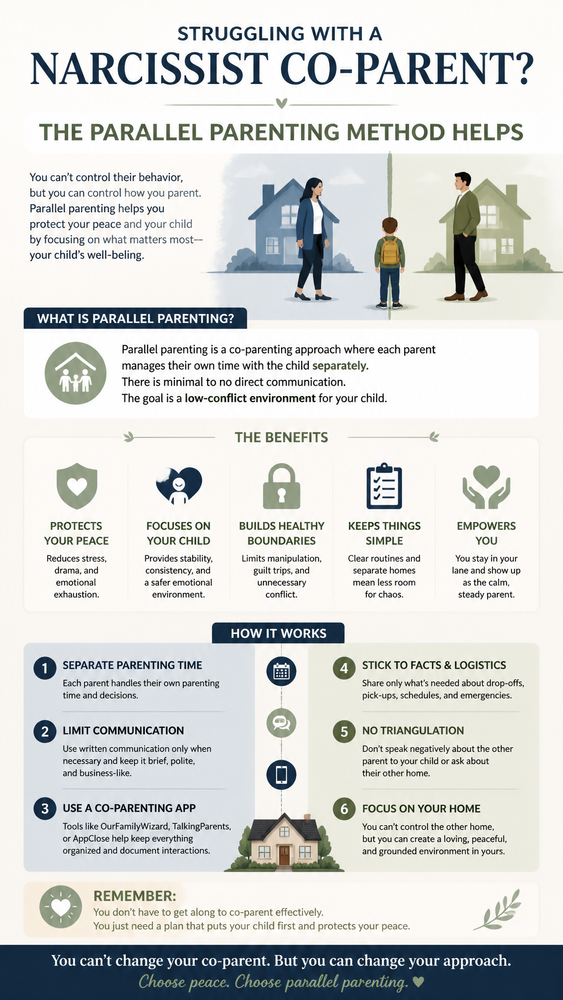
The dynamic between a co-parenting with a narcissist and a normal co-parent is defined by one fundamental asymmetry: one person operates in good faith, and the other does not. Traditional co-parenting assumes mutual respect, shared goals, and basic cooperation. With a narcissistic ex, none of those conditions exist. Therapists and family law professionals now recognize this gap and recommend a different model entirely: parallel parenting. This approach structures your relationship around minimal contact, documented communication, and formal agreements that remove ambiguity. Understanding why this shift is necessary is the first step toward protecting both yourself and your children.
What makes a narcissistic co-parent different from a normal one?
A narcissistic co-parent does not view the parenting relationship as a partnership. They view it as an extension of the control they exercised during the relationship. Narcissistic Personality Disorder (NPD) is the clinical term for the pattern most co-parents encounter, though many narcissistic exes never receive a formal diagnosis. The behaviors are consistent regardless of diagnosis.
Common patterns include:
- Grandiosity and entitlement. The narcissistic co-parent believes their preferences override court orders, schedules, and the child’s stated needs.
- Lack of empathy. Children’s emotional distress registers as inconvenient, not as something requiring a response.
- Gaslighting. Agreed-upon arrangements get rewritten in real time. You find yourself questioning your own memory of conversations.
- Triangulation. Children are pulled into adult conflict, used as messengers, or positioned as allies against you.
- Using children as pawns. Custody time becomes a tool for punishment or leverage, not a genuine expression of parenting interest.
The emotional toll on the non-narcissistic parent is significant. 42% of callers to the National Domestic Abuse Helpline identified a former partner as their perpetrator, with children and legal systems frequently involved. Abuse does not end at separation. It often intensifies.
Pro Tip: Keep a private, dated log of every incident involving manipulation, schedule violations, or child-related conflict. Plain facts, no emotional commentary. This record becomes critical later.
Why does traditional co-parenting fail with a narcissistic ex?
Standard co-parenting assumes both parents can prioritize the child’s needs above their own. It assumes good faith in communication, flexibility in scheduling, and a shared commitment to reducing conflict. These assumptions are reasonable between two cooperative adults. They are exploitable vulnerabilities when one parent is a narcissist.
Every attempt at flexibility becomes an opportunity for boundary violations. Every direct conversation becomes a chance to provoke, manipulate, or gather ammunition. The default advice to “try co-parenting first” is inadequate for high-conflict narcissistic exes. Clinical consensus now recommends containment strategies from the outset.
Parallel parenting is the evidence-based alternative. The table below shows how it differs from traditional co-parenting:
| Feature | Traditional co-parenting | Parallel parenting |
|---|---|---|
| Communication style | Direct, frequent, flexible | Written only, minimal, structured |
| Decision-making | Shared and negotiated | Divided by domain in a formal plan |
| Conflict exposure | Higher, requires ongoing cooperation | Lower, by design |
| Contact between parents | Regular, often informal | Minimal, through documented channels |
| Court involvement | Lower initially | Formalized parenting plan from the start |
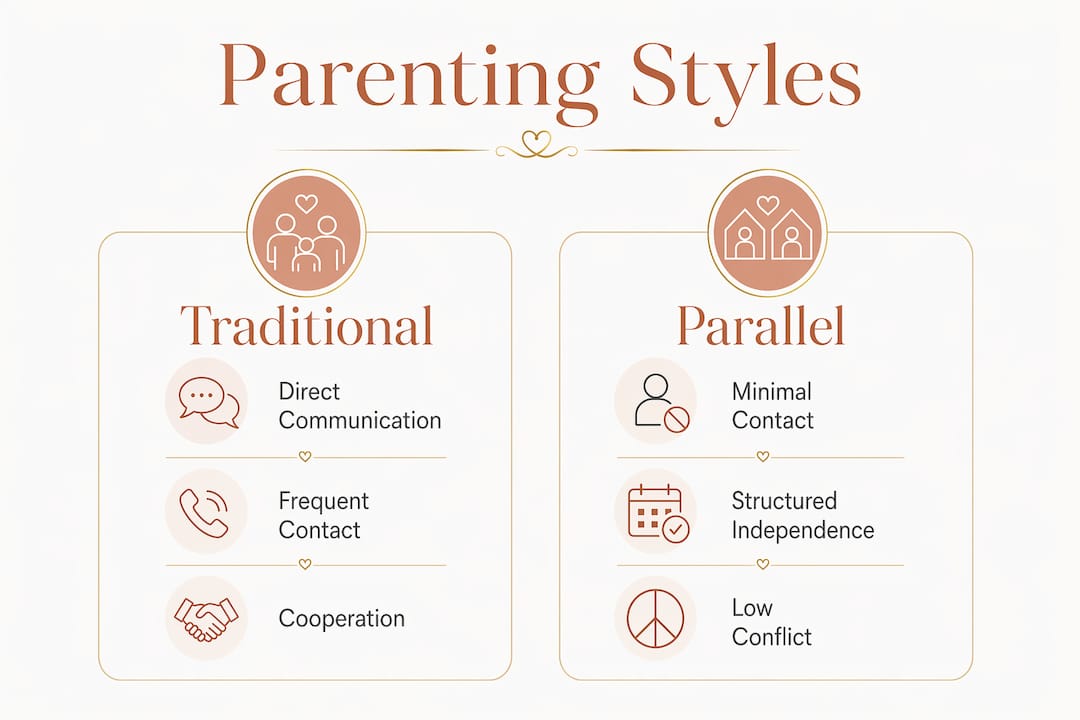
Parallel parenting protects children’s nervous systems from chronic conflict exposure. Structural independence replaces cooperation as the organizing principle. Successful parallel parenting depends on a formalized, detailed parenting plan that assigns decision-making authority clearly, leaving no room for the narcissistic co-parent to exploit ambiguity.
Pro Tip: Request that your parenting plan specifies who makes decisions about medical care, education, and extracurricular activities independently. Vague language invites conflict. Specificity removes it.
How should you communicate with a narcissistic co-parent?
Communication is the primary battlefield in high-conflict co-parenting. The goal is not to resolve conflict through better conversation. The goal is to reduce the frequency and emotional charge of every interaction.
Two frameworks define effective communication in this context:
- BIFF (Brief, Informative, Friendly, Firm). BIFF responses minimize emotional triggers and reduce the chance of prolonged conflict. A BIFF message answers the question, adds no extra information, and closes the loop. It does not invite debate.
- Avoid JADE (Justify, Argue, Defend, Explain). Every time you explain your reasoning to a narcissistic co-parent, you hand them material to argue against. Avoiding JADE responses reduces interaction frequency and keeps you in control of the communication dynamic.
Practical steps for managing communication:
- Use documented platforms like Our Family Wizard or TalkingParents for all co-parenting messages. These platforms timestamp every message and cannot be altered after sending.
- Respond on a schedule, not in real time. Narcissistic co-parents use urgency as a manipulation tactic. A 24-hour response window removes that pressure.
- Never respond to provocations in the message thread. Screenshot and file them. Respond only to the logistical content, if any exists.
- Keep children out of message relays entirely. Never ask a child to pass information to the other parent.
The shift from emotional engagement to transactional communication feels cold at first. It is, in fact, the most protective thing you can do for yourself and your children.
How do you handle legal challenges with a narcissistic co-parent?
Narcissistic co-parents frequently weaponize the legal system in a pattern known as lawfare. Lawfare involves abusing legal processes to maintain control and cause financial attrition. Custody is often sought not out of genuine parenting interest but as a mechanism for ongoing harassment and manipulation.
Protecting yourself legally requires a specific approach:
- Document everything chronologically. Unemotional, child-focused, chronological documentation provides a stronger evidential advantage than emotional storytelling. Courts respond to patterns, not incidents.
- Build a track record, not a winning argument. The shift from “winning” to “building a track record” is the most important mindset change in family court. Demonstrate consistent compliance with orders. Document every violation by the other parent.
- Work with a family law attorney experienced in high-conflict cases. Standard family law attorneys often underestimate narcissistic litigation tactics. Seek counsel familiar with coercive control and parental alienation dynamics. Resources like Jeff T. Gorman Law Offices specialize in exactly these high-conflict custody situations.
- Understand how courts misread these cases. Judges often interpret the narcissistic co-parent’s confidence and charm as credibility. Your calm, documented record is your counter to that perception.
- Request a Guardian ad Litem. In contested custody cases, a Guardian ad Litem represents the child’s interests independently. This removes some of the pressure from your testimony alone.
Detailed guidance on preparing for custody court with a narcissistic ex is one of the most practical investments you can make before any hearing.
Pro Tip: Never send an angry message, make an impulsive legal filing, or respond to provocation in court documents. Every action you take becomes part of your track record. Make it one you are proud to show a judge.
How do you protect your children and maintain your own stability?
One emotionally stable, attuned parent is enough to buffer significant trauma in children. Research in developmental psychology consistently shows that children need at least one secure attachment figure to develop resilience. You are that parent. Your stability is not a luxury. It is your children’s primary protective factor.
Practical ways to shield your children from narcissistic co-parenting conflict:
- Never speak negatively about the other parent in front of your children. This protects them from loyalty conflicts and protects you legally.
- Validate your children’s feelings without interpreting the other parent’s behavior for them. “That sounds really hard” is more useful than “Your dad did that to hurt you.”
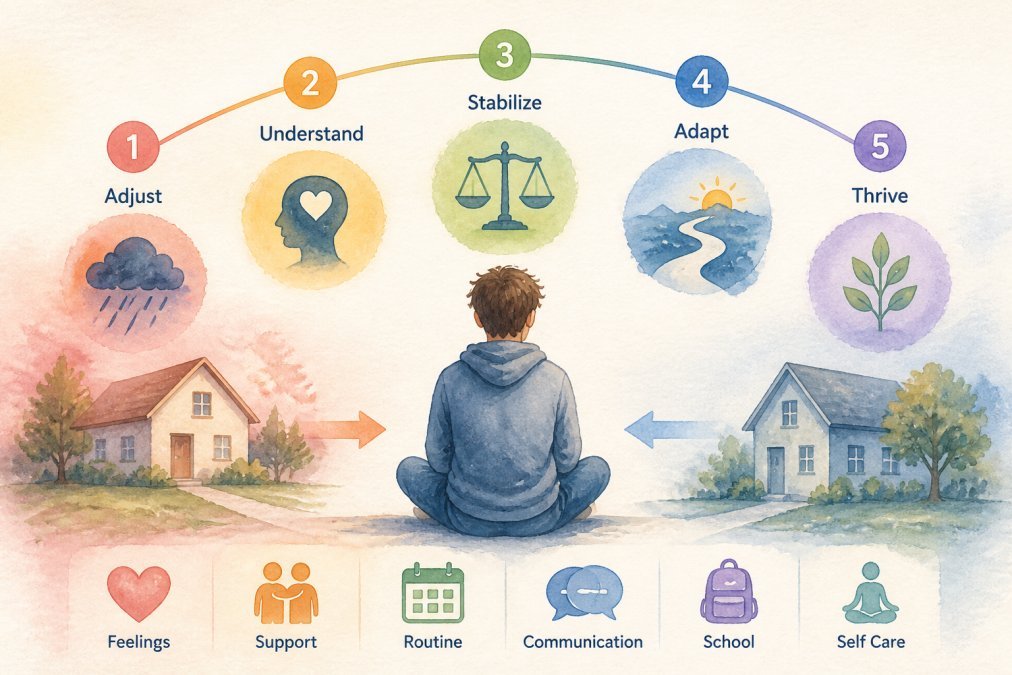
- Create predictable routines in your home. Consistency is the antidote to the chaos narcissistic co-parenting creates.
- Watch for signs of trauma: anxiety, regression, sleep disturbances, or sudden changes in behavior after visits. These warrant professional support.
“Children do not need two perfect parents. They need one parent who is present, consistent, and emotionally safe.” This principle, widely cited in child trauma literature, reframes the goal. You are not competing with the narcissistic co-parent. You are building a refuge.
Resources like supporting kids in two homes offer structured guidance for parents managing this exact dynamic. For your own recovery, trauma bonding is a real and often unrecognized consequence of long-term relationships with narcissistic partners. Recognizing it is the first step toward healing.
Key takeaways
Co-parenting with a narcissistic ex requires parallel parenting, documented communication, and a court-ready track record built on consistent, child-focused behavior.
| Point | Details |
|---|---|
| Parallel parenting over co-parenting | Structured independence replaces cooperation when a narcissistic ex is involved. |
| BIFF communication works | Brief, Informative, Friendly, Firm responses reduce conflict and limit manipulation. |
| Documentation is your legal defense | Chronological, unemotional records outperform emotional testimony in family court. |
| Lawfare is a real tactic | Narcissistic co-parents use legal systems for control, not genuine custody interest. |
| Your stability protects your children | One attuned, consistent parent is enough to buffer significant trauma in children. |
What I’ve learned from watching parents survive this
I have worked with enough families in high-conflict post-separation situations to say this plainly: the parents who fare best are the ones who stop trying to reason with the narcissistic co-parent and start building systems instead. The instinct to explain, to appeal to fairness, to hope the other parent will eventually see the damage they are causing is deeply human. It is also the instinct that keeps people stuck.
The most effective co-parents I have seen treat every interaction with their narcissistic ex like a business transaction. They use platforms like Our Family Wizard, they respond on schedule, and they never deviate from the parenting plan without written confirmation. That discipline feels unnatural at first. Over time, it becomes the structure that makes everything else possible.
The legal piece is where I see the most unnecessary suffering. Parents arrive in court with emotional accounts of years of manipulation, and judges respond to evidence. The shift to building a documented track record rather than trying to “expose” the narcissist is not giving up. It is playing the game that actually wins.
Give yourself permission to grieve the co-parenting relationship you wanted. Then build the one that actually protects your children.
— S.J.Howe

Resources for parents managing high-conflict co-parenting
Dealing with a narcissistic ex in a co-parenting situation is one of the most sustained forms of post-separation stress a parent can face. The emotional, legal, and psychological weight of it is real, and generic advice rarely addresses the specific dynamics involved.
Aftertheaffair offers structured, evidence-informed resources built specifically for parents navigating betrayal, high-conflict dynamics, and post-separation trauma. The parallel parenting method guide walks through implementation in practical terms, including how to set up communication systems and formalize parenting plans. For parents working through the deeper personal impact of these relationships, the trauma recovery checklist provides a structured path toward healing. These resources are designed for the reality you are living, not a simplified version of it.
FAQ
What is parallel parenting and how does it differ from co-parenting?
Parallel parenting is a structured arrangement where each parent operates independently during their own time with the child, with minimal direct contact between parents. Unlike traditional co-parenting, it does not require cooperation or communication beyond formal, documented channels.
Can a narcissistic co-parent change over time?
Narcissistic behavior patterns are deeply entrenched and rarely change without sustained, voluntary therapeutic intervention. Building systems that protect you and your children regardless of the other parent’s behavior is a more reliable strategy than waiting for change.
What is lawfare in a custody dispute?
Lawfare is the use of legal processes as a weapon to exhaust, control, or financially drain the other parent. Narcissistic co-parents often file repeated motions, request unnecessary evaluations, or violate orders knowing enforcement is costly.
How do I communicate with a narcissistic co-parent without being manipulated?
Use the BIFF method: keep messages Brief, Informative, Friendly, and Firm. Avoid justifying, arguing, defending, or explaining your decisions. Documented platforms like Our Family Wizard or TalkingParents create a timestamped record of all exchanges.
How do I know if my child needs professional support?
Watch for anxiety, sleep problems, regression to younger behaviors, or sudden changes in mood after visits with the other parent. A child psychologist experienced in high-conflict family dynamics can assess whether these signs indicate trauma and recommend appropriate support.
Recommended
- Parallel Parenting With a Narcissist – After the Affair Series
- What is the parallel parenting method – After the Affair Series
- Parallel Parenting After Infidelity: When Co-Parenting With Your Betrayer Feels Impossible – After the Affair Series