Last Updated: August 27, 2026
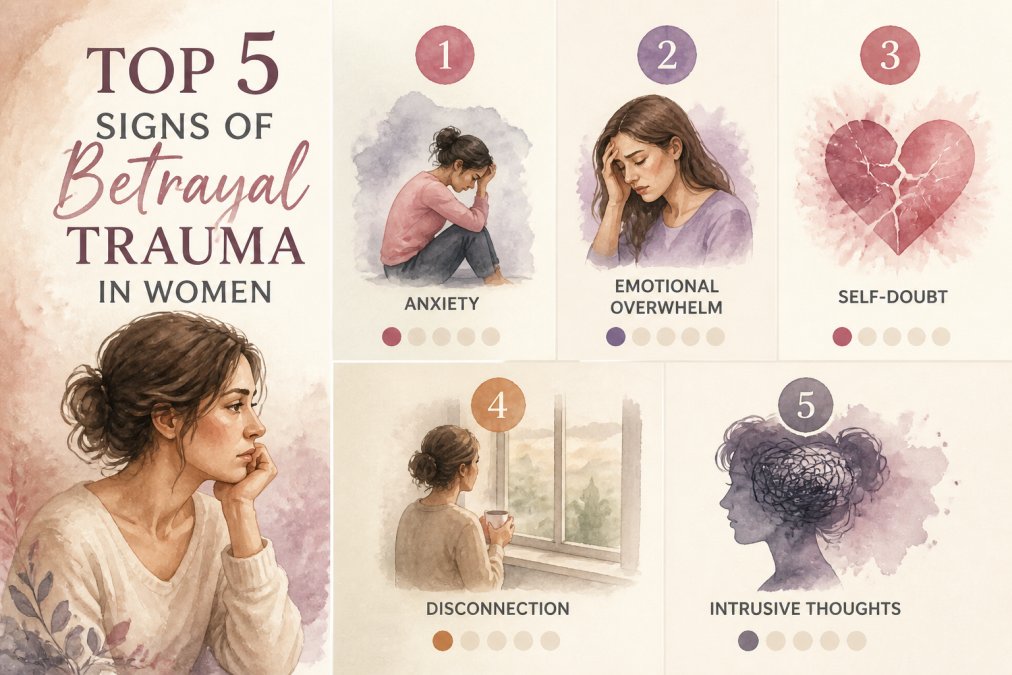
Discovering infidelity shatters the foundation of trust in a relationship, triggering profound psychological and physical responses that go far beyond heartbreak. When a partner’s betrayal comes to light, many women experience betrayal trauma, a form of relational trauma distinct from other types of psychological injury. Understanding these five core signs helps you recognize what you’re experiencing, validate your response, and take the first steps toward healing.
- What Is Betrayal Trauma and Why It Affects Women Differently
- Sign 1: Emotional Numbness and Dissociation
- Sign 2: Hypervigilance and Constant Scanning for Danger
- Sign 3: Intrusive Thoughts and Rumination
- Sign 4: Physical Symptoms and Somatic Responses
- Sign 5: Shame, Self-Blame, and Unworthiness
- Managing Betrayal Trauma After Infidelity Discovery
- Scripts for Setting Boundaries After Infidelity
- Differentiating Betrayal Trauma from Standard PTSD
- Conclusion: Your Healing Starts with Recognition
- Frequently Asked Questions
At After the Affair Series, we work with individuals navigating the immediate aftermath of infidelity discovery. Recognizing these five signs is often the turning point between feeling confused and isolated versus understanding that your response is a predictable, treatable reaction to a profound violation of trust.
What Is Betrayal Trauma and Why It Affects Women Differently
Betrayal trauma in women is a specific type of relational injury that occurs when someone you depend on, typically a romantic partner, violates your trust through deception or infidelity. Unlike general PTSD, which results from external threat, betrayal trauma emerges from the rupture of psychological safety within an intimate relationship.
When you discover infidelity, your amygdala (threat-detection center) becomes hyperactive, your hippocampus struggles to process the traumatic memory coherently, and your prefrontal cortex (rational decision-making) temporarily goes offline (the NIH). This creates nervous system dysregulation that can persist for weeks or months if left unaddressed.
Women often experience betrayal trauma differently than men due to socialization around relational identity and attachment. Many women are taught to prioritize relationship harmony and interpret a partner’s fidelity as a reflection of their own worth. When infidelity occurs, women frequently internalize the betrayal as personal failure rather than a partner’s choice, a cognitive distortion that deepens trauma and delays healing.
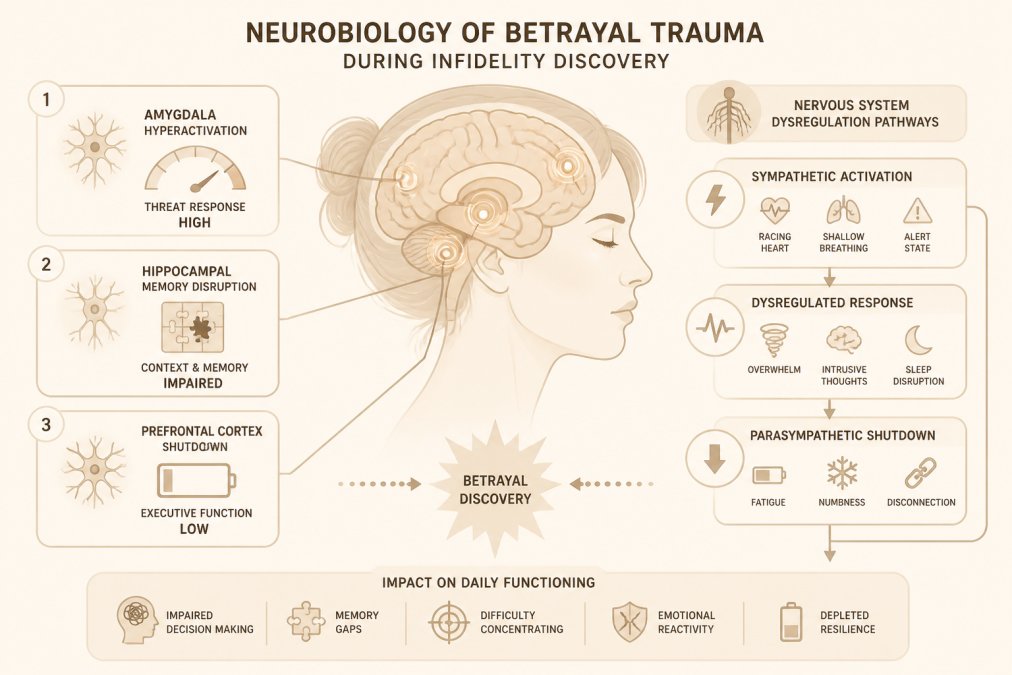
The emotional numbness, intrusive thoughts, and hypervigilance you may be experiencing are not signs of weakness. They’re predictable neurobiological responses to a fundamental breach of trust.
Betrayal trauma in women is a specific relational injury involving nervous system dysregulation, not a character flaw or sign of weakness.
Sign 1: Emotional Numbness and Dissociation
One of the most disorienting symptoms women report after infidelity discovery is emotional numbness, a flattening of affect where nothing feels real and you move through your day on autopilot. This is dissociation, a protective mechanism your nervous system activates when emotional pain exceeds your capacity to process it in real time. It’s not a sign you’re “losing it”, it’s your brain’s way of creating temporary distance from unbearable pain so you can survive the immediate crisis.
Many women describe this as feeling “numb,” “frozen,” “in a fog,” or “like I’m watching my life happen to someone else.” The gap between intellectual knowledge and emotional reality is characteristic of dissociation in betrayal trauma.
The numbness typically begins to shift after 2-4 weeks as your nervous system stabilizes, though the timeline varies widely (peer-reviewed research). During this phase, your primary task is not to “feel more,” but to create safety and stability so your nervous system can gradually come back online.
Dissociation can create a false sense that you’re “handling it well.” This is dangerous because it delays processing and can lead to delayed trauma responses weeks or months later. Numbness is not healing; it’s a pause.
Sign 2: Hypervigilance and Constant Scanning for Danger
After discovering infidelity, many women develop hypervigilance, a state of heightened threat-detection where you’re constantly scanning for signs of further betrayal. You might find yourself checking your partner’s phone, asking repetitive questions, monitoring their location, or interpreting neutral behaviors as evidence of continued deception.
Hypervigilance is your nervous system’s attempt to regain control by predicting and preventing further betrayal. It feels protective, but it’s actually exhausting and unsustainable, burning cortisol and adrenaline at high levels and leading to fatigue, difficulty concentrating, and irritability (peer-reviewed research). The key insight is that hypervigilance cannot prevent betrayal. No amount of monitoring guarantees safety in a relationship with someone who has already chosen deception.
Hypervigilance often triggers cycles of conflict: you ask questions seeking reassurance, your partner becomes defensive, and you interpret their defensiveness as further proof of deception. Breaking this cycle requires [setting boundaries](/ways-to-set-boundaries/) on monitoring behaviors and redirecting that investigative energy toward your own healing.
Sign 3: Intrusive Thoughts and Rumination
Intrusive thoughts are unwanted, repetitive thoughts about the infidelity that intrude unbidden. You might suddenly be flooded with images of your partner with the other person or replay conversations obsessively, searching for the moment you “should have” noticed something was wrong. These thoughts are not a choice, and they’re not a sign that you’re dwelling on the past, they’re a symptom of how your brain is processing incomplete, traumatic information.
Rumination is related but distinct: it’s the compulsive replaying of events, conversations, and timelines. This feels like it should help you understand what happened, but rumination actually deepens trauma by keeping your nervous system activated. Many women report that intrusive thoughts are most intense during moments of vulnerability, early morning, late night, or when alone.
The goal is not to eliminate these thoughts through willpower, but to change your relationship to them. Cognitive techniques and somatic practices help you observe the thoughts without believing them or acting on them.
Sign 4: Physical Symptoms and Somatic Responses
Betrayal trauma lives in your body. Many women experience physical symptoms that have no clear medical cause because they’re manifestations of nervous system dysregulation and unprocessed emotional trauma. Common somatic responses include sleep disturbance, gastrointestinal symptoms, muscle tension, chest tightness, restlessness, fatigue, changes in libido, and immune suppression.
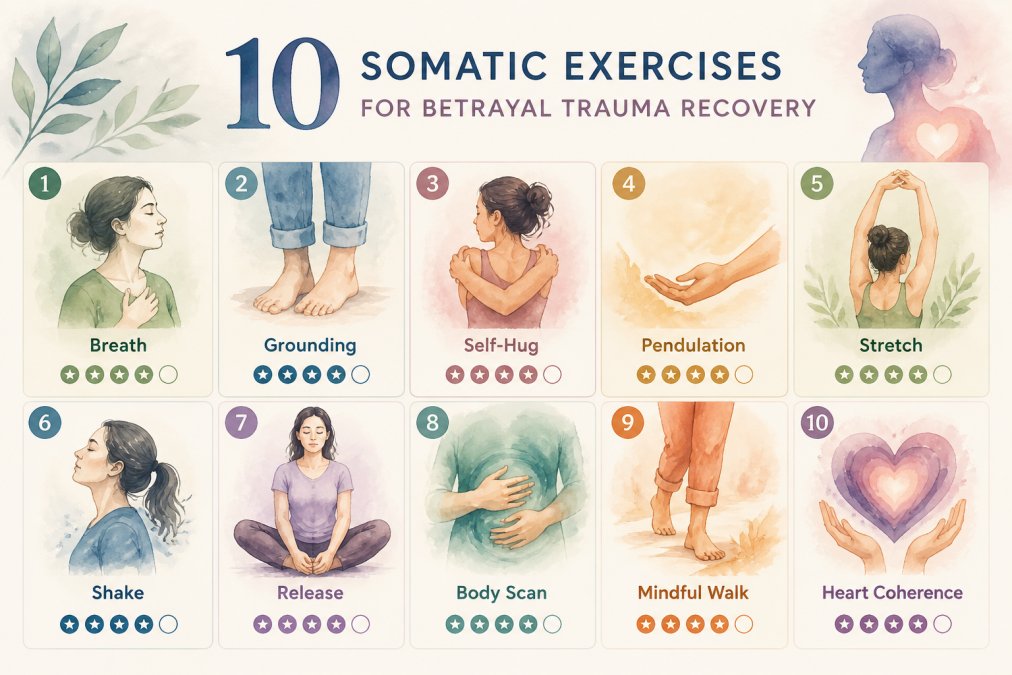
These physical symptoms are not “all in your head.” They’re your body’s direct response to threat and dysregulation. Your nervous system is stuck in a state of vigilance, and your body is bearing the cost. Somatic practices like breathwork, progressive muscle relaxation, yoga, and grounding techniques help regulate your nervous system and reduce the intensity of these physical symptoms.
Physical symptoms of betrayal trauma are not weakness; they’re your body’s signal that your nervous system needs regulation. Somatic practices that address breathing, muscle tension, and grounding are evidence-based tools for recovery.
Sign 5: Shame, Self-Blame, and Unworthiness
Perhaps the most insidious symptom of betrayal trauma is the pervasive sense of shame and self-blame. Even when you intellectually understand that your partner made the choice to betray you, many women find themselves asking: “What did I do wrong?” “Am I not attractive enough?” “If I had been a better partner, this wouldn’t have happened?”
This self-blame is not accidental. Your mind generates the narrative that if you were somehow responsible for the betrayal, then you also have the power to prevent future betrayal through changed behavior. This false sense of control feels safer than accepting that someone you trusted made choices you couldn’t control.
Shame differs from guilt. Guilt is “I did something bad.” Shame is “I am bad.” Betrayal trauma often generates deep shame, manifesting as social withdrawal, difficulty accepting compliments, or perfectionist behaviors. The antidote to shame is not positive affirmations, but connection, validation, and the gradual rebuilding of a coherent sense of self that includes the betrayal but isn’t defined by it. Working through betrayal trauma in a structured way, with clear frameworks and actionable steps, helps counteract the shame narrative. impact of trauma on health.
Managing Betrayal Trauma After Infidelity Discovery
Managing betrayal trauma requires a multifaceted approach that addresses your nervous system, thought patterns, relationships, and sense of identity. The first 48 hours after discovery are critical.
In the immediate aftermath, your primary tasks are stabilization and safety:
- Creating physical safety: If there’s any risk of harm, prioritize that first
- Limiting major decisions: Avoid signing agreements or making relationship decisions while your nervous system is in acute crisis
- Reaching out to trusted support: Tell at least one person you trust what’s happening
- Grounding yourself: Use sensory techniques (cold water on your face, holding ice, naming five things you see) to bring yourself into the present moment
- Limiting information gathering: Resist the urge to investigate or ask repetitive questions
After the initial 48 hours, your focus shifts to stabilization and nervous system regulation (typically 2-6 weeks):
- Establishing a sleep routine: Sleep deprivation intensifies all trauma symptoms
- Moving your body: Walking, yoga, or gentle movement helps process nervous system activation
- Limiting alcohol and substances: These numb temporarily but delay processing
- Journaling or talking through your experience: Putting words to what happened helps your brain process it
- Seeking professional support: Therapy with a trauma-informed provider accelerates healing significantly
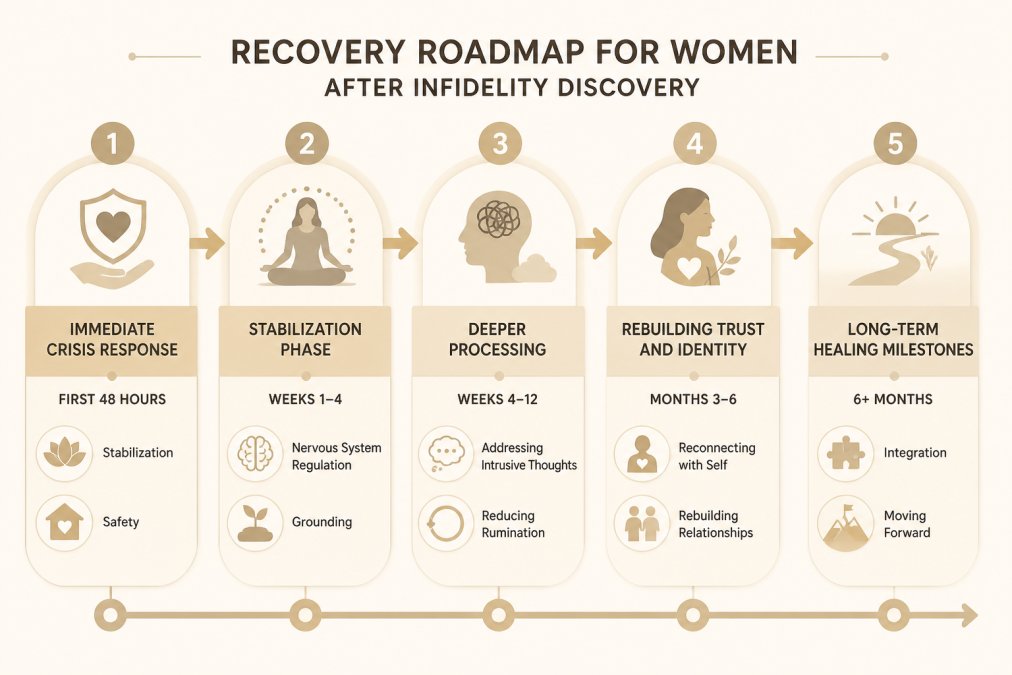
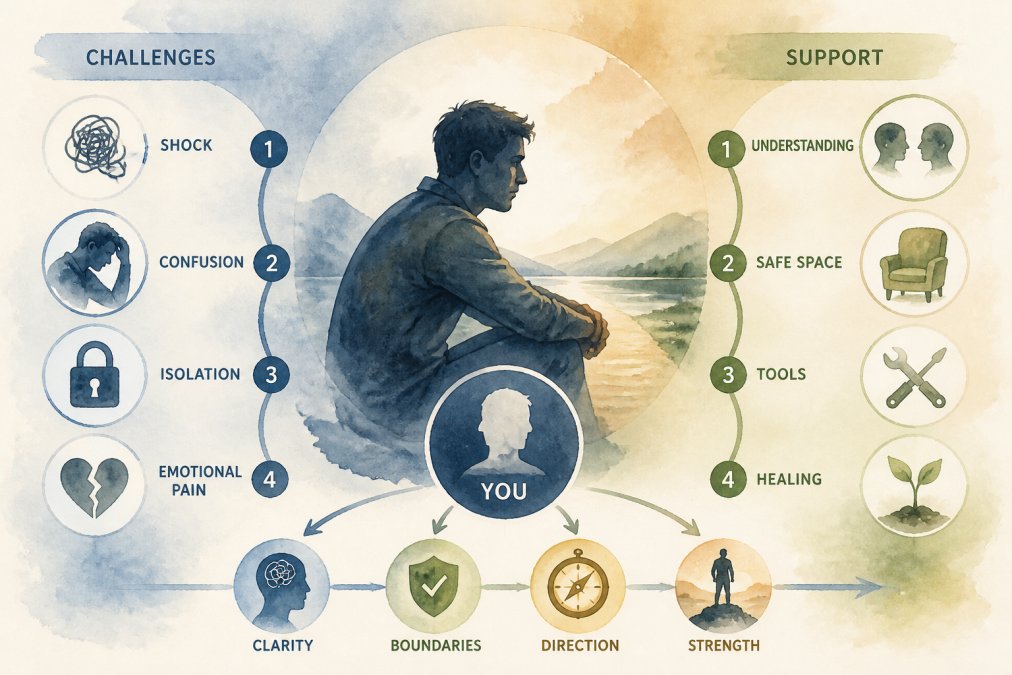
Longer-term healing involves addressing the specific symptoms outlined: processing dissociation, breaking hypervigilance cycles, managing intrusive thoughts through cognitive techniques, regulating somatic symptoms, and rebuilding a sense of worthiness.
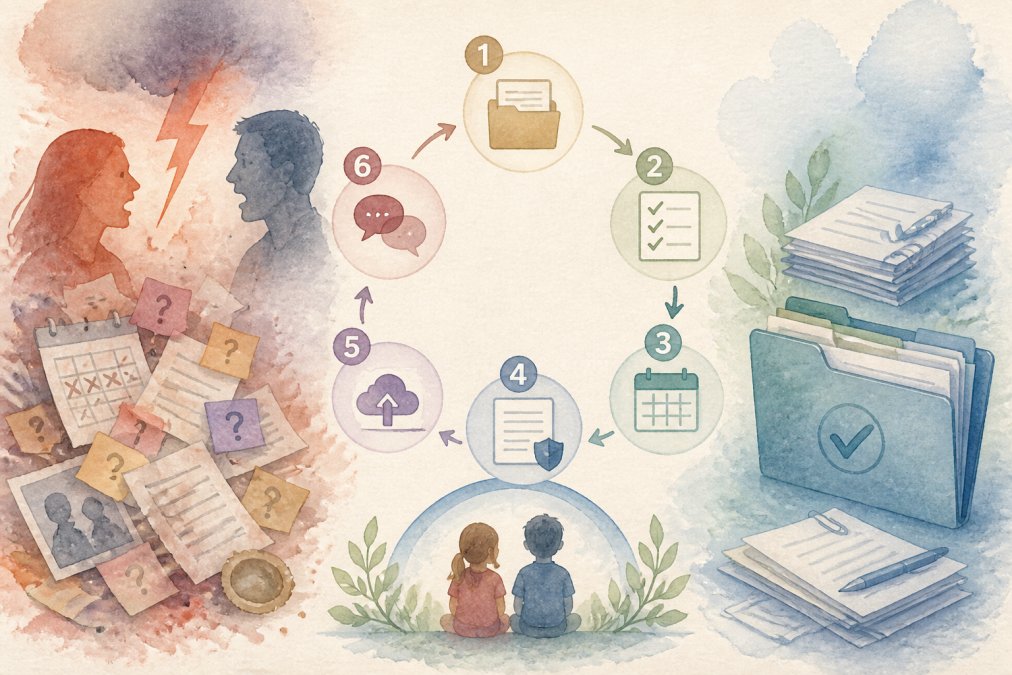
After the Affair Series provides structured frameworks specifically designed for this multi-phase recovery process, offering specific scripts and protocols for managing the exact situations individuals face, from the first conversation after discovery to setting boundaries with a partner who may resist accountability.
Individuals in the acute crisis phase (first 2-4 weeks) who need immediate, actionable tools to stabilize their nervous system and manage hypervigilance without waiting for therapy appointments.
Understanding the pattern is not the same as breaking it
You Can Explain Why This Happened. Can You Explain Why You’re Still Stuck In It?
Most people in affair recovery can narrate their entire situation with total clarity, the timeline, the triggers, the whole story, and still find themselves back in the same spiral by evening. Insight was never the missing piece. This free assessment shows you exactly where the gap actually is.
Take the Free Affair Recovery Clarity Check →A few honest questions · a scored result · 4 minutes · free
Scripts for Setting Boundaries After Infidelity
Setting boundaries after infidelity is essential but difficult. Your nervous system is dysregulated, you’re vulnerable to guilt-tripping or gaslighting, and you may struggle to advocate for your own needs. Structured scripts help you communicate clearly without being derailed.
A boundary script should: (1) state the boundary clearly, (2) explain why it’s necessary without over-justifying, and (3) specify the consequence if violated.
Script for limiting repetitive questioning:
“I need to stop asking you the same questions repeatedly. When I do, it keeps my nervous system activated and prevents me from healing. Going forward, I’m setting a boundary: I’ll ask clarifying questions once, and I need you to answer completely and honestly. After that, I’m moving forward rather than revisiting the same details. If you’re not willing to answer my initial questions fully, that tells me something important about your commitment to rebuilding trust.”
Script for addressing monitoring or surveillance:
“I’ve been checking your phone and location, and I need to stop. This behavior is harming my own recovery and our relationship. I’m setting a boundary: I won’t monitor your activities, and I’m asking you to respect my need to rebuild trust through your actions over time, not through surveillance. If you’re not willing to be transparent about your activities, I’ll need to reconsider whether this relationship is safe for me.”
Script for managing contact with the affair partner:
“I need you to completely cease contact with [person]. Any contact undermines my ability to heal and signals that you’re not taking the betrayal seriously. This is non-negotiable for me. If you maintain contact, I’ll interpret that as a sign that you’re not committed to rebuilding trust, and I’ll need to make decisions about my own future accordingly.”
Script for addressing gaslighting or minimization:
“When you say the affair ‘wasn’t a big deal’ or that I’m ‘overreacting,’ you’re invalidating my very real trauma response. I need you to acknowledge that infidelity is a serious betrayal that has caused significant harm. If you can’t do that, I can’t move forward with you.”
These scripts work because they’re specific, clear, and tied to consequences. They don’t rely on your partner’s agreement; they state what you need and what will happen if those needs aren’t met.
Boundaries without consequences are wishes, not boundaries. If you state a boundary and then don’t follow through when it’s violated, your partner learns that your boundaries are negotiable. The most effective boundaries are those you’re genuinely willing to enforce.
After the Affair Series provides 50+ age-appropriate scripts tailored to different scenarios, from initial discovery conversations to co-parenting communication when separation occurs.
Differentiating Betrayal Trauma from Standard PTSD
While betrayal trauma shares some symptoms with post-traumatic stress (hypervigilance, intrusive thoughts, emotional dysregulation), it has distinct features requiring different treatment approaches.
Standard PTSD typically results from exposure to external threat: combat, accidents, violence, or natural disasters. Betrayal trauma results from relational violation, a breach of trust by someone on whom you depended for safety. The trauma isn’t just about what happened; it’s about who did it and what it means about your judgment, worth, and ability to trust. Additionally, in betrayal trauma, the source of the threat may still be present in your life, creating a more complex healing journey.
Treatment for betrayal trauma often requires specific focus on trust-rebuilding, attachment repair, and cognitive work around shame and self-blame.
Conclusion: Your Healing Starts with Recognition
Recognizing these five signs of betrayal trauma in women is your first step toward reclaiming agency in your recovery. You’re not overreacting, you’re not weak, and you’re not alone. Your response is a predictable, treatable reaction to a profound violation of trust.
Healing from betrayal trauma requires more than time or willpower. It requires structured support, nervous system regulation tools, and frameworks for rebuilding trust in others and yourself. After the Affair Series offers a free 23-point assessment that helps you identify which specific symptoms are most active in your experience and provides a personalized roadmap for addressing them. Take the free assessment today and begin moving from crisis into clarity.
Frequently Asked Questions
Q: What are the long-term effects of betrayal trauma on mental health?
A: Untreated betrayal trauma can lead to chronic anxiety, depression, and complex PTSD symptoms that persist for years. Many individuals experience persistent hypervigilance, difficulty forming new relationships, and a persistent sense of unworthiness. The nervous system remains in a heightened state of alert, making it difficult to feel safe even in secure environments. Professional support and trauma-informed therapy can help reverse these patterns and restore emotional stability.
Q: How does managing betrayal trauma after infidelity discovery differ from standard grief?
A: Betrayal trauma involves cognitive dissonance and shattered trust in addition to grief. While grief is sadness about loss, betrayal trauma includes hypervigilance, intrusive thoughts about the infidelity, and a fundamental disruption of your sense of safety with your partner. The discovery phase often triggers acute crisis symptoms, panic, dissociation, and emotional dysregulation, that require immediate stabilization before deeper healing work can begin.
Q: Can betrayal trauma lead to PTSD?
A: Yes. Betrayal trauma can develop into complex PTSD or post-traumatic stress disorder when the nervous system becomes chronically dysregulated. Symptoms include flashbacks, avoidance behaviors, emotional numbness, and hypervigilance. The relational nature of the betrayal, the violation of trust by someone close to you, intensifies the trauma response. Trauma-informed care and nervous system regulation techniques are essential for recovery.
Q: What scripts for setting boundaries after infidelity actually work with a hostile partner?
A: Structured communication scripts like the Gray Rock Method (brief, boring, emotionless responses) work even with hostile partners because they remove the emotional fuel that escalates conflict. Scripts focus on stating your boundary clearly without justification or argument: ‘I’m not discussing this further’ or ‘I need you to contact me only about the children.’ Consistency matters more than perfection. Writing scripts down beforehand prevents reactive responses during heated moments.
Q: How long does it take to recover from betrayal trauma in women?
A: Recovery timelines vary, but most individuals see significant symptom reduction within 3-6 months of consistent trauma-informed support. Acute crisis symptoms (intrusive thoughts, hypervigilance) typically stabilize within weeks. Deeper healing, rebuilding trust, processing shame, and restoring identity, often takes 12-24 months or longer, especially if the relationship continues. Individual therapy, nervous system regulation practices, and structured support accelerate recovery.
Healing from betrayal trauma is possible, and you don’t have to navigate it alone. After the Affair Series provides the structured frameworks and actionable scripts that help you move through crisis with clarity, protect your emotional wellbeing, and rebuild a sense of safety and identity. Get started with the free 23-point assessment and access the tools designed specifically for women navigating infidelity discovery and its aftermath.
Willpower was never the problem
You’ve Said No Contact Before. What Made It Fail Last Time?
It usually isn’t willpower. It’s a loophole nobody accounted for, a second number, a mutual friend, a platform nobody thought to block. This free audit maps all 47 known workarounds so the boundary holds on its own, without relying on you to be strong enough every single time.
Get the Free Loophole Elimination Matrix →47-point audit · instant download · free