Infidelity shatters trust and leaves deep emotional wounds that can feel impossible to heal. Many couples struggle to know where to begin or how to move forward together without causing more pain. This guide provides a clear, compassionate roadmap with practical strategies designed to help you process trauma, communicate effectively, and rebuild the foundation of your relationship step by step.
- Understanding the journey of healing together
- Prerequisites for healing: what you need before you start
- Step-by-step emotional healing and trust rebuilding process
- Common mistakes to avoid during recovery and how to fix them
- Expected timelines, measurable outcomes, and success metrics
- Safety considerations and emotional boundaries
- Alternative approaches and tradeoffs in infidelity recovery
- Summary and next steps: moving forward in healing together
- Healing support resources from After the Affair
- Frequently asked questions
- Recommended
Key takeaways
| Point | Details |
|---|---|
| Structured phases guide recovery | Following survival, decision, transformation, and growth stages prevents prolonged suffering and builds realistic expectations. |
| Prerequisites ensure readiness | Emotional safety, mutual commitment, and professional support create the foundation for successful healing. |
| Stepwise trust rebuilding works | Gradual forgiveness, consistent communication, and small trust acts accelerate recovery more than rushing the process. |
| Trauma-informed therapy boosts success | Couples using specialized therapy have a 60% higher chance of rebuilding trust successfully. |
| Clear boundaries prevent retraumatization | Establishing emotional safety rules and timeout signals protects both partners during vulnerable healing moments. |
Understanding the journey of healing together
Recovery from infidelity follows distinct emotional phases that help you navigate the chaos and pain. Understanding these stages of healing after an affair provides a roadmap when everything feels overwhelming.
The four primary phases include survival (immediate crisis response), decision (evaluating the relationship’s future), transformation (deep emotional work and trust rebuilding), and growth (creating a stronger partnership). Each phase demands different skills and emotional resources.
Betrayal triggers complex trauma responses including hypervigilance, intrusive thoughts, emotional numbness, and intense anger. These reactions are normal protective mechanisms your mind uses to process the violation of trust. Recognizing them as part of healing rather than signs of weakness helps you respond with self-compassion.
Structured guidance prevents couples from getting stuck in destructive patterns like blame cycles or emotional withdrawal. Without a clear framework, many partners repeat the same painful conversations without progress, extending suffering unnecessarily.
Key elements of understanding your healing journey:
- Recognize that healing is not linear and setbacks are normal
- Accept that both partners experience distinct emotional timelines
- Understand that patience with yourself and each other is essential
- Know that realistic expectations reduce frustration and disappointment
- Acknowledge that professional support accelerates progress significantly
Setting realistic expectations from the start protects you from discouragement. Healing takes sustained effort, vulnerability, and time. Rushing through phases or skipping emotional work creates unstable foundations that crumble under pressure.
Prerequisites for healing: what you need before you start
Successful recovery requires specific conditions in place before beginning structured healing work. Attempting to rebuild trust without these essentials often leads to retraumatization or relationship breakdown.
Both partners must demonstrate genuine emotional readiness to confront painful truths. This means the unfaithful partner has ended the affair completely and shows remorse, while the betrayed partner feels safe enough to engage. Forcing healing before readiness causes more damage.
Mutual commitment to collaborative healing is non-negotiable. One partner cannot carry the entire recovery burden. Both must actively participate in exercises, therapy homework, and difficult conversations even when uncomfortable.
Essential prerequisites for starting your healing journey:
- Complete transparency from the unfaithful partner about the affair
- Willingness to answer questions honestly without defensiveness
- Access to qualified therapists specializing in infidelity trauma
- Time and space for individual emotional processing
- Financial and practical stability to support therapy and recovery time
- Supportive friends or family who respect your healing process
Understanding essential conditions before healing helps you assess whether you are truly ready or need more preparation time. There is no shame in pausing to build stronger foundations first.
Pro Tip: Create a written agreement outlining expectations for honesty, communication frequency, and boundaries before beginning structured recovery work. This document serves as a reference point when emotions run high and clarity fades.
Establishing emotional safety through clear boundaries prevents additional trauma during vulnerable moments. Safety measures might include agreed-upon communication rules, temporary separation of finances, or scheduled check-ins to assess emotional wellbeing.
Without these prerequisites, healing attempts risk stagnating in painful loops or causing additional relationship damage. Taking time to establish solid foundations demonstrates wisdom and commitment to lasting recovery.
Step-by-step emotional healing and trust rebuilding process
Recovery becomes manageable when broken into clear, actionable steps. This infidelity recovery checklist provides the structure you need to move forward systematically.
Step 1: Acknowledge and accept the infidelity openly. Both partners must confront the reality of what happened without minimizing or justifying. The unfaithful partner takes full responsibility while the betrayed partner validates their pain without shame.
Step 2: Engage in emotional processing of anger, hurt, and grief. Allow yourself to feel the full range of emotions without judgment. Suppressing feelings delays healing, while expressing them safely in therapy or journaling releases their power over you.
Step 3: Use structured communication exercises to foster understanding. Learn how to communicate after affair situations using techniques like speaker-listener format, emotion labeling, and reflective listening. These tools prevent defensive reactions and create genuine connection.
Step 4: Practice gradual forgiveness and empathy at your own pace. Forgiveness is not a single event but an ongoing process of releasing resentment. You cannot force it or rush it. Authentic forgiveness emerges naturally as trust rebuilds through consistent actions.
Step 5: Implement trust-building activities and evaluate progress regularly. Small, consistent demonstrations of reliability matter more than grand gestures. Following through on commitments, maintaining transparency, and honoring boundaries rebuild trust incrementally.
Pro Tip: Track trust-building behaviors weekly in a shared journal. Note specific actions like timely responses to texts, keeping promises, or initiating difficult conversations. Seeing progress documented combats hopelessness during difficult moments.
Research shows that couples who engage in trauma-informed therapy tailored for infidelity have significantly better outcomes. Guiding clients after infidelity requires specialized skills that general couples therapy often lacks.
| Recovery Step | Primary Activities | Expected Outcome | Timeline |
|---|---|---|---|
| Acknowledgment | Full disclosure, responsibility-taking | Reality acceptance, reduced denial | Weeks 1-4 |
| Emotional processing | Individual therapy, journaling, safe expression | Trauma release, emotional clarity | Months 1-6 |
| Communication rebuilding | Structured exercises, active listening | Understanding, reduced reactivity | Months 3-12 |
| Forgiveness practice | Empathy building, resentment release | Emotional freedom, connection | Months 6-18 |
| Trust rebuilding | Consistent actions, transparency, boundaries | Restored security, relationship satisfaction | Months 6-24 |
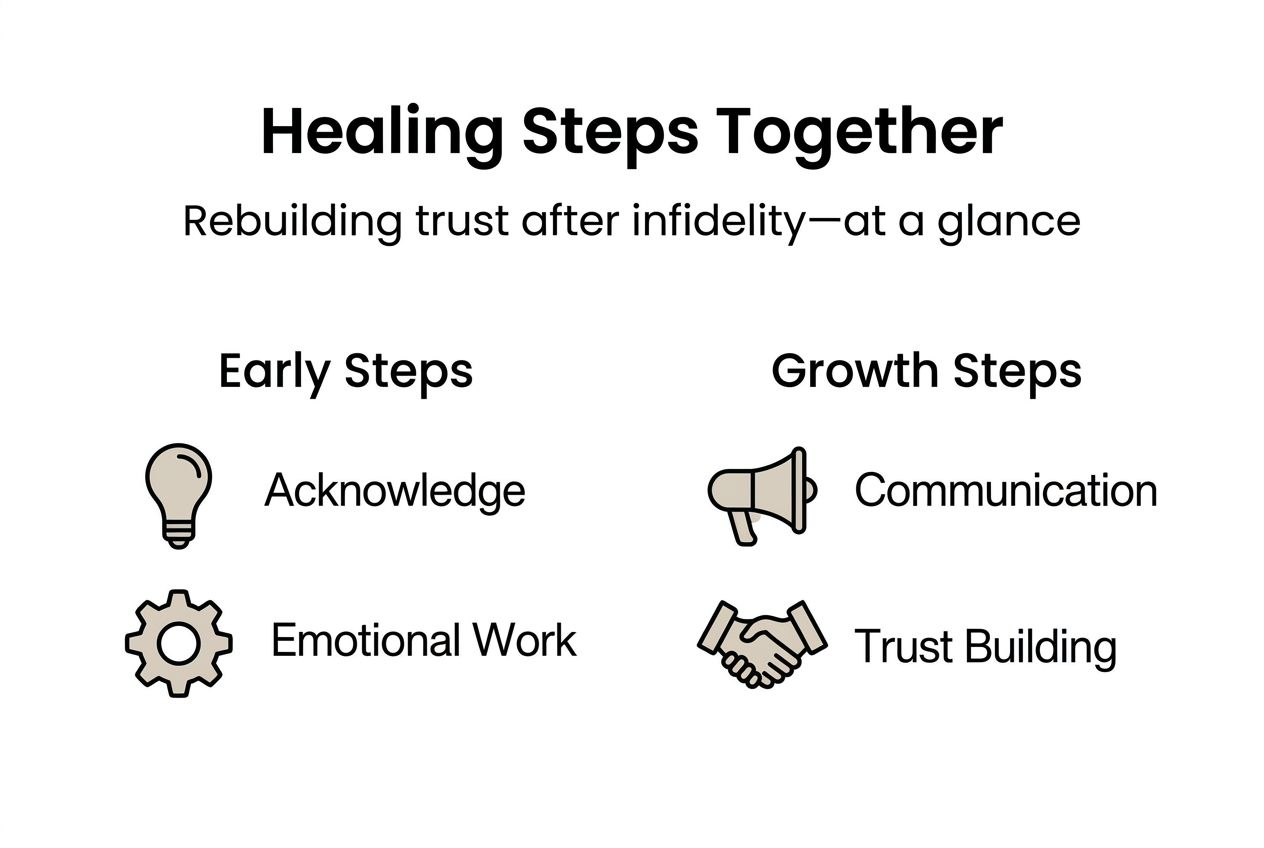
Each step builds on the previous one, creating cumulative progress that transforms your relationship. Skipping steps or rushing through them compromises the entire healing process.
Common mistakes to avoid during recovery and how to fix them
Even well-intentioned couples make predictable errors that derail healing. Recognizing these pitfalls early allows you to correct course before causing lasting damage.
Avoiding difficult conversations delays healing indefinitely. The discomfort of addressing painful topics feels unbearable, so couples suppress questions or concerns. This creates emotional distance and unresolved resentment. Fix this by scheduling regular check-ins where both partners commit to honest dialogue, using communication frameworks to stay constructive.
Rushing forgiveness causes dangerous setbacks. Pressure to “move on” before processing trauma creates false reconciliation that collapses when triggers arise. Authentic forgiveness cannot be forced or scheduled. Fix this by honoring your emotional timeline and communicating openly about where you are in the process.
Ignoring individual healing needs harms collective progress. Focusing exclusively on the relationship while neglecting personal trauma work creates imbalanced recovery. Both partners need individual therapy space to process their unique experiences. Fix this by coping after infidelity naturally through personal reflection, therapy, and self-care practices.
Common pitfalls and their corrections:
- Lack of boundaries invites retraumatization; establish clear safety plans immediately
- Suppressing emotions blocks genuine progress; validate and express feelings safely
- Comparing your timeline to others creates unrealistic pressure; honor your unique pace
- Ignoring triggers leads to escalation; identify and communicate trigger patterns openly
- Neglecting self-care depletes emotional resources; prioritize physical and mental health
- Isolating from support systems increases suffering; maintain healthy friendships and community
The unfaithful partner often wants to “fix things quickly” to alleviate guilt, while the betrayed partner may rush to restore normalcy to escape pain. Both impulses are understandable but counterproductive. Sustainable healing requires facing discomfort rather than avoiding it.
Another critical mistake is making major life decisions during early recovery. Moving, having children, or changing careers adds stress that overwhelms fragile healing. Postpone big decisions until you have established emotional stability and clarity.
Expected timelines, measurable outcomes, and success metrics
Recovery duration varies significantly based on affair circumstances, individual trauma history, and effort invested. Most couples experience meaningful progress within six months but achieve full healing between 12 and 24 months.
Several factors influence your rebuilding trust timeline, including affair duration, whether it was emotional or physical, the level of deception involved, and pre-existing relationship health. Long-term affairs with extensive lies typically require more recovery time than brief indiscretions.
Measurable indicators of progress:
- Reduced frequency and intensity of intrusive thoughts about the affair
- Ability to discuss the betrayal without explosive emotional reactions
- Increased trust in your partner’s honesty and whereabouts
- Restored physical and emotional intimacy comfort levels
- Improved communication quality and conflict resolution skills
- Decreased hypervigilance and anxiety about relationship security
Relationship satisfaction typically increases 65 to 75 percent among couples who complete structured healing programs. This improvement often exceeds pre-affair satisfaction levels because recovery work addresses underlying relationship weaknesses that contributed to vulnerability.
| Timeline Phase | Key Milestones | Success Indicators | Typical Duration |
|---|---|---|---|
| Crisis stabilization | Affair ends, commitment established | Both partners engaged, basic safety present | 1-3 months |
| Emotional processing | Trauma addressed, grief expressed | Reduced reactivity, clarity emerging | 3-8 months |
| Rebuilding foundation | Communication patterns improve | Consistent trust-building actions | 6-14 months |
| Growth and integration | New relationship identity forms | Satisfaction exceeds pre-affair levels | 12-24 months |
These timelines represent averages. Your personal journey may be shorter or longer depending on unique circumstances. Patience with the process demonstrates maturity and commitment to lasting change rather than superficial fixes.
Pro Tip: Conduct monthly relationship assessments using standardized questionnaires that measure trust, satisfaction, and emotional connection. Tracking quantifiable progress combats the feeling that nothing is changing during difficult periods.
Safety considerations and emotional boundaries
Emotional safety forms the bedrock of successful recovery. Without it, healing attempts retraumatize rather than repair. Creating and maintaining clear boundaries protects both partners during vulnerable work.
Emotional safety means both partners feel secure enough to express feelings, ask questions, and show vulnerability without fear of attack, dismissal, or abandonment. It requires the unfaithful partner to respond with patience and non-defensiveness while the betrayed partner practices expressing needs without contempt.
Steps to establish protective boundaries:
- Agree on communication rules including no name-calling, yelling, or threatening
- Create timeout signals either partner can use when overwhelmed
- Designate affair-free zones or times where recovery talk is off limits
- Set transparency expectations for phone access, social media, and whereabouts
- Establish consequences for boundary violations that both partners commit to enforcing
- Schedule regular boundary reviews to adjust as healing progresses
Safety plans reduce retraumatization risk by providing structure when emotions escalate. For example, agreeing that either partner can request a 20-minute break during heated discussions prevents destructive exchanges. The requesting partner commits to returning after the break rather than using it to avoid.
“Emotional boundaries are not walls to keep your partner out. They are guidelines that create the safety needed for genuine intimacy to return. Without clear boundaries, couples oscillate between enmeshment and distance without ever finding secure connection.”
Examples of healthy boundaries include the unfaithful partner accepting complete transparency about their schedule and communications for a defined period, while the betrayed partner commits to not checking up obsessively once reasonable accountability is established. Balance prevents the relationship from becoming a surveillance operation.
Access emotional safety resources that provide templates for boundary agreements and communication contracts. Written documents remove ambiguity when emotional intensity clouds judgment.
Establishing safety plans in advance prevents crisis escalation. Know what steps each partner will take if triggered, who to call for support, and how to de-escalate before damage occurs.
Alternative approaches and tradeoffs in infidelity recovery
Multiple recovery paths exist, each with distinct advantages and limitations. Understanding tradeoffs helps you choose the approach that fits your circumstances, resources, and learning style.
Self-help guides and books offer flexibility and privacy at lower cost. You work at your own pace without scheduling constraints. However, this approach risks missing emotional nuances, lacks personalized feedback, and provides no accountability structure. Success depends heavily on self-discipline and relationship communication skills you may not yet possess.
Individual and couples therapy provides expert guidance tailored to your specific situation. Therapists identify patterns you cannot see and offer tools matched to your needs. The benefits of therapy after infidelity include professional support for processing trauma and rebuilding communication. Drawbacks include significant cost, scheduling challenges, and potential lack of daily practice support between sessions.
Combining self-help resources with professional therapy delivers optimal outcomes. Books and online tools provide daily practice and reinforcement, while therapy offers expert insight and accountability. This integrated approach balances cost, flexibility, and effectiveness.
Trauma-informed therapy benefits couples by addressing the deep emotional wounds infidelity creates. Standard couples therapy often focuses on communication without adequately treating the traumatic impact of betrayal. Specialized approaches recognize infidelity as trauma requiring specific interventions.
| Approach | Key Benefits | Primary Drawbacks | Best For |
|---|---|---|---|
| Self-help only | Low cost, flexible timing, privacy | No personalized guidance, easy to quit | High self-discipline, limited budget |
| Therapy only | Expert insight, accountability, tailored tools | High cost, scheduling constraints, limited practice | Complex trauma, severe communication breakdown |
| Combined approach | Balanced support, daily practice, expert guidance | Requires time and financial investment | Committed couples seeking comprehensive recovery |
| Trauma-informed therapy | Addresses core wounds, higher success rates | Fewer qualified specialists, potentially higher cost | Affairs with significant deception or long duration |
| Support groups | Peer understanding, community, low cost | Lacks professional expertise, variable quality | Supplement to therapy, reducing isolation |
Your choice depends on relationship complexity, financial resources, trauma severity, and personal learning preferences. Many couples start with self-help and add therapy when they encounter obstacles beyond their skill level.
Pro Tip: Evaluate your progress honestly after three months. If you are not seeing measurable improvement in trust and communication, invest in professional support rather than continuing ineffective efforts.
Summary and next steps: moving forward in healing together
You now have a comprehensive roadmap for navigating infidelity recovery with structure and compassion. The journey demands patience, vulnerability, and consistent effort from both partners.
Key elements for successful healing:
- Follow the structured phases from survival through growth without skipping steps
- Establish emotional safety and clear boundaries before beginning deep work
- Use stepwise trust rebuilding through small, consistent actions
- Process emotions fully rather than suppressing or rushing through pain
- Seek professional support when you encounter obstacles beyond your skills
Realistic pacing protects your progress. Healing cannot be forced or accelerated beyond your emotional capacity. Honor your unique timeline rather than comparing yourself to others or arbitrary deadlines.
When challenges arise, revisit the prerequisites and ensure your foundation remains solid. Many setbacks stem from attempting advanced healing work before establishing basic safety and commitment. Relationship growth after infidelity becomes possible when you address root issues rather than surface symptoms.
Your next concrete steps include reviewing the infidelity recovery checklist to assess your current phase, scheduling individual and couples therapy consultations, and creating your boundary agreement document. Taking action immediately while motivation is high increases your success probability.

Healing support resources from After the Affair
Recovering from infidelity requires more than good intentions. You need evidence-based frameworks, practical tools, and expert guidance tailored to your specific situation. After the Affair provides comprehensive resources designed specifically for couples navigating betrayal recovery.
Explore our 7 steps infidelity recovery checklist for a detailed action plan you can implement immediately. This structured approach breaks overwhelming recovery into manageable phases with clear milestones and success indicators.
Discover strategies for relationship growth after infidelity that transform your partnership into something stronger than before. Many couples report deeper intimacy and connection post-recovery when they do the hard work authentically.
Professionals seeking to support clients can access our guide on how to guide clients after infidelity for specialized therapeutic approaches. Our resources combine clinical expertise with compassionate understanding of the unique challenges infidelity creates.
Frequently asked questions
How long does healing from infidelity typically take?
Healing duration varies significantly based on affair circumstances, individual trauma history, and effort invested in recovery. Most couples experience meaningful progress within six to eight months but achieve full healing between 12 and 24 months. Consistent effort and professional support can shorten healing timelines while maintaining authentic emotional processing.
Can forgiveness happen before recognizing individual healing needs?
Authentic forgiveness rarely occurs without addressing individual trauma first. Rushing forgiveness before processing betrayal creates superficial reconciliation that collapses when triggers arise. Sustainable forgiveness emerges naturally as trust rebuilds through consistent actions and emotional work. Forcing it prematurely often leads to resentment and relationship deterioration.
What role does professional therapy play in recovery from infidelity?
Therapy provides specialized tools and emotional support crucial for addressing betrayal trauma effectively. Research demonstrates that couples who engage in trauma-informed therapy have a 60% higher chance of rebuilding trust successfully. The benefits of therapy after infidelity include expert pattern identification, personalized interventions, and accountability structures that self-help alone cannot provide.
Should both partners attend therapy or just the unfaithful one?
Both individual and couples therapy serve important but distinct purposes in recovery. Individual therapy helps each partner process their unique trauma, guilt, or pain privately. Couples therapy addresses relationship dynamics, communication patterns, and trust rebuilding collaboratively. Most successful recoveries incorporate both formats, with individual sessions providing personal healing space while couples work tackles relational repair.
What if my partner refuses to participate in structured healing?
One partner cannot force recovery, but you can still pursue individual healing regardless of their participation. Focus on personal trauma processing, establishing boundaries, and clarifying what you need for relationship continuation. Often, seeing your commitment to growth motivates reluctant partners to engage. If sustained refusal continues, you may need to evaluate whether the relationship can recover without mutual effort.
Recommended
- Relationship Growth After Infidelity – After the Affair Series
- How to Guide Clients After Infidelity for Healing – After the Affair Series
- Rebuilding Trust Timeline – After the Affair Series
- Relationship Healing Process – After the Affair Series
- Role of Trust in Hypnotherapy: Pathway to Lasting Change
- Postpartum Recovery Tips: Comfort And Healing For Moms