Betrayal from infidelity creates profound emotional pain that leaves you feeling lost, confused, and uncertain about your future. You need a clear, structured path forward, one that addresses both your individual healing and the possibility of rebuilding trust with your partner. This guide presents a compassionate, evidence-backed framework that walks you through each recovery phase, from stabilizing overwhelming emotions to creating a renewed relationship vision. Whether you’re navigating this journey alone or together, these steps offer the clarity and support you need to move from crisis to renewal. Embracing effective strategies for Recovery After Betrayal can significantly enhance your healing process.
Table of Contents
- Understanding Betrayal Trauma And Its Impact
- Step 1: Safety, Truth, And Stabilization
- Step 2: Grieving, Ownership, And Emotional Attunement
- Step 3: Rebuilding Intimacy, Trust, And Forgiveness
- Explore Comprehensive Resources For Healing And Growth
- FAQ
Key takeaways
| Point | Details |
|---|---|
| Recovery unfolds in phases | Healing requires commitment from both partners across overlapping stages of safety, grief, and renewal |
| Professional support matters | Therapy enhances outcomes by improving communication, forgiveness, and relationship satisfaction |
| Trust rebuilds through actions | Consistent honest behavior and emotional attunement restore safety more than grand gestures |
| Timelines vary widely | Recovery typically takes one to two years but depends on mutual dedication and active engagement |
| Forgiveness requires structure | Gradual, accountable forgiveness prevents false trust and lingering resentment |
Understanding betrayal trauma and its impact
When someone you love betrays you through infidelity, the emotional damage runs deeper than simple hurt feelings. Betrayal trauma often resembles PTSD, including hypervigilance, emotional dysregulation, and intrusive thoughts that disrupt daily life. The closer the relationship, the more severe the trauma becomes because the person who should provide safety has become the source of danger.
Betrayal trauma disrupts safety and identity, shaking the very foundation of who you thought you were and what you believed about your relationship. You may experience:
- Intense anxiety and difficulty trusting your own perceptions
- Flashbacks triggered by ordinary situations or conversations
- Physical symptoms like insomnia, appetite changes, or chest tightness
- Overwhelming anger alternating with profound sadness
Understanding the partner betrayal trauma theory helps you recognize that your reactions are normal responses to abnormal circumstances. This awareness validates your pain and prepares both partners to engage in healing consciously rather than reactively. Recognizing trauma symptoms creates space for compassion instead of judgment, allowing you to approach recovery with realistic expectations about the emotional work ahead.
“Betrayal doesn’t just hurt your feelings. It fundamentally changes how your brain processes safety, attachment, and trust in ways that mirror combat trauma.”
Acknowledging this depth helps you understand why simple apologies or time alone cannot heal emotional trauma after infidelity. Recovery requires deliberate, structured steps that address both the psychological wound and the relationship rupture simultaneously.
Step 1: Safety, truth, and stabilization
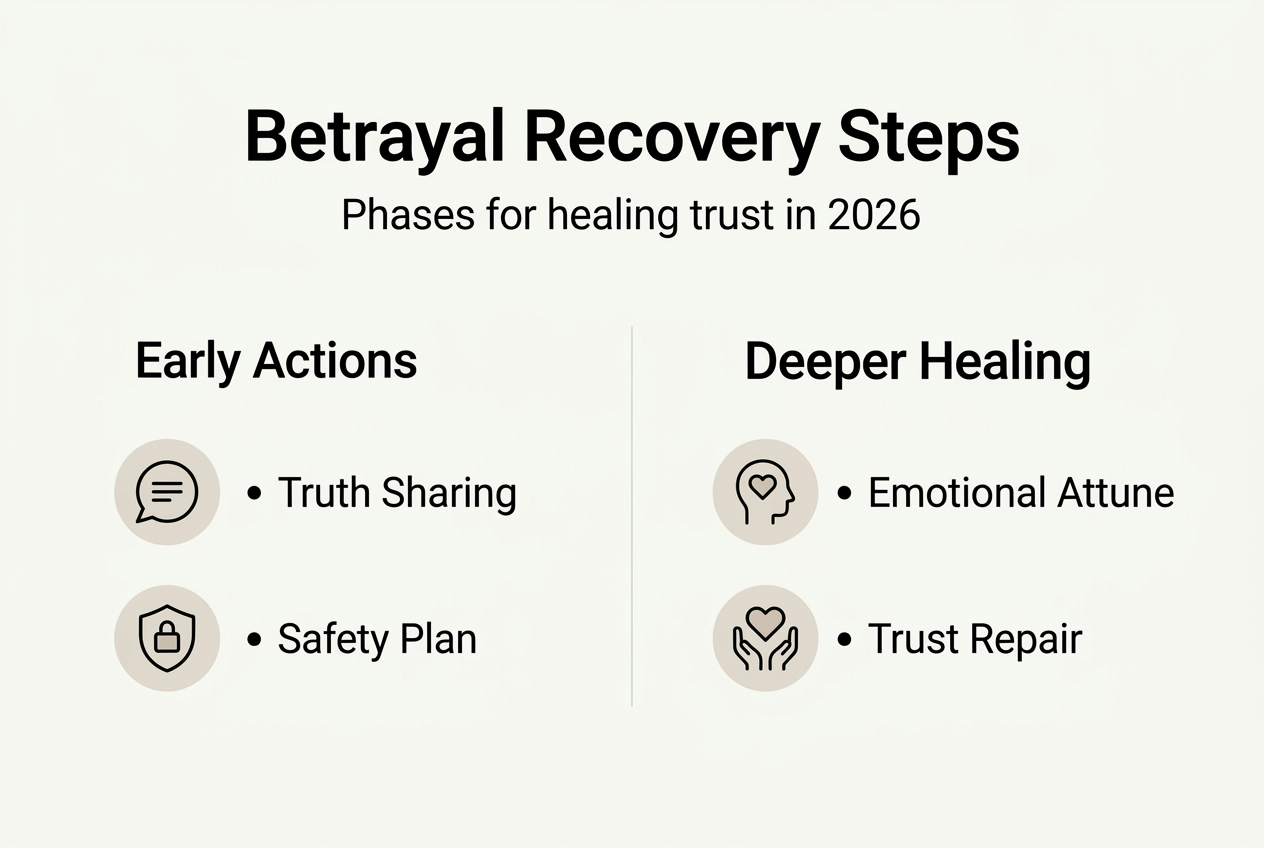
Recovery cannot begin until both partners commit to creating an environment where honesty replaces secrecy and emotional safety replaces fear. The four key phases of recovery start with safety, truth, and stabilization, inviting both partners to face pain and responsibility directly.
The betraying partner must offer complete disclosure, not partial truths or trickle confessions that retraumatize repeatedly. This means:
- Providing a full, honest account of the affair without minimizing or blaming
- Answering questions directly and patiently, even when uncomfortable
- Taking complete accountability without defensive explanations
- Committing to transparency in communication, schedules, and digital access
- Ending all contact with the affair partner immediately and verifiably
Atonement involves honest accountability, apology, and addressing partner feelings empathetically rather than protecting your own comfort. The betrayed partner needs space to express pain, anger, and confusion without being told to “get over it” or “move on.”
Stabilization focuses on managing the emotional chaos that follows discovery. You might feel like you’re losing your mind, cycling through rage, grief, and numbness within hours. Recognize these as trauma symptoms, not personal weakness. Establish basic self-care routines, lean on trusted friends or therapists, and avoid major life decisions while emotions remain volatile.
Pro Tip: Create a written agreement outlining transparency expectations, such as shared access to phones and social media, regular check-ins about whereabouts, and commitment to individual or couples therapy. This tangible document provides security when trust feels impossible.
This phase establishes the foundation for all subsequent healing. Without truth and safety, you’re building recovery on quicksand. Both partners must agree that honesty and transparency are non-negotiable moving forward, understanding that even small deceptions will destroy progress. The stages of healing after an affair cannot advance until this groundwork is solid.
Step 2: Grieving, ownership, and emotional attunement
Once you’ve established safety and truth, the real emotional work begins. This phase requires both partners to process grief, acknowledge their contributions to relationship vulnerabilities, and reconnect through empathy and active listening.
Grieving the relationship you thought you had is essential. The betrayed partner must mourn the loss of innocence, security, and the narrative they believed about their partnership. The betraying partner grieves too, facing shame, guilt, and the pain they’ve caused someone they love. Allow space for:
- Anger that needs expression without destructive action
- Sadness that comes in waves, not linear progression
- Confusion about identity and future direction
- Fear about whether healing is even possible
Ownership means examining the relationship dynamics that created vulnerability to infidelity. This does NOT mean blaming the betrayed partner for the affair. The choice to betray always belongs to the person who made it. However, emotional disconnection and unmet needs often precede affairs, and both partners typically contributed to that disconnection in some way.
Reflect honestly on patterns like:
- Communication breakdowns where feelings went unshared
- Intimacy erosion due to stress, parenting, or neglect
- Unresolved conflicts that created distance
- Individual issues like depression, addiction, or trauma that affected the relationship
Attunement focuses on reconnecting emotionally through empathy and active listening. The betraying partner must demonstrate genuine understanding of the pain they’ve caused, not just intellectually but emotionally. This means sitting with your partner’s anguish without defending, explaining, or minimizing.
Practice reflection by summarizing what you hear before responding. Validate feelings even when they’re uncomfortable: “I understand why you feel unsafe around me right now. My actions destroyed your trust, and that makes complete sense.” This vulnerability creates the emotional reconnection necessary for intimacy to return.
Pro Tip: Schedule regular “state of the union” conversations where you discuss feelings, progress, and setbacks without blame. These structured check-ins prevent resentment from building silently and demonstrate ongoing commitment to transparency.
Emotional attunement reduces relapse risk by addressing the underlying disconnection that made the affair possible. As you rebuild empathy and understanding, you create a relationship dynamic that naturally resists future betrayal. This work supports relationship growth after infidelity by transforming crisis into opportunity for deeper connection.
Step 3: Rebuilding intimacy, trust, and forgiveness
With emotional attunement established, you can begin the gradual process of restoring physical and emotional closeness, rebuilding trust through consistent actions, and entering structured forgiveness that creates lasting renewal.
Intimacy returns slowly, not through forced reconnection but through small, meaningful rituals that rebuild safety:
- Start with non-sexual physical touch like hand-holding or hugs
- Create shared positive experiences through date nights or new activities
- Practice vulnerability by sharing fears and hopes about the future
- Gradually reintroduce sexual intimacy when both partners feel ready, without pressure
- Celebrate small victories and acknowledge progress regularly
Trust rebuilds through consistent changed behavior and emotional safety over time, not grand gestures or empty promises. The betraying partner must demonstrate reliability in small, daily ways: showing up when promised, being transparent about whereabouts, following through on commitments, and responding to emotional needs with patience.
Many couples make critical mistakes during this phase. The following table compares rushed approaches with sustainable repair:
| Rushed Forgiveness | Gradual Repair |
|---|---|
| Pressure to “move on” quickly | Patience with non-linear healing |
| Surface apologies without behavior change | Consistent actions demonstrating commitment |
| Avoiding difficult conversations | Regular emotional check-ins |
| Expecting trust based on promises | Earning trust through transparency |
| Ignoring triggers and flashbacks | Acknowledging and supporting through trauma responses |
Forgiveness is a process supported by accountability, transparency, empathy, ownership, and structure. True forgiveness doesn’t mean forgetting or excusing the betrayal. It means releasing the hold that resentment has on your future while maintaining healthy boundaries and expectations.
Structured forgiveness involves:
- Acknowledging the full impact of betrayal without minimizing
- Witnessing genuine remorse and changed behavior over time
- Choosing to release resentment as a gift to yourself, not the betrayer
- Setting clear boundaries about acceptable behavior moving forward
- Recommitting to a shared vision based on renewed values and priorities
Create that shared vision together by discussing what you want your relationship to become. What values will guide you? What boundaries protect you? What dreams motivate continued growth? This forward focus transforms recovery from avoiding pain to building something genuinely better than what existed before the affair.
Forgiveness doesn’t happen once. You’ll revisit it during triggers, anniversaries, or setbacks. Each time, you choose again to move forward rather than remain stuck in past pain. This ongoing choice, supported by your partner’s consistent trustworthiness, gradually creates the emotional freedom necessary for genuine renewal and healing together.

Explore comprehensive resources for healing and growth
Navigating betrayal recovery requires more than understanding the steps. You need practical tools, expert guidance, and structured support tailored specifically to infidelity trauma. Our infidelity recovery checklist provides detailed action items for each healing phase, helping you track progress and maintain momentum during difficult moments.
Whether you’re working through individual pain or rebuilding trust together, specialized resources make the difference between aimless struggle and purposeful healing. Access workbook exercises, case studies, and expert advice designed around the unique challenges of betrayal recovery. Professional support enhances outcomes significantly, offering the structure and accountability that transform crisis into opportunity for relationship growth after infidelity. Explore the stages of healing after an affair to understand where you are in your journey and what comes next.
FAQ
How long does betrayal recovery typically take?
Healing from infidelity typically takes one to two years, but varies significantly based on individual circumstances, relationship history, and commitment levels. Time alone doesn’t equal healing without active engagement in therapy, communication, and behavior change. Couples who work with professionals and dedicate themselves to structured recovery often experience faster, more complete healing than those who simply wait for time to pass.
What are common challenges couples face during betrayal recovery?
Challenges include triggers, flashbacks, shame, guilt, impatience, and doubts that arise unpredictably throughout the healing process. Emotional triggers can occur months or years after discovery, causing temporary setbacks that feel devastating. The betraying partner often struggles with shame and the betrayed partner with trusting their own judgment, creating ongoing tension that requires patience and mutual support to navigate successfully.
Can couples therapy improve chances of recovery after infidelity?
Yes, couples therapy significantly enhances communication, trust rebuilding, and emotional processing during recovery. Therapeutic interventions significantly improve relationship satisfaction, forgiveness, and well-being with 35 to 60 percent success rates in helping couples stay together and thrive. Professional guidance provides structure, accountability, and expert tools for navigating complex emotional challenges that often overwhelm couples attempting recovery alone.
Is it possible to have a stronger relationship after infidelity?
Many couples report deeper intimacy, better communication, and stronger commitment after successfully navigating betrayal recovery together. The crisis forces honest examination of relationship patterns, individual needs, and shared values that might never have occurred otherwise. However, this growth requires genuine commitment from both partners to do the difficult emotional work, not just survive the affair but transform the relationship into something more authentic and resilient than before.
What if the betraying partner won’t take full accountability?
Recovery cannot progress without genuine accountability from the person who betrayed trust. If your partner minimizes, blames you, or refuses transparency, you’re facing a fundamental obstacle that therapy alone may not overcome. In this situation, focus on your individual healing, set firm boundaries about acceptable behavior, and consider whether the relationship can realistically recover without your partner’s full commitment to change and accountability.
Recommended
- Relationship Healing Process – After the Affair Series
- Rebuilding Trust Timeline – After the Affair Series
- How to communicate after affair: rebuild trust in 2026 – After the Affair Series
- Relationship Growth After Infidelity – After the Affair Series