TL;DR:
- Boundaries after infidelity serve as structural supports to create emotional safety essential for genuine healing, not as punishments. They must be specific, collaboratively set, and evolve over time to rebuild trust and nervous system regulation effectively. Recognizing and addressing obstacles like guilt or control tendencies is vital for establishing boundaries that foster authentic recovery.
After discovering a partner’s infidelity, most people are told they need to “set boundaries.” But nobody explains what that actually means. The role of boundaries post-affair is widely misunderstood. Many betrayed partners either avoid them out of guilt, or mistake them for rules designed to punish or control. Neither approach works. Real boundaries after betrayal serve one purpose: to create enough emotional safety for genuine healing to begin. This article walks you through what that looks like, grounded in clinical research and practical experience.
Key takeaways
| Point | Details |
|---|---|
| Boundaries are not punishment | They function as structural support for your nervous system during the recovery process. |
| Specificity matters | Effective boundaries name observable behaviors, not emotional outcomes you can’t enforce. |
| Collaboration accelerates healing | Boundaries set together with mutual understanding rebuild trust faster than ultimatums. |
| They must evolve over time | Healthy boundaries shift as trust returns, not on a fixed calendar schedule. |
| Professional support helps | Therapy improves the quality and durability of boundaries during recovery. |
Why infidelity breaks your sense of safety first
Before you can understand how to set boundaries after infidelity, you need to understand what infidelity actually does to your brain and body. It is not just emotional pain. It is physiological disruption.
Research shows that oxytocin levels drop up to 40% in the betrayed partner after infidelity is discovered. Oxytocin is the hormone most directly linked to bonding, trust, and felt safety in close relationships. When it crashes, your nervous system reads the environment as genuinely dangerous, even when no physical threat exists. You may find yourself hypervigilant, unable to sleep, scanning your partner’s every word for deception. That is not weakness or neediness. That is a trauma response.
Here is what that means practically:
- Your body cannot heal in a state of constant perceived threat
- Trust cannot be rebuilt through willpower alone
- Emotional safety must be created structurally before it can be felt internally
- Transparency and trauma-informed communication can aid recovery clinically over 12 to 18 months
This is precisely why boundaries matter so much. They are not about keeping your partner in line. Boundaries are structural scaffolding for a nervous system that is in active recovery. Without them, healing has no stable ground to stand on.
Pro Tip: If you feel guilty for needing reassurance or transparency right now, remind yourself that your nervous system is responding to a real disruption. Your needs are not irrational. They are biological.
What healthy boundaries post-affair actually look like
Understanding the importance of boundaries in healing means first being clear about what a healthy boundary is and what it is not. This is where most people get confused.
Boundaries protect emotional safety, while control behaviors create chaos and push partners away. The distinction matters enormously. A boundary says, “This is what I need to feel safe.” A control behavior says, “I need to manage your freedom to feel okay.” One is about self-protection. The other is about power. They can look similar from the outside, but they come from entirely different places.
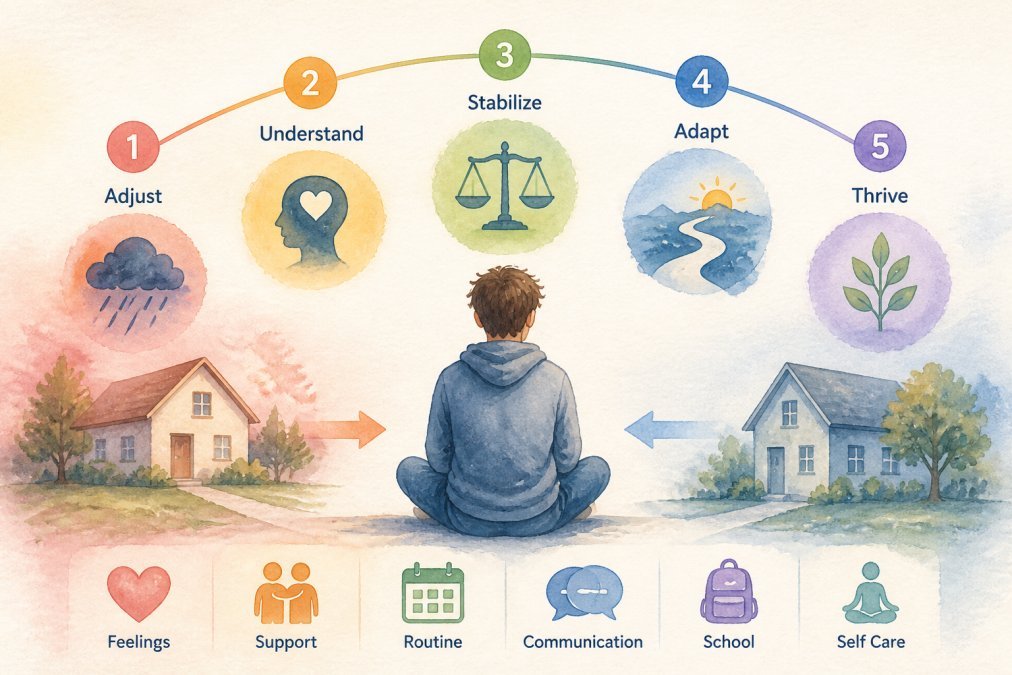
Here is a five-step framework for establishing boundaries after infidelity in a way that supports real healing:
- Identify your non-negotiables. What specific behaviors are making it impossible for you to feel safe? Name them concretely.
- Communicate them clearly. State what you need in observable, specific terms. “I need to know your whereabouts during work hours” is specific. “I need you to be trustworthy” is not.
- Define what happens if a boundary is crossed. This is not an ultimatum. It is a consequence tied to your emotional safety, not a threat designed to manipulate.
- Follow through consistently. Boundaries that are not maintained teach your nervous system that the environment is still unpredictable.
- Adjust as healing progresses. Boundaries must evolve as trust rebuilds, and they should be driven by nervous system safety, not arbitrary timelines.
The types of boundaries most relevant to post-affair recovery fall into five categories: emotional (what topics or conversations you can tolerate right now), physical (space and proximity needs), digital (access to devices or accounts), communication (how and when you discuss the affair), and social (contact restrictions with the affair partner or shared social circles).
| Boundary type | Example |
|---|---|
| Digital | Full access to phone and email during the first 90 days of recovery |
| Social | No contact with the affair partner, in any form |
| Communication | Designated times to discuss the affair, not during meals or bedtime |
| Emotional | Partner does not minimize your pain or rush your healing timeline |
| Physical | No pressure for intimacy until you feel ready |

Pro Tip: Review your boundaries together with your partner every 30 days during the first six months. What felt necessary at week two may shift significantly by month four.
Common obstacles to setting boundaries after betrayal
The guide to post-affair boundaries would be incomplete without addressing the real reasons so many people struggle to set them at all.
Betrayed partners often fear that setting boundaries will push their partner further away, or signal a lack of forgiveness, or come across as controlling. So they stay silent. And in that silence, the nervous system never gets the scaffolding it needs, and recovery stalls.
A few of the most common barriers include:
- Guilt about needing boundaries at all. Many people feel they have no right to ask for transparency or space after an affair. They do.
- Fear of seeming “too demanding.” Asking for observable behaviors to rebuild safety is a right, not manipulation.
- Misreading compliance as change. This is perhaps the most damaging mistake of all.
“The ‘performance of transparency,’ where a partner only complies to avoid conflict without genuinely understanding why the boundary matters, fails to rebuild trust.” (Empathi, 2026)
True recovery requires moving from apology to accountability. A partner who says sorry but continues to guard their phone, minimize your pain, or avoid conversations about what happened is not changing. They are managing you. That distinction matters, and your boundaries can help you see it clearly.
There is also the question of what happens when a partner refuses to respect the boundaries you set. If your partner refuses to end contact with the affair partner, it signals that they are prioritizing that relationship over your emotional safety. That is not a boundary problem. It is a commitment problem. Recognizing that difference early can save you from years of misplaced effort.
Professional support matters here. A therapist who specializes in affair recovery strategies can help you identify which boundaries are truly protective and which fears are getting in the way of setting them.
Practical boundary examples and how they evolve
Knowing the theory behind establishing boundaries after infidelity is one thing. Seeing what they look like in real life is another. Here are examples that reflect the actual experience of recovery, along with how they tend to shift over time.
Early recovery (weeks 1 to 12):
- Full transparency with devices and location sharing
- No contact whatsoever with the affair partner, including through mutual friends
- Daily emotional check-ins to maintain connection and reduce anxiety
- Partner attends individual therapy to understand the root causes of the affair
- Betrayed partner has the right to ask questions without the conversation being shut down
Mid-recovery (months 3 to 9):
- Device access continues but may become less frequent as trust builds
- Communication boundaries shift from daily check-ins to weekly structured conversations
- Social events involving mutual acquaintances are navigated together and with prior agreement
- Intimacy is reintroduced at the betrayed partner’s pace, not on a schedule
Later recovery (months 9 to 18+):
- Many external boundaries reduce significantly as internal trust increases
- Focus shifts from monitoring behavior to building shared vision and connection
- The couple may work together on relationship growth exercises that reinforce the new foundation
Boundaries must be driven by nervous system safety, not by a fixed recovery calendar. Some people need stronger boundaries for longer. Others find that trust returns relatively quickly. Neither is wrong. What matters is that the boundaries you hold at any stage are honest about what you actually need, not about what you think you should need by now.
One thing that consistently shows up in successful recoveries: the betrayed partner who asks for specific observable behaviors is not controlling their partner. They are doing what any person with a disrupted nervous system needs to do. They are creating conditions for survival while the deeper repair work happens underneath.
My perspective on what boundaries really do in recovery
I have worked with and studied enough couples going through affair recovery to say this with confidence: the couples who struggle most with boundaries are usually not the ones who set too many. They are the ones who misunderstand what boundaries are for.
When someone comes to me convinced that their partner “passed the test” because they handed over their phone without resistance, I gently push back. Compliance is not healing. A partner who surrenders transparency to quiet your anxiety is doing something very different from a partner who genuinely understands why that transparency is needed right now.
Building a life around rules to prevent future pain is not a relationship. It is a contract. And you cannot have emotional intimacy with a contract. I have seen people hold their breath for two years inside a technically “boundary-compliant” relationship, waiting for safety that never fully arrived because the underlying work was never done.
What actually moves the needle? Boundaries that are held with a structural scaffolding mindset rather than a punitive one. When you approach boundaries as something you need to function, not something designed to catch your partner out, the whole dynamic shifts. Your partner stops feeling monitored and starts feeling trusted with your real needs. That shift is where genuine reconnection becomes possible.
Trust your pace. Trust your needs. And do not let anyone, including yourself, rush you past a boundary that is still doing necessary work.
— Silviya

Ready to go deeper in your recovery?
If this article has helped clarify the role boundaries play in healing, the next step is putting that understanding into a structured plan. Knowing what boundaries to set is one piece. Knowing how to sequence your recovery so that nothing important gets missed is another.
The Aftertheaffair infidelity recovery checklist gives you a clear, step-by-step framework built around the actual stages of healing, from early crisis management through long-term trust rebuilding. It covers not just boundary setting but the full arc of recovery in a format you can work through at your own pace.
For couples ready to move beyond surviving and into genuine growth, the relationship growth program at Aftertheaffair provides structured tools and expert-informed guidance for rebuilding something stronger than what existed before the affair. You do not have to figure this out alone.
FAQ
What is the real role of boundaries post-affair?
Boundaries post-affair function as structural support for the betrayed partner’s nervous system during recovery. They create the emotional safety needed for genuine healing to begin, not as punishment, but as a protective framework.
How do I set boundaries after infidelity without seeming controlling?
Focus on observable behaviors that address your specific safety needs rather than restricting your partner’s autonomy broadly. Boundaries that are clearly explained and collaboratively agreed upon are protective, not controlling.
Should boundaries change over time during recovery?
Yes. Effective boundaries evolve as trust rebuilds and your nervous system regulation improves. They should be reviewed regularly, approximately every 30 days in the first six months, and adjusted based on actual progress rather than fixed timelines.
What if my partner refuses to respect my boundaries?
Consistent boundary violations signal that your partner is not prioritizing your emotional safety. If your partner refuses to end contact with the affair partner or dismisses your stated needs, this reflects a commitment issue that requires honest evaluation, ideally with professional support.
Do boundaries guarantee my partner won’t betray me again?
No boundary can guarantee future fidelity. Boundaries provide the conditions for repair work to happen safely, but they cannot eliminate the possibility of future betrayal. Real safety comes from genuine accountability and changed behavior over time.
Recommended
- Emotional Affair Recovery – After the Affair Series
- Boundaries That Actually Work – After the Affair Series
- Role of boundaries after betrayal to rebuild trust – After the Affair Series
- Boundaries After Serial Cheating: What Works – After the Affair Series