Last Updated: August 6, 2026
- Understanding Betrayal Trauma and Your Healing Path
- Best Books for Surviving Spouse Betrayal
- Rebuilding Trust After an Affair: What the Research Shows
- Infidelity Recovery Workbook Resources and Structured Tools
- Stages of Infidelity Recovery and What to Expect
- Managing Emotional Triggers and Regaining Emotional Safety
- Healing Together vs. Healing Apart: Making Your Decision
- How to Choose the Right Book for Your Situation
- Differentiating Betrayal from General Relationship Conflict
Understanding Betrayal Trauma and Your Healing Path
Discovering infidelity creates a specific type of psychological injury. Betrayal trauma differs from general relationship conflict because it shatters the foundation of safety and trust that intimate partnerships require. When the person closest to you becomes the source of harm, your nervous system registers this as a threat at the deepest level.
Your brain rewires itself in response to the betrayal. You may experience intrusive thoughts, hypervigilance, emotional flooding, and oscillation between wanting reconciliation and needing escape. This is a documented trauma response, not weakness. Recovery is possible and follows recognizable patterns.
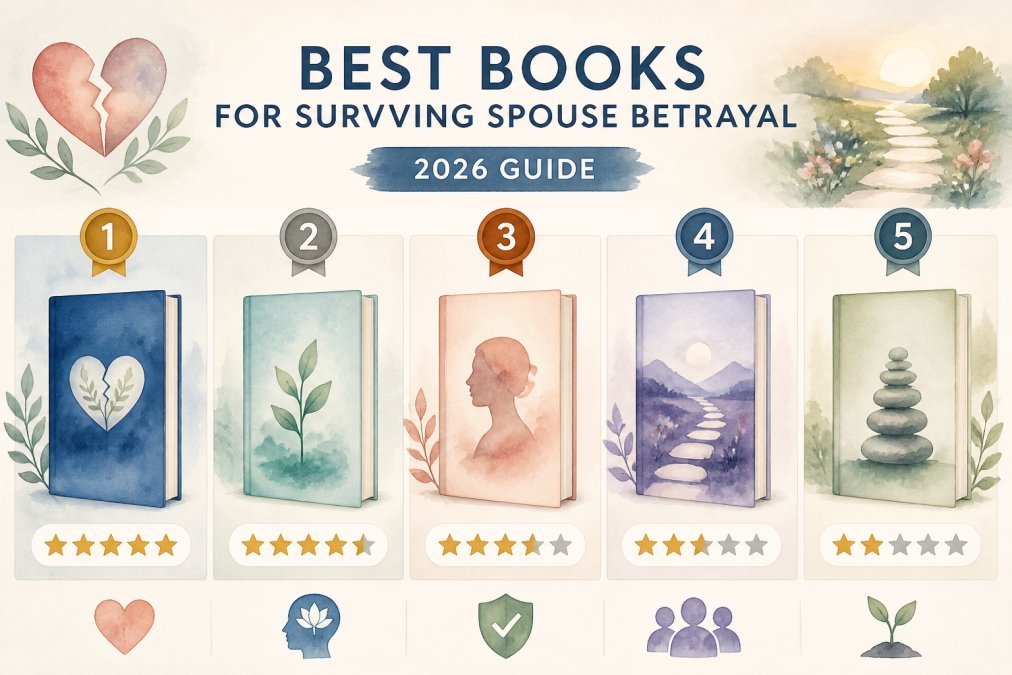
This guide covers the best books for surviving spouse betrayal, organized by your situation: whether you’re the betrayed partner, the unfaithful partner, or a couple attempting to rebuild together. We’ve included resources addressing betrayal trauma symptoms, workbook-based tools, and frameworks for deciding whether reconciliation or separation serves your wellbeing.
At After the Affair Series, we understand that books alone don’t solve infidelity crises, but they provide essential context, validation, and practical strategies during the most disorienting period of your life.
Best Books for Surviving Spouse Betrayal
For the Betrayed Partner
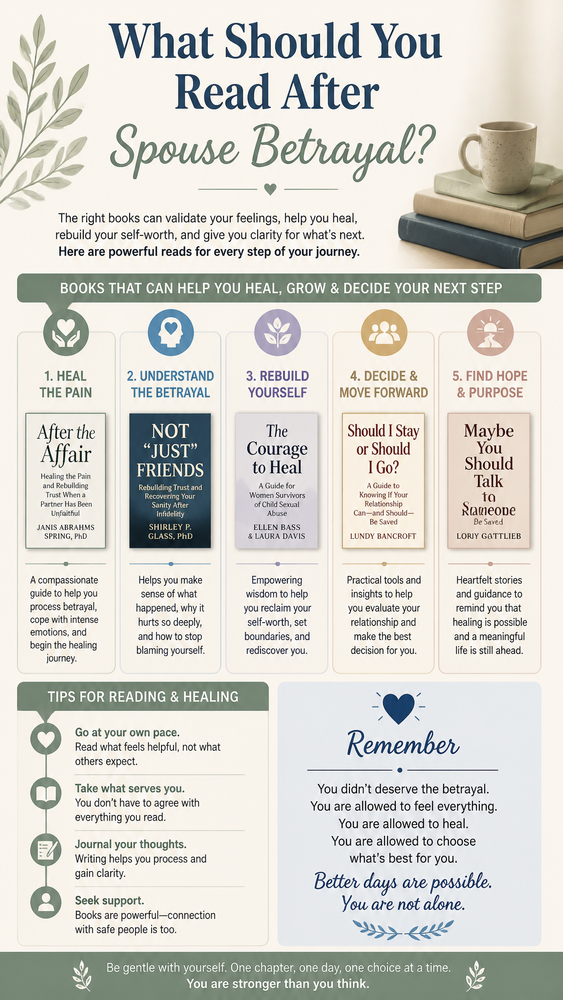
1. The Betrayal Bind: How to Heal When the Person You Love the Most Hurts You the Worst by Michelle Mays
This book directly addresses the core paradox betrayed partners face: you desperately want connection with the person who caused your deepest wound. Mays names this the “betrayal bind”, the simultaneous need for safety and longing for reconciliation with someone who broke your trust. What makes this essential is its focus on the betrayed partner’s experience without requiring mutual effort from your partner. She provides tools for managing trauma symptoms while you decide what you actually want, whether that’s reconciliation or separation.
Reading accounts from others in similar situations reduces the isolation that infidelity creates. Knowing your experience has a name and a documented healing pathway matters significantly.
2. After the Affair: Healing the Pain and Rebuilding Trust When a Partner Has Been Unfaithful by Janis Abrahms Spring, Ph.D.
Spring’s framework divides infidelity recovery into three stages: Crisis and Shock, Processing the Betrayal, and Moving Forward. This structure helps you understand where you are in the journey and what emotional work typically comes next. Spring explains why trust rebuilding takes years, not months, and reframes anger as necessary for boundary-setting and accountability demands.
3. Not “Just Friends”: Rebuilding Trust and Recovering Your Sanity After Infidelity by Shirley Glass
Glass explains how affairs develop through gradual erosion of emotional boundaries, helping betrayed partners recognize warning signs. Her greatest strength is clarifying what trust actually requires. Glass distinguishes between forgiveness and trust, showing that you can forgive without rebuilding the relationship, a distinction that’s liberating for people pressured to “just forgive” without their partner demonstrating genuine change.
A common mistake is assuming that your partner’s remorse equals genuine change. Remorse is the starting point, not the destination. Without behavioral change, boundary enforcement, and transparency, trust cannot rebuild.
For the Unfaithful Partner
4. How to Help Your Spouse Heal From Your Affair: A Compact Manual for the Unfaithful by Linda MacDonald
If you’re the partner who had the affair, this book is essential. MacDonald explains what your betrayed spouse actually needs from you psychologically and practically to heal. She details what accountability looks like in practice: transparency, patience with triggers, consistent reassurance, and long-term commitment to change.
5. The State of Affairs: Rethinking Infidelity by Esther Perel
Perel explores what affairs reveal about desire, commitment, and the gap between who we are and who we want to be in a relationship. For unfaithful partners, this book offers non-shaming exploration of why the affair happened without excusing the harm. This understanding is essential for preventing future infidelity.
For Couples Healing Together
6. Getting Past the Affair: A Program to Help You Cope, Heal, and Move On, Together or Apart by Douglas Snyder, Donald Baucom, and Kristina Gordon
This is the book for couples attempting reconciliation with a structured, evidence-based roadmap. The program is organized into manageable phases with specific emotional and behavioral work for each phase. The workbook sections provide structured exercises for both partners, concrete conversations with specific prompts rather than vague advice.
Healing from infidelity requires both partners to show up consistently over months or years. If either partner is unwilling to do this work, no book or therapy will bridge the gap.
7. Torn Asunder: Recovering From an Extramarital Affair by Pastor Dave Carder
For couples with faith backgrounds, Carder integrates spiritual healing with practical recovery strategies. He addresses a specific challenge: the pressure to reconcile because divorce is theologically discouraged, helping couples distinguish between genuine reconciliation and staying together out of obligation.
8. Unfaithful: Hope and Healing After Infidelity by Gary and Mona Shriver
The Shrivers share their personal journey through infidelity recovery, including a new chapter on emotional affairs. Their honesty about how long healing takes and how messy the process feels demonstrates that recovery is possible.
Rebuilding Trust After an Affair: What the Research Shows
Trust rebuilding is not linear. Your partner may demonstrate complete transparency and genuine remorse, and you still experience waves of doubt and fear. This isn’t a sign that reconciliation is failing, it’s a sign that your nervous system is healing from trauma.
Research shows that trust typically rebuilds in phases: crisis management (stopping the affair, establishing transparency), understanding (exploring why the affair happened), and rebuilding (consistent behavioral change and emotional reconnection). Genuine trust typically begins returning after 18-24 months of consistent transparency and repair work.
A critical distinction: trust in your partner’s fidelity differs from trust in their character. You may never fully trust their fidelity again, and that’s reasonable. The question becomes whether you can trust them to be transparent, accountable, and committed to preventing future betrayal.
Couples rebuilding trust should prioritize transparency and accountability over reassurance. The unfaithful partner’s job is to behave in verifiably trustworthy ways and allow the betrayed partner to rebuild trust at their own pace.
Infidelity Recovery Workbook Resources and Structured Tools
Beyond traditional books, workbook-based resources provide structured exercises that move recovery from intellectual understanding to emotional processing. “Getting Past the Affair” is essentially a workbook with supporting narrative.
After the Affair Series provides structured toolkits beyond books, offering specific frameworks and scripts for managing high-conflict situations that often accompany infidelity and separation.
| Resource Type | Best For | Typical Duration | Key Benefit |
|---|---|---|---|
| Traditional books | Understanding and validation | 1-2 weeks reading | Comprehensive frameworks and expert perspective |
| Workbooks with exercises | Emotional processing and behavioral change | 8-12 weeks | Structured, actionable work beyond reading |
| Couples therapy workbooks | Guided conversations between partners | 12-20 weeks | Neutral framework prevents defensiveness |
| Self-guided toolkits | Crisis management and communication | Ongoing access | Immediate practical solutions in difficult moments |
Stages of Infidelity Recovery and What to Expect
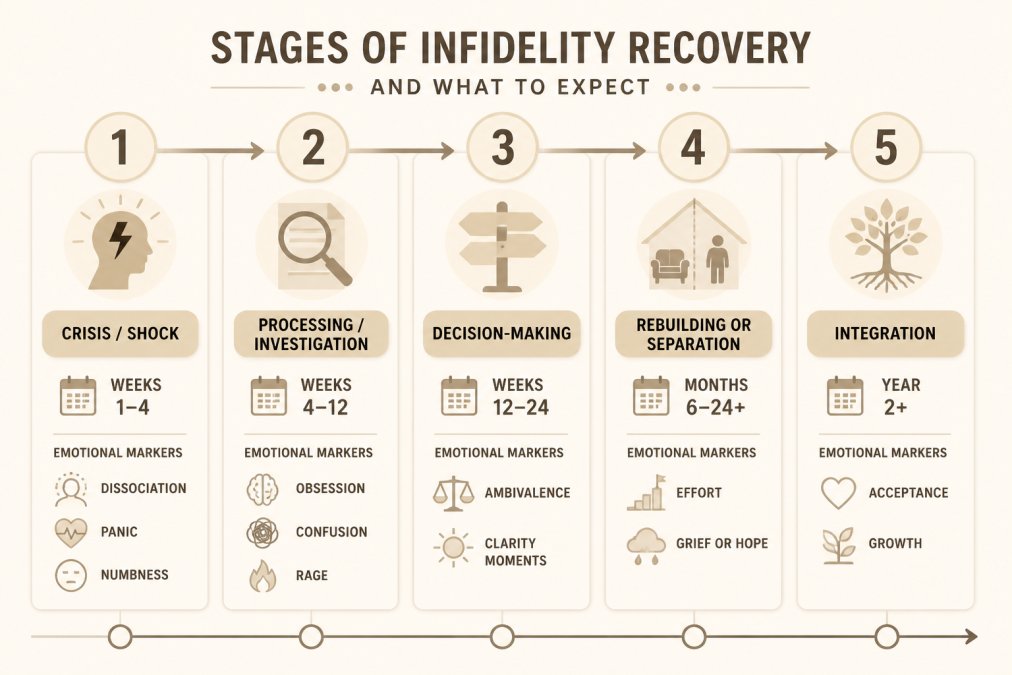
Infidelity recovery follows recognizable psychological stages, though not everyone moves through them linearly or at the same pace.
Stage 1: Crisis and Shock (Weeks 1-4)
Discovery triggers acute trauma responses: dissociation, intrusive thoughts, panic, rage, or emotional numbness. Your nervous system is in fight-or-flight mode. This stage requires crisis stabilization through emergency therapy, medical support, or safety planning if abuse is present.
Take the free 23-point assessment →
Stage 2: Processing and Investigation (Weeks 4-12)
You become obsessed with understanding exactly what happened. This phase feels chaotic and painful, but serves a psychological purpose: your brain is trying to make sense of something that violated your fundamental assumptions about your relationship.
Stage 3: Decision-Making (Weeks 12-24)
You must decide whether to attempt reconciliation or separate. Many people oscillate between choices multiple times. Clarity often comes from assessing whether your partner is genuinely committed to change and whether you can imagine rebuilding the relationship.
Stage 4: Rebuilding or Separation (Months 6-24+)
If reconciling, this involves behavioral change, consistent transparency, and gradual trust rebuilding. If separating, this involves processing grief, establishing new co-parenting structures, and rebuilding your identity as a single person.
Stage 5: Integration (Year 2+)
Infidelity becomes part of your history rather than the center of your identity. If you reconciled, the affair is integrated into your relationship story, not forgotten, but no longer triggering acute trauma responses. If you separated, you’ve moved through grief and are building a new life.
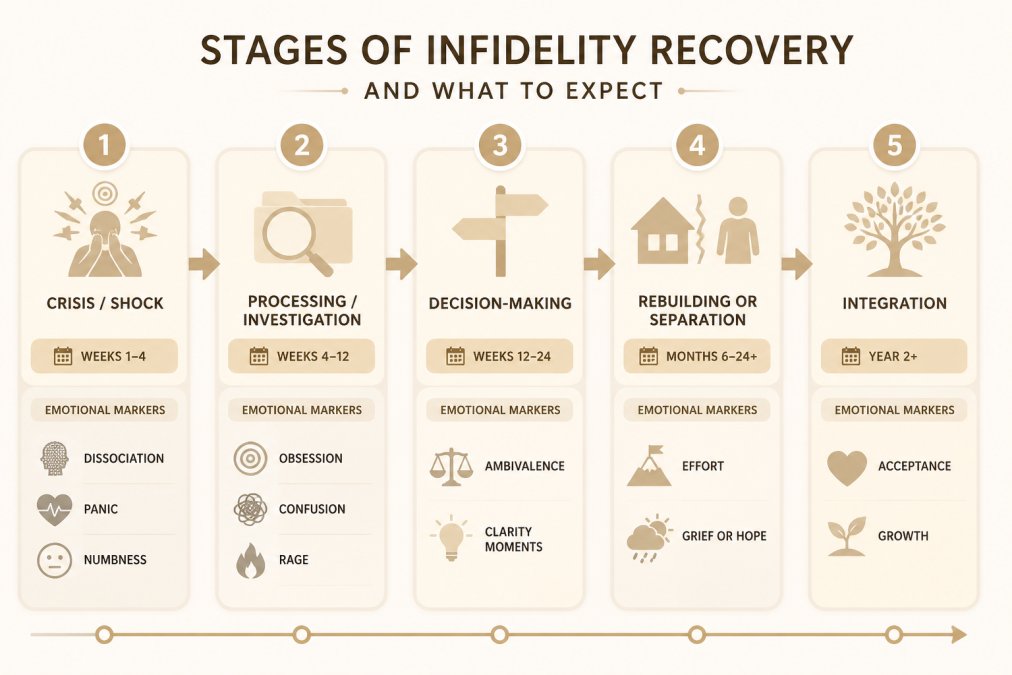
Forcing yourself through these stages faster than your nervous system can process often results in unresolved trauma that surfaces later in the relationship or in future relationships.
Managing Emotional Triggers and Regaining Emotional Safety
Betrayal trauma creates triggers, specific situations, sensations, or reminders that activate your trauma response. A song playing during the affair, your partner’s phone buzzing, seeing the person involved. These triggers aren’t irrational, they’re your nervous system’s learned association between a stimulus and danger.
Managing triggers requires identifying what specifically triggers your trauma response and developing concrete regulation techniques. These might include grounding exercises (focusing on five things you can see, four you can hear, three you can feel), physical movement, reaching out to a trusted person, or using structured communication scripts. Many books listed here address trigger management specifically.
Regaining emotional safety is gradual. It requires your partner to demonstrate through consistent behavior that they’re trustworthy, and it requires you to develop internal regulation skills so your safety doesn’t depend entirely on your partner’s behavior.
Healing Together vs. Healing Apart: Making Your Decision
The most important decision after infidelity isn’t whether to forgive, it’s whether to stay. Some couples heal together and build stronger relationships. Others separate and heal individually. Neither path is inherently right or wrong.
A practical framework: separate the decision into phases. In the first phase (weeks to months after discovery), decide only whether to stay in the same house and attempt initial communication. In the second phase (months 3-6), reassess based on your partner’s actual behavior. Have they been transparent? Are they genuinely committed to change? In the third phase (months 6-12), you have enough information to make an informed decision about long-term reconciliation.
How to Choose the Right Book for Your Situation
If you’re the betrayed partner in acute crisis (weeks 1-8): Start with “The Betrayal Bind” by Michelle Mays or “After the Affair” by Janis Spring. Both validate your experience and provide immediate tools for managing emotional flooding.
If you’re the betrayed partner seeking to understand the affair: “Not ‘Just Friends'” by Shirley Glass provides the clearest explanation of how affairs develop and what conditions enable them.
If you’re the unfaithful partner committed to repair: “How to Help Your Spouse Heal From Your Affair” by Linda MacDonald is essential. Pair it with “The State of Affairs” by Esther Perel for deeper exploration of why the affair happened.
If you’re a couple attempting reconciliation: “Getting Past the Affair” by Snyder, Baucom, and Gordon provides the most structured, evidence-based program with workbook sections for specific exercises.
If you have a faith background: “Torn Asunder” by Dave Carder or “Unfaithful” by Gary and Mona Shriver integrate spiritual healing with practical recovery.
If you’re in decision paralysis: “The State of Affairs” by Esther Perel helps you explore deeper questions about what the affair reveals about your relationship.
| Book Title | Best For | Reader Type | Primary Focus | Key Strength |
|---|---|---|---|---|
| The Betrayal Bind | Early-stage betrayed partners | Betrayed | Emotional healing & safety | Nervous system regulation |
| After the Affair | Couples in early recovery | Both | Understanding & healing | Staged framework |
| Not “Just Friends” | Understanding how affairs develop | Betrayed | Understanding the affair | Prevention insights |
| Getting Past the Affair | Couples attempting reconciliation | Couple | Practical steps & decision-making | Structured program |
| How to Help Your Spouse Heal | Unfaithful partners | Unfaithful | Accountability & repair | Direct accountability |
| The State of Affairs | Exploring relationship dynamics | Both | Deeper understanding | Nuanced perspective |
| Torn Asunder | Faith-based couples | Couple | Spiritual healing | Faith integration |
| Unfaithful | Faith-based couples | Couple | Personal narrative & healing | Relatability & hope |
Differentiating Betrayal from General Relationship Conflict
Betrayal trauma is neurologically different from general relationship conflict. General relationship conflict involves disagreement about issues, finances, parenting, or communication styles. These conflicts are painful but don’t typically trigger trauma responses.
Betrayal trauma involves a violation of fundamental trust. The person you depend on for safety becomes the source of danger. This activates your nervous system’s deepest threat-detection systems, producing hypervigilance, intrusive thoughts, emotional flooding, and dissociation.
The distinction matters because it determines what kind of help you need. General relationship conflict often improves with couples therapy focused on communication. Betrayal trauma often requires trauma-specific therapy (like EMDR or trauma-focused CBT) in addition to couples work.
The path through infidelity is one of the most painful journeys you can take. The books recommended here provide frameworks, validation, and practical strategies from people who’ve studied and survived this terrain. But books alone aren’t sufficient for most people.
If you’re navigating infidelity alongside high-conflict co-parenting, After the Affair Series provides structured toolkits addressing the specific communication challenges that emerge when betrayal leads to separation. The platform offers 50+ age-appropriate scripts for conversations with children, frameworks for managing hostile interactions with an ex-partner, and a free 23-point assessment to help you understand your current situation.
Take the free assessment to identify your specific needs and access resources tailored to your situation, whether you’re deciding whether to reconcile, managing the emotional aftermath of discovery, or protecting your children’s wellbeing during separation.