
- Definition and context of parallel parenting
- Emotional impact on children and how parallel parenting protects them
- Key features and legal considerations of parallel parenting in the UK
- Implementing parallel parenting for emotional healing after infidelity
- Explore more resources for healing and co-parenting support
- Is parallel parenting healthy? common questions
- Recommended
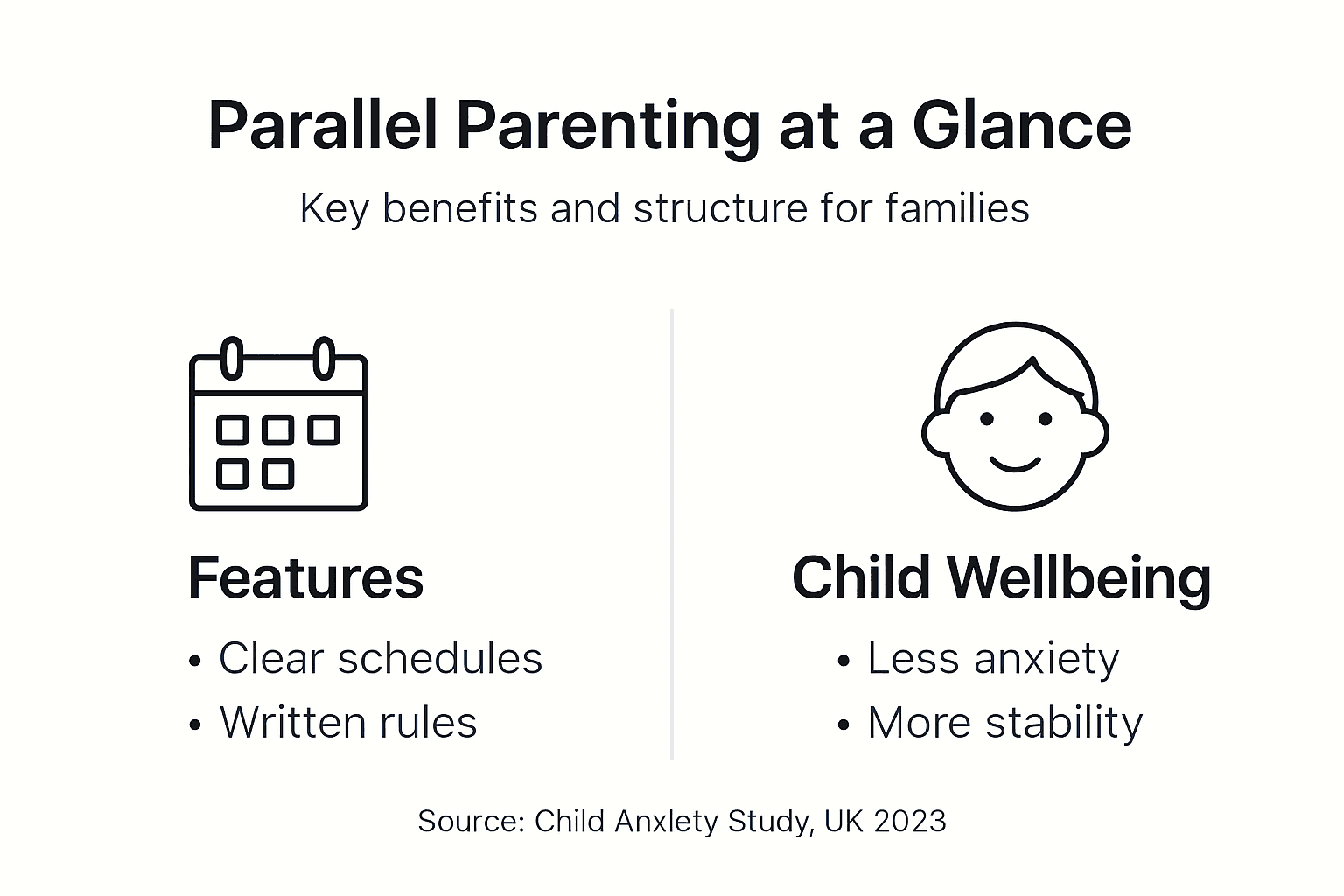
Many parents fear that parallel parenting signals failure or abandonment. The truth is far different. When conflict runs high after infidelity, parallel parenting reduces children’s anxiety by 30% and provides the stable foundation they desperately need. This approach doesn’t weaken bonds. It protects them. You’ll discover how parallel parenting works, why it benefits children emotionally, and how to implement it effectively in your family.
Key takeaways
| Point | Details |
|---|---|
| Conflict reduction | Parallel parenting reduces direct parental interaction by over 70%, minimizing children’s exposure to disputes. |
| Child anxiety | Children exposed to high parental conflict experience 30% higher anxiety rates, which structured parallel parenting significantly reduces. |
| Legal recognition | UK courts support parallel parenting through Child Arrangement Orders that enforce boundaries and schedules. |
| Emotional safety | Independent parenting styles allow each parent to heal while maintaining consistent, predictable routines for children. |
| Future flexibility | Families can gradually transition toward cooperative parenting when conflict subsides and trust rebuilds. |
Definition and context of parallel parenting
Parallel parenting is a structured approach designed for high-conflict families where parents operate independently with minimal direct communication. Think of it as two separate households running smoothly on parallel tracks rather than intersecting roads. Each parent makes daily decisions for their household without consulting the other on routine matters.
This differs sharply from traditional co-parenting. Co-parenting requires collaboration, shared decision making, and regular communication about your child’s life. That works beautifully when respect and trust exist. After infidelity, though, those foundations often crumble. Every conversation risks escalating into conflict.
Key differences between parallel parenting and co-parenting:
- Parallel parenting limits communication to essential information only, often through apps or written messages
- Co-parenting involves frequent discussions and joint decisions on daily matters
- Parallel parenting allows each parent autonomy over their parenting time and household rules
- Co-parenting requires unified approaches and consistent rules across both homes
Why choose parallel parenting after infidelity? Because trust has evaporated. Emotional wounds remain raw. The anger, hurt, and resentment make productive communication nearly impossible. Your children watch every interaction. They absorb the tension. They internalize the conflict as somehow their fault.
Parallel parenting in high-conflict situations creates clear boundaries and structured schedules that protect everyone involved. You focus on healing yourself and maintaining a stable environment for your children during your parenting time. Your ex does the same. The overlap shrinks to what’s legally necessary and nothing more.
Understanding co-parenting vs parallel parenting helps you recognize which approach suits your current situation. Many families eventually transition from parallel to cooperative parenting as wounds heal. Right now, though, you need the structure that keeps conflict away from your children’s daily lives.
Emotional impact on children and how parallel parenting protects them
Your children’s emotional wellbeing depends heavily on the environment you create. Research shows children in high-conflict parental environments face 30% higher rates of anxiety. That statistic isn’t abstract. It represents real kids struggling with sleep, showing behavioral changes, and developing stress-related health issues.
Parallel parenting directly addresses this harm. By limiting your children’s exposure to arguments, tense exchanges, and hostile communication, you create safer emotional territory. They don’t witness the anger. They don’t hear the accusations. They don’t carry the burden of mediating between feuding parents.
How parallel parenting shields children emotionally:
- Reduces exposure to adult conflict and emotional volatility
- Provides predictable routines in each household that build security
- Allows children to maintain loving relationships with both parents separately
- Eliminates the pressure to take sides or carry messages between households
- Creates space for each parent to model healthy emotional regulation
The impact of parallel parenting on children extends beyond immediate anxiety reduction. Children thrive with consistency. When they know what to expect in each home, when transitions follow clear schedules, and when they’re shielded from adult disputes, their nervous systems can relax. They can focus on being kids rather than managing parental emotions.
Consider this: every hostile interaction your child witnesses teaches them about relationships and conflict resolution. What lessons do you want them learning? Parallel parenting models boundaries, respect for differences, and prioritizing a child’s needs over adult grievances.
Watch your children carefully during this transition. Some kids adapt quickly to parallel parenting structures. Others need extra support. Look for signs of stress: changes in eating or sleeping patterns, increased clinginess, regression in behavior, or new academic struggles. Address these promptly with age-appropriate conversations and professional help if needed.
Remember that parallel parenting with a narcissist or other high-conflict personality requires extra vigilance. The reduced contact protects not just your emotional health but your children’s as well. You’re not abandoning communication. You’re choosing strategic, structured interaction that serves your family’s wellbeing.
Key features and legal considerations of parallel parenting in the UK
Effective parallel parenting requires clear structures and often legal backing. Parallel parenting reduces direct contact by over 70% through carefully defined communication protocols and detailed parenting plans. This isn’t about being difficult. It’s about creating sustainable boundaries that prevent conflict.
Your parenting plan becomes the roadmap. It specifies exactly when transitions happen, who handles which decisions, how information gets shared, and what happens when disputes arise. The more detailed your plan, the less room exists for disagreement and confusion.
| Element | Description | Purpose |
|---|---|---|
| Communication method | Email, co-parenting apps, or third-party intermediaries only | Limits emotional escalation and provides documentation |
| Parenting schedule | Exact times, dates, and locations for transitions | Eliminates negotiation and reduces conflict opportunities |
| Decision-making authority | Clear division of who decides education, healthcare, activities | Prevents disputes over daily matters |
| Information sharing | Specified format and frequency for updates | Maintains necessary communication while minimizing contact |
| Dispute resolution | Agreed process using mediation or legal channels | Provides structure when disagreements occur |
Essential components of a parallel parenting plan:
- Detailed custody schedule including holidays, school breaks, and special occasions
- Communication protocols specifying methods, frequency, and acceptable topics
- Decision-making authority for routine matters (each parent during their time) and major decisions (education, healthcare, religion)
- Transportation arrangements and transition procedures
- Methods for sharing important information about the child’s wellbeing
- Process for making changes to the schedule or addressing emergencies
In the UK, parallel parenting is legally recognized through court orders such as Child Arrangement Orders. These orders formalize your parenting plan and make it enforceable. If your ex violates the agreed boundaries or schedule, you have legal recourse.
Pro Tip: Invest time creating an exceptionally detailed parallel parenting plan upfront. Every ambiguity you leave creates an opportunity for conflict later. Specify everything from pickup times to how you’ll handle sick days.
Courts generally support parallel parenting arrangements when they clearly serve the child’s best interests. Judges recognize that high-conflict parents need structure and boundaries. Your solicitor can help draft a plan that courts will approve and enforce.
Pro Tip: Engage legal help early in the process. A solicitor experienced in family law can ensure your parenting plan includes all necessary elements, protects your rights, and stands up in court if enforcement becomes necessary.
Communication typically moves to written formats like email or specialized co-parenting apps. These platforms create records of all exchanges, which protects you if disputes escalate. Some families use mediators or family members as intermediaries for information sharing, further reducing direct contact.
Implementing parallel parenting for emotional healing after infidelity
You know why parallel parenting matters. Now let’s make it real. Implementation requires honest assessment, careful planning, and ongoing adjustment as your family heals. These steps guide you from chaos toward stability.
Step 1: Assess conflict levels honestly
Take stock of where you stand. Can you have a conversation about your child without it devolving into accusations about the affair? Do discussions about schedules trigger emotional flooding? If direct communication consistently produces conflict, parallel parenting suits your current needs.
Step 2: Develop a detailed, legally-backed parenting plan
Creating detailed parenting plans with clear schedules, communication rules, and boundaries significantly reduces stress for everyone. Work with a solicitor or mediator to draft a comprehensive document. Cover daily routines, decision-making protocols, holiday schedules, and dispute resolution. The more thorough you are now, the smoother your future becomes.
Step 3: Establish communication tools that limit direct contact
Choose a co-parenting app like OurFamilyWizard or Coparently. These platforms keep communication focused, documented, and professional. Set clear boundaries about response times (24-48 hours for non-urgent matters). Agree that communication covers only child-related logistics and wellbeing, nothing else.
Step 4: Monitor your child’s wellbeing and adjust as needed
Your plan serves your child, not your convenience. Watch how they respond to the new structure. Are they more relaxed? Showing signs of stress? Talk with them age-appropriately about how things feel. Adjust schedules or routines if something isn’t working, always prioritizing their emotional safety.
Step 5: Consider gradual transition when appropriate
Parallel parenting isn’t necessarily permanent. As you heal and conflict diminishes, you might slowly transition from parallel to cooperative parenting. This takes time, often years. Start with small increases in communication about your child’s activities or achievements. Test whether you can handle brief, child-focused conversations.
Pro Tip: Don’t rush the transition. Parents moving too quickly from parallel parenting to co-parenting often experience conflict relapse. Take it slow. One successful interaction doesn’t mean you’re ready for daily communication.
Each step requires patience and commitment. You’re building new patterns while healing from betrayal. Some days feel harder than others. That’s normal. The structure you’re creating now protects your children while you do the difficult work of emotional recovery.
Pro Tip: Always prioritize your child’s emotional safety above convenience, pride, or desire for control. When making decisions about the parallel parenting plan, ask yourself: does this choice reduce my child’s stress and exposure to conflict? If yes, choose it.
Remember that successful parallel parenting doesn’t mean you and your ex become friends. It means you’ve created a functional system where your children can thrive despite the adult relationship breakdown. That’s not failure. That’s responsible, loving parenting under difficult circumstances.
Explore more resources for healing and co-parenting support
Navigating life after infidelity while raising children challenges even the strongest people. Parallel parenting addresses the immediate conflict, but your healing journey needs more support. Many families discover that structured guidance makes the difference between merely surviving and genuinely rebuilding.

Our infidelity recovery checklist provides clear steps for emotional healing alongside practical co-parenting strategies. You’ll find tools that address both your personal recovery and your role as a parent. The relationship growth resources explore how families rebuild trust and create healthier dynamics, whether you’re working toward reconciliation or moving forward separately.
Visit our resource library for comprehensive support covering every stage of recovery. You’ll discover expert guidance, practical templates, and compassionate insights that recognize the complexity of healing after betrayal while raising children. These resources complement your parallel parenting plan, addressing the emotional work that makes stable co-parenting possible.
Is parallel parenting healthy? common questions
What makes parallel parenting healthy for children?
Parallel parenting protects children from witnessing adult conflict, which reduces their anxiety and stress levels significantly. The structured approach provides predictable routines in each household, giving children the stability they need to feel safe. Children maintain loving relationships with both parents without being caught in the middle of disputes.
How does parallel parenting differ from co-parenting?
Parallel parenting involves minimal direct communication between parents, with each household operating independently on daily matters. Co-parenting requires collaboration, frequent communication, and unified approaches across households. The key difference between co-parenting and parallel parenting lies in the level of interaction and joint decision-making required.
Is parallel parenting a long-term solution?
Parallel parenting can be temporary or long-term depending on your family’s needs. Many families use it during high-conflict periods following infidelity or separation, then gradually transition toward more cooperative co-parenting as emotions settle. Some families maintain parallel parenting indefinitely if conflict remains high or personalities clash fundamentally.
Does parallel parenting harm child-parent bonds?
No, parallel parenting actually protects parent-child relationships by reducing conflict exposure. Children develop strong bonds with each parent separately in calm, stable environments. The absence of hostile interactions allows children to enjoy their time with each parent without emotional strain or divided loyalties.
When should families consider transitioning from parallel parenting?
Consider transitioning when you can consistently communicate about your child without conflict, when both parents have healed enough to interact respectfully, and when your child shows readiness for more parental cooperation. This typically takes several years. Start slowly with small increases in communication and assess whether old conflict patterns resurface before expanding cooperation.
Recommended
- Parallel Parenting Method – How It Supports Healing – After the Affair Series
- Parallel Parenting Impact – After the Affair Series
- Parallel Parenting Plan – After the Affair Series
- Parallel Parenting & High-Conflict Exes – After the Affair Series