TL;DR:
- Betrayal trauma is a neurobiological injury to attachment that alters how individuals experience love and trust.
- Healing typically requires 18 to 24 months and involves consistent behavioral change, professional support, and patience.
Affairs cause betrayal trauma, a neurobiological injury to attachment that fundamentally changes how people experience love and trust. This is the heartbreaking truth about affairs and love: infidelity does not simply break a relationship. It rewires the nervous system of the person betrayed. Infidelity affects 20% to 50% of committed relationships and ranks among the leading causes of divorce worldwide. That prevalence means the pain you feel is not rare, and neither is the possibility of recovery. Healing from affair trauma is real, but it demands far more than apologies and good intentions.
What betrayal trauma does to your brain and body
Betrayal trauma is the clinical term for the nervous system injury that occurs when a trusted partner violates the core conditions of attachment. The brain registers this violation the same way it registers physical danger. Fight-or-flight responses activate. Hypervigilance sets in. The betrayed person cannot simply “think their way” through the pain because the injury is biological, not just emotional.
Emotional pain from betrayal is rooted in neurobiology rather than cognition alone. This is why well-meaning advice like “just forgive and move on” consistently fails. The nervous system does not respond to logic until it first feels safe. Forgiveness, in the clinical sense, requires nervous system regulation before it becomes possible at all.
Recovery timelines reflect this biological reality. Healing typically takes 18–24 months, with some couples requiring up to three years for substantial recovery. That timeline is not a sign of weakness. It is the time the nervous system needs to rebuild a sense of safety from consistent, repeated evidence.
The complexities of relationships often intertwine affairs and love, making understanding their dynamics crucial for healing.
Pro Tip: Sustained behavioral consistency from the unfaithful partner matters far more than a single dramatic apology. The betrayed partner’s nervous system responds to patterns of proof over time, not one-time gestures.
Why do affairs happen, even in happy relationships?
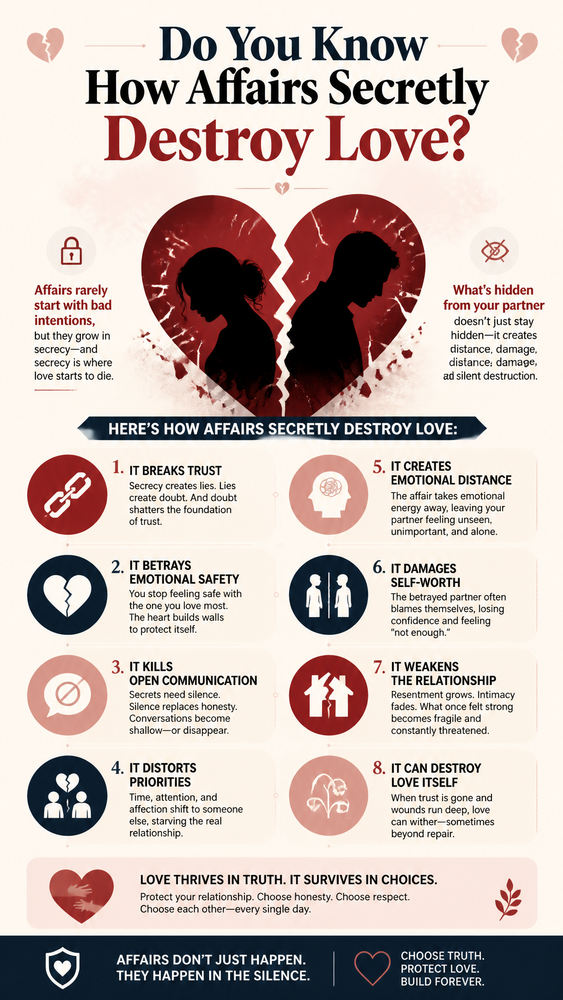
The most damaging myth about infidelity is that affairs only happen in unhappy marriages. Affairs arise from a complex mix of vulnerabilities, unmet needs, desire for novelty, and opportunity, and they occur even in relationships where both partners report genuine love and satisfaction. Accepting this complexity is not about excusing the behavior. It is about understanding it accurately enough to heal.
Common drivers of infidelity include:
- Unmet emotional needs that a person has not communicated or does not know how to name
- Opportunity and context, such as work travel, online access, or social environments that lower inhibition
- Desire for novelty or validation that has nothing to do with the quality of the primary relationship
- Personal vulnerabilities, including attachment wounds, depression, or unresolved trauma from earlier in life
- Compartmentalization, the ability some people have to separate the affair entirely from their primary relationship
Gender differences in motivation are real and documented. Surveys show 44% of men report affairs as purely sexual, while only 11% of women say the same. Women more often cite emotional disconnection as a driver. These differences matter for how couples approach disclosure and recovery conversations.
Rejecting the simple victim-and-perpetrator frame does not minimize the betrayed partner’s pain. It creates the conditions for honest dialogue, which is the only foundation on which real healing can stand.
Pro Tip: Avoid reducing the cause of an affair to a single explanation. Oversimplification protects no one and blocks the deeper understanding both partners need to move forward.
Real stories of betrayal and what they reveal about love
Real stories of betrayal share one consistent feature: the emotional experience is never simple. People who discover a partner’s affair rarely feel just one thing. They feel love and fury at the same time. They grieve the relationship they believed they had. They question every memory. This is not confusion. It is the natural result of attachment colliding with violation.
Consider these patterns that appear repeatedly in clinical accounts:
- A person discovers a two-year affair and reports still feeling deep love for their partner, alongside a rage they cannot contain. Both feelings are real and simultaneous.
- A betrayed partner describes being triggered by a song, a restaurant, or a specific time of day, months after the affair ended. These intrusive memories and triggers are symptoms of betrayal trauma, not signs of being “too sensitive.”
- A couple who separates after an affair reconnects two years later, not because they forgot what happened, but because both did the individual work required to show up differently.
- A betrayed partner who chooses to leave describes the process of healing as the most clarifying experience of their life, one that reshaped their understanding of what they actually need from love.
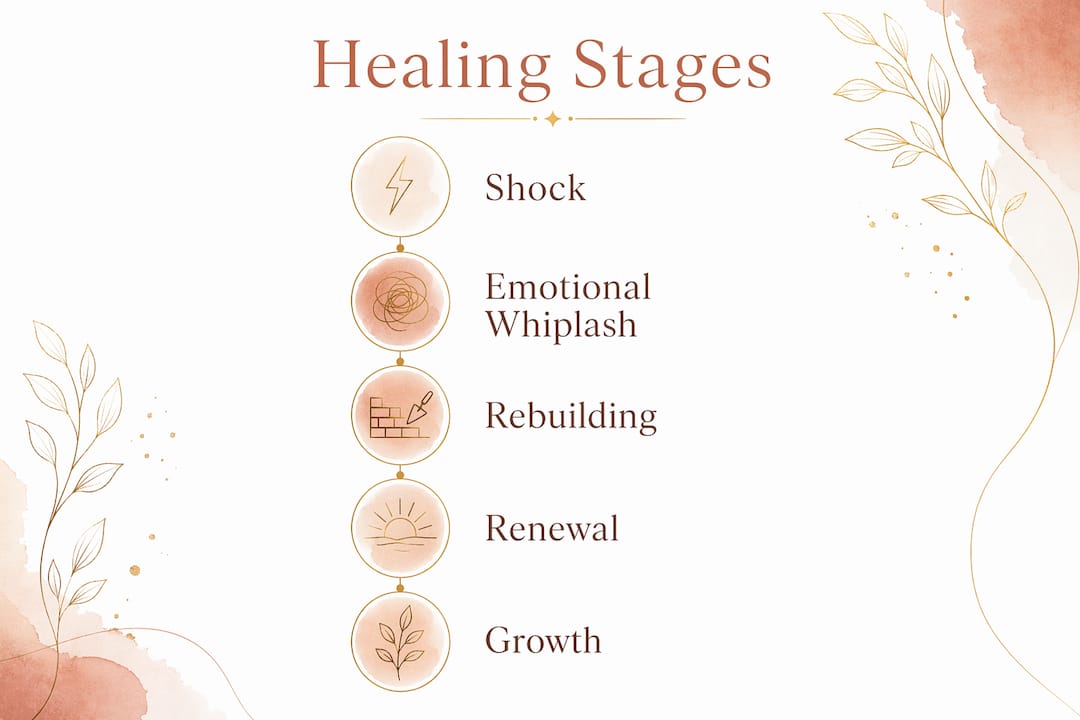
These stories illustrate that healing is not linear. The stages of healing after infidelity include periods of apparent progress followed by sharp setbacks. That pattern is normal. Misreading a setback as failure causes many people to abandon the process too early.
The non-linear nature of recovery also explains why love after cheating looks so different from person to person. Some rebuild. Some leave and grow. Both outcomes can represent genuine healing.
How do you navigate healing and decide what comes next?
The single most important early decision is to delay irreversible choices. Experts recommend waiting several months after discovery before making major decisions about the relationship. The nervous system in acute crisis cannot produce clear, long-term thinking. Decisions made in that state are often regretted regardless of which direction they go.
Structured therapeutic support produces measurably better outcomes than attempting recovery alone. 70–74% of couples who engage in professional therapy after infidelity successfully rebuild trust and report more intentional relationships. That figure is not a guarantee, but it is a strong signal that professional guidance changes the odds significantly.
Therapeutic approaches that show consistent results include:
- Emotionally Focused Therapy (EFT): Targets the attachment injuries underneath the surface conflict and helps both partners identify and express core emotional needs.
- Partners for Change Outcome Management System (PCOMS): Uses session-by-session feedback to track progress and adjust the therapeutic approach in real time.
- Structured disclosure: A therapist-guided process in which the unfaithful partner answers specific questions about the affair in a controlled setting, reducing the betrayed partner’s need to obsessively search for information.
- Grounding and nervous system regulation exercises: Breathing techniques, somatic work, and mindfulness practices that help the betrayed partner move out of fight-or-flight before attempting difficult conversations.
The goal of recovery is not restoring the old relationship. True healing requires building something new, whether that is a more honest bond with the same partner or a clearer sense of self that moves forward independently. Understanding relationship breakdowns through this lens removes the pressure to “get back to normal” and replaces it with the more honest goal of building something real.
| Healing stage | What it looks like |
|---|---|
| Acute crisis | Shock, disbelief, inability to eat or sleep, obsessive questioning |
| Emotional whiplash | Alternating between hope and rage, often triggered by small reminders |
| Stuck phase | Apparent plateau where progress feels stalled; normal and expected |
| Rebuilding | Consistent behavioral change, restored communication, renewed trust |
| Integration | The affair becomes part of the story, not the whole story |
Many couples get stuck at the emotional whiplash stage and interpret it as evidence that recovery is impossible. It is not. It is the stage where rebuilding trust requires the most patience and the most consistent effort from both partners.
Key Takeaways
Affairs cause betrayal trauma, a biological nervous system injury that requires sustained behavioral change, professional support, and realistic timelines of 18–24 months to heal.
| Point | Details |
|---|---|
| Betrayal trauma is biological | The nervous system injury from infidelity cannot be resolved through logic or apologies alone. |
| Affairs happen in happy relationships | Complex factors including opportunity and unmet needs drive infidelity, not just relationship unhappiness. |
| Healing takes 18–24 months | Most couples in specialized therapy move from clinical distress to recovery within this window. |
| Delay major decisions | Waiting several months before irreversible choices protects against crisis-state thinking. |
| Professional therapy changes outcomes | 70–74% of couples in structured therapy rebuild trust and report stronger, more intentional bonds. |
What I have learned about love after betrayal
Affairs strip love down to its most uncomfortable truth: attachment does not switch off because trust has been broken. I have worked with people who describe hating their partner and loving them in the same breath, and both feelings are completely accurate. That contradiction is not a sign of weakness. It is what makes betrayal so devastating and so hard to explain to anyone who has not lived it.
What I find most striking is how often people expect healing to feel like a straight line. They expect to feel worse, then better, then done. The reality is messier and, ultimately, more honest. The relationship healing process involves circling back through pain that you thought you had already processed. That is not regression. That is how the nervous system integrates trauma.
The couples I have seen build genuinely stronger relationships after an affair share one quality: they stopped trying to recover the relationship they had and started building one they had never had before. That shift requires honesty that most couples have never practiced. It is hard. It is also the most direct path to something real.
My strongest caution is against rushing forgiveness. Forgiveness that arrives before the nervous system is regulated is not forgiveness. It is suppression, and it will resurface. Give yourself the time the biology actually requires. Seek trauma-informed support, not just general counseling. And treat personal growth after infidelity as a legitimate outcome, not a consolation prize.
— S.J.Howe
Aftertheaffair resources for healing after betrayal
Knowing what betrayal trauma is and how it works is the first step. Knowing what to do next is where most people get stuck.
Aftertheaffair offers structured, evidence-informed resources built specifically for this moment. The 7-step infidelity recovery checklist gives you a clear, practical sequence to follow when everything feels chaotic. For couples working to rebuild, the relationship growth program addresses the specific stages where most people stall. If you are a therapist supporting clients through this, the clinical guidance resource provides a structured framework grounded in current trauma research. Aftertheaffair exists because recovery deserves more than generic advice.
FAQ
What is betrayal trauma?
Betrayal trauma is a neurobiological injury to attachment that occurs when a trusted partner violates the core conditions of the relationship. It produces symptoms similar to PTSD, including hypervigilance, intrusive memories, and sleep disruption.
How long does healing from affair trauma take?
Healing typically takes 18–24 months, with some couples requiring up to three years. Couples who engage in specialized therapy move through clinical distress to recovery significantly faster than those who attempt it alone.
Can a relationship survive infidelity?
Research shows 70–74% of couples in professional therapy successfully rebuild trust after infidelity. Survival depends on sustained behavioral change, structured disclosure, and both partners’ willingness to build something new rather than restore what existed before.
Why do affairs happen in happy relationships?
Affairs arise from a complex mix of personal vulnerabilities, unmet needs, opportunity, and desire for novelty. These factors operate independently of relationship quality, which is why infidelity can occur even when both partners report genuine love and satisfaction.
Should I make decisions immediately after discovering an affair?
Experts recommend waiting several months before making irreversible decisions. The nervous system in acute crisis cannot support clear long-term thinking, and decisions made in that state are frequently regretted regardless of direction.
Recommended
- Can Couples Recover From Multiple Affairs? – After the Affair Series
- How to Tell Kids About an Affair – After the Affair Series
- Will a Married Partner Leave Their Spouse? A Realistic Guide – After the Affair Series
- Why affair recovery is complex: a guide to healing