Last Updated: July 16, 2026
- Why Custody Exchanges Matter: Understanding the Stakes
- Step 1: Establish a Consistent Exchange Schedule
- Step 2: Choose Neutral Custody Exchange Locations
- Step 3: Master Co-Parenting Communication Strategies
- Step 4: Use Child Custody Exchange Apps
- Step 5: Implement Safety Protocols for High-Conflict Cases
- Step 6: Support Your Child Before and After Exchanges
- Common Mistakes That Escalate Conflict During Exchanges
- Frequently Asked Questions
Why Custody Exchanges Matter: Understanding the Stakes
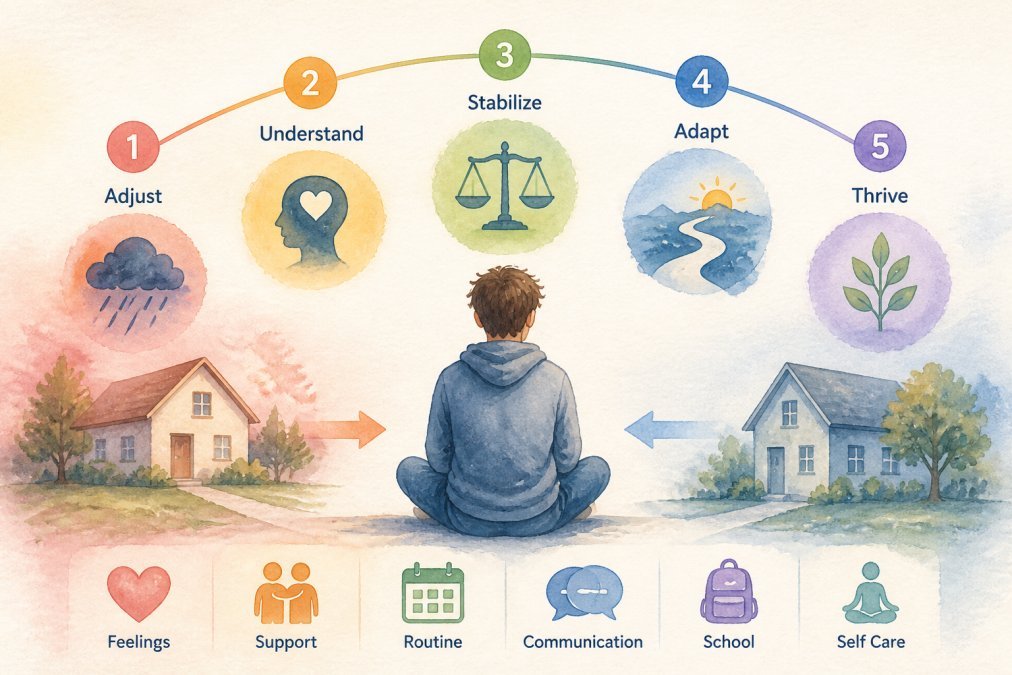
Custody exchanges are transition points where children absorb parental tension acutely. Research from American Psychological Association on parental conflict effects shows that children exposed to high-conflict exchanges experience measurable increases in anxiety, behavioral problems, and difficulty regulating emotions. The good news: conflict during custody exchanges is largely preventable through structure, clear boundaries, and intentional communication strategies.
How Conflict Affects Children’s Emotional Regulation
When children witness parental conflict during handoffs, their nervous systems shift into threat mode. Tense exchanges, raised voices, or silent hostility teach children that transitions are dangerous. Over time, they develop anticipatory anxiety about custody exchanges and struggle with emotional self-regulation.
The damage isn’t always visible in the moment. A child may smile during the handoff, then have an emotional breakdown later. The conflict itself may be brief, but the child‘s nervous system processes it for hours afterward.
The Long-Term Impact of High-Conflict Handoffs
Repeated exposure to parental conflict during exchanges creates lasting patterns. Children begin to associate transitions with stress, developing school refusal, sleep disturbances, or somatic complaints on exchange days. According to Journal of Family Psychology studies on custody conflict, children in high-conflict custody situations show significantly higher rates of depression and anxiety into adulthood.
However, this trajectory is changeable. Parents who implement structured, low-conflict exchange protocols see measurable improvements in child behavior and emotional stability within 4-6 weeks.
Step 1: Establish a Consistent Exchange Schedule
Predictability is your most powerful tool for reducing child anxiety. A consistent custody exchange schedule removes the uncertainty that feeds anxiety and conflict.
Creating Predictability to Reduce Anxiety
Set a specific day and time for every exchange, and honor it without exception. The same day each week, the same time (down to the minute), and the same location. Document this schedule in writing in your custody agreement and a shared calendar app.
Consistency serves multiple purposes: your child knows what to expect, there’s no ambiguity about responsibility, and there’s no opening for conflict because the schedule is predetermined.
Set a phone reminder for 15 minutes before every exchange. Arriving early or on time signals respect for the schedule and prevents the stress that escalates conflict.
Building Flexibility Without Sacrificing Structure
Handle legitimate schedule changes through a formal process, not ad-hoc negotiation at the exchange itself. Request changes in writing at least 48 hours in advance using email or a co-parenting app. State the specific reason, propose an alternative date/time, and ask for confirmation.
Never agree to schedule changes in person at the exchange. Keep all schedule discussions in writing.
Step 2: Choose Neutral Custody Exchange Locations
The physical location of the exchange sets the emotional tone. A neutral location reduces the intimacy that can trigger conflict and provides built-in structure that prevents escalation.
Exchanging at a parent’s home allows extended conversation, puts one parent in a vulnerable position, and sends mixed signals to the child about the relationship status.
What Makes a Location Truly Neutral
A neutral location is public, visible to others, and has no connection to either parent’s personal space. The best locations are library parking lots, park entrances, or grocery store parking lots, places where lingering isn’t natural and both parents feel equally comfortable.
For high-conflict cases, consider a third-party exchange facility run by family service organizations. Trained staff oversee the handoff, documentation is created, and the exchange is structured. These facilities cost $30-75 per exchange but are worth it if exchanges regularly escalate or if there are safety concerns.
Never exchange at either parent’s workplace. This creates professional complications and signals to your child that work is entangled with custody stress.

Step 3: Master Co-Parenting Communication Strategies
How you communicate during and around custody exchanges determines whether the interaction stays calm or escalates. The goal is to exchange the child safely and efficiently, with zero opportunity for conflict to develop.
Written Communication: Documentation That Protects
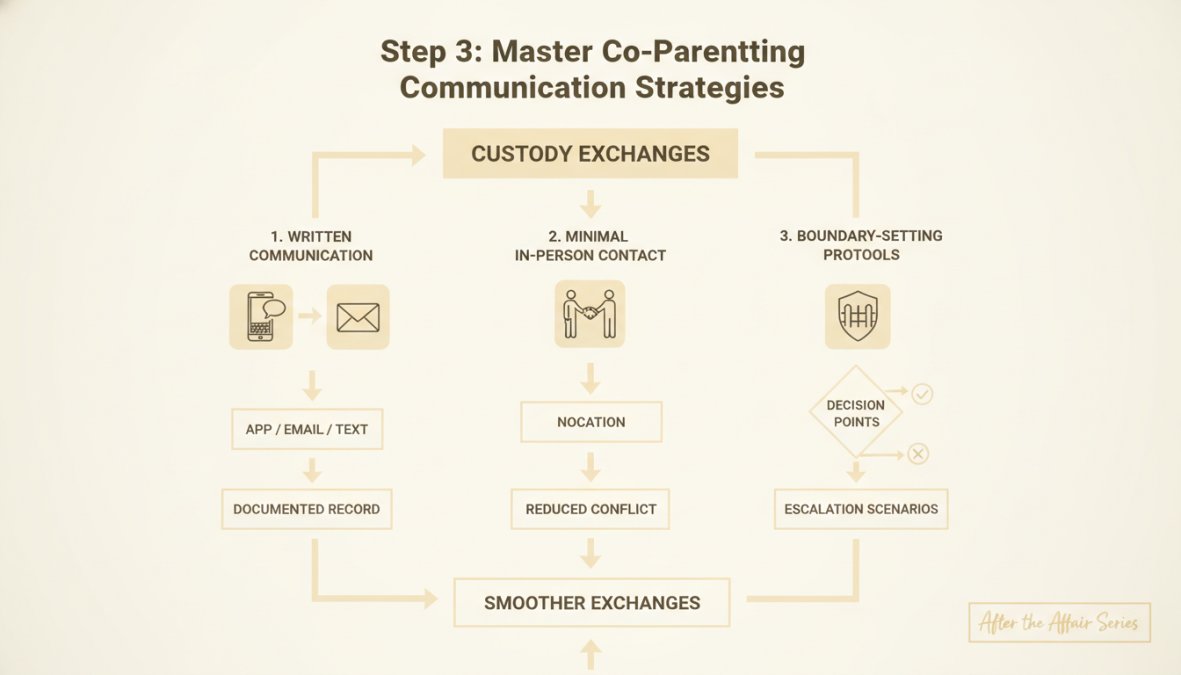
Keep all non-emergency communication in writing through email, text, or a co-parenting app. Written communication removes emotion, creates a legal record, forces clarity, and prevents real-time escalation.
Use a simple format: state the topic, provide specific information, ask for confirmation, and sign off. No personal commentary or emotional language.
GOOD: “Sophia has a dentist appointment Tuesday at 4 PM at Bright Smile Dental, 123 Main Street. I’ll pick her up from school at 2:45 PM and bring her back by 6:30 PM. Please confirm receipt.”
BAD: “Sophia needs a dentist appointment because you never take her to the doctor. I’m taking her Tuesday.”
Minimizing In-Person Contact During Handoffs
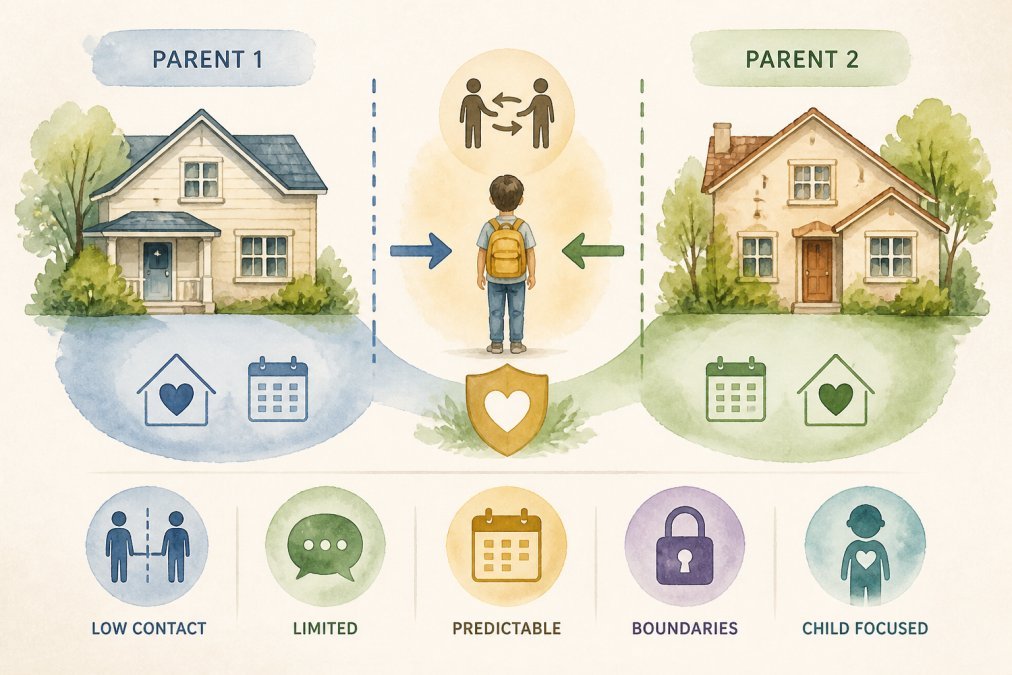
The less you talk during the exchange, the less chance conflict has to develop. Aim for zero conversation beyond greeting and confirming the child is ready. Use a “doorstep exchange” protocol: parent A brings the child to the door or car, parent B confirms the child is present, and the exchange is complete. Total interaction time: under one minute.
If you must communicate about something urgent, do it in writing before or after the exchange, never during the handoff itself.
The shortest exchange is the safest exchange. Every minute of in-person contact increases the risk of conflict.
Setting Clear Boundaries for Both Parents
Clear boundaries include: no discussing the other parent in front of the child, no asking the child about the other parent’s personal life, no discussing finances or legal matters during the exchange, no arriving more than 10 minutes early or late, no lingering after the exchange, and no discussing parenting decisions during the handoff.
Write these boundaries down and share them with the other parent, framing them as protecting the child. If the other parent violates these boundaries, don’t engage. Keep the exchange short, don’t respond to provocative comments, and document the violation.
Step 4: Use Child Custody Exchange Apps
Digital co-parenting apps eliminate direct communication and create automatic documentation. They’re one of the most effective tools for reducing conflict because they remove the opportunity for real-time escalation.
How Digital Co-Parenting Apps Reduce Direct Conflict
Apps create a buffer between parents. Instead of texting or calling, you send a message through the app. The other parent sees it when they check the app, not immediately. This delay removes reactive escalation.
Many apps include a “tone meter” feature that flags messages that sound angry or hostile, catching inflammatory language before it’s sent. Apps also create communication structure, keeping conversations focused on specific purposes: schedule changes, expense sharing, child information, and parenting decisions.
Documentation Features for Legal Protection
A co-parenting app creates a legal record that protects you. Every message, every schedule change, and every agreement is documented with timestamps. If the other parent claims you agreed to something you didn’t, you have the record to prove otherwise.
Some apps allow you to export your entire communication history as a PDF for your attorney. This is invaluable documentation if custody disputes escalate.
Use a co-parenting app even if your relationship with the other parent is civil. The documentation protects both of you and creates clarity around decisions.
Step 5: Implement Safety Protocols for High-Conflict Cases
If your custody situation involves threats, violence, substance abuse, or severe mental health issues, standard protocols aren’t enough. You need safety-focused strategies that protect both you and your child.
When Third-Party Supervision Is Necessary
Third-party supervision is necessary when there’s a history of violence or threats, untreated substance abuse, concerns about the child’s safety, a restraining order, evidence of parental alienation, or the child expresses fear about seeing the other parent.
Supervised exchanges are conducted by a trained professional or at a supervised exchange facility. The supervisor documents the exchange, ensures the child’s safety, and can intervene if conflict escalates.
Video Recording and Documentation Best Practices
In high-conflict cases, video recording the exchange creates an objective record. Before recording, check your state’s laws. Some states allow one-party recording, while others require two-party consent.
If recording is legal, use it strategically to document the exchange location and time, the other parent’s arrival and departure, the child’s emotional state, and any violations of the custody agreement. Keep the recording objective and factual. Store recordings securely and don’t share them on social media.
Never use video recording as a threat or weapon. Recording should be discreet and used only for documentation purposes.
Step 6: Support Your Child Before and After Exchanges
Your child’s emotional experience during custody exchanges depends heavily on how you prepare them and how you support them afterward. What happens in the 30 minutes before and after the exchange often matters more than the exchange itself.
Pre-Exchange Preparation to Reduce Child Anxiety
Start preparing your child for the exchange at least 30 minutes before it happens. Use a predictable pre-exchange routine: remind them calmly that the exchange is coming, help them gather belongings, encourage them to use the bathroom, and have them put on shoes and a jacket.
Avoid asking them what they want to do at the other parent’s house, reminding them of negative things about the other parent, or making them feel like they’re abandoning you. Use neutral, positive language: “Mom will be here soon. You’re going to have a great time. I’ll pick you up on Friday. I love you.”
For children with significant anxiety, use a visual schedule showing the exchange location, a photo of the other parent, and a clock showing the time.
Post-Exchange Cool-Down Routines for Emotional Recovery
The hour after the exchange is critical. Your child’s nervous system is still activated from the transition. Implement a post-exchange cool-down routine: spend 15-20 minutes in a calm, quiet space, let them decompress without questions, offer a snack or water, do a calming activity, and avoid interrogating them about the other parent.
After 30-45 minutes, your child should be regulated. This is not the time to ask detailed questions about the other parent’s house or what they did.
The post-exchange hour determines whether your child will dread the next exchange or look forward to it. A calm, supportive cool-down routine teaches their nervous system that transitions are safe.
Common Mistakes That Escalate Conflict During Exchanges
Using Your Child as a Messenger
Never send messages to the other parent through your child. Using your child as a messenger puts them in an impossible position and escalates conflict because messages get distorted. Always communicate directly with the other parent in writing through an app or email.
Discussing Parental Issues During Handoffs
Never use the exchange as an opportunity to discuss finances, legal matters, or relationship issues. If you need to discuss something serious, schedule a separate meeting or conversation in writing. The exchange is not the time to address parenting concerns or behavioral issues.
Arriving Late or Changing Plans Without Notice
Lateness is one of the most common triggers for conflict. Arrive at least 5 minutes early. If you’re going to be late, text or call at least 15 minutes before the scheduled time with a specific new arrival time.
Never change the exchange location or time without advance notice and agreement. Consistency and reliability build trust and reduce conflict.
| Strategy | When to Use | Expected Result | Frequency |
|---|---|---|---|
| Consistent schedule | All situations | Reduced child anxiety | Every exchange |
| Neutral location | All situations | Fewer escalations | Every exchange |
| Written communication | All situations | Clear documentation | As needed |
| Co-parenting app | Moderate to high conflict | Automatic record-keeping | Daily/weekly |
| Third-party supervision | High-conflict/safety concerns | Professional oversight | Every exchange |
| Pre-exchange routine | All situations | Smoother transitions | Every exchange |
| Post-exchange cool-down | All situations | Faster emotional recovery | Every exchange |
Custody exchanges will always involve some stress. Your child is transitioning between two homes and two parents. That’s inherently challenging. But conflict during exchanges is preventable.
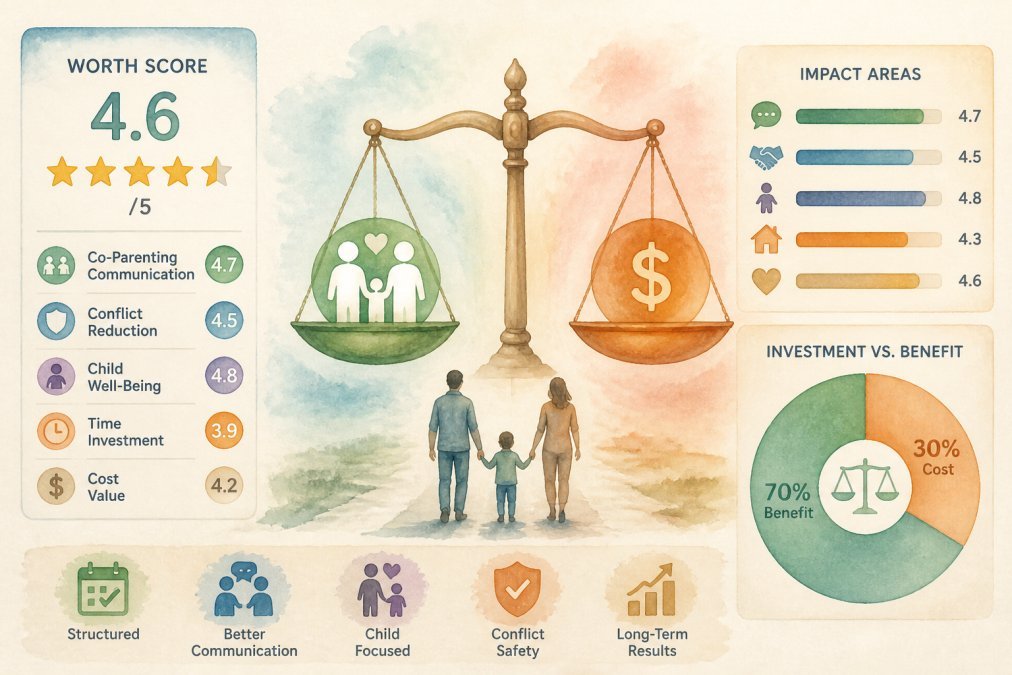
The strategies in this guide, consistent schedules, neutral locations, written communication, co-parenting apps, and emotional support for your child, work because they remove the conditions that create conflict. They create structure, documentation, and boundaries that keep both parents focused on the child’s wellbeing.
Start with one change. If your current exchanges happen at your home, move them to a public location. If you’re communicating by phone, switch to email. If you don’t have a written schedule, create one and get it signed. Each change reduces conflict incrementally.
The goal isn’t perfection. It’s creating a system where conflict is structurally difficult to achieve. When you have a consistent schedule, a neutral location, written communication, and clear boundaries, conflict requires deliberate effort.
Your child will notice the difference within weeks. Exchanges will feel calmer, their anxiety will decrease, and they’ll stop dreading the transition.
Frequently Asked Questions
What is a neutral exchange location for custody exchanges?
A neutral exchange location is a public, safe space where neither parent has authority or comfort advantage. Examples include police station lobbies, public libraries, shopping centers, or dedicated exchange facilities. The location should be easily accessible, well-lit, monitored, and free from distractions that could escalate conflict. Neutral locations reduce tension because neither parent feels territorial, and the public setting naturally encourages civil behavior during handoffs.
How can co-parenting apps help reduce conflict during custody exchanges?
Child custody exchange apps provide structured communication channels that replace direct contact, reducing opportunities for conflict. These platforms offer shared calendars, expense tracking, message documentation, and photo sharing, all recorded for legal protection. By minimizing phone calls and in-person conversation, apps create professional distance while ensuring both parents stay informed. Documentation features also protect you if disputes arise, as all communication is timestamped and preserved.
What are the effects of parental conflict on children during exchanges?
High-conflict custody exchanges trigger child anxiety, stress responses, and emotional dysregulation. Children exposed to parental tension during handoffs may develop separation anxiety, behavioral problems, or difficulty trusting both parents. Research in family law shows that children benefit from predictable, calm exchanges where parents maintain emotional control. Protecting your child from conflict during these moments directly supports their psychological wellbeing and long-term adjustment to the custody arrangement.
When should I use a third-party monitor or supervised exchange service?
Third-party supervision is appropriate in high-conflict cases involving documented abuse, safety concerns, parental alienation patterns, or court-ordered requirements. Supervised exchange services provide neutral professionals who oversee handoffs, document interactions, and ensure child safety. If direct contact consistently escalates into arguments, threats, or unsafe behavior, a professional monitor protects both the child and creates a legal record. Many family law courts recommend this approach when parallel parenting strategies alone haven’t reduced conflict.
Get started with After the Affair Series and access structured frameworks for managing high-conflict co-parenting. The platform provides 50+ age-appropriate scripts for talking to your child about custody exchanges, templates for written communication that reduces conflict, and a complete boundary-setting toolkit. Take the free 23-point assessment to identify your specific conflict triggers and get personalized recommendations for your situation.