TL;DR:
- Explaining parental separation after an affair requires clear, age-appropriate messages that prioritize the child’s emotional safety.
- Parents should present a united, blame-free front, emphasizing love, safety, and practical changes rather than details of the affair.
- What key messages should you share when explaining separation after an affair?
- How should you adapt the conversation for different ages?
- Why does a united, blame-free front matter so much?
- How do you manage ongoing conversations after the first disclosure?
- Key takeaways
- What I’ve learned about telling children the truth after betrayal
- FAQ
Explaining parental separation to a child after an affair means delivering clear, reassuring information that protects your child’s emotional well-being while honoring what they can actually understand at their age. Children do not need the full adult story. They need to know they are safe, loved, and that the changes ahead will not take either parent away from them. This guide walks you through exactly what to say, how to say it for different ages, and how to manage the conversations that will follow over months and years.
What key messages should you share when explaining separation after an affair?
The core task when explaining divorce to children in this context is not to explain the affair. It is to explain the separation. Children need reassurance that they are safe and loved, not details about what one parent did or did not do. The standard clinical term for this approach is “child-focused disclosure,” and it is the framework recommended by family therapists and mediators alike.
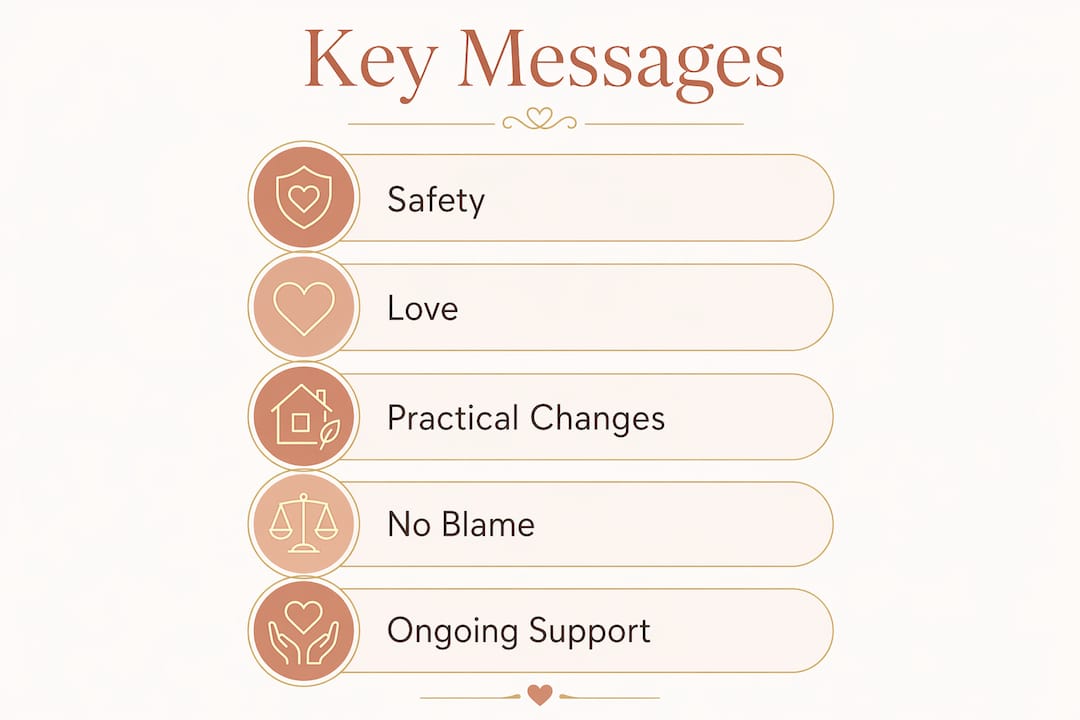
Your message should cover four things, and nothing more:
- The separation is real and permanent. Children cope better with clarity than with false hope. Avoid phrases like “we’re taking a break.”
- Neither parent is going away. Reassure your child that both parents will remain present and involved in their life.
- It is not their fault. Say this explicitly, more than once. Children between ages 4 and 12 are especially prone to self-blame during separation.
- Here is what daily life will look like. Explain where they will sleep, who will take them to school, and when they will see each parent.
Effective communication focuses on practical impacts rather than adult relationship details. A child asking “Why are you separating?” does not need to hear about infidelity. An honest, age-appropriate answer is: “Mom and Dad have some grown-up problems we can’t fix together, but we both love you completely and that will never change.”
Pro Tip: Write down your core message before the conversation. Three sentences covering safety, love, and practical changes is enough. Reading from notes is fine. It shows you took the conversation seriously.
How should you adapt the conversation for different ages?
Children’s developmental stage shapes how much information and reassurance they need. A five-year-old and a fifteen-year-old are processing this news through entirely different cognitive and emotional frameworks. Using the same script for both is one of the most common mistakes parents make.
Toddlers and preschoolers (ages 2 to 5)
Children this young understand concrete facts and daily routines, not abstract relationship concepts. Keep it to one or two sentences: “Mommy and Daddy are going to live in different houses. You will see both of us every week.” Repeat this message calmly and often. Regression behaviors like bedwetting or clinginess are normal responses, not signs of lasting damage.
School-age children (ages 6 to 12)
This group asks more direct questions and is highly sensitive to fairness and blame. Be honest that the separation is an adult decision, and repeat clearly that it is not their fault. Avoid any detail about the affair. If they ask why, a phrase like “We had some problems between us that we couldn’t solve” is both truthful and protective. Children in this age range also benefit from knowing the practical schedule in writing, since concrete information reduces anxiety.
Teenagers (ages 13 and up)
Teens often already sense that something happened, and some may have discovered the affair themselves. Trying to hide the basic fact that a betrayal occurred can backfire badly with this age group, damaging trust in both parents. You do not need to share graphic details, but a measured acknowledgment that one parent made a serious mistake, followed by a clear statement that this is an adult matter and not their burden to carry, is more credible than a vague explanation. Give them space to be angry. Do not require them to be okay with it.
Pro Tip: Prepare specific answers to the three questions every child asks: \”Is it my fault?\”, \“Will you get back together?\” and \“Where will I live?\” Rehearsing your answers out loud before the conversation reduces the chance of saying something you will regret under pressure.
Why does a united, blame-free front matter so much?
Interparental conflict predicts children’s emotional difficulties more strongly than the separation itself. This is one of the most consistent findings in family psychology research, and it means that how you and your co-parent behave toward each other matters more than the fact of the separation. A child who watches two calm, cooperative parents deliver the same message will adjust far better than one who hears two different stories laced with blame.
Here is how to prepare a united front before the conversation:
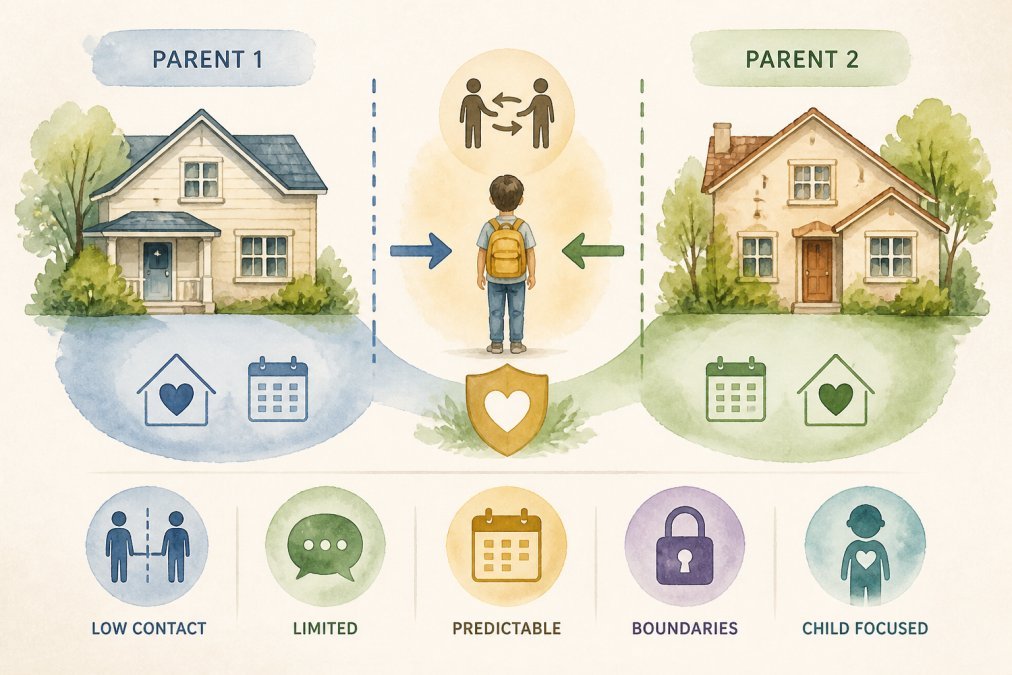
- Agree on the facts you will share. Parents should agree on what the child will hear, focusing on what changes and what stays the same, not on the reasons for the split.
- Write a shared script. A shared, blame-free script supports the child’s emotional safety and prevents the “Rashomon Effect,” where each parent tells a different version of events.
- Rehearse it together. Practice the conversation at least once before delivering it. This reduces the chance that one parent will go off-script when emotions run high.
- Agree on what you will not say. Specifically, agree that neither parent will mention the affair, assign blame, or speak negatively about the other parent in front of the child.
- Follow up consistently. After the initial conversation, both parents should reinforce the same messages independently in their own homes.
“Children infer blame from tone and parental conflict even when details are withheld. A consistent, rehearsed script mitigates this risk.” — Advanced Mediation Solutions
If you and your co-parent cannot have a civil planning conversation, consider using a family mediator or therapist to help you align on messaging before speaking to your child. The investment is worth it. Research from a 2026 randomized controlled trial found that child-focused interventions produced medium-to-large reductions in conflict perceived by children within just 12 weeks. That is a measurable, fast result.
How do you manage ongoing conversations after the first disclosure?
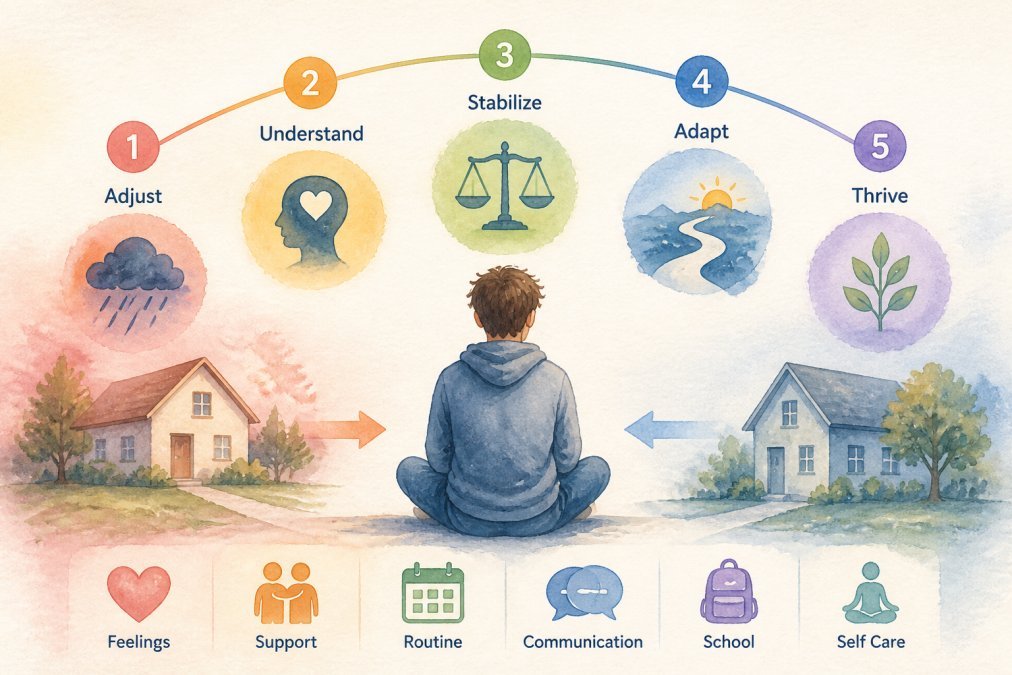
The initial conversation is not the end. Children revisit separation questions multiple times as they develop, and what satisfies a seven-year-old will not satisfy the same child at eleven. Parenting after infidelity means committing to a long-term communication practice, not a single difficult talk.
Watch for these signs that your child needs more support:
- Declining school performance or withdrawal from friends
- Increased aggression, anxiety, or sleep disturbances
- Asking the same questions repeatedly without seeming reassured
- Expressing loyalty conflicts, such as refusing to enjoy time with one parent
When these signs appear, respond with patience rather than defensiveness. A child asking “Why did Daddy leave?” for the fifth time is not trying to punish you. They are processing something that does not yet make sense to them. Acknowledge the feeling first: “I know this is really hard and confusing.” Then restate the core message: “Both of us love you and that is not going to change.”
One boundary that protects children significantly is avoiding parentification. This means never using your child as a confidant, messenger, or emotional support system for your own grief about the affair. Framing separation as one parent’s fault or sharing details amid conflict creates loyalty conflicts and causes lasting harm. Keep adult pain in adult spaces, whether that is therapy, trusted friends, or structured support like the resources at Aftertheaffair.
Pro Tip: Create a low-pressure ritual for ongoing check-ins, such as a weekly walk or a regular dinner where your child knows they can ask anything. Predictable access to you reduces the anxiety that drives repeated questioning.
For deeper guidance on supporting kids in two homes, Aftertheaffair offers structured resources specifically built for this transition.
Key takeaways
Child-focused disclosure, delivered with a unified and blame-free message from both parents, is the single most protective approach when explaining parental separation after an affair.
| Point | Details |
|---|---|
| Lead with safety and love | Open every conversation by reassuring your child they are safe, loved, and not at fault. |
| Match the message to the age | Toddlers need simple facts; teens need measured honesty and space to process anger. |
| Prepare a shared script | Both parents should agree on the same facts and rehearse together before speaking to the child. |
| Conflict harms more than separation | Minimizing children’s exposure to parental conflict matters more than any single conversation. |
| Expect ongoing dialogue | Children revisit these questions for years; commit to patient, consistent responses over time. |
What I’ve learned about telling children the truth after betrayal
I have worked with many parents who arrive at this conversation carrying enormous guilt, and that guilt often pushes them in one of two directions. Either they overshare, hoping that honesty will somehow repair the damage, or they say almost nothing, hoping silence will protect their child. Both approaches tend to backfire.
What I have seen work, consistently, is what I would call “protective honesty.” You tell the truth about the situation without telling the whole truth about the cause. Your child deserves to know that the family structure is changing. They do not deserve to carry the weight of knowing why. That distinction is not dishonesty. It is good parenting.
The parents who handle this best are not the ones who have it together emotionally. They are the ones who have done enough of their own work to be present for the conversation without falling apart in front of their child. That means getting your own support in place first. Whether that is a therapist, a trusted friend, or a structured resource like the Aftertheaffair series, you cannot pour from an empty cup.
I also want to say something that most guides skip: you will not do this perfectly. You will say something slightly wrong, or your voice will crack, or your co-parent will go slightly off-script. That is okay. Children are resilient when the overall pattern of communication is calm, consistent, and loving. One imperfect conversation does not define the outcome. The ongoing relationship does.
For parents wondering how infidelity affects children long-term, the research is actually more hopeful than most people expect when conflict is kept low and both parents remain engaged.
— S.J.Howe

How Aftertheaffair can support you through this
Knowing what to say to your child is one piece of a much larger recovery process. Aftertheaffair provides structured, evidence-informed resources built specifically for parents navigating separation and healing after betrayal.
The 7 Steps Infidelity Recovery Checklist is a practical starting point that covers communication, co-parenting, and emotional recovery in a clear, step-by-step format. For parents in the early stages, the Navigating Infidelity guide addresses the first months after discovery, including how to manage parenting responsibilities while processing betrayal trauma. These resources do not replace therapy, but they give you a framework when everything feels uncertain.
FAQ
What should I never say to my child about the affair?
Never name the affair as the cause of the separation, assign blame to either parent, or share details about what happened. Details about why the marriage ended belong in adult spaces, not in conversations with children.
How do I answer ‘Is it my fault?’ when talking to kids about separation?
Say directly and clearly: “No, this is not your fault at all. This is a grown-up problem between Mom and Dad, and it has nothing to do with anything you did.” Repeat this message at every age, because children need to hear it more than once.
At what age can I be more honest about the affair with my child?
With teenagers, a measured acknowledgment that one parent made a serious mistake is more credible than vague explanations, but graphic details are never appropriate. Age-appropriate communication controls what the child feels responsible for at every stage of development.
What if my co-parent refuses to present a united front?
Focus on what you can control in your own home. Keep your messaging consistent, blame-free, and child-focused. If conflict is unavoidable, a family mediator can help align both parents on child-facing communication before it causes lasting harm.
How do I know if my child needs professional support?
Signs that warrant professional help include persistent sleep problems, declining school performance, withdrawal from friends, or repeated expressions of guilt or loyalty conflict. A child therapist who specializes in family transitions can provide targeted support that goes beyond what parents can offer alone.
Recommended
- How to Tell Kids About an Affair – After the Affair Series
- How to Emotionally Prepare Kids for Parenting Changes After Infidelity – After the Affair Series
- Parenting During Affair Fog – After the Affair Series
- Heal when an affair produced a child: 5 key steps – After the Affair Series