TL;DR:
- Trauma bonding is a pathological emotional attachment to an abuser, created through cycles of harm and intermittent reassurance. It involves neurochemical dependency driven by fluctuating cortisol and oxytocin levels, making leaving feel impossible and healing complex. Recovery requires trauma-informed therapy, support networks, and somatic practices to re-regulate the nervous system and break the cycle.
Trauma bonding is defined as a strong, pathological emotional attachment to an abusive individual, formed through cycles of abuse punctuated by intermittent positive reinforcement. Dr. Patrick Carnes coined the term in 1997 to describe what he observed in survivors of captivity, domestic abuse, and coercive control. The bond does not form despite the abuse. It forms because of it. Understanding this distinction is the first step toward recognizing why leaving feels so physically and emotionally impossible, and why healing requires far more than willpower.
What is trauma bonding, and why does it happen?
Trauma bonding psychology rests on one core mechanism: intermittent reinforcement. When affection and cruelty alternate unpredictably, the brain locks onto the moments of warmth with far greater intensity than it would in a consistently loving relationship. This is the same neurological process that makes gambling addictive. The unpredictability itself becomes the hook.
At a biochemical level, cortisol and oxytocin flood the system in alternating cycles during abuse and reconciliation phases. Cortisol spikes during conflict, and oxytocin surges during the honeymoon period that follows. Together, they create a chemical dependency that causes survivors to fixate on the good times even while the harm continues. This is not weakness. It is neurochemistry.
The limbic system, the brain’s emotional processing center, registers the abuser as both the source of threat and the source of safety. That contradiction is what makes the trauma bond relationship so disorienting. The nervous system becomes dysregulated, oscillating between hyperarousal and collapse, and the body begins to associate the abuser’s presence with relief rather than danger.
One critical clarification: trauma bonding refers specifically to an addictive attachment to an abuser or captor. It is not the same as “bonding over shared trauma,” a phrase that has entered casual conversation. Conflating the two delays recognition and recovery.
Pro Tip: If you find yourself defending someone’s behavior to friends and family while privately feeling afraid or worthless, that pattern is worth examining with a trauma-informed counselor.
Key conditions that create a trauma bond include:
- Power imbalance: One person controls resources, access, or emotional safety.
- Intermittent reinforcement: Abuse and affection alternate without a predictable pattern.
- Isolation: The survivor is cut off from outside perspectives that could name the dynamic.
- Perceived threat: The nervous system registers leaving as more dangerous than staying.
What are the signs and stages of trauma bonding?
Recognizing a trauma bond from the inside is genuinely difficult. The bond is designed, often unconsciously, to obscure itself. Key signs include rationalizing abuse, defending the abuser to others, experiencing self-esteem that rises and falls entirely in response to the abuser’s moods, and feeling a physical pull back to the relationship after attempts to leave.
The seven stages of a trauma bond follow a recognizable arc:
- Love bombing: Intense affection, attention, and idealization that creates rapid emotional dependency.
- Trust and dependency: The survivor begins to rely on the abuser for emotional validation.
- Criticism and devaluation: Small put-downs and criticisms begin to erode self-worth.
- Gaslighting: The survivor’s perception of reality is systematically undermined.
- Resignation: The survivor accepts the abuser’s version of events and stops pushing back.
- Loss of self: Identity, friendships, and independent judgment are progressively surrendered.
- Emotional addiction: The survivor experiences withdrawal symptoms when separated from the abuser.
The honeymoon period that follows an abusive episode is not evidence of the abuser’s “true self.” The intermittent affection phase is a calculated, often subconscious, tactic to rebuild dependency. Understanding this reframes the confusion survivors feel when the person who hurt them suddenly becomes tender and apologetic.
| Trauma bond relationship | Healthy attachment |
|---|---|
| Self-worth tied to partner’s approval | Self-worth exists independently |
| Fear of partner’s moods drives behavior | Disagreement is safe and expected |
| Leaving feels physically dangerous | Separation is uncomfortable but manageable |
| Positive moments feel euphoric and rare | Affection is consistent and predictable |
| Isolation from support network | Outside relationships are encouraged |
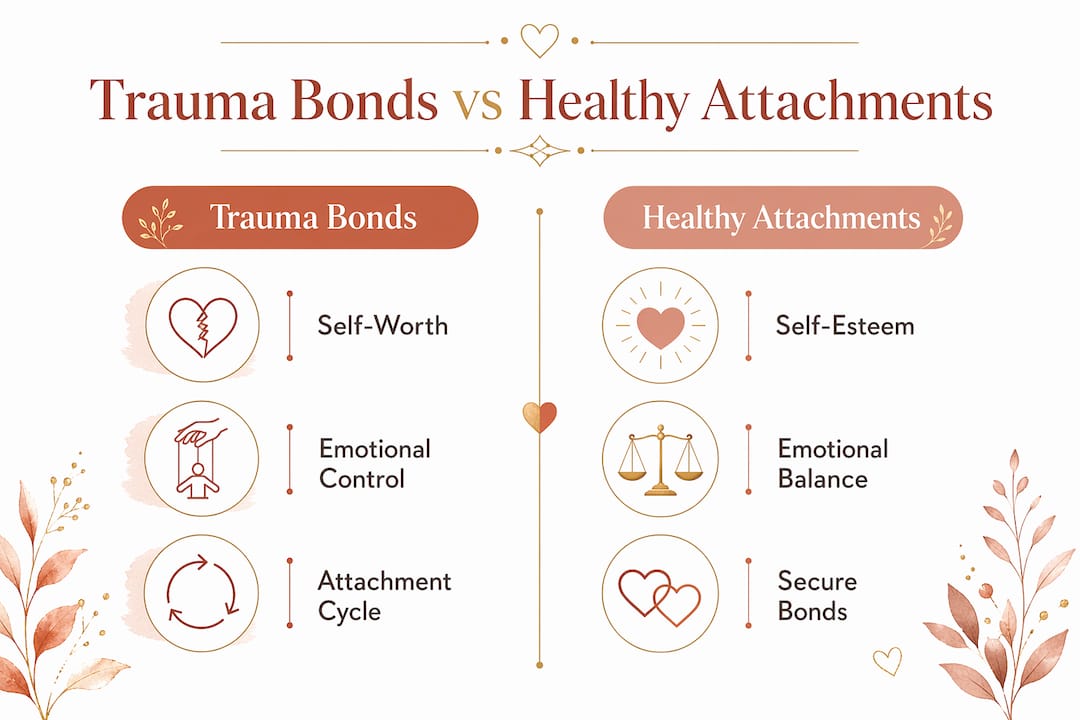
Pro Tip: Print this comparison table and circle the column that describes your relationship. What you see on paper is often clearer than what you can feel in the moment.
What effects does trauma bonding have on health?
The effects of trauma bonding extend well beyond emotional distress. Survivors frequently develop anxiety disorders, clinical depression, and post-traumatic stress disorder. The constant state of threat and hypervigilance rewires the stress response system, making it difficult to feel safe even after leaving the relationship.
“Trauma bonding is a survival mechanism, not a character flaw. The bond biologically seeks safety from the very source of pain.” — SELF Magazine
Physically, the toll is measurable. Individuals in trauma bonded relationships are 2.7 times more likely to develop functional somatic syndromes, including chronic pain, gastrointestinal disorders, and fatigue. This means the body keeps score in literal, clinical terms. Stress hormones sustained at high levels over months or years cause systemic inflammation and immune suppression.
Attempts to leave the relationship produce physiological withdrawal symptoms that closely resemble substance addiction: intense anxiety, sleep disruption, intrusive thoughts, and a felt sense of physical danger. This is why the phrase “just leave” is not only unhelpful but factually inaccurate as advice. The nervous system is not cooperating with that instruction.
Self-blame compounds every layer of harm. Survivors commonly believe that changing their own behavior will stop the abuse. This belief is incorrect. Trauma bonds are survival mechanisms, biological adaptations to an environment of unpredictable threat. Naming that truth is not an excuse for the abuser. It is a release valve for the survivor.
| Health domain | Common effects |
|---|---|
| Psychological | Anxiety, depression, PTSD, dissociation |
| Emotional | Chronic shame, distorted self-image, emotional numbness |
| Physical | Somatic syndromes, sleep disruption, immune suppression |
| Social | Isolation, difficulty trusting others, damaged support networks |
How can you begin healing and breaking trauma bonds?
Breaking trauma bonds starts with naming what is happening. That act alone, calling the dynamic by its correct name, interrupts the self-blame loop and begins to restore a survivor’s grip on reality. Recovery is nonlinear, and abusers frequently use love bombing precisely when a survivor attempts to leave, which hijacks hope and pulls them back into the cycle.
Healing requires addressing both the psychological and physiological dimensions of the bond. Therapy modalities that work directly with the nervous system, including EMDR (Eye Movement Desensitization and Reprocessing), somatic experiencing, and trauma-focused cognitive behavioral therapy, are among the most effective approaches. Talk therapy alone often cannot reach the body-level responses that sustain the bond.
Practical steps for beginning recovery include:
- Build a named support network. Tell at least one trusted person what is happening. Isolation is the bond’s primary defense mechanism.
- Work with a trauma-informed counselor. General therapy is helpful, but a counselor trained in relational trauma understands the specific dynamics at play.
- Develop a safety plan. Organizations like the National Domestic Violence Hotline provide structured planning tools for leaving safely.
- Practice self-care strategies consistently. Sleep, nutrition, and physical movement directly regulate the nervous system and reduce withdrawal intensity.
- Expect setbacks without interpreting them as failure. Returning to an abusive relationship during recovery is statistically common. It does not mean healing is impossible.
Pro Tip: When the pull to return feels overwhelming, write down three specific incidents of harm in detail. The nervous system responds to abstraction; concrete memory interrupts the idealization cycle.
Rebuilding emotional resilience after betrayal is a gradual process that requires patience with yourself. The goal is not to stop loving the person. The goal is to stop needing the cycle.
Key takeaways
Trauma bonding is a neurochemical and psychological survival response, not a personal failing, and recovery requires addressing both the mind and the nervous system simultaneously.
| Point | Details |
|---|---|
| Trauma bonding definition | A pathological attachment to an abuser formed through cycles of harm and intermittent affection. |
| Core mechanism | Alternating cortisol and oxytocin create a chemical dependency that mimics substance addiction. |
| Signs to recognize | Rationalizing abuse, self-esteem tied to the abuser’s moods, and physical withdrawal when separated. |
| Health effects | Survivors face elevated risk of PTSD, depression, and somatic illness including chronic pain. |
| Path to healing | Trauma-informed therapy, a named support network, and self-compassion are the foundations of recovery. |
Why healing a trauma bond is harder than anyone tells you
I have worked with people who describe their abusive relationship as the most intense love they have ever felt. That statement used to surprise me. Now I understand it as a direct symptom of the bond itself. The neurochemical highs produced during reconciliation phases are genuinely more powerful than the steady warmth of a healthy relationship. Survivors are not confused about love. They are experiencing a chemically amplified version of it.
What conventional advice gets wrong is the assumption that understanding the dynamic is enough to break it. Knowing you are trauma bonded does not switch off the withdrawal. I have seen highly educated, self-aware people return to abusive relationships six or seven times, not because they lacked information, but because their nervous systems had not yet been given the tools to regulate without the abuser’s presence.
The most underrated part of addressing betrayal trauma is the body work. Survivors who add somatic practices, whether that is yoga, breathwork, or EMDR, to their recovery consistently report faster stabilization than those who rely on insight alone. The bond lives in the body. That is where a significant part of the healing has to happen.
I also want to say directly: if you have returned to a harmful relationship after trying to leave, you are not weak. You are experiencing a physiological response that is well-documented and well-understood. The path forward is not shame. It is structure, support, and time.
— S.J.Howe
Start your recovery with structured support
If what you have read here resonates, you are not alone, and you do not have to figure out the next steps without guidance. Aftertheaffair offers evidence-informed resources built specifically for people navigating relational trauma, betrayal, and the complex emotional aftermath of abusive or unfaithful relationships.
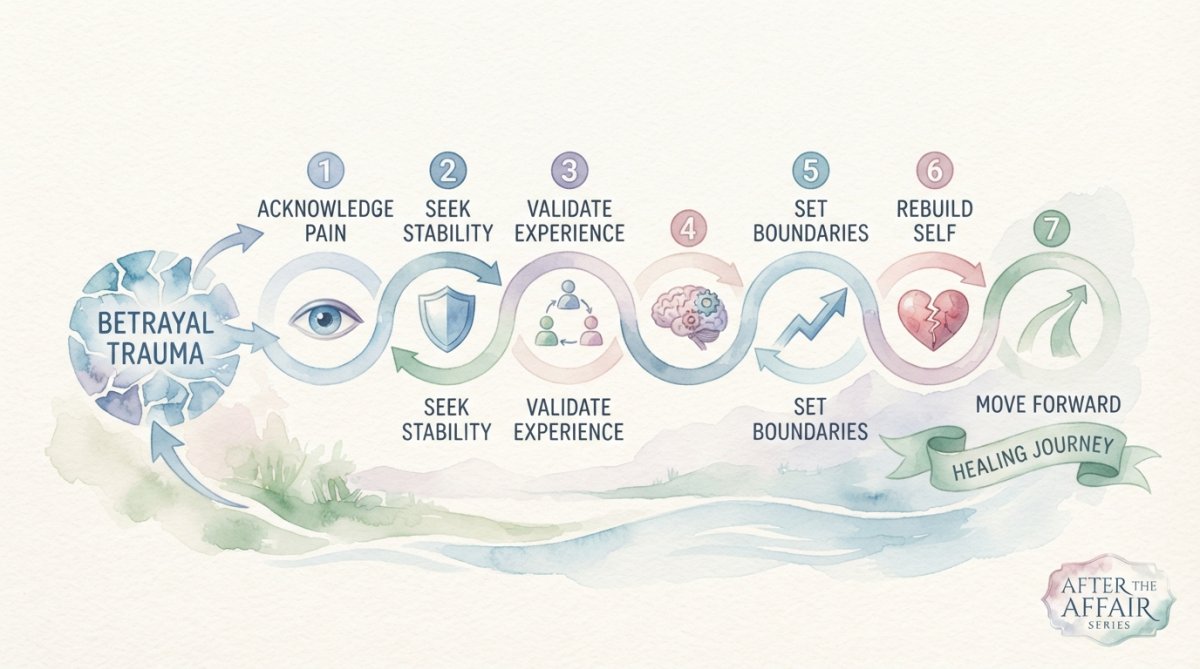
The trauma recovery checklist at Aftertheaffair walks you through seven concrete steps for healing after betrayal, from stabilizing your nervous system to rebuilding your sense of self. For couples working through the aftermath of infidelity and coercive dynamics, the relationship growth resources provide a structured path toward rebuilding trust. Recovery is possible. The right framework makes it more likely.
FAQ
What is the trauma bonding definition in simple terms?
Trauma bonding is a strong emotional attachment to an abusive person, formed because cycles of harm and affection create a neurochemical dependency similar to addiction. Dr. Patrick Carnes coined the term in 1997 to describe this specific pattern.
How do you know if you are in a trauma bond relationship?
Key signs include defending your partner’s abusive behavior to others, feeling your self-worth rise and fall entirely with their moods, and experiencing intense anxiety or physical distress when you try to leave. These symptoms reflect nervous system dysregulation, not personal weakness.
What causes trauma bonding to feel so addictive?
The alternating flood of cortisol during conflict and oxytocin during reconciliation creates a chemical cycle that the brain registers as dependency. This neurochemical pattern explains why survivors fixate on the positive moments despite ongoing harm.
Can trauma bonding happen outside of romantic relationships?
Yes. Trauma bonds form in any relationship with a significant power imbalance and intermittent reinforcement, including parent-child relationships, cult dynamics, and workplace abuse. The psychological mechanism is the same regardless of the relationship type.
How long does it take to heal from a trauma bond?
Recovery is nonlinear and varies significantly by individual, the duration of the relationship, and access to trauma-informed support. Most survivors experience repeated cycles before sustained healing, which is a documented pattern rather than a sign of failure.
Recommended
- Am I Trauma Bonded or Actually in Love? – After the Affair Series
- Was ist Trauma-Bonding? Ursachen, Muster und Heilung 2026 – After the Affair Series
- The Extinction Burst Survival Guide – After the Affair Series
- AM I TRAUMA BONDED OR ACTUALLY IN LOVE? – After the Affair Series