TL;DR:
- Leaving after infidelity is appropriate when a partner refuses accountability, continues deception, or shows no effort to repair the relationship.
- Most decisions should be made after waiting 6 to 12 months to allow trauma-related distortions to resolve and genuine behavioral change to emerge.
- When it’s time to leave after infidelity: the clearest signs
- How long should you wait before deciding to leave after betrayal?
- What does genuine repair and accountability look like after infidelity?
- Practical steps to support your emotional health while deciding
- Key takeaways
- What I’ve learned about the stay-or-leave decision after infidelity
- FAQ
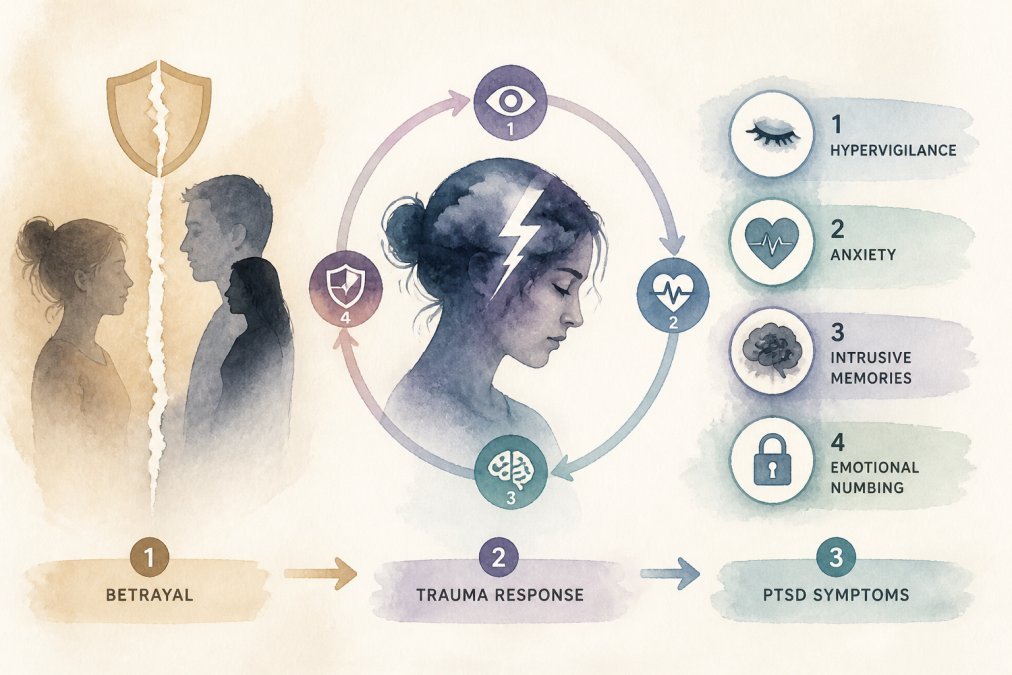
Knowing when it’s time to leave after infidelity is defined by one core truth: when your partner refuses honest accountability, maintains ongoing deception, or shows no genuine commitment to repair, staying becomes a choice that costs you your emotional health. Betrayal trauma, the clinical term for the psychological injury caused by a partner’s infidelity, shares significant overlap with PTSD and requires real, observable change from the person who caused the harm. The decision to stay or go is rarely clean or quick. But specific behavioral signals from your partner, and from your own body and mind, can cut through the confusion and point you toward clarity.
When it’s time to leave after infidelity: the clearest signs
The most reliable indicators that leaving is the right choice are not feelings. They are behaviors. Anchor Light Therapy identifies several concrete “walk away” triggers that therapists use to guide clients through this exact decision. These are not about punishing a partner for a mistake. They are about recognizing when the conditions for healing simply do not exist.
Watch for these signs to leave after cheating:
- The affair has not ended. If your partner continues contact with the affair partner, whether openly or secretly, repair is impossible. You cannot rebuild a house while someone keeps setting it on fire.
- Refusal to talk honestly. Avoidance, deflection, or shutting down conversations about the infidelity signals that your partner is unwilling to face what they did. Healing requires open, sustained dialogue.
- Trickle truth disclosures. This is when a partner reveals details in small, painful installments rather than offering full honesty upfront. Trickle truth retraumatizes the betrayed partner repeatedly, making each new revelation feel like a fresh betrayal.
- Refusal to attend therapy. Couples therapy after infidelity is not optional for serious repair. A partner who refuses to attend is signaling that they are unwilling to do the work.
- Repeated broken promises. One broken promise can be a stumble. A pattern of broken promises is a statement about character and commitment.
- Ongoing lying. Continued deception after discovery, including lies about the scope of the affair or contact with the affair partner, is one of the clearest signs that leaving is warranted.
- Your mental health is deteriorating. Persistent anxiety, inability to function at work, or physical symptoms of chronic stress are your body telling you that the current situation is not survivable long-term.
Pro Tip: Keep a private journal during this period. Writing down what your partner says versus what they do over weeks and months creates an objective record that cuts through the fog of trauma and helps you see patterns clearly.
The absence of accountability is not a personality quirk. Certainty that a partner will never change is recognized by therapists as a signal that the relationship has reached a point of no return. If you feel that certainty, trust it.
How long should you wait before deciding to leave after betrayal?
Timing matters enormously in this decision, and most people underestimate how much betrayal trauma distorts their thinking in the immediate aftermath of discovery. Therapists recommend waiting 6 to 12 months before making a permanent stay-or-leave decision, unless ongoing harm or active deception makes staying dangerous. This is not about tolerating bad behavior. It is about giving your nervous system enough time to stabilize so that your decision reflects your actual values, not just your acute pain.
Here is how to use that window productively:
- Observe behavior, not words. In the first weeks after discovery, most unfaithful partners express remorse. What matters is whether that remorse translates into sustained behavioral change over months, not days.
- Seek individual therapy. A therapist who specializes in betrayal trauma, such as those trained in Emotionally Focused Therapy (EFT) or EMDR, can help you process emotions without making irreversible decisions from a place of crisis.
- Build a support network. Trusted friends, family members, or a support group for betrayal survivors reduce the isolation that makes trauma worse and decision-making harder.
- Set a personal review date. Choose a specific point, such as three months or six months out, to consciously reassess where things stand. This prevents indefinite limbo and gives you a structured moment to evaluate progress.
- Leave immediately if safety is at risk. Waiting for clarity applies only when you are physically and emotionally safe. If your partner is abusive, threatening, or continuing the affair without remorse, the 6-to-12-month framework does not apply.
Acute betrayal trauma scrambles decision-making in ways that feel indistinguishable from clarity. The goal of this waiting period is not patience for its own sake. It is giving yourself the conditions to think straight.
What does genuine repair and accountability look like after infidelity?
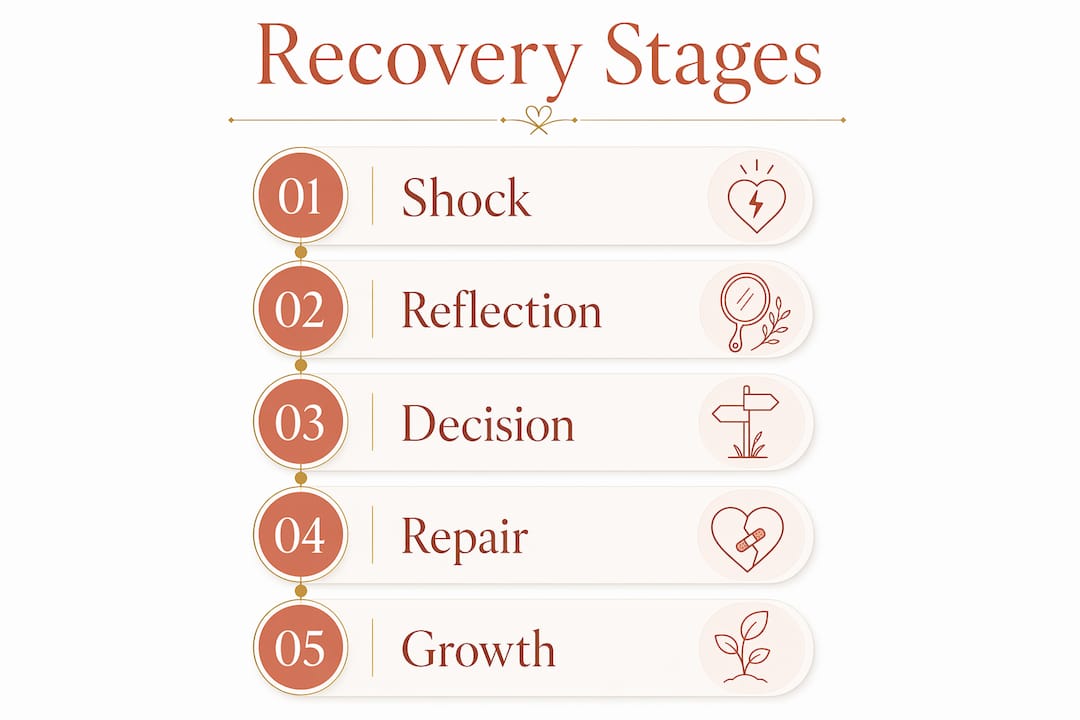
Understanding what real accountability looks like is what separates a partner who is genuinely committed to repair from one who is performing remorse to avoid consequences. This distinction is the most important factor in deciding whether staying is worth it.
| Genuine repair | Performance of remorse |
|---|---|
| Full, structured disclosure of the affair | Partial answers, minimizing, or trickle truth |
| Consistent transparency about whereabouts and communication | Defensiveness when asked questions |
| Willingness to answer hard questions repeatedly | Impatience with your grief or triggers |
| Proactive engagement in couples therapy | Attending therapy reluctantly or inconsistently |
| Behavioral change sustained over months | Intense apologies followed by old patterns |
Full disclosure versus trickle truth is one of the most significant predictors of healing speed. A single structured disclosure, even when painful, allows the betrayed partner to grieve a defined event. Trickle truth creates an open wound that never closes because new information keeps arriving.
Repair is judged by consistent behavior over time, not by the intensity of early apologies. A partner who cries and begs for forgiveness in week one but becomes impatient with your grief in month three is showing you who they are. A partner who remains transparent, answers questions without resentment, and tolerates your triggers six months later is demonstrating something real.
Pro Tip: Ask your partner to answer the same difficult question on three separate occasions, weeks apart. A partner committed to repair will answer consistently and without irritation. Inconsistency or growing defensiveness tells you something important about their actual commitment.
Rebuilding trust after cheating is possible, but only when both partners are doing the work. If you are the only one carrying the weight of repair, that imbalance is itself a sign worth paying attention to.
Practical steps to support your emotional health while deciding
Coping with betrayal while simultaneously trying to make one of the biggest decisions of your life is genuinely one of the hardest things a person can do. Your emotional health is not a secondary concern during this process. It is the foundation on which any good decision gets made.
These steps support both your healing and your clarity:
- Give yourself permission to grieve. Grief, professional support, and boundary-setting are the three pillars of stabilizing after betrayal. Grief is not weakness. It is the appropriate response to a real loss, whether that loss turns out to be the relationship or the version of it you believed you had.
- Consider a temporary separation. Physical space can reduce the daily emotional intensity enough to think more clearly. A structured separation with agreed-upon terms is different from abandonment. It is a tool for gaining perspective.
- Seek individual therapy before couples therapy. You need your own space to process what happened without managing your partner’s emotions at the same time. Individual therapy focused on betrayal trauma gives you that.
- Distinguish information-seeking from rumination. Requesting information for your own safety is legitimate and necessary. Compulsively searching your partner’s phone at 2 a.m. for the hundredth time is rumination, and it deepens trauma rather than resolving it. Knowing the difference protects your mental health.
- Set and enforce boundaries. A boundary is not a punishment. It is a statement about what you need to feel safe. If your partner cannot respect basic boundaries during the repair period, that tells you everything you need to know about whether staying is viable.
- Recognize when exhaustion becomes a signal. Emotional exhaustion that does not lift after months of effort, even with support, is your system telling you that the cost of staying has exceeded what you can sustain. That signal deserves respect, not suppression.
You can explore coping strategies after betrayal that are grounded in therapeutic frameworks and designed specifically for the kind of pain you are carrying right now.
Key takeaways
Leaving after infidelity is the right choice when your partner’s behavior, not just their words, shows no genuine commitment to accountability, transparency, or repair.
| Point | Details |
|---|---|
| Behavior over words | Judge your partner’s commitment by sustained actions over months, not early apologies. |
| Wait 6 to 12 months | Betrayal trauma distorts decision-making; give yourself time to stabilize before a permanent choice. |
| Trickle truth is a red flag | Repeated partial disclosures retraumatize and signal a partner unwilling to be fully honest. |
| Your health is the baseline | Persistent emotional exhaustion and declining mental health are legitimate reasons to leave. |
| Therapy is non-negotiable | A partner who refuses couples therapy is refusing repair. That refusal is itself a decision. |

What I’ve learned about the stay-or-leave decision after infidelity
By Silviya
The question I hear most often is: “How will I know when it’s really time to go?” And the honest answer is that clarity rarely arrives as a single dramatic moment. It accumulates. You notice the same pattern for the fifth time. You realize you have stopped hoping. You catch yourself planning a future that does not include your partner, and it feels like relief rather than grief.
What I have found, both in the research and in conversations with people navigating this, is that most people already know. They are not lacking information. They are waiting for permission. So here it is: your emotional health is a legitimate reason to leave. You do not need proof of ongoing deception or a dramatic final incident. A relationship where you cannot heal is reason enough.
The other thing I want to say is this: do not let anyone rush you. Not toward staying, and not toward leaving. The people who make decisions they feel good about later are almost always the ones who gave themselves enough time to move past the initial shock and observe what their partner actually did with the opportunity to repair things. Promises are easy. Showing up consistently for months, tolerating your pain without resentment, and choosing transparency when it would be easier to hide things. That is what real accountability looks like. If you are seeing it, that matters. If you are not, that matters more.
— S.J.Howe
How Aftertheaffair can support your next step
Aftertheaffair was built for exactly this moment. Whether you are still in the thick of deciding or you have already made your choice and need support moving forward, the resources here are designed to meet you where you are. The 7-step infidelity recovery checklist gives you a structured, practical framework for healing that does not require you to have everything figured out first. If you are weighing your options, the stay-or-leave guide walks you through the counseling frameworks therapists use to support this decision. And if you are unsure whether individual or couples therapy is the right fit, Aftertheaffair’s therapy comparison resource breaks it down clearly so you can choose the support that actually matches your situation.
FAQ
What are the clearest signs it’s time to leave after infidelity?
The clearest signs include a partner who refuses to end the affair, continues lying, avoids honest conversation, or refuses couples therapy. Ongoing deception and a pattern of broken promises signal that the conditions for repair do not exist.
Should I make a final decision immediately after discovering the affair?
Therapists recommend waiting 6 to 12 months before a permanent decision, because acute betrayal trauma distorts perception and judgment. The exception is when ongoing harm, abuse, or active deception makes staying unsafe.
What does real accountability look like from an unfaithful partner?
Real accountability is full disclosure without trickle truth, consistent transparency over months, willingness to answer hard questions without defensiveness, and proactive participation in therapy. Intensity of early remorse is not a reliable indicator.
How do I protect my mental health while deciding whether to stay or leave?
Seek individual therapy with a betrayal trauma specialist, build a support network, set clear boundaries, and distinguish between legitimate information-seeking and compulsive rumination. Your emotional stability is the foundation for any good decision.
Can a relationship actually recover after infidelity?
Recovery is possible when both partners are genuinely committed to the process and the unfaithful partner demonstrates sustained behavioral change over time. If only one partner is doing the work, recovery stalls regardless of how much effort the betrayed partner invests.
Recommended
- How to Guide Clients After Infidelity for Healing – After the Affair Series
- How to navigate post-affair decisions: 5 key steps
- Will a Married Partner Leave Their Spouse? A Realistic Guide – After the Affair Series
- Stay or Leave After Cheating – After the Affair Series