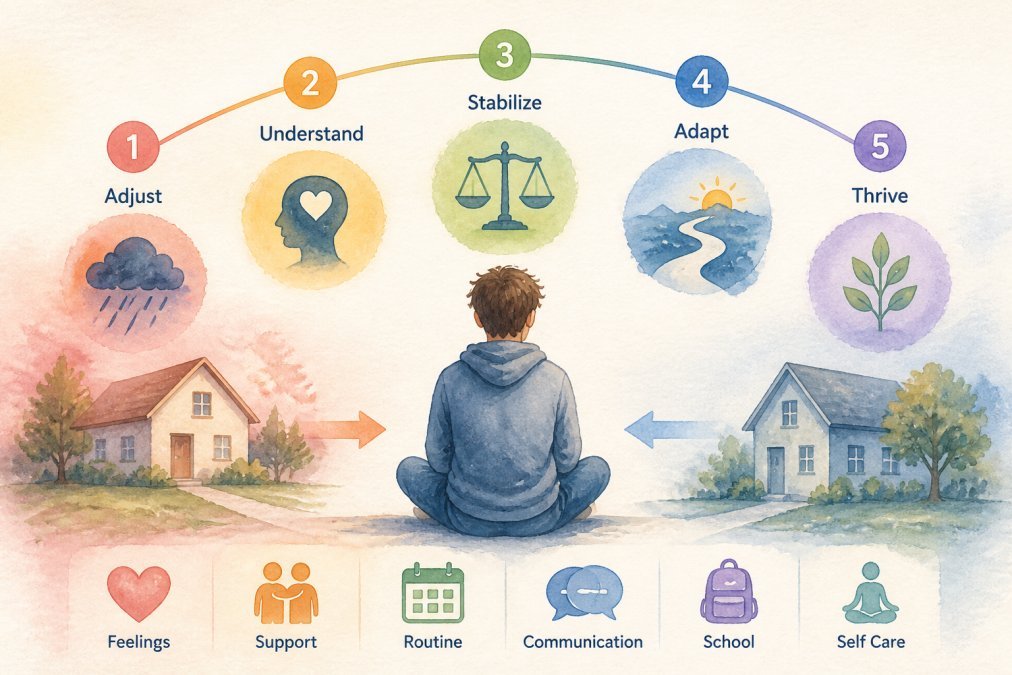
TL;DR:
- Teenagers experiencing infidelity-driven divorce often suffer betrayal trauma, which affects their mental and physical well-being. Support via honest communication, trauma-informed therapy, and healthy outlets can significantly improve their emotional resilience and long-term outcomes. With proper intervention and support, these negative effects are preventable, and teens can build resilience despite family trauma.
- What teenagers whose parents are divorcing due to infidelity actually feel
- How should parents talk to you about divorce when infidelity is involved?
- What coping strategies actually help teens heal after infidelity-related divorce?
- How does infidelity-related divorce affect your long-term future?
- Key takeaways
- What I have learned from watching teens carry this weight
- FAQ
Teenagers whose parents are divorcing due to infidelity face a specific kind of emotional pain that ordinary divorce resources rarely address. You are not just losing a family structure. You are processing a betrayal that was not yours to carry, often without the language or support to make sense of it. Research on betrayal trauma in teens shows that adolescents frequently absorb this shock through their bodies and behavior before they can name what they are feeling. Trauma-informed counseling, honest parental communication, and digital mental health tools like the SES NXT program are among the most effective supports available to you right now.
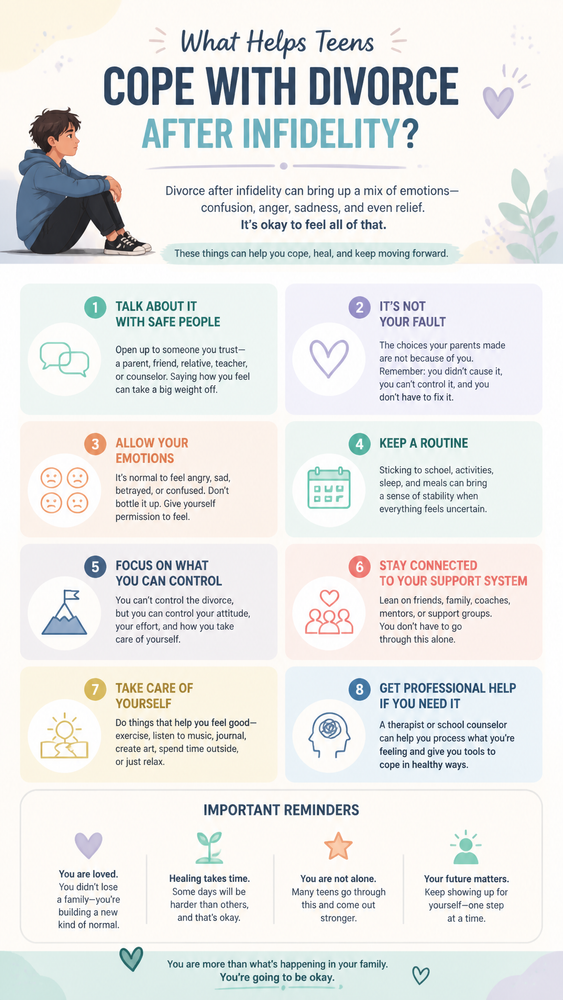
What teenagers whose parents are divorcing due to infidelity actually feel
The clinical term for what you may be experiencing is betrayal trauma, a specific psychological response that occurs when someone you depend on for safety violates your trust. It is different from ordinary grief because it attacks your sense of reality, not just your sense of loss.
Here is what that looks like in practice:
- Guilt and self-blame. Teens often construct self-blaming narratives about a parent’s infidelity because adolescent thinking is still partly egocentric. You may wonder if you caused stress that pushed a parent away. You did not.
- Physical symptoms. Betrayal trauma dysregulates the nervous system, producing chest tightness, a constant urge to escape, or a feeling of physical unsafety. These are real physiological responses, not overreactions.
- Social withdrawal and anxiety. Research confirms that guilt acts as a bridge symptom connecting depression and social anxiety in adolescents from divorced families. Shame makes you want to disappear from friendships and school life.
- Anger and confusion. You may feel furious at one parent, protective of the other, and then guilty for both reactions. Holding contradictory feelings at the same time is normal and does not mean you are broken.
- Numbness. Some teens shut down entirely. Emotional numbness is a protective response, not a sign that you do not care.
“Teens may lack the words for betrayal, but their bodies keep score. Tracking physical sensations, like noticing when your chest tightens or your stomach drops, gives you concrete cues to step away from toxic interactions before they overwhelm you.”
Understanding how teens react to infidelity by age can help you recognize that your responses are predictable, not shameful.
Pro Tip: Keep a simple body-check journal. Once a day, write down one physical sensation you noticed and what was happening at the time. This builds self-awareness and helps a therapist understand your experience faster.
How should parents talk to you about divorce when infidelity is involved?
If your parents have not had this conversation with you yet, or if it went badly, knowing what good communication looks like gives you the power to ask for it.
- The conversation should be planned, not reactive. Best practice calls for a 10 to 20 minute honest conversation without blame, followed by private time for you to process. A rushed or emotionally chaotic disclosure causes more harm than the news itself.
- You deserve age-appropriate honesty. You do not need graphic details about what happened. You do need a clear, direct answer to the question: “Is this real, and is our family changing?” Vague answers fuel anxiety more than facts do.
- Follow-up matters. Research recommends documented follow-up within 24 hours of the initial conversation. A parent checking back in, asking how you are doing, and answering new questions signals that you are not being abandoned to process this alone.
- You are allowed to ask questions. You do not have to accept silence. Asking “What is going to change for me?” or “Where will I live?” is not disrespectful. It is you taking care of yourself.
- Affair fog is real. The concept of parenting during affair fog describes the emotional confusion that clouds a parent’s judgment during and after infidelity. If a parent seems unavailable or erratic, it is not because you matter less. Their capacity is temporarily compromised.
Pro Tip: If a parent refuses to talk or keeps changing the subject, write your questions down and hand them the paper. It removes the pressure of a face-to-face confrontation and makes it harder to ignore.
For parents reading this alongside their teen, Aftertheaffair has a detailed guide on talking to kids about an affair that walks through each step of this conversation.
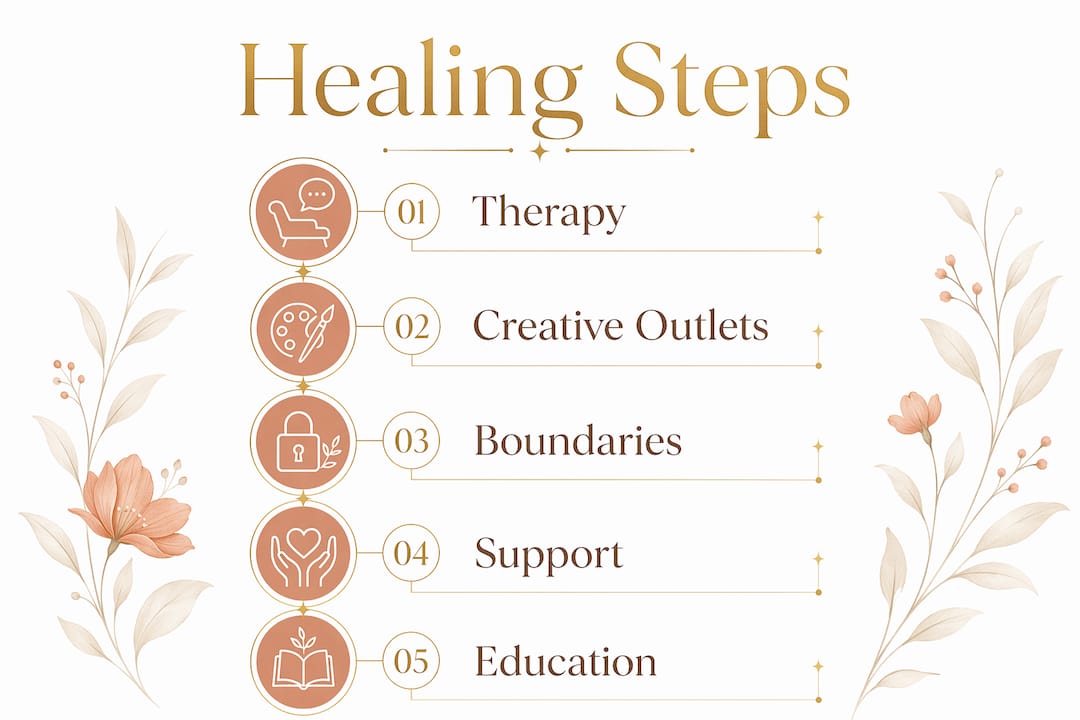
What coping strategies actually help teens heal after infidelity-related divorce?
Recovery from this kind of family disruption is not linear, but certain approaches have strong evidence behind them.
Therapy and digital mental health tools
Trauma-informed therapy is the most direct path to processing betrayal trauma. Brief, child-centered therapy sessions combined with school counselor coordination reduce emotional distress and improve adjustment in teens after divorce. If in-person therapy is not accessible, digital interventions are a legitimate alternative. The SES NXT program showed medium-to-large improvements in mental health symptoms over 12 weeks, with effect sizes between 0.66 and 0.71. That is a clinically meaningful result. Aftertheaffair’s overview of therapy types for infidelity trauma explains which modalities work best and why.
Creative and physical outlets
Safe creative outlets like art, movement, and writing help teens process intense emotions that are too big for words. This is not soft advice. It is grounded in how the nervous system processes trauma. Running, drawing, playing music, or writing in a private journal all give your body a channel to discharge what it is holding.
Boundaries with parents
You are allowed to set limits on what you hear and when. Refusing to speak to a parent or declining to hear details about the affair is not a failure of loyalty. It is a protective developmental milestone. Forgiveness is not the same as boundary-setting, and no one can demand you offer it on a timeline.
| Coping strategy | Why it works |
|---|---|
| Trauma-informed therapy | Directly addresses nervous system dysregulation and self-blame patterns |
| Journaling physical sensations | Builds self-awareness and gives therapists concrete material to work with |
| Creative and physical outlets | Discharges stored emotional energy without requiring verbal processing |
| School counselor involvement | Provides consistent adult support in a neutral, non-family environment |
| Boundary-setting with parents | Protects identity development and prevents emotional enmeshment |
Pro Tip: Tell your school counselor what is happening at home, even in one sentence. Schools can quietly adjust academic expectations during a family crisis without broadcasting your situation to teachers.
How does infidelity-related divorce affect your long-term future?
The research on long-term outcomes is sobering, but it is not a sentence. It is information you can use.
Parental divorce linked to infidelity increases teen birth rates by 63% and raises early death risk by up to 55%, with income at age 27 running about 13% lower than peers from intact families. These numbers reflect what happens without adequate support. They are not your destiny. They are the cost of leaving this kind of trauma unaddressed.
The same research base shows that healthy coping, stable adult relationships, and consistent professional support significantly reduce these risks. Teens who access therapy, maintain school engagement, and have at least one reliable adult in their corner show markedly better outcomes. Building resilience after infidelity is a skill, not a personality trait. It is developed through practice and support, not through being naturally tough.
Your education is one of the most protective factors available to you. Staying connected to school, even when home feels chaotic, keeps a structure in place that supports both mental health and future economic stability. If academic performance drops during this period, that is a signal to ask for help, not evidence that you cannot succeed.

Key takeaways
Teenagers whose parents are divorcing due to infidelity need betrayal-specific support, honest communication, and trauma-informed tools to protect both their immediate mental health and their long-term outcomes.
| Point | Details |
|---|---|
| Betrayal trauma is specific | Infidelity-related divorce triggers nervous system dysregulation, not just ordinary grief. |
| Guilt is the bridge symptom | Reducing shame and self-blame directly lowers risk of depression and social anxiety. |
| Communication quality matters | A planned, 10 to 20 minute honest conversation with follow-up reduces long-term distress. |
| Digital therapy works | Programs like SES NXT show clinically significant mental health improvements in 12 weeks. |
| Long-term risks are preventable | Support, school engagement, and therapy reduce the statistical risks tied to infidelity-related divorce. |
What I have learned from watching teens carry this weight
By Silviya
Most articles about divorce and teens focus on the divorce. What I have found, working in this space, is that the infidelity is the wound that actually needs treating. Teens are remarkably perceptive. They often know something is wrong long before any adult says a word, and the silence teaches them that their instincts cannot be trusted. That is the damage that lasts.
What helps more than anything is not a perfect conversation or the right therapist, though both matter. It is the experience of having at least one adult witness their pain without flinching, without redirecting to their own feelings, and without asking the teen to make them feel better about it. When a parent can hold genuine remorse without leaning on their child for comfort, something shifts. The teen stops feeling responsible for managing the family’s emotional temperature.
I also want to say this directly: you are not obligated to forgive anyone on a schedule. Healing is not a performance. The teens I have seen struggle most are the ones who were told to “move on” before they were ready, or who were quietly recruited as emotional support for a grieving parent. Your job right now is to stay in school, stay connected to people who are good for you, and let yourself feel what you actually feel. That is enough.
— S.J.Howe
Resources to support your healing
If you are a teenager working through your parents’ divorce caused by infidelity, or a parent trying to support one, Aftertheaffair offers structured, evidence-informed resources built specifically for this kind of recovery. The infidelity recovery checklist walks through seven concrete steps that apply to both adults and teens processing betrayal trauma. For those who want a deeper framework, the trauma recovery checklist addresses the psychological stages of healing after betrayal in a format you can work through at your own pace. These are not generic self-help tools. They are grounded in the same clinical frameworks used in trauma-informed therapy.
FAQ
What is betrayal trauma in teenagers?
Betrayal trauma is a psychological response that occurs when a trusted caregiver violates safety or trust. In teens, it produces nervous system dysregulation, self-blame, and physical symptoms like chest tightness, often before the teen can name what they are feeling.
Is it normal to feel angry at both parents?
Yes. Holding contradictory emotions toward both parents simultaneously is a recognized response to infidelity-related divorce. Anger at the parent who cheated and frustration with the parent who stayed are both valid and do not cancel each other out.
Do teens have to forgive a parent who cheated?
No. Forgiveness differs from boundary-setting, and refusing to speak to a parent can be a healthy protective response. Forgiveness, if it comes, should be a personal choice made in the teen’s own time, not a condition placed on them by adults.
What kind of therapy helps teens after infidelity-related divorce?
Trauma-informed therapy is the most effective approach. Brief, child-centered sessions coordinated with school counselors show strong results. Digital programs like SES NXT also demonstrate clinically significant improvements over 12 weeks for teens who cannot access in-person care.
Can the long-term effects of infidelity-related divorce be avoided?
The negative long-term outcomes associated with infidelity-related divorce are significantly reduced when teens access consistent support, maintain school engagement, and work with a therapist. These outcomes reflect unsupported teens, not an unavoidable fate.
Recommended
- How Infidelity Affects Children – After the Affair Series
- Landing – After the Affair Series
- How to support kids in two homes after infidelity – After the Affair Series
- Landing – After the Affair Series